Weekend links 339

hiorns.jpg

Untitled (2011) by Roger Hiorns. Photograph by Kate Green.

• “Most surprising and troubling of all is the status of a series of new paintings, also depicting naked male bodies. The figures look archaic, painted using latex and molten and folded plastic. They have sex with each other and with themselves. Extra penises float about, and fill any otherwise unoccupied orifice. There’s a lot of rogering going on, anal and oral, the figures consumed entirely by the act.” Adrian Searle reviews Roger Hiorns’ latest show at the Ikon Gallery, Birmingham.

• “At the heart of magical belief is the belief in your own free will, in your ability to make changes and influence the world. It wasn’t accepting your circumstances, it was working to understand and directly change them.” Jessa Crispin on the women of the Hermetic Order of the Golden Dawn.

Addison Nugent on William Hope Hodgson: “The Forgotten Bodybuilding, Shark-Fighting Sailor who Invented Cosmic Horror (and annoyed Houdini)”. I’d quibble with the “forgotten”—Hodgson is sometimes overlooked but not exactly unknown—but the appraisal is welcome.

• More end-of-year lists: The Quietus posts its Albums of the Year, Bandcamp does the same, while Adrian Curry at MUBI announces his favourite film posters of the year.

Callum James has devised The Quite Difficult Book Quiz for those who’d like a challenge (and a donation to charity) over Christmas.

• “A profoundly poetic anomaly”: Kenan Malik on the Tantric paintings that pre-empt Modernist abstraction.

Patricia M’s Flickr albums contain a wealth of antique graphic design, advertising art and undigitised letterforms.

• “Cronky, shonky, soggy, knackered”: Simon Reynolds on ten years of Moon Wiring Club.

Michael LePointe on the delightful mysteries of The Voynich Manuscript.

Veloelectroindustrial: Wandering the wastelands of former industry.

• Mix of the week: Secret Thirteen Mix 202 by JG Biberkopf.

• “Was Edmund Wilson jealous of Lolita?” asks Alex Beam.

• “Research finds MP3s drain your music of emotion.

Richard H. Kirk‘s favourite albums.

Pavel Banka‘s surreal abstractions.

Dennis Cooper‘s Alan Clarke Day.

Cosmic Surfin’ (1978) by Yellow Magic Orchestra | Cosmic Meditation (1991) by Moondog | Cosmic Call (2006) by The Evpatoria Report

Weekend links 335

oelze.jpg

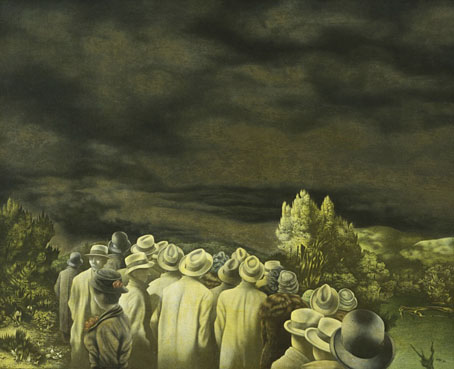
The Expectation (1936) by Richard Oelze.

Richard Oelze, 1900–1980 is an exhibition of paintings and drawings at the Michael Werner Gallery, London, which runs until January 2017. More Surrealist works by Oelze may be seen at But Does It Float and Ubu Gallery.

Will McMorran on the problems of translating the Marquis de Sade’s most obscene work. Related: Jay Sina on Sexistential Horror: HP Lovecraft and the Marquis de Sade as perverse peers.

• Mixes of the week: More Halloween horror at No Condition Is Permanent, Secret Thirteen Mix 200 by JK Flesh, and a mix for The Wire by Botany.

The Chronicles of Clovis (1911), a story collection by Saki (HH Munro) who died 100 years ago this week.

• “Jack is 24, sometimes he’s a drag queen named Sabrina.” The Queen (1968).

• The Mindset of the Macabre: An interview with Abigail Larson.

• “The world is full of bloviators,” says MAD cartoonist Al Jaffee.

Ginette Vincendeau on how the French birthed film noir.

• How to throw a dinner party like Salvador Dalí.

Sastanàqqàm, another new song by Tinariwen.

• At A Year In The Country: more Quatermass.

• Photographs by Klaartje Lambrechts.

Paul Bailey on Pasolini’s lost boys.

Adam Shatz on Leonard Cohen.

Subterranean London

Joan Of Arc (1986) by Jennifer Warnes with Leonard Cohen | Who By Fire (1986) by Coil | The Future (1992) by Leonard Cohen

The mystery of trams

quays-black.jpg

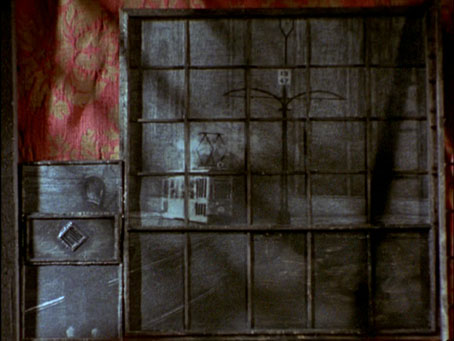
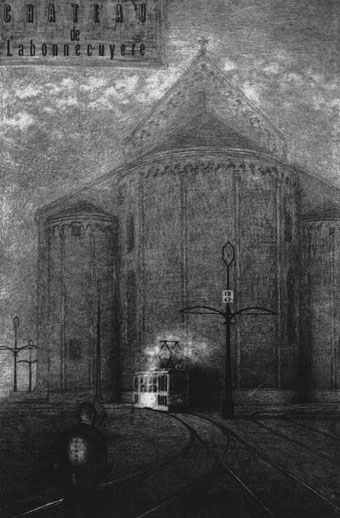
Chateau de Labonnecuyere (c. 1970s) by The Brothers Quay.

Trams are a recurrent feature in the early drawings of the Brothers Quay, and they’ve also appeared in the Quays’ earliest animated films and in some of their designs for the stage. I respond to this fetishisation on the deepest level having been born and raised on the Fylde coast of Lancashire, an area which was for many years the only place in Britain that kept its tramways after the rest of the country had given over the streets to buses and cars. Trams are so ingrained in my consciousness that I still dream about the trams of my childhood, many of which were rattling, streamlined things dating back to the 1930s. Manchester was tramless when I arrived in the city in 1982 but a few years later the council embarked on an ambitious and far-sighted scheme to return trams to the city’s streets. The first routes opened in 1991, and the network has been evolving ever since, pushing out of the centre along disused rail lines.
delvaux1.jpg

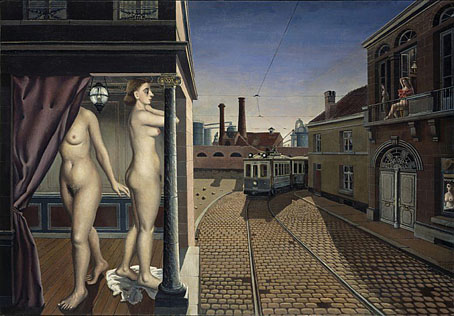
La Rue du Tramway (1938–1939) by Paul Delvaux.

The Quays aren’t alone in being attracted to this form of public transport. Trams haunt a certain type of oneiric European imagination, and I often wonder where the attraction lies. I think it’s something to do with their small scale and the way they remain bounded within the cities they serve. Trains have a romance and mythology of their own but are wide-ranging and far more common, as are buses whose presence on a city street is a reminder that the tram can be replaced. The Quays are Europhiles so they no doubt see the trams of the Continent as another feature of European city life that’s more arresting to American eyes. This post gathers some of the Quays’ uses together with other notable (and favourite) examples.
delvaux2.jpg

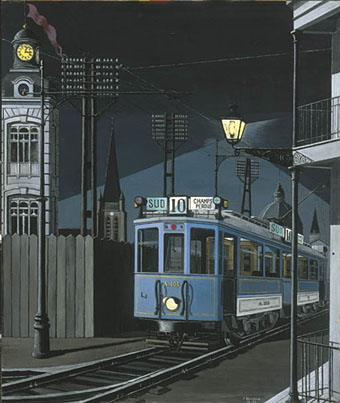
Tram nocturne (1950) by Paul Delvaux.

Several of the examples listed here are Belgian which either means that trams exercise the Belgian imagination more than that of other nations, or I happen to pay more attention to Belgian art. (Probably a little of both.) Paul Delvaux put trams into several paintings but seems to have been the only Surrealist to do so.

tram1.jpg

tram2.jpg

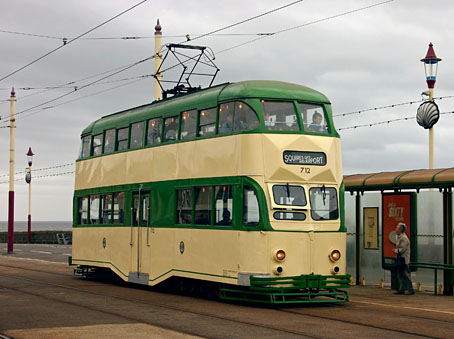
The trams that haunt my imagination are the cream-and-green vehicles that trundled for decades up and down the Fylde coast between Blackpool and Fleetwood. These machines used to run along the line at the end of the street I grew up in so there’s never been a day I can remember when I wasn’t aware of the tram—and of these vehicles in particular—as a viable mode of public transport. Looking at the websites of tram enthusiasts reveals the different names for each generation of Blackpool trams; so I now know that the bow-ended ones (which I always liked) are known as Brush Railcoaches, while the double-deckers are known as Balloons. None of these names were ever used by locals.
schuiten.jpg

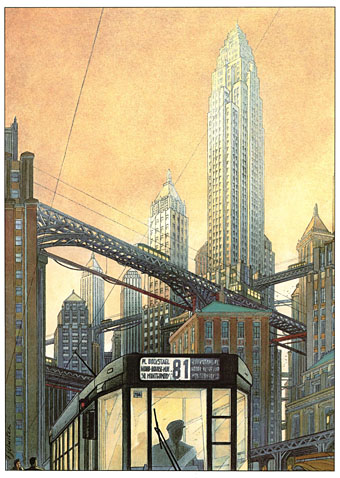
Back to Belgium, and the comics and illustrations drawn by the marvellous François Schuiten are filled with trams. I’ve written at length about the Obscure World mythos of Schuiten and Peeters so rather than repeat myself I’ll point to the mystery of Tram 81, a recurrent and unexplained presence in Schuiten’s work.
nocturna1.jpg

Nocturna Artificiala.

nocturna2.jpg

Nocturna Artificiala.

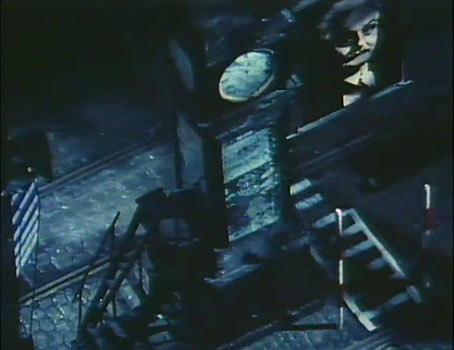
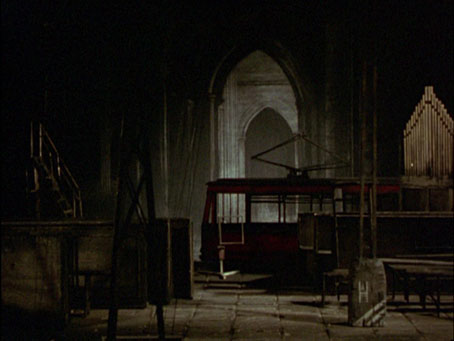
Trams for the Brothers Quay are the small European variety rather than the streetcars seen in some American cities. One of the brothers’ Black Drawings, Chateau de Labonnecuyere, features a pantographed vehicle that glides through their later animated films. The first of these, Nocturna Artificiala (1979), is a wordless masque involving the yearning relationship between the solitary puppet character and an empty, nocturnal tram. The film is an animated extension of Chateau de Labonnecuyere which not only features the drawing itself but also includes a unique moment where the tram glides through the vast cathedral seen in the background.
janacek1.jpg

Leos Janacek: Intimate Excursions.

janacek2.jpg

Leos Janacek: Intimate Excursions.

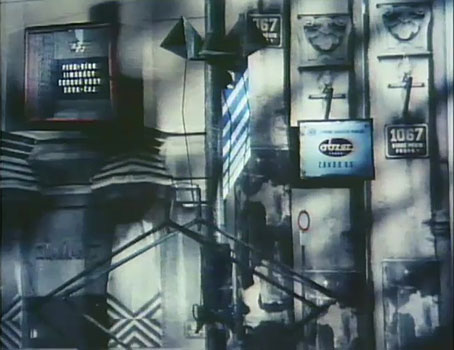
The power-line supports seen in Chateau de Labonnecuyere are a recurrent motif in the Quays’ works. They appear together with the Nocturna Artificiala tram in Leos Janacek: Intimate Excursions (1983), and may be glimpsed among the faded detritus in Street of Crocodiles (1986).
avalon1.jpg

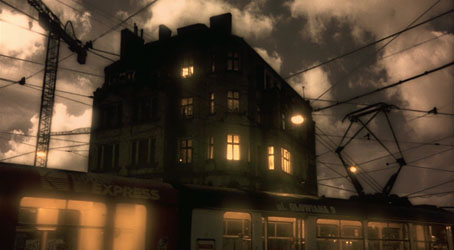
Avalon.

avalon2.jpg

Avalon.

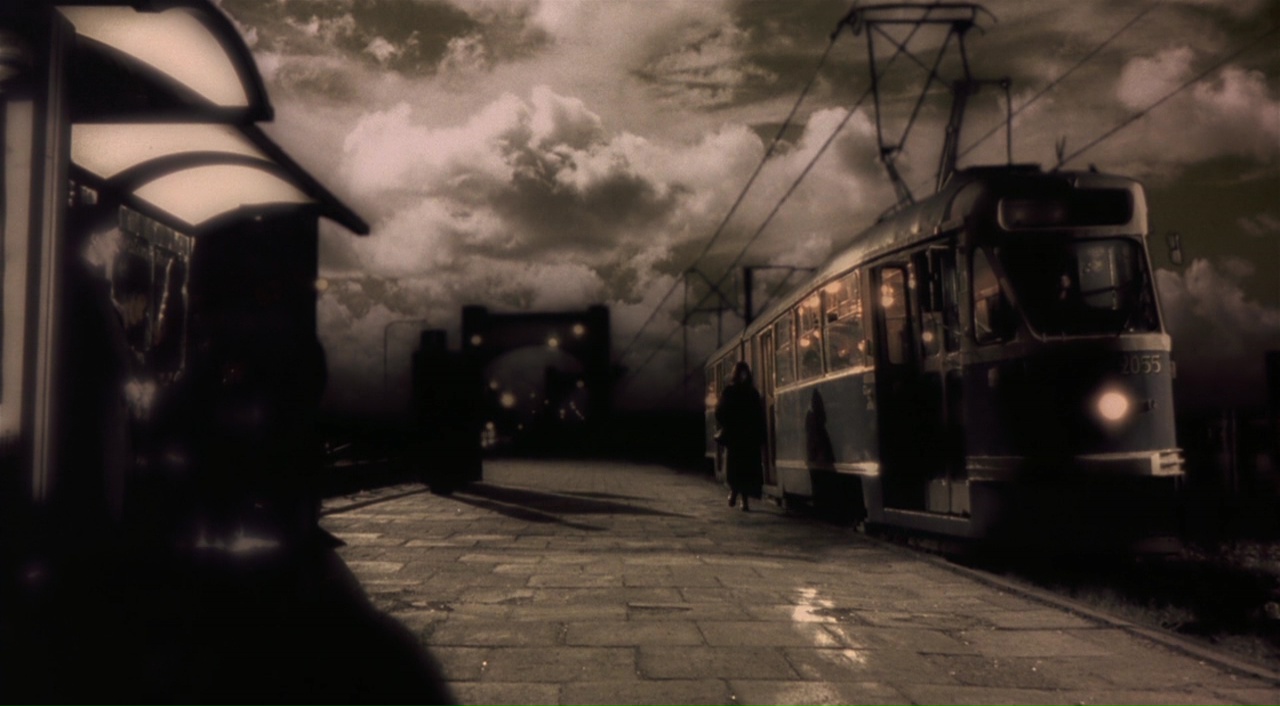
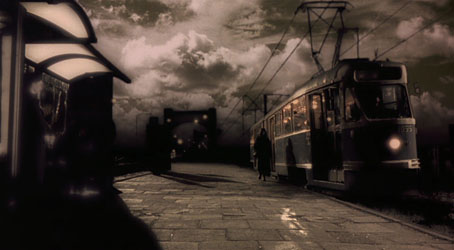
I don’t know what the Quays would make of the science-fiction scenario of Mamoru Oshii’s Avalon (2001) but the recurrent scenes of a nocturnal tram journey would probably appeal, especially since the tram in question is a Polish one. Mamoru Oshii is the director of many SF-oriented animations, not least The Ghost in the Shell (1995). Avalon was a surprise when it appeared (and then seemed to vanish all-too-quickly): a live-action drama concerning the players of a virtual reality game which can have lethal consequences for the contestants. The film was made in Poland with a Polish cast, and the scenes are heavily processed throughout, with everything given a sepia wash. Coming after The Matrix, Dark City et al, the virtual reality aspect wasn’t so much of a surprise but I loved the juxtaposition of a futuristic story in a run-down European setting. And the trams, of course. The dream-like atmosphere of the film’s mundane scenes brings everything back to Delvaux and his tram nocturnes.

I was going to add Tramway (1966) to this list, a short student film directed by Krzysztof Kieslowski, but it’s not especially mysterious. It’s worth a look if you like Kieslowski, however, and may be watched here. If anyone has suggestions for other mysterious trams then please leave a comment.

Elsewhere on { feuilleton }
The Quay Brothers archive

Previously on { feuilleton }
Paul Delvaux: The Sleepwalker of Saint-Idesbald
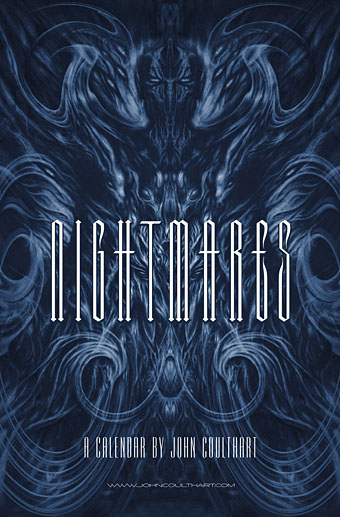
Nightmares calendar

calendar14.jpg

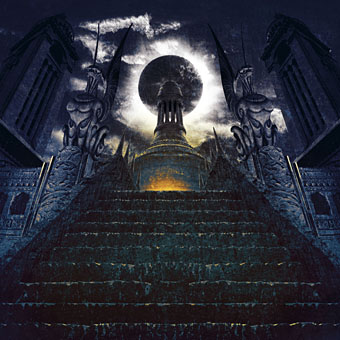
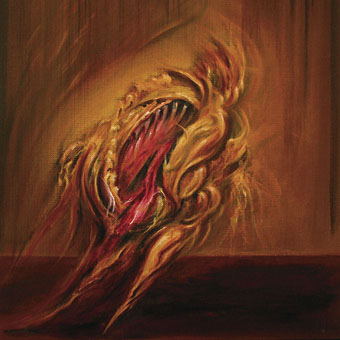
Presenting the latest Coulthart calendar. Last year’s Lovecraft-themed collection was well-received (and is on sale again this year) so I thought I’d try a similar accumulation of horror imagery. Much of the artwork this time is from my intensive painting period circa 1996–1998, and includes one piece—the red painting below—that hasn’t been made public before. Further traces of Lovecraft may be found in the tentacles of the Lord Horror canvas—HPL by way of Frank Frazetta—and the two panels of the Red Night Rites diptych. The latter was a large picture of Reverbstorm-level grotesquery done as a wraparound cover for The Unspeakable Oath, a Lovecraftian gaming journal. While working on it I had William Burroughs in mind as much as Lovecraft, and Burroughs happened to die while work was still in progress so the picture is dedicated to him. Also Lovecraftian is In Spaces Between, one of the pages from my Kabbalistic collaboration with Alan Moore, The Great Old Ones. Howl from Beyond is a title that some people may recognise from Magic: The Gathering. I painted over 20 pictures for the card game but most of them were done in haste, and not to my satisfaction. Howl from Beyond is one of the few I felt worked as intended.

As before, this calendar is available at Zazzle, and comes with black pages and a minimal layout for the dates. Larger images of the artwork may be seen here. I said last year that I’d move some of the other calendar designs to Zazzle (CafePress having discontinued the vertical format I’d been using for years) but I still haven’t done this. One day… And speaking of nightmares, earlier this year I was designing the interiors for another excellent collection of horror stories edited by Ellen Datlow which happens to bear this title. When I get some of that elusive spare time I’ll add the book to the website.

calendar01.jpg

January: Steps of Descent (digital, 2008).

calendar02.jpg

February: Untitled (acrylics on board, 1997).

calendar03.jpg

March: Waltzes and Whispers (acrylics on board, 1998).

Continue reading “Nightmares calendar”

Weekend links 330

battle.jpg

Summer Passing (2013) by Laura Battle.

• The Marquis de Sade’s enduringly contentious The 120 Days of Sodom has been republished by Penguin Books in a new translation by Will McMorran and Thomas Wynn. “[De Sade] described his novel as ‘the most impure tale ever written since the world began’ and, for all the hyperbole, his description still holds true even now,” says Will McMorran, exploring the history and reputation of the book.

• From the Cutting Room Floor: Rick Klaw talks to Bruce Sterling about the current state of US (and world) politics. Sterling’s Futurist novel Pirate Utopia (which I’ve designed and illustrated) will be published by Tachyon next month.

• New from Strange Attractor: In Fairyland: The World of Tessa Farmer, edited by Catriona McAra, and Of Shadows: One Hundred Objects from The Museum of Witchcraft and Magic by Sarah Hannant and Simon Costin.

• Mix of the week: Programme No. 16 in the long-running Radio Belbury series is a guest presentation by The Pattern Forms (Jon Brooks, Edward Macfarlane and Edward Gibson).

The Book of Three Gates by Simon Berman, “An Esoterica of HP Lovecraft’s Cthulhu Mythos”, is seeking funding.

• Occultist Phil Hine discusses Richard Payne Knight and phalluses at the Conway Hall, London, later this month.

• “My goal is to make music that is transcendent and isn’t specific of a certain time,” says Earth’s Dylan Carlson.

• Kiss the sky: psychedelic posters of the 60s and 70s from the collection of the late Felix Dennis.

Radionics Radio: An Album Of Musical Radionic Thought-Frequencies.

Madeleine LeDespencer on the occult bookshops of London.

Unknown Pleasures waveform gif generator

Sade Masoch (1968) by Bobby Callender | Confessional (Give Me Sodomy Or Give Me Death) (1991) by Diamanda Galás | The Sodom And Gomorrah Show (2006) by Pet Shop Boys