Weekend links: New Year edition

olofsdotter1.jpg

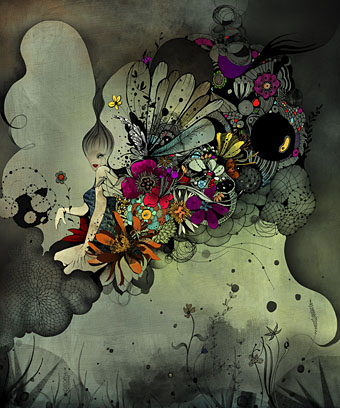
Flower Me Gently (2010) by Linn Olofsdotter.

• “Many of Moorcock’s editorials are published here, and they still make exhilarating reading. Then, as now, Moorcock set his face against a besetting English sin: a snobbish parochial weariness, an ironic superiority to the frightful oiks who have started filling up the streets. You can almost hear, behind the languorous flutter of the pages, Sir Whatsits sniggering to Lady Doo-Dah. It still goes on, and it’s usually the same flummery in different clothes. Moorcock not only would not go to the party: he threw the literary equivalent of explosive devices into the Hampstead living rooms.” Michael Moorcock’s Into the Media Web reviewed. And also here.

• “Beefheart channeled a secret history of America, the underbelly of a continent and a culture that has now all but vanished along with one of its greatest poets.” Jon Savage on the life and work of the late Captain.

Miniatures Blog, in which musician Morgan Fisher works his way through each of the fifty one-minute tracks on his extraordinary Miniatures compilation album, with details and anecdotes about the artists and the recording of each piece.

Look at Life: IN gear (1967). A Rank Organisation newsreel about Swinging London. Sardonic commentary and some great colour photography showing how the often shabby reality differs from the caricature. Many of the shots are familiar from documentaries about the era but this is the first time I’ve seen them all in one place.

olofsdotter2.jpg

Predator (Self-portrait) by Linn Olofsdotter.

Lewis Carroll’s new story: The Guardian‘s review of Through the Looking-Glass from December, 1871. Related: My Through the Psychedelic Looking-Glass 2011 calendar is now reduced in price.

The United Kingdom and Ireland as seen from the International Space Station, December, 2010. Related: Spacelog, the stories of early space exploration from the original NASA transcripts.

The “Big Basket” Fraud, 1958: “…there seems to be a limited segment with a one-track mind interested in seeing an exaggerated masculine appendage.”

• “Ancient arena of discord”: a billboard for King’s Cross by Jonathan Barnbrook. Related: Vale Royal by Aidan Andrew Dun.

• The inevitable Ghost Box link, Jim Jupp is interviewed at Cardboard Cutout Sundown.

• Amazon is still playing the random moral guardian at the Kindle store.

Antwerpian Expressionists at A Journey Round My Skull.

Salami CD and vacuum packaging by Mother Eleganza.

Paris 1900: L’Architecture Art Nouveau à Paris.

Bill Sienkiewicz speaks about Big Numbers #3.

Philippe Druillet illustrates Dracula, 1968.

Aesthetic Peacocks at the V&A.

Well Did You Evah! (1990), Deborah Harry & Iggy Pop directed by Alex Cox.

“Who is this who is coming?”

whistle4.jpg

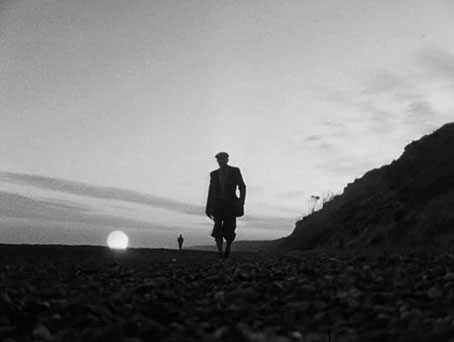
Whistle and I’ll Come to You (1968).

He blew tentatively and stopped suddenly, startled and yet pleased at the note he had elicited. It had a quality of infinite distance in it, and, soft as it was, he somehow felt it must be audible for miles round. It was a sound, too, that seemed to have the power (which many scents possess) of forming pictures in the brain. He saw quite clearly for a moment a vision of a wide, dark expanse at night, with a fresh wind blowing, and in the midst a lonely figure—how employed, he could not tell. Perhaps he would have seen more had not the picture been broken by the sudden surge of a gust of wind against his casement, so sudden that it made him look up, just in time to see the white glint of a sea-bird’s wing somewhere outside the dark panes.

MR James, Oh, Whistle, and I’ll Come to You, My Lad.

One of the alleged highlights of this year’s Christmas television from the BBC was a new adaptation of an MR James ghost story, Oh, Whistle, and I’ll Come to You, My Lad. The film starred John Hurt and came with the same truncated title, Whistle and I’ll Come to You, as was used for Jonathan Miller’s 1968 version, also a BBC production. The story title comes originally from a poem by Robert Burns. The new work was adapted by Neil Cross and directed by Andy de Emmony, and I describe it as an alleged highlight since I wasn’t impressed at all by the drama, the most recent attempt by the BBC to continue a generally creditable tradition of screening ghost stories at Christmas. Before I deal with my disgruntlement I’ll take the opportunity to point the way to some earlier derivations. (And if you don’t want the story spoiled, away and read it first.)

Continue reading ““Who is this who is coming?””

Wildeana 4

hichens.jpg

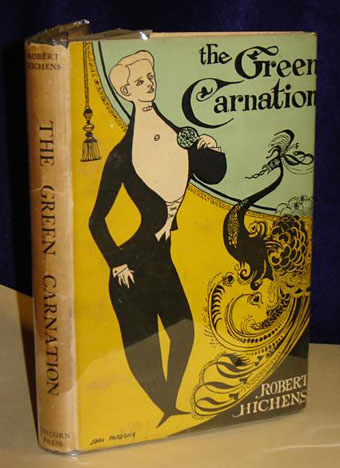
I could make these posts a lot more often since there’s seldom a week goes by when Oscar Wilde’s work or something from his life isn’t making the news somewhere. I forget now how I came across the Robert Hichens book but the Beardsley-derived cover design is the best I’ve seen for this title. The Green Carnation was first published in 1894 and is the notorious roman à clef whose lead characters, Esmé Amarinth and Lord Reginald Hastings, are based on Wilde and Lord Alfred Douglas. Hichens paints the pair as very obvious inverts with none of the “is he or isn’t he?” subtlety that Wilde managed to sustain in public. For a scandalised London the book seemed to confirm what was already suspected about Wilde and Bosie’s relationship.

The cover art is credited to one John Parsons, an illustrator whose other work, if there is any, eludes the world’s search engines. This edition was published in 1949 by Unicorn Press and it’s something I’m tempted to buy as a companion for my Unicorn Press edition of Dorian Gray.

The following links are to recent articles spotted whilst looking for other things:

Oscar Wilde, Classics Scholar. A review of The Women of Homer by Oscar Wilde, edited by Thomas Wright and Donald Mead.
• A new Broadway production of The Importance of Being Earnest has actor Brian Bedford playing Lady Bracknell.
Buyers go Wilde for Oscar as short note to his friend sells for €1,500.
Outsmarted: What Oscar Wilde could teach us about art criticism.

Elsewhere on { feuilleton }
The Oscar Wilde archive
The book covers archive