Weekend links 383

nomata.jpg

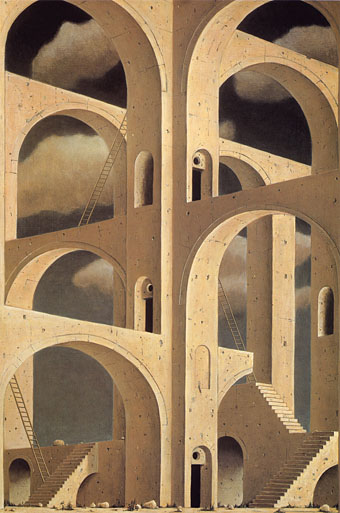
Arcadia-24 (1988) by Minoru Nomata.

Dark Entries and Honey Soundsystem Records release a video of edited moments from gay porn film Afternooners to promote the release of the film’s electronic soundtrack by Patrick Cowley. The album, which is the third and final collection of Cowley’s porn soundtracks, is out now.

Emily Temple looks at some of the art inspired by Italo Calvino’s Invisible Cities. I explored the same subject a couple of years ago in a week of Calvino art posts. From 2014: Peter Mendelsund on designing covers for Calvino.

Jim Downes on the late Charley Shively, a gay liberation activist who wasn’t interested in equality. Not an uncommon attitude in some gay circles but it’s one you seldom see aired in the mainstream press.

Geeta Dayal on A Little Electronic Milky Way of Sound by Roland Kayn, a 14-hour composition of “cybernetic music” which has been released in a lavish 16-CD box set by Frozen Reeds.

• An introduction to Henri-Georges Clouzot in seven films by Adam Scovell. Clouzot’s masterwork, The Wages of Fear (1953), is released on blu-ray by the BFI next week.

• Ubu Yorker: Menachem Feuer interviews Kenneth Goldsmith, writer and the man behind Ubuweb.

• Why Oscar-winning cinematographer Vittorio Storaro thinks the film vs. digital debate is bullshit.

David Barnett on supernatural fiction’s “best kept secret”, Robert Aickman.

Michèle Mendelssohn on how Oscar Wilde’s life imitates his art.

• Mix of the week: Secret Thirteen Mix 233 by Mick Harris.

Invisible Limits (1976) by Tangerine Dream | Invisible Cities (1990) by Jah Wobble’s Invaders Of The Heart | Invisible Architecture (1995) by John Foxx
Weekend links 381

siner.jpg

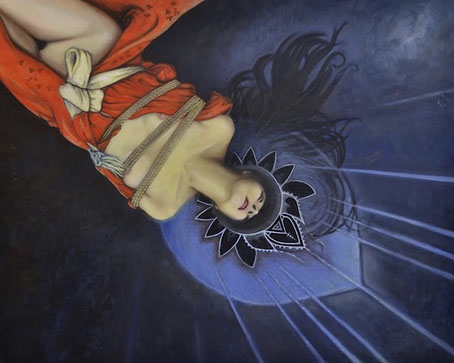
States of Ecstasy 1 by K. Lenore Siner some of whose work may be seen in Witch-Ikon: An Exhibition of Contemporary Witchcraft Imagery at Mortlake & Company, Seattle.

Emily Temple compiles a list of “40 creepy book covers”. A shame that she (or Lithub) can’t also credit more of the artists and designers responsible. Searching titles at ISFDB would turn up many of the missing names.

• Blogging has suffered in recent years from the onslaught of social media but some persist in maintaining the form as a creative act. Poemas del río Wang is one such, its scope best seen in this alphabetical index.

• Mixes of the week: XLR8R Podcast 510 by Moodprint, Secret Thirteen Mix 232 by Alex XIII Maerbach, a mix for The Wire by Sadaf, and FACT mix 621 by NHK yx Koyxen.

Out next month: Mute: A Visual Document, being a visual history of Mute Records by Terry Burrows and Daniel Miller.

Nick Soulsby on “the myth and majesty of Vangelis’ timeless Blade Runner soundtrack”.

Compound in the new album by Yair Elazar Glotman. Stream it in full here.

Killed by Roses (1963): Eikoh Hosoe’s photographs of Yukio Mishima.

Oriental Traditional Music from LPs & Cassettes

• Hours and hours of Blue Jam. Oo ab welcome.

• 65 books of prints by Katsushika Hokusai.

Alpha (1976) by Vangelis | Rêve (1979) by Vangelis | Flamants Roses (1979) by Vangelis

Weekend links 377

czukay.jpg

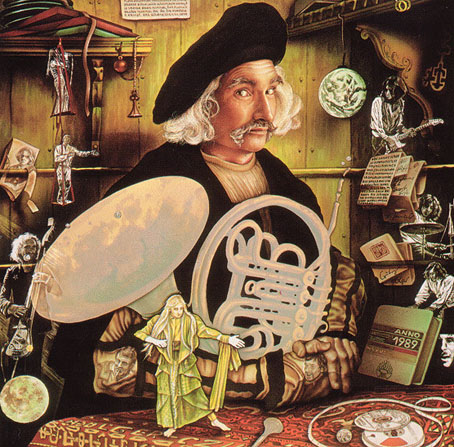
Holger Czukay by Ursula Kloss, from the cover of Czukay’s Moving Pictures (1993). (The painting is a pastiche of Holbein’s portrait of Georg Gisze.)

• RIP Holger Czukay. The obituaries have emphasised his role as the bass player for Can, of course, but he was just as important to the band as a sound engineer and producer: it was Czukay’s editing skills that shaped many of their extended jams into viable compositions. Post-Can he recorded 20 or so albums by himself or with collaborators, several of which can be counted among the best of all the Can solo works. Geeta Dayal and Jason Gross remembered their encounters with Czukay, while FACT reposted their 2009 interview. Czukay’s final interview was probably last year when he talked to Ian Harrison for Mojo magazine.

For my part, I was astonished when Czukay phoned me out of the blue one day in 1997 to thank me for sending him a video I’d made in the 1980s. This was a scratch production created with two VCRs that set 300 clips from feature films to Hollywood Symphony, the final piece on Czukay’s Movies album. Years later, MTV showed a couple of similar video collages that Czukay had made for Can so I sent a copy of my effort to Spoon Records thinking he might be amused. His public persona was often one of a wacky mad professor but the jokiness was allied to an impressive technical skill and curiosity. Most of our brief conversation was taken up with my answering his questions about my primitive video recording.

• “Every pebble can blow us sky-high”: A reconsideration by J. Hoberman of The Wages of Fear, directed by Henri-Georges Clouzot.

• Dario Argento’s masterpiece of horror cinema, Suspiria, is 40 years old. Martyn Conterio looks at five of its influences.

Mark Korven’s Apprehension Engine: an instrument designed to play the music of nightmares.

• The mystery of the Voynich Manuscript solved at last? Nicholas Gibbs thinks so.

• At Dangerous Minds: The macabre and disturbing sculptures of Emil Melmoth.

Jonathan Meades reviews A Place for All People by Richard Rogers.

• Mix of the week: Secret Thirteen Mix 229 by Erin Arthur.

• The ten creepiest objects in the Wellcome Collection.

Rob Chapman’s essential psychedelia reading list.

It’s Just A Fear (1966) by The Answers | Fear (1992) by Miranda Sex Garden | Constant Fear (2002) Bohren & Der Club Of Gore

Weekend links 376

newton.jpg

The House by the Canal (1945) by Algernon Cecil Newton.

• RIP Tobe Hooper. Black Hole Reviews recounts the troubled history of The Texas Chain Saw Massacre in Britain, a film that was given a short-lived cinema release then banned for 20 years. Elsewhere: Who sampled from Tobe Hooper’s films? Tucktonia, a model village whose London buildings were destroyed for Hooper’s Lifeforce.

• Graphic language of the wall: Rick Poynor on Brassaï’s photographs of graffiti for Le Livre de Poche. More Poynor: National Theatre Posters: A Design History is available for pre-order from Unit Editions. There’s more from the latter here.

• “A question of queer as a kind of futurism: an attitude or tendency that connects mid-20th-century performers and photographers to contemporary digital art and fashion.” Brian Dillon reviewing Queer British Art at Tate Britain.

In evolutionary terms, the intelligence of octopuses is an anomaly. The last common ancestor between octopuses on the one hand, and humans and other intelligent animals (monkeys, dolphins, dogs, crows) on the other, was probably a primitive, blind worm-like creature that existed six hundred million years ago. Other creatures that are so evolutionarily distant from humans—lobsters, snails, slugs, clams—rate pretty low on the cognitive scale. But octopuses—and to some extent their cephalopod cousins, cuttlefish and squid—frustrate the neat evolutionary division between clever vertebrates and simple-minded invertebrates. They are sophisticated problem solvers; they learn, and can use tools; and they show a capacity for mimicry, deception and, some think, humour. Just how refined their abilities are is a matter of scientific debate: their very strangeness makes octopuses hard to study. Their intelligence is like ours, and utterly unlike ours. Octopuses are the closest we can come, on earth, to knowing what it might be like to encounter intelligent aliens.

Amia Srinivasan reviewing Other Minds: The Octopus and the Evolution of Intelligent Life by Peter Godfrey-Smith, and The Soul of an Octopus: A Surprising Exploration into the Wonder of Consciousness by Sy Montgomery

Royal Academy of Arts to reveal explicit side of Dalí and Duchamp.

• At Wormwoodiana: Mark Valentine on The Mystic Umbrellas.

Norton Critical Edition’s Periodic Table of Literary Villains.

• Mix of the week: FACT mix 616 by Lanark Artefax.

Virus Fonts has a new website.

Little Umbrellas (1969) by Frank Zappa | Umbrellas (1971) by Weather Report | Black Umbrellas (2003) by Broadcast

Weekend links 373

YDKMorimoe.jpg

Untitled (2011) by YDK Morimoe. Via Jim Post at Dennis Cooper’s.

For The Climax Of The Night by Total Leatherette is almost certainly the only album you’ll see this year with autofellatio cover art. Faux Fox gives a taste of the new album, while an earlier piece, Squeeze Hunk, features a Tom of Finland-style video. And speaking of which, Dome Karukoski’s feature film, Tom of Finland, is released in the UK this week. Related: Tom of Finland coffee.

• The death of playwright Joe Orton in 1967 prompted yet more 50th anniversary articles this week. Mentioned here before, and better value than all the textual appraisal, is the BBC’s 70-minute TV documentary from 1982, A Genius Like Us: A Portrait of Joe Orton, which includes interviews with family, friends, colleagues and Orton’s biographer, John Lahr.

• Two skulls, 50,000 postcards and a book that took 50 years to finish: Stuart Jeffries visits artist Tom Phillips.

• New at the Internet Archive: 25,000 78RPM records. You can never go wrong with Duke Ellington.

Lock Your Door and The Reformation of St. Jules: Algernon Blackwood filmed in 1949.

Redemption, an exhibition of art by Fay Pomerance (1912–2001) at Ushaw College, Durham.

• At Dirge Magazine: Daniel Pietersen on the myth of the sunken city.

• Mix of the week: FACT Mix 613 by Aaron Dilloway.

Laetitia Sadier’s favourite albums.

• RIP Hywel Bennett

Sunken City (1961) by Les Baxter | Ys (1971) by Alan Stivell | Atlantis (1971) by Deuter