Weekend links 214

/sfsound.jpg

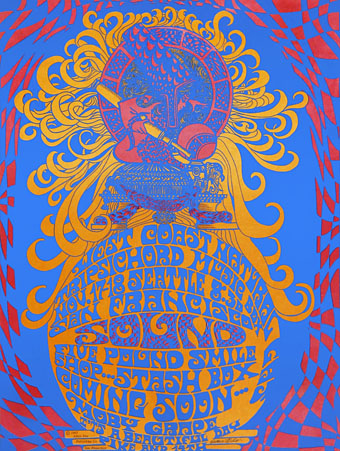
San Francisco Sound (1967). Art by Wallace Studio, Seattle.

• RIP gay porn pioneer Peter de Rome. BUTT posted de Rome’s surprisingly daring Underground (1972), a film in which two men have an unfaked sexual encounter on a New York subway train. That film and others are available on the BFI’s DVD collection. Related: Brian Robinson remembers a director of films whose supporters included Andy Warhol, William Burroughs and John Gielgud.

• “My stuff is implicitly critical of television as it is now,” explains Jonathan [Meades], “Television used not to be as openly moronic as it has become…” A lengthy and typically pugnacious Meades interview with Remy Dean.

Thurston Moore remembers the Burroughs-themed Nova Convention staged in New York in 1978. William Burroughs 100—Nova Convention is a retrospective exhibition running at Red Gallery, London, next month.

How are we expected to take seriously…any work which appears to have engaged less than the whole passionate attention of its author? To be fobbed off, at the last, with something which we feel to be less true than the author knew it to be, challenges the importance of the whole art of writing, and instead of enlarging the bounds of our experience, it leaves them where they are.

Katherine Mansfield was also a book reviewer.

• JG Ballard’s Crash is reissued in August by Fourth Estate with an introduction by Zadie Smith. There’s a tantalising extract from the intro at the NYRB or you can read the whole thing if you’re a subscriber.

• “Between 1959 & 1980 Shirley Collins changed the course of folk music in England & America. Thirty years after disappearing, she’s back.”

Photos by Anne Billson of one of the more attractive Parisian arcades. Related (in a flâneur sense): Christina Scholz‘s Vancouver dérive.

• “Why did Borges hate soccer?” asks Shaj Matthew. Related: George Orwell on the same subject.

• Mixes of the week: FACT mix 447 by Forest Swords, and Programme 13 from Radio Belbury.

• At Dangerous Minds: Roland Topor’s cheerfully violent illustrations from Les Masochistes.

• Rainy Day Psychedelia: Ben Marks on Seattle’s neglected 1960s poster scene.

• Strange Flowers looks at Oskar Schlemmer‘s Triadic Ballet designs.

• A Journey to Avebury: Stewart Lee interviews Julian Cope.

It’s All Over Now (1963) by The Valentinos featuring Bobby Womack | It’s All Over Now (1964) by The Rolling Stones | It’s All Over Now (1974) by Ry Cooder
Mannen kunst

wezenaar1.jpg

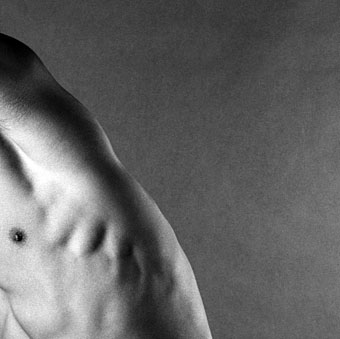
Landscape II (1994) by Rick Wezenaar.

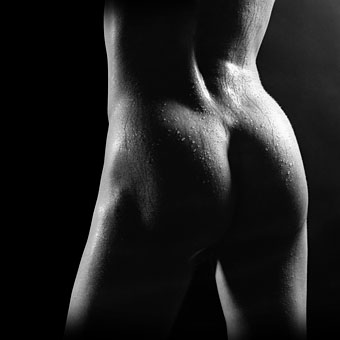
Dutch photographer Rick Wezenaar writes that he’s now in business again after several years away from the field. Among his work there’s a substantial collection of male art photography featuring a variety of nudes and semi-nudes. Some of the models are dancers which will no doubt interest those who are always arriving here after searching for ballet boys. There’s also a call for new models if you’re in the Amsterdam area, and suitably photogenic.

wezenaar2.jpg

Wet (1995) by Rick Wezenaar.

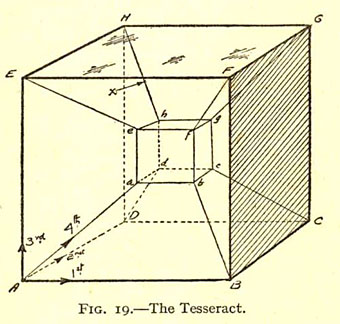
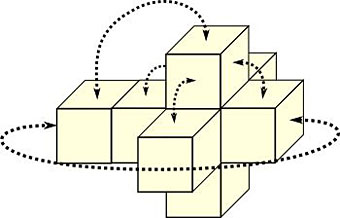
More hypercubes

hypercube1.jpg

A few more extensions of the idea, not all of which have much to do with Hinton’s concepts beyond the name.

hypercube2.jpg

hypercube3.jpg

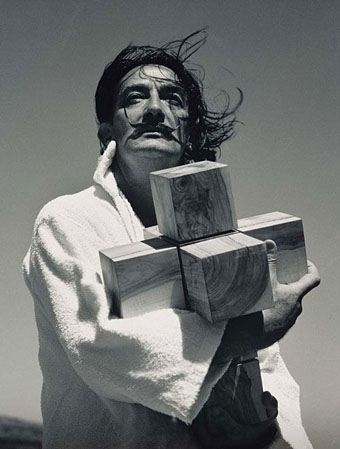
Salvador Dalí with hypercube (1952). Photo by Francesc Català-Roca.

hypercube4.jpg

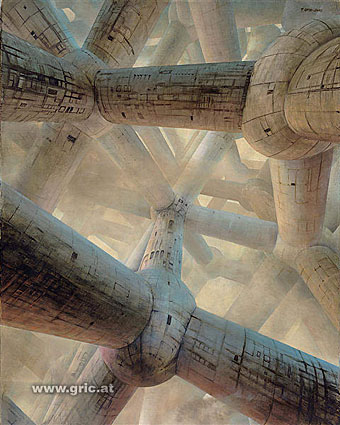
Hypercubic Metropolis (2002) by Peter Gric.

hypercube5.jpg

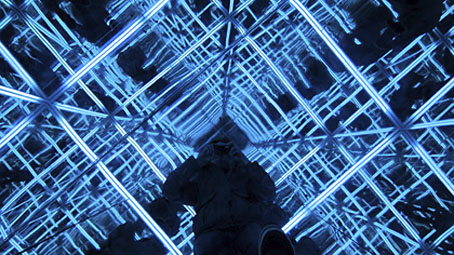
HyperCube (2012) is an installation by artist Jaap van den Elzen and sound composer Augusto Meijer which combines the mirror room familiar from the work of Yayoi Kusama with changeable lighting and sound effects. See also Cube 2: Hypercube (2002) which concerns a group of people imprisoned in a tesseract.

Previously on { feuilleton }
Hinton’s hypercubes
Infinite reflections

Dubliners

clarke.jpg

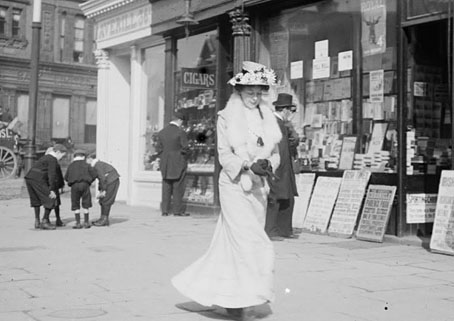
Woman walking past a stationery shop on O’Connell (Sackville) Street. Photo by JJ Clarke.

This year is the centenary of James Joyce’s short-story collection, Dubliners, so the book provides a predominant theme for this year’s Bloomsday. Not a great departure when both Dubliners and Ulysses concern the inhabitants of the same city. Dubliners would have been published before 1914 but the book was refused by several publishers and printers who objected to Joyce’s brand of realism.

The picture above is from a selection of photos of Dublin’s citizens by JJ Clarke, all of which were taken during the time depicted in Dubliners and Ulysses. Elsewhere:

• In honour of the Dubliners centenary 15 writers were asked to create new stories as a response to Joyce’s originals. Eimear McBride is one of the contributors. The Guardian posted her response to Ivy Day in the Committee Room, and she writes about Dubliners here.

• An introduction to Dubliners by Anthony Burgess, written in 1986 then never published, with illustrations by Louis le Brocquy.

James Longenbach reviews The Most Dangerous Book: The Battle for James Joyce’s ‘Ulysses’ by Kevin Birmingham.

Richard Hamilton‘s series of drawings and prints based on Ulysses are on display at the British Museum.

• Stefany Anne Golberg on the old people, young people, and priests of Dubliners.

• Illustrations by Robert Berry for Dubliners‘ final story, The Dead.

Previously on { feuilleton }
Covering Joyce
James Joyce in Reverbstorm
Joyce in Time
Happy Bloomsday
Passages from James Joyce’s Finnegans Wake
Books for Bloomsday

Recent signals

signals1.jpg

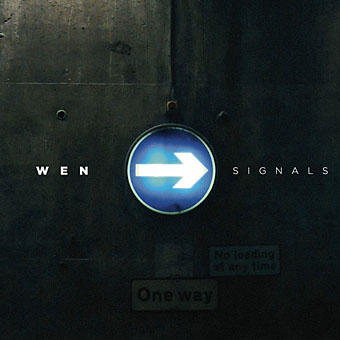
Signals (2014): vinyl front cover. Photo by Nico Hogg.

Seeing as my design for the recent Signals album by Wen has been deemed one of the best covers of the year so far I thought I ought to mention some of the other albums I’ve worked on over the past few months. I tend to give the most attention here to my book designs and illustrations but I’m still working on music releases, albeit with less regularity.

One reason the book work receives more attention is that there’s more of my input involved. Almost all these recent releases have begun as picture selections from the artist which it’s been my job to work into a printable form then place the relevant information in a suitable typeface. This isn’t to downplay the work involved: the careful placing of type becomes more critical the more the design tends to minimalism, and even the best photo can be ruined by clumsy typesetting or an unsympathetic typeface. The challenge of working in a more minimal direction can be a refreshing one when much of the work I do tends to visual excess.

signals2.jpg

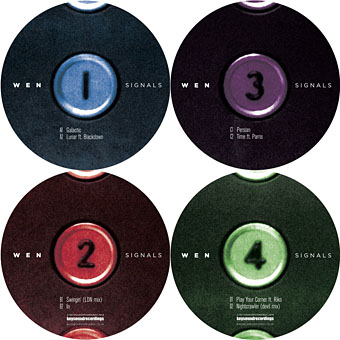
Signals (2014): vinyl labels. Photos by Nico Hogg.

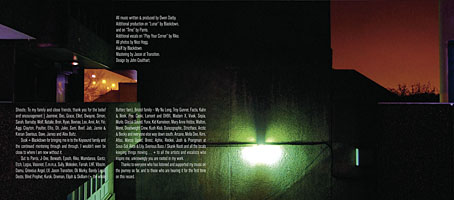
Wen’s album for Keysound Recordings is a collection of dark urban rhythms for which Nico Hogg provided some suitable views of nighttime London. The numbers on the vinyl labels are lift buttons from a high-rise block, while the abstract scene below is a photo of the Thamesmead housing estate.

signals3.jpg

Signals (2014): CD interior. Photo by Nico Hogg.

Continue reading “Recent signals”