Seven Songs by 23 Skidoo

23skidoo.jpg

Along with Elemental 7 by CTI, this was another Doublevision video release that I never got to see in its original videocassette form. Seven Songs is the first and arguably the best of the 23 Skidoo albums, released in 1982 on Fetish Records in a great sleeve by Neville Brody. Production was by “Tony, Terry & David” aka Ken Thomas, Genesis P-Orridge & Peter Christopherson. The latter two were still in Throbbing Gristle at the time so there’s a further connection with the CTI release. The video director was Richard Heslop who can be seen with his Super-8 camera on the inner sleeve of 23 Skidoo’s second album. Seven Songs is his first credited film work.

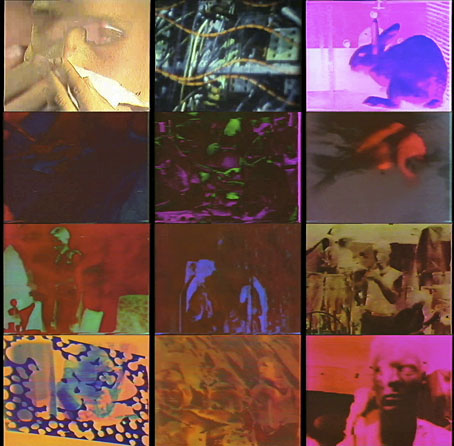
The videos are very much of their time, layered and cut-up images mixing footage from numerous sources—tribal rituals, totalitarian politics, animation, medical or scientific films, shots of the group performing, and so on—with the whole mélange processed through a video synthesiser. While it may look outmoded now, thirty years ago this degree of intensity and fragmentation was still radically unlike anything being offered by broadcast television. Pop video directors and ad agencies weren’t slow to adopt similar techniques for far more commercial ends. Richard Heslop went on to work with Derek Jarman, and recently directed a feature of his own, Frank. Low-quality bits of Seven Songs have been on YouTube for a while but Heslop posted the whole thing to Vimeo a few months ago along with the Tranquiliser footage that rounded out the original cassette release. 23 Skidoo are still active, and are playing a gig in London next Sunday with the former singer from Can, Damo Suzuki. Details about that event here.

Previously on { feuilleton }
Elemental 7 by CTI
Neville Brody and Fetish Records
World Fantasy Awards

infernal.jpg

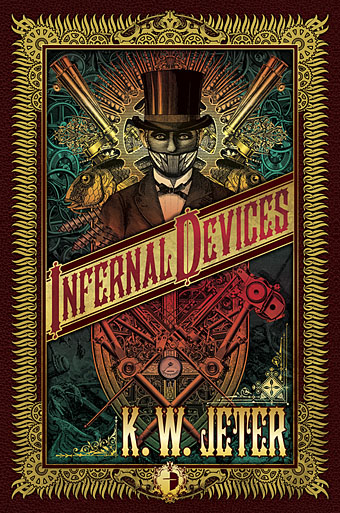
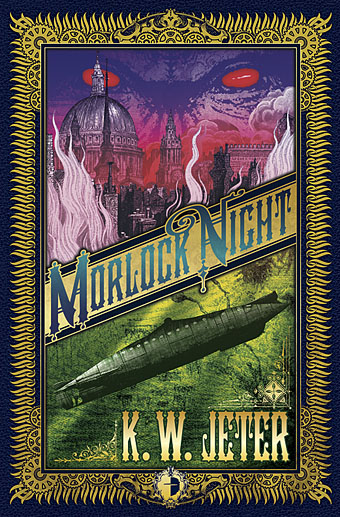
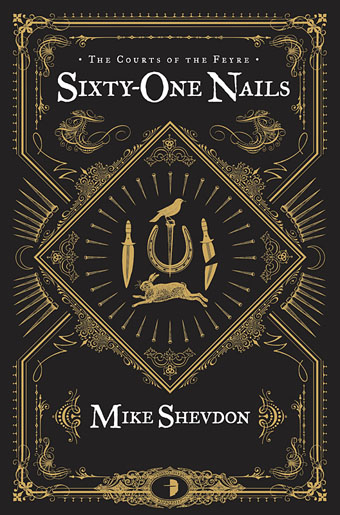
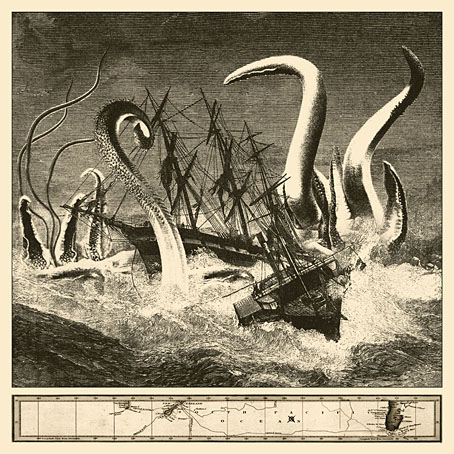
Presenting some of the cover art and interior illustration from 2011 which won me the World Fantasy Award for best artist in Toronto on Sunday. (The complete awards list is here.) It was a surprise to be nominated, and even more of a surprise to win since working in different areas—book, music, comics—is never a good way to get noticed for doing one particular thing. It’s also the case that sf/fantasy art awards tend to favour painters or virtuoso digital artists over people such as myself who I suppose are more illustrator-designers; that’s not a criticism, just an acknowledgement of the strength and popularity of highly-refined pictorial art in this area of the literary world. The recognition hazard works in the opposite direction: the design world often gives the most attention to graphic design alone, with the illustration quotient being regarded as secondary content.

I’m not exactly sure what the judges were looking at of my work so these examples have been chosen for being published during the year under examination. They’re also covers that people seemed to like a lot, especially KW Jeter‘s Morlock Night (even though I still prefer Infernal Devices!), and those for Mike Shevdon‘s books. The Jeter and Shevdon volumes are all published by Angry Robot who will also be publishing Lavie Tidhar‘s The Bookman Histories early next year sporting another of my covers. Lavie’s novel Osama won best novel in Toronto while Ann and Jeff VanderMeer (editors of the Lambshead book below) picked up a best anthology award for their monumental The Weird. And to add to the good company, my regular publishers Tachyon saw one of their authors, Tim Powers, gaining best story collection. Congratulations to everyone, and a big thanks to Ann for collecting my award.

I’m always using these posts to point to other artists so it’s only right that I encourage everyone to go and look at the work of the other nominees. Here they are (although Jon Foster’s site appears down at the moment):

Julie Dillon
Jon Foster
Kathleen Jennings
John Picacio

John Picacio has a rather gorgeous calendar due out soon, details here.

morlock.jpg

lambshead.jpg

Title page for The Thackery T. Lambshead Cabinet of Curiosities edited by Ann & Jeff VanderMeer (Harper Voyager).

shevdon1.jpg

Continue reading “World Fantasy Awards”

More CthulhuPress

cthulhoid.jpg

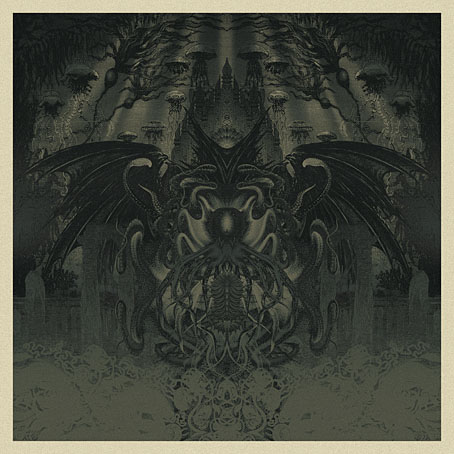
Cthulhoid (2012).

I finally found time this weekend to add these recent works to my CafePress shops so they’re now available as prints. I’ll add a few more products later on although not everything at CafePress suits either square images or work with large amounts of detail. Click on the pictures for the links.I don’t think I’ve mentioned before that Cthulhoid will soon be appearing soon on the cover of a Lovecraftian fiction collection edited by ST Joshi. The book is A Mountain Walked: Great Tales of the Cthulhu Mythos from Centipede Press. I haven’t been given a publication date yet but it’ll probably be out early next year.

And do I need to say for the fifth or sixth time that these pictures are also a part of this year’s Cthulhu Calendar? They are. Thanks to everyone who’s bought a copy so far.

deprofundis.jpg

De Profundis (2012).

tentaclelatitudes.jpg

S. Latitude 47°9?, W. Longitude 126°43? (2012).

Previously on { feuilleton }
Cthulhu Calendar
S. Latitude 47°9′, W. Longitude 126°43′
Resurgam variations
De Profundis
Cthulhoid and Artflakes
Cthulhu for sale
Cthulhu God
Cthulhu under glass
CthulhuPress
Cubist Cthulhu

Weekend links 133

woods1.jpg

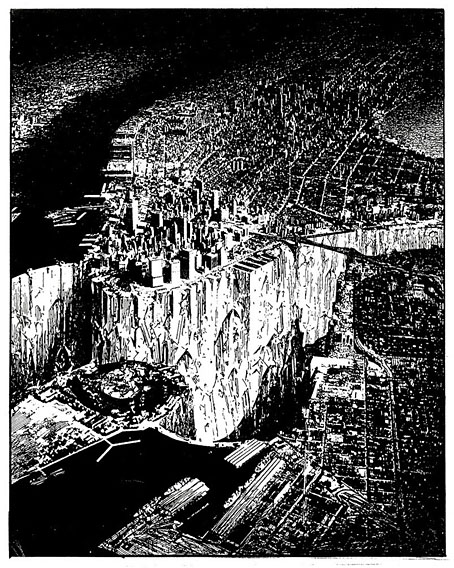
Lower Manhattan (1999) by Lebbeus Woods.

RIP Lebbeus Woods, an architect and illustrator frequently compared to Piranesi not only for his imagination and the quality of his renderings but also for the way both men built very little from a lifetime of designs. Lots of appreciations have appeared over the past few days including this lengthy piece by Geoff Manaugh at BLDGBLOG. (Geoff interviewed Woods in 2007.) Elsewhere: A slideshow at the NYT, Steven Holl remembers Lebbeus Woods and Lebbeus Woods, visionary architect of imaginary worlds. See also: Lebbeus Woods: Early Drawings and this post about Woods’ illustrations for an Arthur C Clarke story collection. Woods was at his most Piranesian with Gothic designs for an artificial planet that would have been the principal location in Vincent Ward’s unmade Alien 3.

Arkhonia draws to the end of a year of blogging about and around the Beach Boys’ errant masterwork, Smile (1967). Witty, discursive and frequently scabrous accounts of how Brian Wilson’s magnum opus was derailed and marginalised until it became convenient for commercial interests to exploit its reputation. Anyone following those posts won’t have been surprised by Wilson’s sacking from his own group by Mike Love in September.

• “We’ve been underground for 27 hours now. Everyone is caked in mud, with grit in their hair.” Will Hunt explores the catacombs and sewers of Paris.

I think the only remotely interesting drug was acid. I had a slightly peculiar attitude towards it I think. Just about everything about hippydom I hated. I liked the 60s up to about ’65 or ’66. I liked the mod clothes, I liked the look. I wasn’t a keen taker of speed because I didn’t like the comedown from it. Then everything changed and became looser, I didn’t like the clothes at all. I felt rather out of step with it. The acid thing was interesting though. I come from Salisbury and from the age of 12 I had a friend who was 30 years older than I was who I saw regularly up until when he died a couple of years ago, whose obituary I wrote in The Times. This man was called Ken James and he was deputy head at the chemical warfare unit at Porton Down [the MOD’s Defence Science and Technology Laboratory]. He then became head of the scientific civil service; he was the man who introduced computing into the civil service and he had taken acid as early as 1950. This was long before Aldous Huxley.

Sharp Suits And Sparkle: Jonathan Meades On Acid, Space And Place by John Doran. Marvellous stuff. Meades’ new book is Museum Without Walls.

• In New York later this month: A Cathode Ray Séance – The Haunted Worlds of Nigel Kneale.

• More acid: Kerri Smith talks to Oliver Sacks about his drug experiences.

• “It starts with an itch”: Alan Bennett (again) on his new play, People.

nymag.jpg

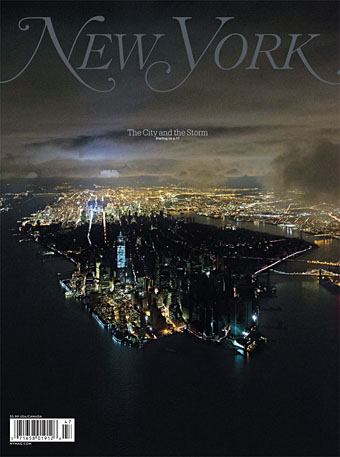
Lower Manhattan last Wednesday. Photo by Iwan Baan.

• Back issues of OMNI magazine can now be found at the Internet Archive.

• Alan Moore & Mitch Jenkins present their new film, Jimmy’s End.

• At BibliOdyssey: Atlas title pages part one & part two.

• Raw Functionality: An interview with Emptyset.

Athanasius, Underground

Vintage Caza

Stormy Weather (1979) by Elisabeth Welch.

Elemental 7 by CTI

cti1.jpg

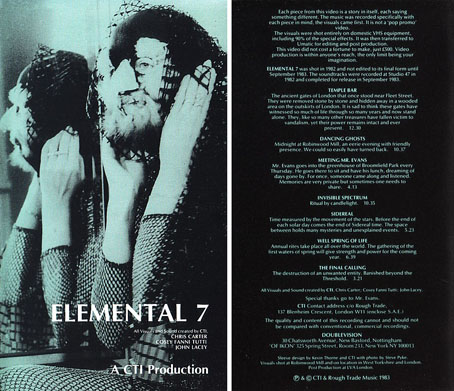
Design by CTI and Kevin Thorne.

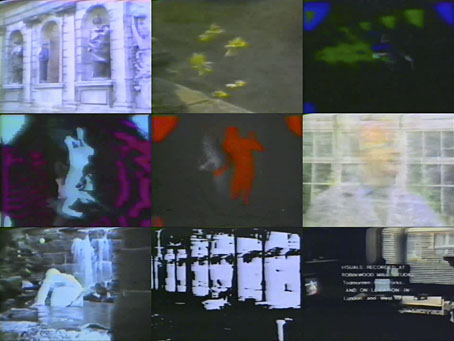
Yet another of those things I’ve known about for years but have only seen recently thanks to YouTube. Elemental 7 was an early music + video release by Chris Carter and Cosey Fanni Tutti following the split of Throbbing Gristle in 1981. They’d already recorded under the Chris & Cosey name but in 1983 formed CTI—Creative Technology Institute—a side project that allowed for the release of works such as this that differed from their usual electronic output. Elemental 7 is a 50-minute video that for want of a better term might be classed as ambient, the visuals being grainy, impressionistic or semi-abstract images by John Lacey with a soundtrack that’s on the whole less rhythmic than the C&C albums. The whole thing was made for £500, and the quality isn’t supposed to compete with broadcast television. In 1983 it was still a rare thing for groups to take control of their own video production. In the UK few people were doing this aside from Factory Records, who had their own Ikon video label, and some of the Industrial groups such as Cabaret Voltaire, Psychic TV and 23 Skidoo. Cabaret Voltaire released the tape and soundtrack album of Elemental 7 on their Doublevision label.

cti2.jpg

It’s a curious thing being able to see this after so long. I’m very familiar with the music (it was always good late-night listening) but, as with Cabaret Voltaire’s Johnny YesNo film and other Doublevision releases, I didn’t have any means of watching video tapes through much of the 1980s. Nothing this unusual ever appeared on TV, of course. The ritualistic sequences are reminiscent of the early films of Derek Jarman, not least In the Shadow of the Sun which had a soundtrack by Throbbing Gristle, while the opening sequence, Temple Bar, has some historical value in showing the stone gate of the City of London sitting abandoned in Theobalds Park before it was returned to the capital in 2003.

Elemental 7 has never been reissued since its tape release so this is the only way you’ll get to see it for now.

Elemental 7: part 1 | part 2 | part 3 | part 4 | part 5

1. Elemental 7 0:13
2. Temple Bar (The Forgotten Ancient Gates Of London) 12:30
3. Dancing Ghosts (Midnight At Robinwood Mill) 10:37
4. Meeting Mr. Evans (A Moving Experience) 04:13
5. Invisible Spectrum (Ritual By Candlelight) 10:35
6. Sidereal (Time Measured By Movement Of The Stars) 05:23
7. Well Spring Of Life (Gathering The First Waters Of Spring) 06:39
8. The Final Calling (Physical Exorcism) 03:21
9. CTI Credit Sequence 02.17

Previously on { feuilleton }
Gristleism
A=P=P=A=R=I=T=I=O=N
In the Shadow of the Sun by Derek Jarman