Street Fair, 1959

sf1.jpg

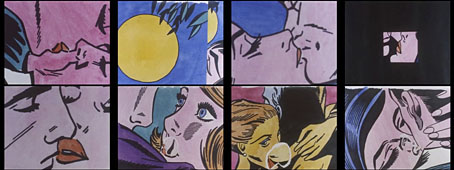
The street is upper Grant Avenue, San Francisco, seven minutes of local colour captured on silent 16mm film by Edward Silverstone Taylor:

This edited Ektachrome home movie with professional titles documents a 1959 street fair, upper Grant Avenue, San Francisco—the center of Beat culture. The film includes shots of filmmaker Dion Vigne and his wife Loreon, artist and occultist Marjorie Cameron, and artist Wallace Berman, displaying and selling their art works.

The presence of Marjorie Cameron (below) is what fascinates in these quarters, recognisable thanks to her red hair and the distinctive profile seen when she played the Scarlet Woman in Kenneth Anger’s Inauguration of the Pleasure Dome five years earlier. You also see what appear to be a couple of her paintings. The street fair looks pretty bohemian for the late 50s but a glance at Anthony Stern’s frenetic San Francisco short from a decade later shows a much wilder place. (Via Dangerous Minds.)

sf2.jpg

Previously on { feuilleton }
San Francisco by Anthony Stern
Kenneth Anger on DVD again

Sebastiane by Derek Jarman

sebastiane.jpg

Sebastiane Opens
October 1976: Sebastiane opened at the Gate cinema in Notting Hill last night after a day of record attendances and good reviews. At the opening Barney James, who plays the centurion, sat next to my parents. At the end of the film he turned to Dad and said, “I don’t suppose forces life was ever like that.” To my surprise Dad replied, “I was out in the Middle East before the war and it’s really quite accurate.”

After its opening at the Gate, where it played for four months before moving into the West End, Sebastiane opened all over the world to wildly different reviews. The Germans found our Latin untuned to their ears, and the French, at least so I was told, panned it. In the States it was classed S for Sex and we were unable to advertise it – so the audiences turned up expecting hardcore and were disappointed. However in Italy and Spain it was a stunning success with lyrical reviews. In Rome, Alberto Moravia came to the first press show and praised the film in the foyer saying that it was a film that Pier Paolo would have loved.

Derek Jarman, Dancing Ledge (1991)

Pasolini would indeed have loved Sebastiane (1976) which owes much to the Italian director’s historical films, especially Oedipus Rex (1967) and Medea (1969). The film was Jarman’s first feature (co-directed with Paul Humfress), produced on a very small budget, and filmed on the coast of Sardinia. Brian Eno provided the music, and Lindsay Kemp has a memorable cameo appearance in the opening scene. The events which lead to the martyrdom of Saint Sebastian (Sebastianus) are dramatised from the point of view of a group of Roman soldiers who have Sebastianus among their company. The film is notable for its all-Latin dialogue, and for being the first non-porn film to feature a male erection, although that detail is often missing from prints which judiciously crop the lower portion of the screen.

The copy linked here has somehow turned up at the Internet Archive, and is the same erection-free version which has circulated for some years on DVD. The sneaky censorship would have been justified ten or more years ago but makes no sense today when far more explicit films are easily available. But if you haven’t seen Sebastiane then you have an opportunity for as long as this copy remains available…which may not be for long since I’m sure its copyright can’t have lapsed.

The late, unlamented and very reactionary British film critic Leslie Halliwell once complained that Pasolini’s “Trilogy of Life” films featured “a forest of male genitalia”. The same might be said of Sebastiane which, judging by the intemperate comments one sees on review sites, provokes a similar splenetic reaction. “It’s just gay porn!” they shriek, to which the obvious response is “No, it isn’t”, and “So what if it was?” A century of cinema has paraded the bodies of women for the gaze of the heterosexual male, the same male who chokes on his dudgeon when faced with the very thing he carries between his legs. Grow up, boys. Also at the Internet Archive (for the time being) is Derek Jarman’s The Garden (1990), the most personal of his later films until his final feature, Blue, in 1993.

Previously on { feuilleton }
A Journey to Avebury by Derek Jarman
Derek Jarman’s music videos
Derek Jarman’s Neutron
Mister Jarman, Mister Moore and Doctor Dee
The Tempest illustrated
In the Shadow of the Sun by Derek Jarman
Derek Jarman at the Serpentine
The Angelic Conversation
The life and work of Derek Jarman

Weekend links 156

leonard.jpg

Le Vampire (c. 1903) by Agathon Léonard. Via Beautiful Century.

• Two masters of rumbling atmospherics interviewed at The Quietus: Bobby Krlic aka The Haxan Cloak talks to Maya Kalev while Thomas Köner talks to Joseph Burnett.

Discussions about the arts now have an awkward, paralyzed quality: few judgments about the independent excellences of works are offered, but everyone wants to know who sat on the jury that gave out the award. It’s become natural to imagine that networks of power are responsible for the success or failure of works of art, rather than any creative power of the artist herself.

We’ve reached the point at which the CEO of Amazon, a giant corporation, in his attempt to integrate bookselling and book production, has perfectly adapted the language of a critique of the cultural sphere that views any claim to “expertise” as a mere mask of prejudice, class, and cultural privilege.

Too Much Sociology, an essay by The Editors at n+1

• Prints of Karl Blossfeldt‘s plant portraits can be seen at the Whitechapel Gallery, London.

Stephen J. Gertz on Samuel Roth, “The Most Notorious Publisher In American History”.

• Max Beerbohm is Cranky: Mary Mann on the appeal of the curmudgeon.

• Travel brochure graphics: Graphic design from the 1920s to the 1970s.

• Still returning to its constituent components: Chernobyl’s ghost town.

Thoughtless Grin: a new Arthur Mixtape

Richard Williams: the master animator

Ketch Vampire (1976) by Devon Irons | A Vampire Dances (Symmetry) (1988) by Jon Hassell with Farafina | Vampires (1999) by Pet Shop Boys

Labels

label01.jpg

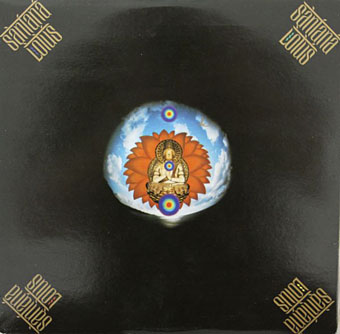
A post for Record Store Day, and a slight return to the work of Hipgnosis and the late Storm Thorgerson. One of the many things which impressed about Hipgnosis album designs was the way they gradually came to approach each album as a distinct package for which every component deserved special attention. The very early Hipgnosis designs were little more than photos or photo-collage with some typography applied; a few years down the line and in addition to creating elaborate pictorial sleeves they were also designing logos or special typography for each release, with the design frequently extending to the labels of the vinyl records themselves.

label03.jpg

This last feature has since become so commonplace that it’s surprising now to find albums with a simple generic label. The Beatles Sgt. Pepper album is famous for its own elaborate package which included a special inner sleeve, but the label on the disc was the regular Parlophone design which had been used on all the earlier Beatles releases. Hipgnosis were in the vanguard of designing special labels, and I’m tempted to say they began the practice although it’s likely there were prior examples. The earliest Hipgnosis example seems to be the prism design for The Dark Side of the Moon (1973); prior to this Pink Floyd were using the same label as other artists on Harvest Records. A few more Hipgnosis examples follow below. I especially like the ones for Wings Over America (1976), a triple-live set which extended the passenger plane sleeve design by using artwork based on different aircraft instrument dials.

label04.jpg

label05.jpg

Continue reading “Labels”

Storm Thorgerson, 1944–2013

hipgnosis1.jpg

Wish You Were Here (outer and inner sleeve, 1975) by Pink Floyd.

Whenever people ask questions about your work, at some point the subject of influences always turns up. Influences for me are usually few, they’re those things which skew your perception to such a degree—or which enlarge the range of possibilities—that they make you follow a path you might otherwise have never pursued. I’ve said on many occasions that the window of our local record shop in the 1970s was an art gallery whose contents changed every week, with gatefold sleeves offering an endless variety of fantastic visions and smart designs. I was often indifferent to the music the sleeves were intended to advertise, if a favourite band happened to have a great record sleeve then so much the better. It wasn’t that I wanted to be a record sleeve designer as such, more that the views (as Roger Dean called his first book) were incredibly stimulating, and they excited me enough that I wanted to have the creation of images like that in my future.

hipgnosis2.jpg

Wish You Were Here shrinkwrap and George Hardie’s sticker design.

I’ve written at some length about Roger Dean and Barney Bubbles but it was Hipgnosis that dominated those window displays during the golden age of record sleeve design. Obituaries of Storm Thorgerson have rightly been acknowledging the contributions of his Hipgnosis design partners Aubrey Powell and Peter Christopherson, but Thorgerson always came across as the driving force, a position reinforced by his text for the group’s first book collection, An ABC of the Work of Hipgnosis: Walk Away René (1978), and by his post-Hipgnosis career which continued to generate even more startling images. Walk Away René is like the designs of Hipgnosis themselves: witty, clever, and beautifully produced, while Thorgerson’s commentary is refreshingly honest both about the details of album production, and in its lack of the affectation which afflicts many design books. Working in the music business probably helped maintain a no-bullshit attitude; it’s difficult to imagine many other designers cheerfully announcing in their first public showcase that their studio is so primitive that everyone has to piss in the sink. Or, as I noted in December, drawing attention to your least favourite covers in an even more lavish showcase.

hipgnosis3.jpg

The Dark Side Of The Moon (1973) by Pink Floyd.

The cover examples here have been chosen via the essays in For the Love of Vinyl: The Album Art of Hipgnosis (2008) where several people were asked to choose their favourite sleeves. I’d find it impossible to choose a favourite, although at a push I’d probably go for Wish You Were Here. With its absence/four elements concept, in its original package—the postcard insert, the unlabelled sleeve shrink-wrapped in black cellophane then stickered with a George Hardie drawing which I once laboriously copied—it comes close to perfection when you’re discussing album designs as works of art.

hipgnosis4.jpg

Presence (1976) by Led Zeppelin.

The Hipgnosis Covers site is the place to see more work by Storm Thorgerson and company.

Storm Thorgerson, Pink Floyd and the final secret of the world’s greatest record sleeve designer
The Guardian: “The best album designer in the world”
Storm Thorgerson remembered by Aubrey Powell
Adrian Shaughnessy at Creative Review
Mark Blake at MOJO
Telegraph obituary

hipgnosis5.jpg

Go 2 (1978) by XTC.

Elsewhere on { feuilleton }
The record covers archive

Previously on { feuilleton }
Hipgnosis turkeys
Peter Christopherson, 1955–2010
Storm Thorgerson: Right But Wrong
Battersea Power Station