Steam and smoke

walden1.jpg

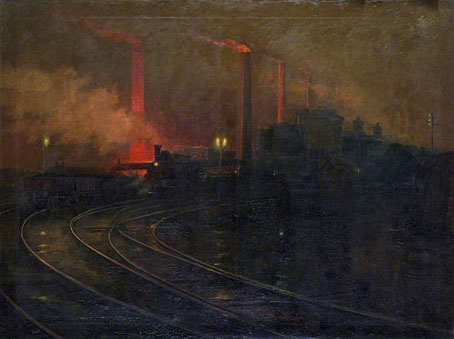
Cardiff Docks (1894) by Lionel Walden.

There’s a tendency to consider the art of the 19th century as being preoccupied with the rural, the mystical and the historic: all true in the case of the Pre-Raphaelites. But the effects of the Industrial Revolution attracted enough artists to create a sub-genre of painting that takes the miasmas of factories and the hellish glow of furnaces as its subject; Philip de Loutherbourg’s Coalbrookdale by Night (1801) is one of the more well-known examples, not least for being a painting that shows the future emerging from a rural landscape in a truly infernal manner.

Lionel Walden (1861–1933) was an American artist who was in Wales long enough to paint several scenes of the Cardiff docks and the steelworks. I’d not seen this gorgeously atmospheric painting of the docks before but it captures the light and the ambience of a British autumn/winter with the same fidelity as John Atkinson Grimshaw, an artist who made chilly mornings and smoky twilights his speciality. Walden’s other paintings are a lot lighter, with more traditional views of docks, boats and fishermen. (Via Beautiful Century.)
walden2.jpg

The Steelworks, Cardiff at Night (1893–97) by Lionel Walden.

Previously on { feuilleton }
How It Works
The art of John Atkinson Grimshaw, 1836–1893
Weekend links 226

na.jpg

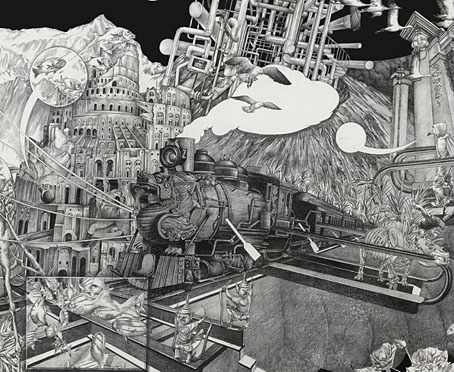
Fly (2012, detail) by Zhao Na.

• This week in psychedelia: the UK now has its own Psychedelic Society (just in time for the mushroom season), and is using some of my psychedelic Wonderland/Looking-Glass artwork for its headers and things. Over at The Quietus John Doran asks what makes music psychedelic in 2014, while a number of the site’s writers offer suggestions for a survey of modern European psychedelia (bonus points for using the alien head from the cover of Heldon 6: Interface at the top of the page).

Rick Poynor looks at posters by Hans Hillmann for Jean-Luc Godard’s films while at the BFI site four directors pay tribute to Hillmann. “…poster art has stagnated over the last 30 or 40 years,” says Peter Strickland. “It’s an embarrassment for film when one considers how the music industry has completely embraced the graphic form.” Related: lots of Hans Hillmann at Pinterest.

• More psychedelics (and more of the usual suspects), neurologist Andrew Lees on William Burroughs’ experiences with yagé and apomorphine, and DJ Pangburn on a word-search puzzle containing “every word Borges wrote”. The life and work of William Burroughs is celebrated in London next month with a one-day event, Language is a Virus from Outer Space.

• At Dangerous Minds: Kenneth Anger – Magier des Untergrundfilms (1970), a 53-minute documentary by Reinold E. Thiel. The subtitles are obtrusive but the material itself, which includes footage of Anger filming Lucifer Rising, is priceless.

• 73 minutes of Pye Corner Audio playing in Ibiza last month. More electronica: Colm McAuliffe talks to former members of the BBC’s Radiophonic Workshop.

The Assassination of Margaret Thatcher – August 6th 1983, an excellent story by Hilary Mantel who talks about her own assassination fantasies here.

• Mixes of the week: Cosey Fanni Tutti‘s 2014 Mix for Dazed Digital, and Secret Thirteen Mix 128 by DSCRD.

Pond i, a video for a new piece of music by Jon Brooks.

Tomorrow Never Knows (1966) by The Mirage | Tomorrow Never Knows (1976) by 801 | Tomorrow Never Knows (1983) by Monsoon

Salomé and Wilde Salomé

salome1.jpg

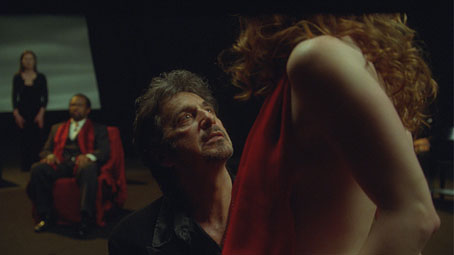
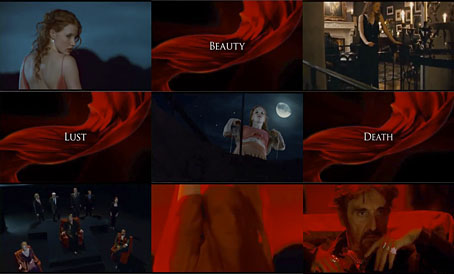
Three years on and Al Pacino’s recent pet projects—Salomé and Wilde Salomé—have yet to be given a general release. Salomé is the one I’m most eager to see, a filmed performance of the Oscar Wilde play with Jessica Chastain in the title role. There is at least a trailer now, which gives an intriguing taste of the production. Like Steven Berkoff, Pacino has opted for modern dress while making some of the details—the moon, Jokanaan’s well—more material. If Wilde’s Symbolist melodrama seems rather effete for a man known for playing gangsters it should be noted that the play features a suicide and two executions, as well as a strong theme of paternal incest and even necrophilia. Herod, of course, is notorious for being a child-murdering king.

salome2.jpg

Pacino and Jessica Chastain are in London on Sunday at BFI Southbank talking with Stephen Fry about Salomé and the feature-length production documentary, Wilde Salomé. Both films will also receive screenings. Here’s hoping the rest of us won’t have much longer to wait before we can see them.

Elsewhere on { feuilleton }
The Oscar Wilde archive
The Salomé archive

The Scottish Fairy Book

scots01.jpg

A post with some connection to the main news of the week, namely the vote for Scottish independence. At the time of writing the outcome is still in a quantum superposition between Yes and No. I’ve lived in England all my life but I’m half-Scottish (and a quarter Welsh) so the question has a personal relevance beyond being a citizen of the United Kingdom. For the record I would have voted Yes if I’d had the opportunity.

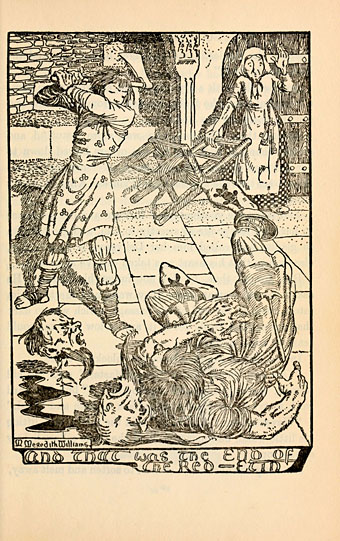
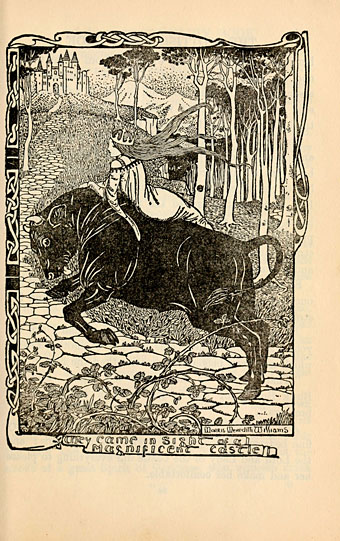
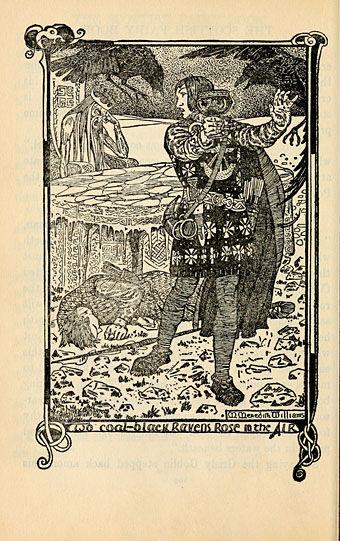
The Scottish Fairy Book (1910) is a popular retelling by Elizabeth Grierson of fairy stories and folk tales. The illustrations are by Morris Meredith Williams (1881–1973), an artist who was born in Wales but lived in Edinburgh for several years. This is only a small selection of Williams’ illustrations for the book which also include many half-pages, vignettes and two self-contained pictorial sequences: Times to Sneeze, and a dialect version of Monday’s Child. Browse the rest of the book here or download it here.

scots02.jpg

scots03.jpg

Continue reading “The Scottish Fairy Book”

Jacques Houplain’s Maldoror

houplain1.jpg

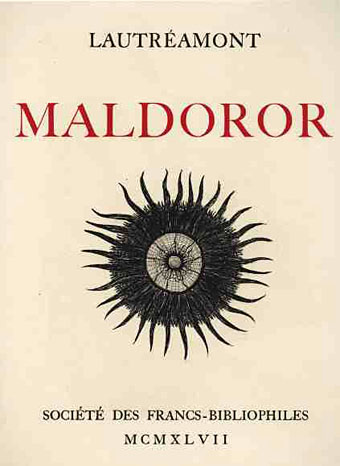
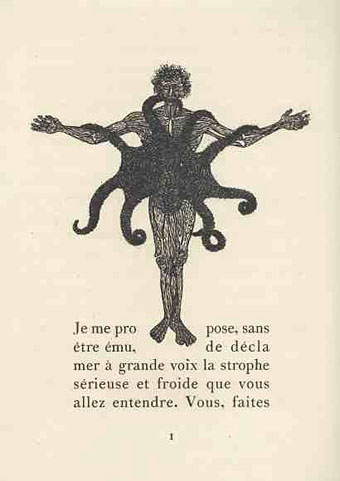
This is more like it. In 2008 when I posted one of Jacques Houplain’s etchings for a 1947 edition of Les Chants de Maldoror there were none of the other pictures in the series to be found. Now there’s a website devoted to Houplain’s work which features a page of his Maldoror illustrations. There’s a crude vigour to these pieces that gets much closer to Lautréamont’s fervour and viciousness than do the illustrations by Houplain’s famous contemporaries. Houplain is also one of the few illustrators to pay some attention to Lautréamont’s frequent digressions into the animal kingdom. The artist’s other work is worth a look; Legendes is a series of prints of medieval demons.

houplain2.jpg

Continue reading “Jacques Houplain’s Maldoror”