John Austen’s Tales of Passed Times

austen01.jpg

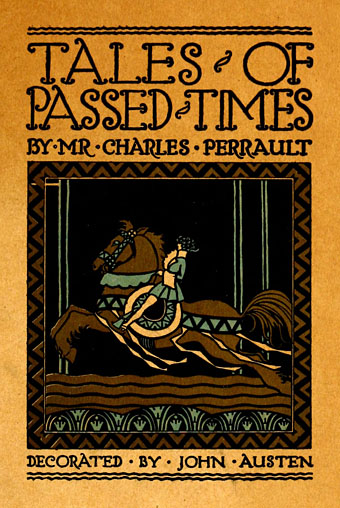
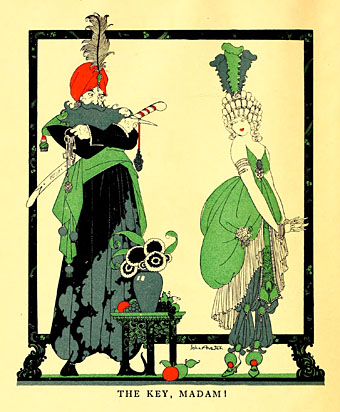
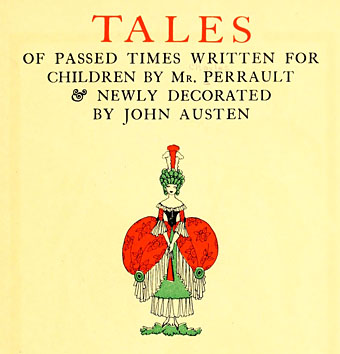
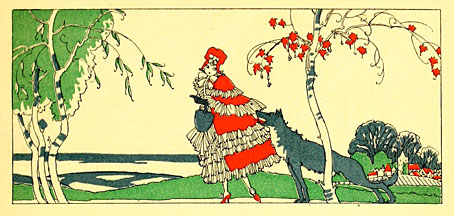
The retellings of old folk tales by Charles Perrault (1628–1703) became the earliest examples of what we now call fairy tales, but Perrault’s versions of Little Red Riding Hood, Puss in Boots, Sleeping Beauty, Cinderella et al have tended to be overshadowed by the more copious works of the Brothers Grimm and their followers. Perrault has attracted illustrators, however, including major figures such as Gustave Doré and Harry Clarke. This edition by John Austen is one of the artist’s earliest books dating from 1922. Perrault collections are often short; this one is only 74 pages but Austen fills the book with many small illustrations and vignettes. It’s a surprise seeing his work in colour when the more familiar drawings are all striking black-and-white. Spot colours help highlight Little Red Riding Hood’s outfit and Bluebeard’s beard. See the rest of the book here or download it here. (Thanks again to Nick for the tip!)

austen02.jpg

austen03.jpg

austen04.jpg

Continue reading “John Austen’s Tales of Passed Times”

A Picture, a film by Lejf Marcussen

picture.jpg

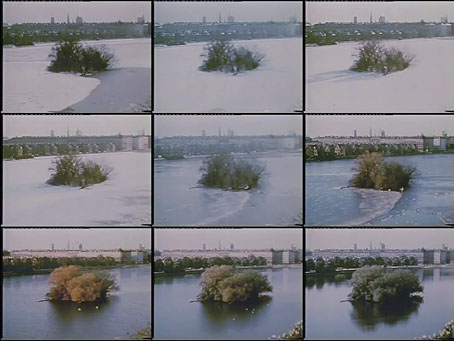
Something wintry for those of us in the northern hemisphere. Danish filmmaker Lejf Marcussen is recognised internationally for his Surrealist animation The Public Voice (1988) but his other films are less well-known. A Picture (1977) is one of the earliest, a 3-minute time-lapse shot of an island in a lake which progresses gradually from winter to summer. Not as resolutely minimal as Fog Line but another example (albeit stretching the definition) of what Andrei Tarkovsky called “sculpting with time”.

Previously on { feuilleton }
Fog Line, a film by Larry Gottheim
Wavelength
The Public Voice by Lejf Marcussen

Birth of a Zimbu

zimbu1.jpg

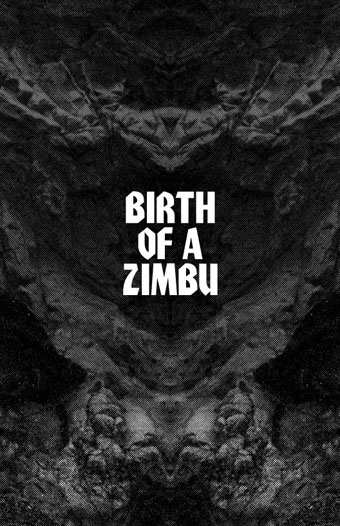
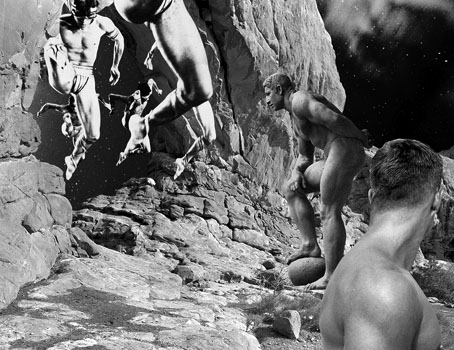
Birth of a Zimbu by Christopher Schulz is another addition to the growing collection of artworks based on William Burroughs’ The Wild Boys (1971), in this case a 52-page collection of “visual reveries made from collaged parts of dated gay porn, ancient ruins, and other various unrelated sources.” The book costs $10 and may be previewed and ordered here.

zimbu2.jpg

The Zimbus are Burroughs’ solution to the problem of reproduction (or regeneration) among the Wild Boys, his army of eternal teenage boys at war with the world at large in a dystopian 1988. Warfare means casualties so in order to maintain their homosocial, homoerotic tribal existence they gather at special times to perform sex-magic rituals that summon the “Zimbu” spirit forms of dead Wild Boys. The Zimbus are incarnated as new Wild Boys after being inseminated and fully materialised.

Burroughs wasn’t short on fantastic concepts but his ideas are often delivered and dismissed in a few lines. By contrast, the creation of the Zimbus is given pages of detailed description, the separatist, semi-human world of the Wild Boys being one to which he devoted a great deal of imaginative attention. I’ve linked before to Phil Hine’s essay, Zimbu Xototl Time, which examines the Zimbu idea at some length, drawing comparisons to similar ideas in anthropology and other fiction. If I ever get round to finished the long-gestating Wild Boys portfolio I may be able to show some Zimbu manifestations of my own.

Elsewhere on { feuilleton }
The William Burroughs archive

In The Past

inthepast1.jpg

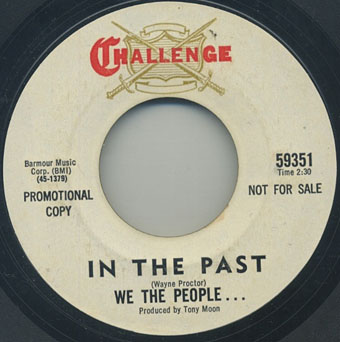
In The Past (1966) by We The People.

Thanks to Modzilla in the comments for yesterday’s post I’ve been listening to different versions of In The Past all day. I always found the Chocolate Watchband rendition to be very catchy, the kind of song you’d expect to be covered by other bands even though the version in yesterday’s playlist is the work of session musicians under the direction of producer Ed Cobb. The original song is an uptempo number written by Wayne Proctor and recorded in 1966 by his garage outfit, We The People, a group I knew of already since two of their songs are featured on the Nuggets CD box. In The Past isn’t one of them, however, so I hadn’t heard it until today. More surprising is seeing the amount of times it’s been covered since. Lava lamps and false eyelashes at the ready, here’s a quick summary of a musical obsession.

inthepast2.jpg

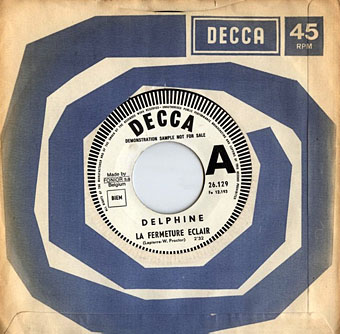
La Fermeture Eclair (1966) by Delphine.

The title translates as The Zipper Closure (?). Delphine was a Belgian singer who recorded a handful of singles. This seems to be her most popular song (see below), and a regular inclusion on compilations such as this. The YouTube video matches the music to shots from Vera Chytilová’s marvellous Daisies (1966).

inthepast3.jpg

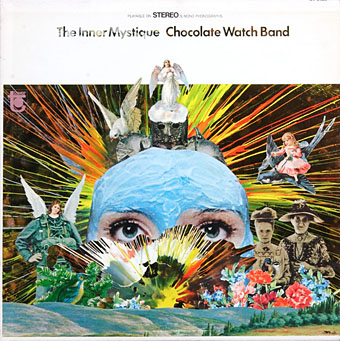
In The Past (1968) by The Chocolate Watchband.

Posted again so I get a chance to show the (uncredited) collage cover. Cobb and co. add sitar flourishes worthy of Bill Laswell.

Continue reading “In The Past”

Listen to the Colour of Your Dreams: Part Five

hippies.jpg

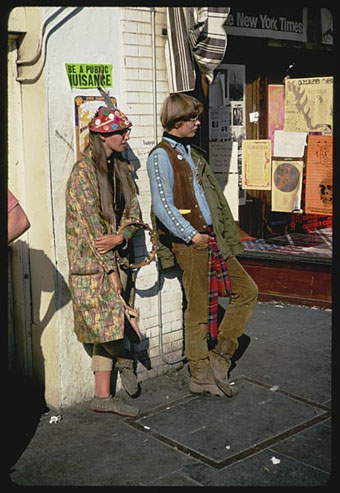
Haight Street hippies, San Francisco, Oct. 26, 1967. From the Charles W. Cushman Photograph Collection.

Continuing the psychedelic mega-mix based on Jon Savage’s list of “100 mind-expanding masterpieces” (see this post). The fifth of the six mixes is the second visit to the USA, and features songs from the years 1967 to 1968 arranged in chronological order. As before, the selections from the Savage 100 are in bold, and I’ve added notes about my additions or amendments.

Savage’s selections for the USA can be more arguable than those in the UK list. As I noted earlier, UK singles are easily identifiable for being effects-heavy studio creations. The US scene evolved out of the dance halls of San Francisco, the same halls that also fuelled the demand for all the trend-setting psychedelic poster art. Some of the bands could be just as adventurous in the studio but the sound at this point is more a transcription of the live performance. In other songs the “psychedelic” quality is a result of context, as with Otis Redding who played at the Monterey Pop Festival, and is singing here about the San Francisco Bay, but isn’t really a psychedelic artist.

US Psychedelia, Part Two by Feuilleton on Mixcloud

Radio ad — The Trip
The Glass Family — House Of Glass (The first song on the group’s only album.)
Kaleidoscope (US) — Egyptian Candy (The multi-generic multi-instrumentalists recorded a number of Middle Eastern-style pieces. This is one of the more obscure ones.)
Park Avenue Playground — The Trip (The wildest trip song of them all.)
The Red Crayola — Hurricane Fighter Plane (One of the few actual songs in the psychedelic soup of the group’s first album. This version is from a compilation.)
Jefferson Airplane — White Rabbit
Tim Buckley — Hallucinations
The Chocolate Watchband — In The Past (The Savage 100 has Are You Gonna Be There (At The Love-In). This replacement is by the “fake” Watchband assembled by producer Ed Cobb to fill out a side of the group’s second album. Real or fake, I always liked the song.)
Big Brother and the Holding Company — Piece Of My Heart (The Savage 100 has Ball And Chain.)
The West Coast Pop Art Experimental Band — Smell of Incense (A great song by a group who never sound as experimental as their name implies.)
The Third Bardo — Five Years Ahead Of My Time
Painted Faces — Anxious Colour
The Beau Brummels — Magic Hollow
Buffalo Springfield — Broken Arrow
The Strawberry Alarm Clock — Incense And Peppermints
Love — The Red Telephone
The Byrds — Change Is Now
Otis Redding — (Sittin’ On) The Dock Of The Bay
The Balloon Farm — A Question Of Temperature
Sly & The Family Stone — Dance To The Music
Quicksilver Messenger Service — Pride Of Man
The Monkees — Porpoise Song (The Monkees at their most tripped-out. A song by Goffin & King that plays over shots of Micky Dolenz swimming with solarised mermaids during the opening of their feature film, Head.)

Previously on { feuilleton }
Listen to the Colour of Your Dreams: Part Four
Listen to the Colour of Your Dreams: Part Three
Listen to the Colour of Your Dreams: Part Two
Listen to the Colour of Your Dreams: Part One
What Is A Happening?
My White Bicycle
Ogdens’ Nut Gone Flake
Tomorrow Never Knows
The Dukes declare it’s 25 O’Clock!
A splendid time is guaranteed for all