Weekend links 267

morgan.jpg

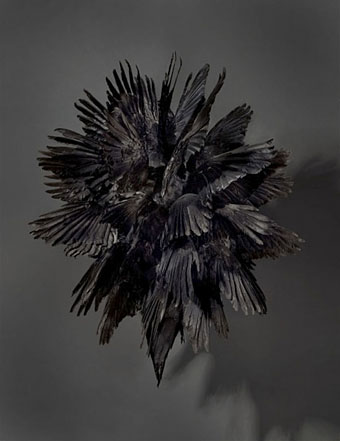
Black Fever (2010) by Polly Morgan.

• “She was something of an Auntie Mame figure for me. We spent years haunting secondhand bookstores in Berkeley, Los Angeles, and New York, talking for hours over ever more bizarre dishes of Chinese Hakka cuisine in a hole-in-the-wall eatery at Stockton and Broadway in San Francisco, watching Kenneth Anger flicks and the surrealistic stop-motion puppet masterpieces of Ladislas Starevich, which Tom Luddy would screen for us at the Pacific Film Archive, over and over again until our eyeballs nearly fell out.” Steve Wasserman remembers Susan Sontag.

California Dreams is “the first career-spanning compendium of Mouse’s work; it includes his recent landscapes and figurative paintings. Taken as a whole, the work is a weird, gilded, space-age, flame-licked way to chart the rise of late-twentieth-century youth culture”. Jeffery Gleaves on the psychedelic art of Stanley Mouse.

• “Not only does moral preoccupation corrupt the artfulness of fiction, but fiction is an inefficient and insincere vehicle for moralizing,” says Alice Gregory, joining Pankaj Mishra to address the question: “Do Moralists Make Bad Novelists?”

Nabokov’s posthumously published Lectures on Literature reprints a corny magazine ad that Nabokov liked to show to his students at Cornell, as an example of a certain kind of sunny American materialism and kitsch (or poshlost, in Russian): it’s an ad for flatware featuring a young housewife, hands clasped, eyes brimming as she contemplates a place setting. Nabokov titled it “Adoration of Spoons,” and it undoubtedly played a significant role in his creation of the suburban widow Charlotte Haze. From such strangely endearing trash was a masterpiece born.

John Colapinto reviewing Nabokov in America by Robert Roper

• “How many typefaces is too many typefaces?” asks Adrian Shaughnessy. “What happens to our ability to discriminate and exercise good judgment when we have a near-infinite number of possibilities?”

• At BUTT: a clip from one of the more dreamlike scenes in Wakefield Poole’s gay porn film, Bijou (1972). Poole’s “sensual memoir”, Dirty Poole, is published by Lethe Press.

John Banville reviews The Prince of Minor Writers, selected essays of Max Beerbohm edited by Phillip Lopate.

• My thanks once again to Dennis Cooper for featuring this blog on his list of cultural favourites.

• More Moogery: Sarah Angliss, Gazelle Twin and Free School in the Moog Sound Lab.

• Mix of the week: XLR8R Podcast 394 by Francesca Lombardo.

Atlas Obscura gets to grips with the enormous Devil’s Bible.

Feel You, a new song by Julia Holter.

Spoonful (1960) by Howlin’ Wolf | Spoon (1972) by Can | Spoon (2013) by Mazzy Star

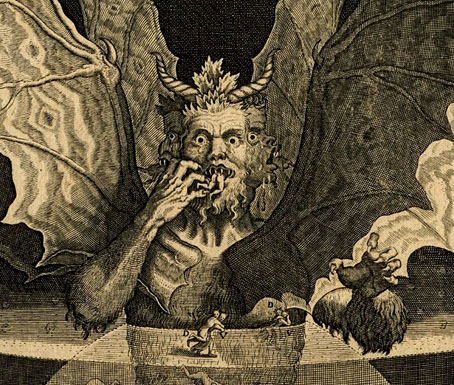
LVCIFER

lucifer1.jpg

An engraving of Dante’s encounter with Lucifer/Satan at the end of the Inferno. Illustrators of Dante have given us a number of depictions of Dante’s fallen angel—a monstrous beast with multiple wings and three heads; icy blasts from the wings travel through the circles of Hell—but this is one I’d not seen before. The engraving is by Cornelis Galle the Elder after a drawing by Lodovico Cardi (also known as Cigoli), and it’s unusual for showing Lucifer in full rather than the more common partial view of the monster imprisoned in the ice.

lucifer2.jpg

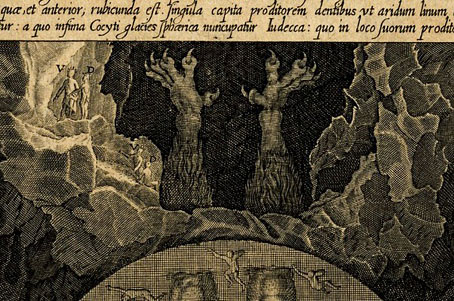
The engraving is another of those that depict several events in one image, with the figures of Virgil and Dante shown crossing the plain of ice then climbing down Lucifer’s body; passing the centre of the world Virgil (now carrying Dante) changes direction to account for the reversal of gravity. Climbing a rocky path, they emerge at the foot of Mount Purgatory to find Lucifer’s legs protruding from the stone. The reversal of gravity is one of the more advanced ideas in The Divine Comedy, as is the general idea of a spherical Earth. What Dante doesn’t mention, and few artists show, is Lucifer’s sexless groin positioned at the Centrum Mundi, a detail accounted for here. (Larger version.)

lucifer3.jpg

Elsewhere on { feuilleton }
The etching and engraving archive

Previously on { feuilleton }
Lachman’s Inferno
Hell, a film by Rein Raamat
Inferni
Mirko Racki’s Inferno
Albert Goodwin’s fantasies
Harry Lachman’s Inferno
Melancholy Lucifers
Maps of the Inferno
A TV Dante by Tom Phillips and Peter Greenaway
The last circle of the Inferno
Angels 4: Fallen angels

Shadowland, a film by Anthony Lucas

shadowland.jpg

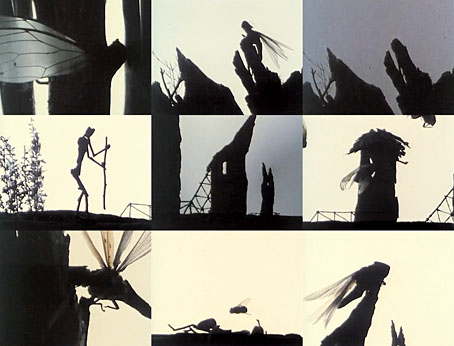
I forget who recommended this to me but the tip was probably a result of my recent work with silhouettes on Ishbelle Bee’s book covers. Shadowland (1988) is a short student film which, for the most part, concerns the conflict between stick-figure humans and an army of giant winged insects. It’s not quite a silhouette work in the manner of Lotte Eisner since the figures and decor all show some solidity. Everything is in shadow, however, hence the title. Watch it here.

Brion Gysin record covers

gysin01.jpg

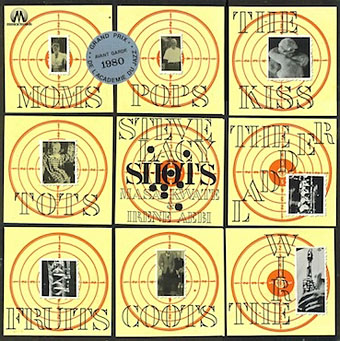
Shots (1977) by Steve Lacy.

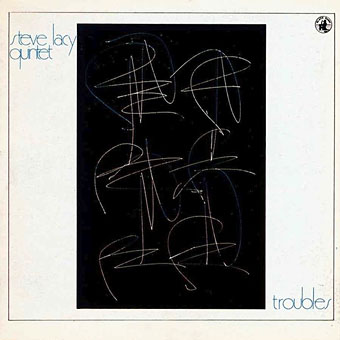
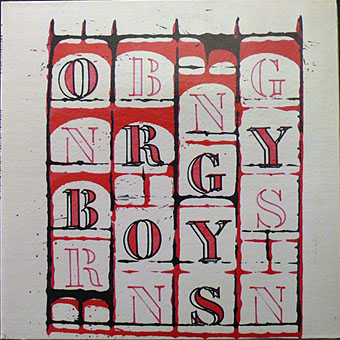
Continuing an occasional series about artists or designers whose work has been used on record sleeves. The life and work of Brion Gysin (1916–1986) is the subject of a new exhibition, Unseen Collaborator, that opened last week at October Gallery, London. The gallery page mentions Gysin’s connections to the music world: among other things, it was Gysin’s enthusiasm for the Master Musicians of Jajouka that gave those people and their music global prominence, with a little help from Brian Jones. But there are other connections, whether as a collaborator with Steve Lacy, or as a decorator of album covers. Some of these uses are posthumous but this small collection includes a few releases I’d not come across before.

gysin02.jpg

Troubles (1979) by The Steve Lacy Quintet.

gysin03.jpg

Orgy Boys (1982) by Brion Gysin.

A 12-inch single with Gysin reading from William Burroughs and his own writings. “Songs dedicated to his orgy pals: William S. Burroughs, Mick Jagger, Keith Richards, Iggy Pop, David Bowie, Fafa de Palaminy, Patti Smith, Allen Ginsberg and John Giorno…”

Continue reading “Brion Gysin record covers”

The art of Aleksandr Kosteckij

ak06.jpg

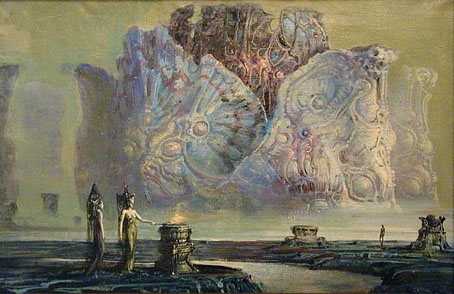
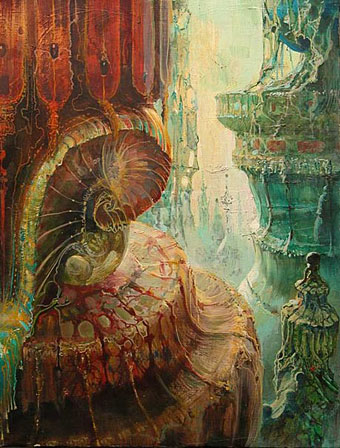
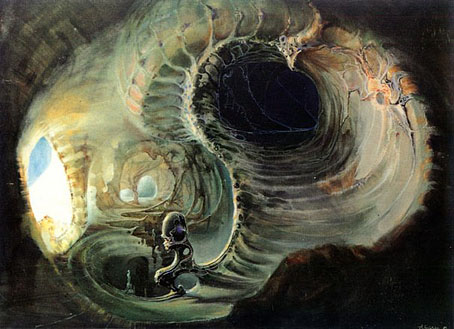
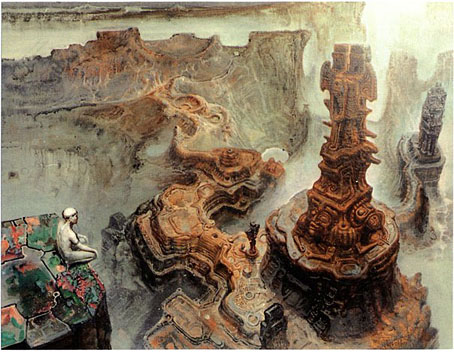
This is the kind of fantastic art I like a great deal: nebulous landscapes whose vast forms may be some kind of hybrid architecture; implications of the alien and mystical that retain some ambiguity; dreamlike without slipping into post-Surrealist cliché. Monsieur Thombeau at Full Fathom Five (whose excellent eye I have to thank once again) describes the paintings of Aleksandr Kosteckij/Kostetsky (1954–2010) as being “like Gustave Moreau, Salvador Dalí, and Max Ernst put in a blender and left out in the rain.” I’d place them somewhere between Ernst Fuchs and Bruce Pennington but Moreau’s chimeras are certainly present. You’d think an artist of this calibre with a large body of work would be better known, most of the attention at the moment seems to be on Russian websites. Let’s hope that changes soon.

Update: Thanks to Joe for pointing the way to this dedicated website, something I missed in my haste.

Examples chosen from these sites:
http://vk.com/album-32941665_175452413 (139 images)
http://www.2photo.ru/en/post/18614

ak07.jpg

ak02.jpg

ak03.jpg

Continue reading “The art of Aleksandr Kosteckij”