Weekend links 446

pca.jpg

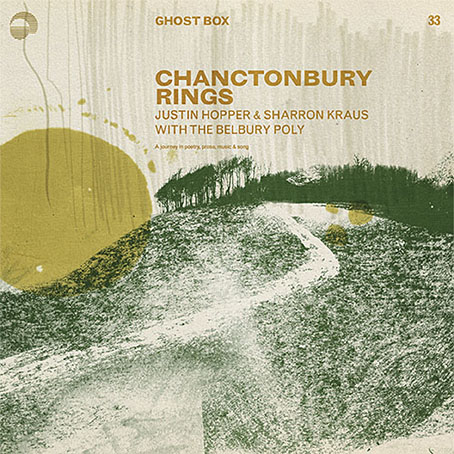
The Ghost Box label releases a new album by the excellent Pye Corner Audio in February (previews are here). The spectral design, as ever, is by Julian House.

• “In October 1966, Phyllis Willner arrived on motorcycle in San Francisco as a teenage Jewish runaway from Jamaica, Queens. She quickly fell in with the Hell’s Angels, the San Francisco Mime Troupe and, most crucially, the Diggers, who were just getting their street radical thing together in the Haight-Ashbury. The next two years would be eventful: many extraordinary highs, some really terrible lows.” Jay Babcock talks to Phyllis Willner about her involvement with “the executive branch of the hippie movement”, the Diggers.

• At Expanding Mind: Erik Davis talks with religious scholar Diana Pasulka about UFOs, scientific believers, book encounters, elite cabals, studying weirdness, and her new book American Cosmic: UFOs, Religion, Technology.

• Kenneth Anger is now 91 but he still appears hale, and looks even more magus-like than ever. This short film by Floria Sigismondi finds him reminiscing in the antiquated confines of the Chateau Marmont hotel on Sunset Boulevard.

David Wojnarowicz did not write dark fantasy. He wrote real life. In The Waterfront Journals he brilliantly captures electric tales from the mouths of strangers, those he described as “junkies, prostitutes, male hustlers, truck drivers, hobos, young outlaws, runaway kids, criminal types”, whose lives echo his own ostracized existence. He was thirteen when he was first paid for sex and sixteen when he started “turning tricks” regularly. His mother kicked him out of the house. By the time Wojnarowicz came out to friends in New York, he was in his early twenties. He was on the cusp of finding his voice as a writer and his confidence as an artist. It was the mid-1970s. AIDS was about to tear through the gay community.

Lara Pawson reviews three books by artist and writer David Wojnarowicz

John Banville reviews Kafka’s Last Trial by Benjamin Balint: “A scrupulous study of the squabble between Germany and Israel over Kafka’s papers, and the two women caught in the middle.”

• A sitting with the diva of the diode: electronic musician Suzanne Ciani in conversation with Christine Kakaire.

• Mixes of the week: Secret Thirteen Mix 076 by KK Null, and XLR8R Podcast 574 by SHXCXCHCXSH.

Cassie Packard on the colorful and clairvoyant history of aura photography.

Edward Gorey’s Children’s Books Illustrations, Revisited.

Alison Flood on the fascination of miniature books.

Magic Hollow (1967) by The Beau Brummels | Hollow Stone (1972) by Khan | Through Hollow Lands (For Harold Budd) (1977) by Brian Eno

L’Image, 1896–1897

image01.jpg

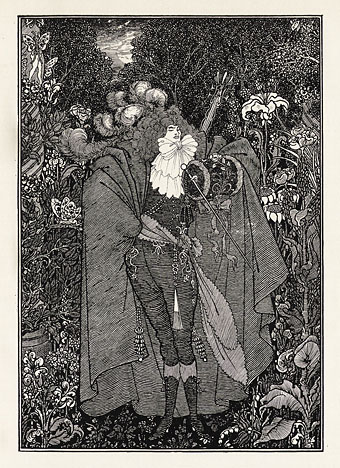
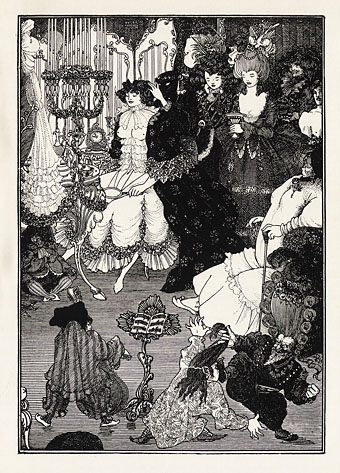
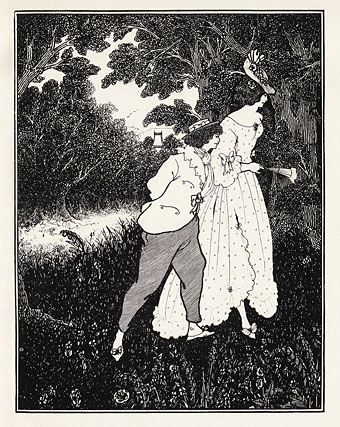
L’Image was a short-lived French publication dedicated to the art of contemporary wood engraving. Short-lived it may have been but its position at the birth of Art Nouveau means that many of its smaller graphics have been recycled ever since in studies of the period. One of these graphics, a fleuron by Jean-Jacques Drogue, was the subject of an earlier post when I was tracing the origin of a motif used for many years by my colleagues at Savoy Books. I eventually found Drogue’s fleuron in a collection of rather poor scans at Gallica, a good resource but one whose web interface (and often the materials themselves) leaves much to be desired.

image02.jpg

All the images here are from a collection of the entire run of L’Image at the Internet Archive which are much better quality and which include the early issues missing from Gallica. The most notable thing about the earlier issues is the way they combine the Art Nouveau style with Symbolist art; in addition to an engraving by Carlos Schwabe that I hadn’t seen before there’s a very Symbolist piece about nocturnal Bruges featuring art by Georges de Feure.

image03.jpg

image04.jpg

Continue reading “L’Image, 1896–1897”

Weekend links 445

fukuda.jpg

Masayo Fukuda‘s octopus is cut from a single sheet of paper.

• “But in the title track, Homosapien contains a truly great song; four and a half minutes of bubbling synth and clever wordplay, atop which Shelley puts to one side the knowing coyness he’d frequently inserted into his contributions to the Buzzcocks catalogue, loosens his tie, and, as much as he ever committed to tape, is explicit in telling the listen exactly what he desires.” James McMahon on Pete Shelley’s first proper solo album.

Kosmischer Läufer, the reissue project for East German kosmische music of the 1970s which may not be entirely authentic, has now reached its fourth volume. Authentic or not, the attention to detail is impressive.

• One of my favourite browsing places this month: NASA Image and Video Library.

• At Dangerous Minds: Eric Stanton and the History of the Bizarre Underground.

• Public domain artworks in high resolution at the Art Institute of Chicago.

• Mix of the week: FACT Mix 686 by the The Radiophonic Workshop.

• At Dennis Cooper’s: Les Blank Day.

Art of the Poster 1880–1918.

cakeordeathsite

Interstellar Rock: Kosmische Musik (1974) by Cosmic Jokers | Sehr Kosmisch (1974) by Harmonia | Meine Kosmische Musik (1974) by Sternenmädchen

Weekend links 444

guillou.jpg

Visions Cosmiques—Improvisations Dédiées À L’équipage D’Apollo 8 (1969) by Jean Guillou. No designer credited.

• 50 years ago this weekend Apollo 8 was on its way to the Moon. Jean Guillou’s album of organ improvisations took the mission as its inspiration although his turbulent music seems more suited to the near-disaster of Apollo 13 than the weightless drift of space travel. The album has been out-of-print for decades but may be heard in full here and here. Related: the Discogs listing for the Philips’ Prospective 21e Siècle series of avant-garde music. Most of the other albums in this series remain unreissued, and are now very collectible, not least because of their metallic “Heliophore” sleeves.

• Christmas cheer be damned: the spook season extends from Halloween to the end of the year. At These Unquiet Things, Sarah Chavez offers a list of favourite seasonal vampires, witches and ghosts. For those who prefer something televisual that isn’t more MR James, The Lorelei (1990) is a feature-length supernatural drama written by Nick Dunning. And speaking of the unavoidable James, Sarah K Marr presents an annotated analysis of A Warning to the Curious embellished with her excellent photos of the area of the Norfolk coast where the story is set.

• At Bandcamp: Voltaic Liturgies: “A symbiosis of flesh, machinery and umbral cosmic mysticism” by Primitive Knot and The Wyrding Module; and In The Sunshine We Rode The Horses by Rowan : Morrison (Rowan Amber Mill with Angeline Morrison): “The album explores themes of our beautiful natural surroundings, and how the pursuit of profit guides us to learn ‘the cost of everything and the value of nothing’, paving the way for the scarring of the landscape with fracking, HS2, retail parks, and so on…”

• “Influential Manga Artist Gengoroh Tagame on Upending Traditional Japanese Culture”. Tagame is also a prolific gay porn illustrator, a part of his career the headline avoids although it is acknowledged in Anne Ishii’s interview.

• Mixes of the week: Dream Perception Mix by Moon Wiring Club, Strange Great Snow: A Conjuror’s Hexmas by Seraphic Manta, December’s Reverie by Cafekaput, and Secret Thirteen Mix 275 by CoH.

• On the Scary Thoughts podcast: Erik Davis on philosophical pessimism, cosmic horror, police procedurals, serial killers, gnostic notions, and Louisiana as featured in the first season of True Detective.

• Manuscripts, letters and other documents by HP Lovecraft are now digitised and available for browsing at Brown University Library.

• William Hope Hodgson—The Essex-born Master of Horror: a biographical essay by Peter Berresford Ellis.

• The best ambient releases of 2018 according to FACT.

• At Dennis Cooper’s: Donald Sutherland Day.

Sandspiel

Rocket USA (1977) by Suicide | Ticket To The Moon (1981) by Electric Light Orchestra | From Ape to Apollo (1994) Thomas Fehlmann

Prokofiev’s The Love for Three Oranges

lfto1.jpg

Given the time of year, and last week’s Quays-themed post, this seemed like a good follow-up. Opera North’s production of Prokofiev’s The Love for Three Oranges was broadcast by the BBC during the Christmas holiday of 1989. The opera isn’t quite as saccharine a Christmas entertainment as The Nutcracker Suite but the libretto is still light-hearted fare, being based on a Neopolitan fairy tale in which the son of the King of Clubs is afflicted by melancholy after reading too much tragic poetry. The King stages an entertainment to cheer the Prince but the only thing that makes him laugh is the witch, Fata Morgana, falling over and revealing her underclothes. This humiliation provokes the witch into cursing the Prince to fall in love with three oranges. These he immediately sets off to find, and thereby hangs the tale. Richard Jones directed the production, with the English Northern Philharmonia providing the music. The opera is also sung in English, the translation being by David Lloyd-Jones.

lfto2.jpg

The stage decor for the Opera North production was designed by the Quay Brothers, one of several operas they worked on around this time. The opera may be a comic one but the design emphasis is on gloom and decay, a feature that extends to Sue Blane’s costumes, many of which seem to have been styled with the Quays’ films in mind. In addition to a Nosferatu-like Leander (the sinister Prime Minister), a company of children appear from time to time wearing masks which make them look like the Quays’ doll-headed puppets. The chorus, meanwhile, wear antique gas-masks of a style which people would now refer to as steampunk. The most overt reference to the Quays films occurs during the King’s entertainment when a vast mutant creature is wheeled onto the stage, the creature’s head being the colossal cousin of the twitching cyclops from Rehearsals for Extinct Anatomies. The cumulative effect of the grotesquery combined with absurd comedy is of an opera equivalent of Mervyn Peake’s Gormenghast, all of which makes me wonder what the BBC’s Gormenghast might have been like if the corporation had hired the Quays and Sue Blane to work the same magic they do here. (There is a Gormenghast opera by Irmin Schmidt but I’m not keen on the music and what I’ve seen of the staging it looks a lot less like Peake than this one does.)

lfto3.jpg

Decor aside, the most notable feature of this production, and the broadcast itself, was the scratch-and-sniff card which was provided to every member of the audience, and to any viewers who bought a copy of the BBC’s Listener magazine before the screening. Each time a numbered card appeared on the stage the audience had to scratch and sniff the relevant panel. The scents—which include orange, of course—are less offensive than those for John Waters’ Polyester (1981) although the audience is still surprised into sniffing the farts of the demon, Farfarello.

card.jpg

Elsewhere on { feuilleton }
The Quay Brothers archive