Weekend links 301

ruscha.jpg

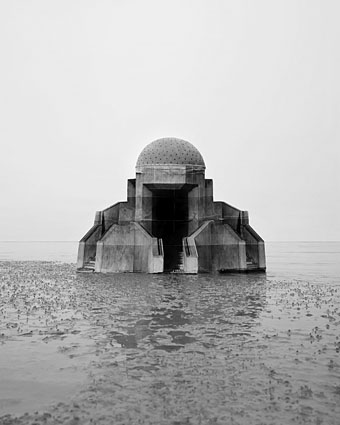
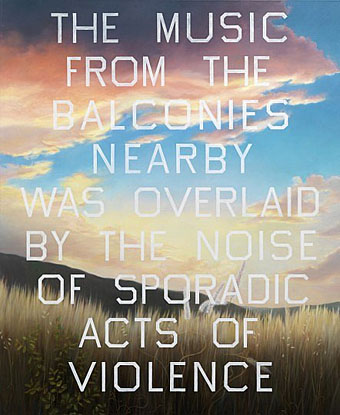
The Music from the Balconies (1984) by Edward Ruscha.

• At The Quietus: High-Rise director Ben Wheatley runs through his favourite films. Kudos for mentioning Elem Klimov’s Come and See (1985) among the more familiar fare, a nightmarish masterwork that everyone should watch at least once. On the same site, author Joe R. Lansdale also lists some favourite films while discussing the new TV series of his Hap and Leonard books.

Electric Hintermass (Sound Apart) by Hintermass, a track from The Apple Tree, their debut album on the Ghost Box label.

Michael Mann’s Heat: “A complex, stylistically supreme candidate for one of the most impressive films of the Nineties”.

• Despair Fatigue: David Graeber on how [political] hopelessness grew boring, and what happens next.

• Mix of the week: FACT Mix 541 by Tortoise, and Blowing Up The Workshop 56 by Eric Lanham.

• At Dennis Cooper’s: “Some books (1961–1975) that either faked ingesting LSD or did”.

• David Litvinoff again: “Was he only an opportunistic hustler?” asks David Collard.

John Carpenter’s The Thing rescored with one of the director’s Lost Themes.

Overlooked: a book by Marina Willer about the manhole covers of London.

• Pam Grossman (words) and Tin Can Forest (art) ask What is a Witch?

• A long way down: Oliver Wainwright on JG Ballard and High-Rise.

• A conversation with designer and typographer Erik Spiekermann.

• The BFI compiles a list of “The 30 Best LGBT Films of All Time“.

• Decoding the spiritual symbolism of artist Hilma af Klint.

Sabat Magazine

Heat (1983) by Soft Cell | The Heat (1985) by Peter Gabriel | Heat Miser (1994) by Massive Attack
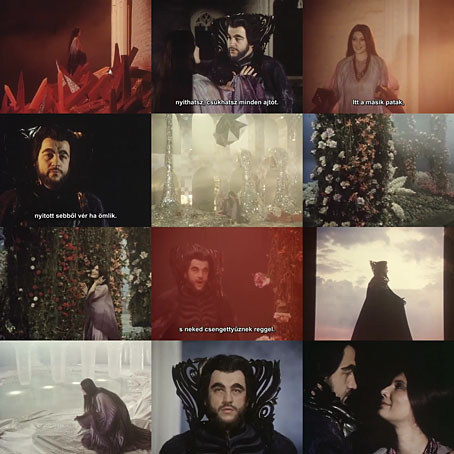
Bluebeard’s Castle, 1981

bluebeard.jpg

Filmed performances of Bartók’s Bluebeard’s Castle continue to find their way to YouTube. Clips of this film from 1981 have been around for a while but not the entire opera which I hadn’t seen until now. On a theatrical and cinematic level this performance isn’t as successful as the superb version Leslie Megahey made for the BBC in 1988; director Miklós Szinetár gives us a rather traditional Gothic reading that’s only contradicted by the slight stylisation of the sets. The climactic moment when the Fifth Door opens delivers a simple blaze of white light that can’t compete with the equivalent moment in Megahey’s version when the castle floor opens up and Bluebeard’s kingdom is revealed in miniature. The musical recording is excellent, however, with Georg Solti conducting the London Philharmonic Orchestra. Kolos Kováts plays Bluebeard and Sylvia Sass is Judith. Watch it here.

Previously on { feuilleton }
Michael Powell’s Bluebeard revisited
Joseph Southall’s Bluebeard
Leslie Megahey’s Bluebeard

Weekend links 300

goudal.jpg

Observatoire IX from the Observatoires series by Noemie Goudal.

• “Before Lady Raglan’s intervention, this figure had been anonymous. She gave him a name: the Green Man.” Josephine Livingstone on the persistence of a supposed figure from pagan folklore.

Ben Wheatley: “Financing a film as crazy as [High-Rise] takes good casting”. Related (in a Ballardian sense): the abandoned hotels of the Sinai Desert.

• “We were in danger of becoming full-time, paid up musicians…” Drew Daniel and Martin “MC” Schmidt of Matmos look back over their career.

Fahey didn’t make many new friends with his scything dismissal of the folk revival. He distrusted the way that folkies regarded music as a carrier for the correct political messages of the moment. As Lowenthal puts it: “To him, the student idealists had naïve worldviews and dreamed of unrealistic political utopias,” whereas Fahey “attempted to channel darkness and dread through his music.” For Woody Guthrie and Pete Seeger devotees, the ideological message came first, with musical tone or trickery a distant second. As Fahey saw it, the dizzyingly strange source music they borrowed from and then built their careers on emerged as little more than a scrubbed-up ventriloquist’s doll, all the coarse grain and troubling metaphysic of its original voices jettisoned. He also detected high condescension and low reverse racism in how the folk-revival people preferred their old blues guys barefoot and wearing dungarees—even if they now usually dressed in sharp suits and often preferred to play amplified, electric urban blues.

Ian Penman on John Fahey

• “It’s amazing how quickly a sound can lose its moorings and float off into this kind of unchartered territory,” says Robin The Fog.

• Mixes of the week: FACT Mix 540 by Via App, and Secret Thirteen Mix 178 by BlackBlackGold.

Oliver Wainwright on Edward Johnston, designer of the typeface for the London Underground.

• At Dennis Cooper’s: DC’s: Spotlight on…The Free-Lance Pallbearers (1967) by Ishmael Reed.

Each drop of Hennessy X.O is an Odyssey: Nicolas Winding Refn makes an alcohol ad.

Wayne Shorter & Herbie Hancock pen an open letter to the next generation of artists.

Japan’s scariest manga artist (Junji Ito) loves Japan’s creepiest cosplayer (Ikura).

• “He was a sexual outlaw.” Jack Fritscher‘s love affair with Robert Mapplethorpe.

Peter De Rome: the RAF pilot who became “the grandfather of gay porn”.

The Strange Case of Mr William T. Horton

• RIP Big George Martin and Ken Adam.

Shortwave Radio World

Viriconium FAQ

Nine Feet Underground (1971) by Caravan | Green Bubble Raincoated Man (1972) by Amon Düül II | Betyárnóta (Outlaw Song, 1989) by Muzsikás

Heavy-Light, a film by Adam K. Beckett

beckett.jpg

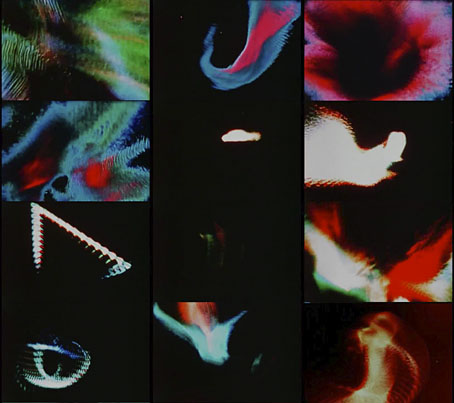
In the early 1990s the UK’s Channel 4 still operated as an avant-garde television channel, broadcasting films, dramas and documentaries that the other channels would be unlikely to show. Late nights were often filled out with resolutely uncommercial fare, as was the case when Abstract Cinema was shown in 1993, a 50-minute documentary by Keith Griffiths that traced the history of abstract cinematic experimentation from the animations of Oskar Fischinger to the growing field of computer graphics. The documentary was followed by an additional 25 minutes of abstract shorts, one of which, Heavy-Light (1973) by Adam K. Beckett, is a particular favourite.

Most of Beckett’s films are free-form doodles, hand-drawn and dreamlike in their endlessly shifting and often erotic metamorphoses. Heavy-Light is different for being the product of some optical process that sends billowing waves of vivid colour blooming out of darkness. The effect is very similar to Jordan Belson’s films where the realisation is equally mysterious and the result equally (that word again) psychedelic; a bonus in Beckett’s film is the excellent score by Barry Schrader. Beckett died young at the age of 29 so there isn’t much of his work to see although a few of the animated films are also on YouTube at the moment (see here, here, here and here). They may not remain there for long so watch them while you can.

Elsewhere on { feuilleton }
The abstract cinema archive

Jan Švankmajer, Director

svankmajer.jpg

As I have always said, my aim is to make Surrealist documentaries. I want to show that our world is imaginative by nature, that you can look at it imaginatively. It has something that escapes the quotidian gaze. And it is possible to reveal it through the technique of animation. Animation thus becomes a sort of new alchemy.

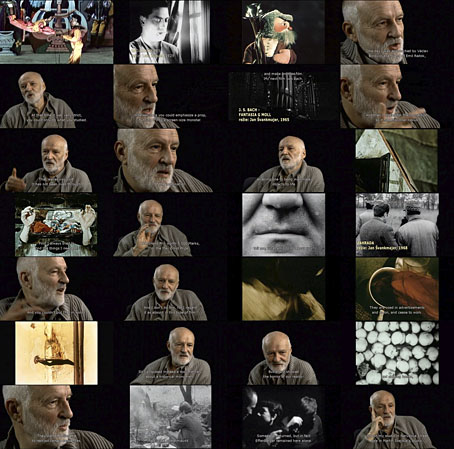
Thus Jan Švankmajer whose production company, Athanor, is named after the furnace used by medieval alchemists. Jan Švankmajer, Director (2009) is an hour-long documentary by Martin Sulík, one of several films from Golden Sixties, a Czech television series about film directors. Švankmajer has been the subject of several documentaries following his rise to international prominence, one of which, Les Chimeres des Švankmajer (2001), may be found on the BFI’s DVD set of the complete short films. Martin Sulík’s documentary doesn’t cover as much ground as the French film—the focus is on the 1960s—but has an advantage by allowing Švankmajer to talk at length about his work. Topics include his discovery of the usefulness of animation, his approach to filmmaking (and art in general), and peripheral subjects such as the soundtrack music of Zdeněk Liška, and the activities of the Prague Surrealist group. (Via MetaFilter.)

Jan Švankmajer, Director: Part one | Part two | Part three | Part four

Previously on { feuilleton }
Don Juan, a film by Jan Švankmajer
The Pendulum, the Pit and Hope
Two sides of Liška
The Torchbearer by Václav Švankmajer