Ambagious Tactics

cards1.jpg

Ambagious Tactics is a box containing 120 small white cards, most of which show a short aphorism, suggestion or piece of advice for the creatively-minded. A few cards at the end of the box feature line drawings instead of words; there are also three blank cards for the user’s own contributions. Anyone familiar with  Brian Eno and Peter Schmidt’s Oblique Strategies will recognise the form: “over one hundred worthwhile dilemmas” which artists, writers (and anyone else) can use as a prompt to jolt a creative endeavour away from familiar ruts or to provide a solution to an impasse or problem.

cards2.jpg

The first deck of Oblique Strategies was published in an edition of 500 copies 50 years ago which makes Ambagious Tactics an anniversary celebration as well as “An Oblique Tribute Act—A choir of over 100 versatile enigmas”. The main difference between the Strategies and the tributes is that the Strategies were mostly the work of Eno and Schmidt, although I think Eno says somewhere that the pair asked friends and colleagues for contributions. For the tributes Alistair Fruish has collected a single suggestion from many different people, myself included:

Some of these creatives are connected to Eno and Schmidt, and some are folk who regularly used Oblique Strategies, others are members of Arts Labs around the country, and some people were asked for the hell of it.

I’m very familiar with Oblique Strategies, mostly via their recent manifestations as online editions or freeware applications. The only physical deck I’ve seen is Alan Moore’s heavily-used first edition, and Alan happens to be one of the contributors to this deck.

cards4.jpg

My own contribution may seem a little glib or obvious at first: when you’re creating something you’re invariably on the lookout for things you don’t like. The question is intended to have a wider reach than this, and refers to something Jon Hassell used to talk about with regard to his own creations: the question of what you really like in a fundamental sense, and how this can be distilled into your own creative activities. Asking yourself what you really like helps you avoid falling into the slipstream of prevailing trends (unless that’s what you really like…), or doing something solely to fulfil other people’s expectations. Hassell couldn’t be involved with the project so this was my attempt to bring some of his own thinking to the tribute act. My original idea—”Do the washing up”—was one I had to reject after I confirmed that it’s one of the suggestions you’ll find in Oblique Strategies. (It’s one I recommend all the same. Try it.)

cards3.jpg

Ambagious Tactics has been published by the Northampton ArtsLab and Alan Moore’s Mad Love imprint. I don’t know how much you might have to pay if you want a set of the cards but there’s an email address on this page for those requiring further details.

Before I started writing this post I thought I’d see what random suggestion the Oblique Strategies application on my phone might have to offer. The advice is suitably oblique and rather fitting as well:

Revaluation (a warm feeling)

Previously on { feuilleton }
Jon Hassell, 1937–2021
Imaginary Landscapes: A film on Brian Eno

Weekend links 799

cope.jpg

A Night Alarm: The Advance! (1871) by Charles West Cope.

• At Spoon & Tamago: Meet the artist creating humorous, nihonga-style images of daily life with their rescue cat.

• The thirteenth installment of Smoky Man’s exploration of The Bumper Book of Magic has been posted (in Italian) at (quasi).

• New music: I Remember I Forget by Yasmine Hamdan; Clearwater by Maps And Diagrams.

His boss was a cards-to-his-chest type named Boynt Crosstown—and here I admit to having dropped that in as the merest excuse to revel right now in more of Pynchon’s christenings: Dr. Swampscott Vobe, Wisebroad’s Shoes, Connie McSpool, Glow Tripworth de Vasta, Cousin Begonia, “child sensation Squeezita Thickly”—for this author’s longstanding genius there on that private swivel chair of the Department of Character Appellations matches long-gone Lord Dunsany’s for imaginary gods and cities.

William T. Vollmann reviews Shadow Ticket, the new novel by Thomas Pynchon

• At Colossal: Twelve trailblazing women artists transform interior spaces in Dream Rooms.

• At Public Domain Review: Ballooning exploits in Travels in the Air (1871 edition).

• At the BFI: Josh Slater-Williams on where to begin with the films of Satoshi Kon.

Colm Tóibín explains why he set up a press to publish László Krasznahorkai.

• At Print Mag: Ken Carbone on a pool of perfection in Paris.

• Mix of the week: Bleep Mix #310 by Rafael Anton Irisarri.

• Steven Heller’s font of the month is OTC Textura.

Ron Mael’s favourite albums.

Shadowplay (1979) by Joy Division | Shadow (1982) by Brian Eno | Shadows (1994) by Pram

Two new covers

rockhill.jpg

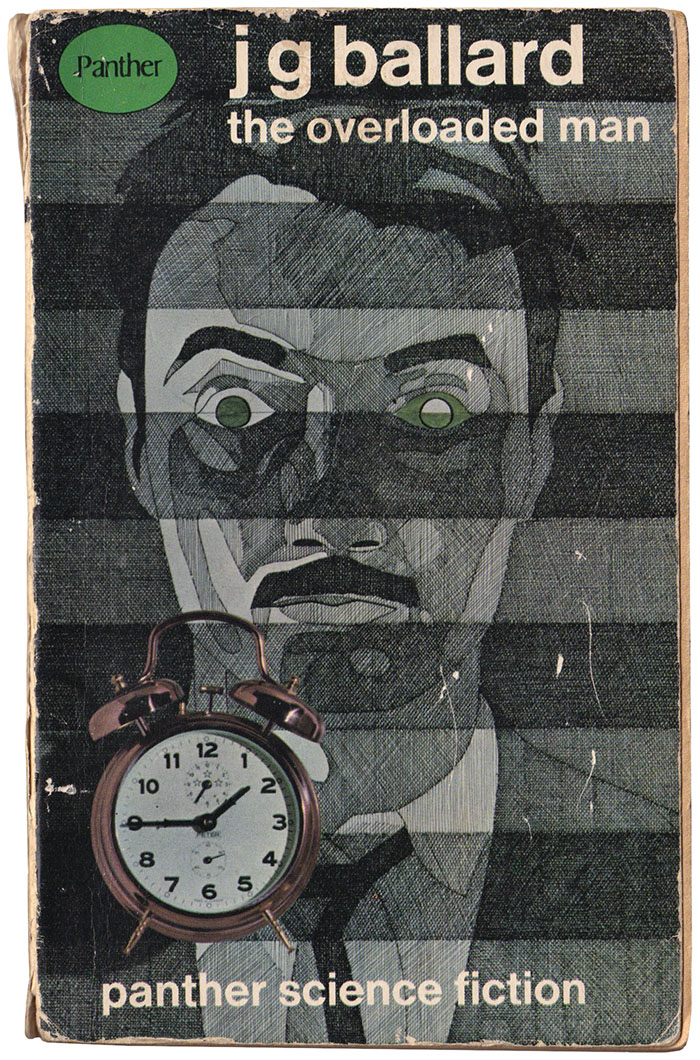
My latest cover designs have arrived in time for Spook Month, although the first of these suits the season more by association than its appearance. Jim Rockhill’s A Mind Turned in Upon Itself is a study of the work of J. Sheridan Le Fanu, Ireland’s leading writer of ghost stories and Gothic fiction. This is another design for Swan River Press which adheres to the publisher’s preferred format of a dustjacket that wraps a small hardback with textured and illustrated boards. The brief was fairly straightforward, to present a rare photograph of Le Fanu in a suitably attractive manner. My initial idea was to create a frame that would reflect to some degree various aspects of Le Fanu’s fiction, but it quickly became apparent that the portrait photo was too tall and narrow to sit easily inside a frame that matched the ratio of the book. A better option was to look for a frame which could fit the shape of the book while also filling in the space around the photo.

dore.jpg

A page from The Workshop: a Monthly Journal Devoted to Progress of the Useful Arts.

When Le Fanu was writing in the mid-19th century book design had become very lavish, with a proliferation of presentation volumes gold-blocked and embossed on their covers and spines. The Heztel editions of Jules Verne are prime examples, as are the many editions of Gustave Doré’s books. My cover is an adaptation of a German edition of Doré’s Bible which had an unusual panel in the centre that happened to be a good size and shape to accommodate the Le Fanu photo, although I still had to extend the design a little. My version also includes a pair of small Le Fanu monograms embedded in the frame.

outline.jpg

For the board illustration I followed the form of an earlier Swan River book with an Irish theme, The Far Tower, whose boards I covered with an engraving collage. The end result, which looks like a single illustration, is a composite of two smaller illustrations from a book of views of Ireland, together with a quantity of foliage which frames the design and joins the pictures together.

ppc.jpg

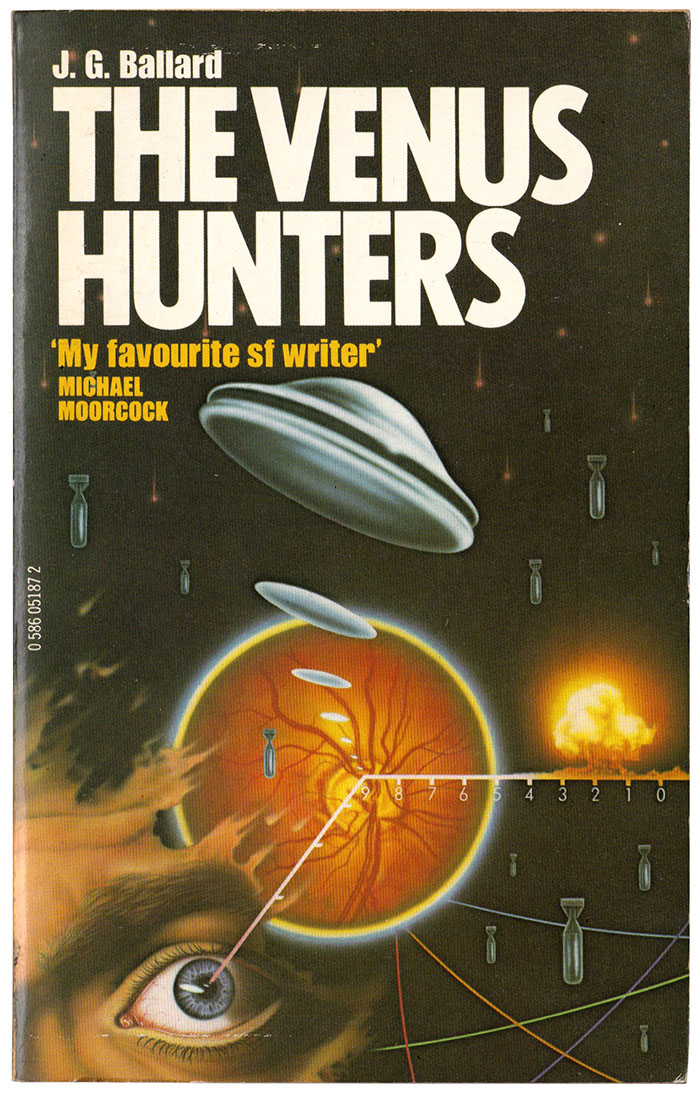
The second cover is for a book I’m working on at the moment, Lovecraft’s Brood, a sequel to Tachyon’s well-received Lovecraft’s Monsters. I was very pleased to be asked to work on this one, the earlier book is a favourite of mine from among the books I’ve done for Tachyon, and Ellen Datlow is an expert at compiling well-chosen story collections. There’s not much I can say about the cover which follows the form of the previous book. As with Lovecraft’s Monsters, the framed face will also appear as one of the interior illustrations. You’ll have to wait a while to see the results of this, however. Watch this space.

brood-cover.jpg

Meanwhile, I’ve neglected to mention another Tachyon book whose interiors I’ve designed which is available now. The Essential Horror of Joe R. Lansdale is a great introduction to the work of a master of horror fiction whose stories manage to be grim and witty in equal measure. Very grim at times; visceral horror is Lansdale’s forte. The collection includes his best-known story, Bubba Ho-Tep, and features cover art by another Swan River Press cover artist, Dave McKean.

Previously on { feuilleton }
Lovecraft’s Monsters

Elliott Dold’s Night

dold01.jpg

Looking for artwork by Elliott Dold turned up this remarkable set of illustrations for an unremarkable collection of poetry, Night, by a friend of the artist, Harold Hersey. Elliott Dold (1889–1957) was an American illustrator during the early days of the pulp magazines, best known today for drawings of huge machines which are a match for those by his more prolific contemporary, Frank R. Paul. The pulp magazines are so often filled with mediocre illustration that it’s a pleasure to find another talent lurking in their pages. But Dold was more than an illustrator of big science, as these illustrations for Hersey’s dubious poetry demonstrate.

dold02.jpg

Night is a collection of vaguely erotic poems, all of which Hersey labels “Nocturnes”. The collection was published in 1923 in a privately-printed subscriber-only edition, and every description I’ve read of it agrees that the illustrations are the best thing about it. The drawings are also radically different to Dold’s science-fiction art, to a degree that they could easily be taken for the work of a different illustrator. “What a pity the artist has to waste his time grinding out art for the pulps,” said HP Lovecraft, in a letter to Clark Ashton Smith. A pity, indeed. Dold’s illustrations are on a par with those that Wallace Smith was producing in the same year, and are close enough to Smith’s style that’s it’s tempting to accuse him of imitation. Smith’s style wasn’t unique, however; Ray Frederick Coyle was another American artist at work in the 1920s who favoured the same combination of strict black-and-white, careful linework and stylised figures. It’s curious that three books with somewhat controversial contents should have been published in the USA in 1922/23, all of them illustrated in a very similar manner: Ben Hecht’s Fantazius Malare (illustrated by Wallace Smith), James Branch Cabell’s new edition of Jurgen (illustrated by Ray Frederick Coyle), and Hersey’s Night. Rather than look for spurious influence I’d guess that this was a combination of coincidence and American literature acquiring a belated taste for Decadence which required suitably Beardsleyesque illustration. Similar trends were evident in cinema, especially in Alla Nazimova’s 1923 film adaptation of Oscar Wilde’s Salomé, where the costumes and settings were all based on Beardsley’s illustrations.

dold03.jpg

The images here are from a copy of the book at HathiTrust that’s another poor Google scan. The Hathi website isn’t as convenient for reading as the Internet Archive so I’ve downloaded all of the illustrations and, when necessary, cleaned the grey tone left by the scanner’s camera.

dold04.jpg

dold05.jpg

Continue reading “Elliott Dold’s Night”

Weekend links 798

atlantis.jpg

Atlantis (1971) by Bartolomeu Cid dos Santos.

• “Given the workaday settings of many of his movies (a hotel, a summer camp, a science fair), their mortal stakes may come as a surprise, or at least as a paradox—yet paradox is at the heart of his entire body of work.” Richard Brody explores the New Yorker roots of Wes Anderson’s The French Dispatch.

• “The power of the Kelmscott Chaucer is in how all the elements harmonise to create something visually spectacular.” Michael John Goodman on William Morris and his reinvention of book design.

• At Smithsonian Mag: “What actually sparks Will-o’-the-Wisps? A new study traces the science behind the mysterious, wandering lights“.

• At Dennis Cooper’s: A chronology of 26 things with Clive Barker’s name on them and what he thinks about that.

• At Wormwoodiana: The novels of Derek Raymond and the type of crime fiction he called “The Black Novel”.

• At Colossal: Untamed flora subsumes abandoned greenhouses in Romain Veillon’s Secret Gardens.

• At The Wire: Read an extract from James Tenney: Writings and Interviews on Experimental Music.

• The Strange World of…Mulatu Astatke.

• RIP Patricia Routledge.

The Garden (1981) by John Foxx | The Secret Garden: Main Title (1993) by Zbigniew Preisner | Secret Garden (2011) by Sussan Deyhim