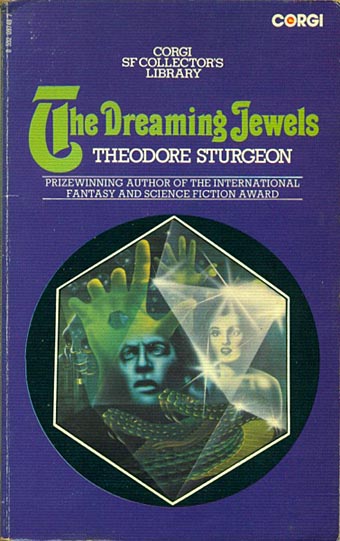
Corgi SF Collector’s Library

corgi02.jpg

Cover artist unknown.

“Here, for the connoisseur, for the devotee of the SF genre, and for those who like their reading to combine excitement with good writing, is the Corgi SF Collector’s Library – a series that brings, in a uniform edition, many of the Greats of SF – standard classics, contemporary prizewinners, and controversial fiction, fantasy, and fact…”

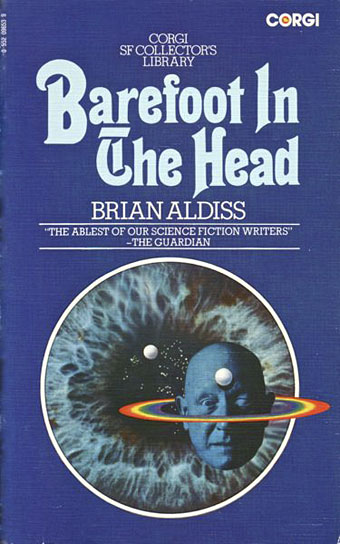
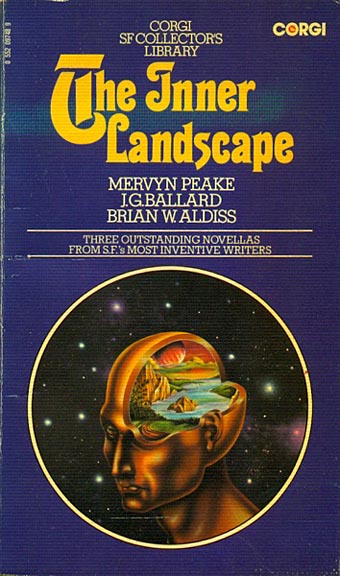
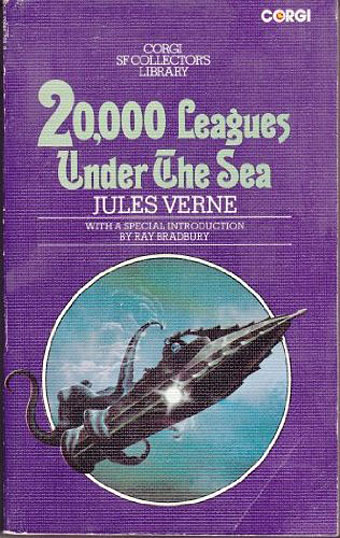
Only in the 1970s would you find a line of SF paperbacks with all the titles set in Thalia, a Victorian typeface revived by the post-psychedelia predilection for any design that was florid and ornate. Corgi’s SF Collector’s Library was published from 1973 to 1976, arriving just as my reading was moving from child-friendly SF to adult fiction. Consequently, I bought quite a few of these books, and still own a couple of them. The design was uniform but with a surprising amount of variation for such a short-lived series. The background colours ranged from deep blue to purple, while the card used for the covers was regular paperback stock for some of the titles with the majority using textured card, a treatment that further distinguished the series from its rivals on the bookshelves.
corgi12.jpg

Art by Joe Petagno.

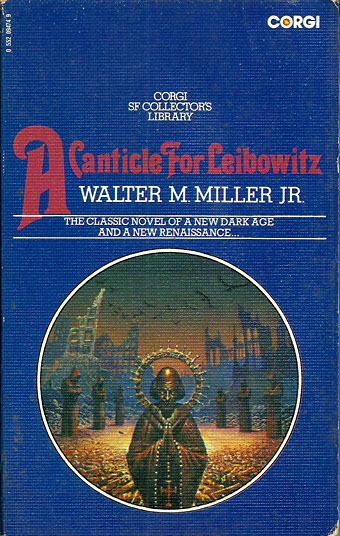
Looking at these covers again I’ve been wondering if the idea of framing the artwork in a circle was borrowed from Penguin’s run of HG Wells reprints from 1967. Corgi had done something similar the same year with their Ray Bradbury series (all with art by Bruce Pennington) but the Wells editions went through several reprints, and the SF Collector’s Library follows their form even down to allowing the artwork to break the frame.
corgi03.jpg

Art by Bruce Pennington.

The samples here are a small selection of the series which featured a fair representation of British SF illustrators of the time. None of the artists were credited on the covers, however—a poor showing on the part of Corgi—so a few of them remain unidentified.
corgi01.jpg

Art by Tony Roberts.

corgi05.jpg

Cover artist unknown.

Continue reading “Corgi SF Collector’s Library”

Weekend links 633

fuller.jpg

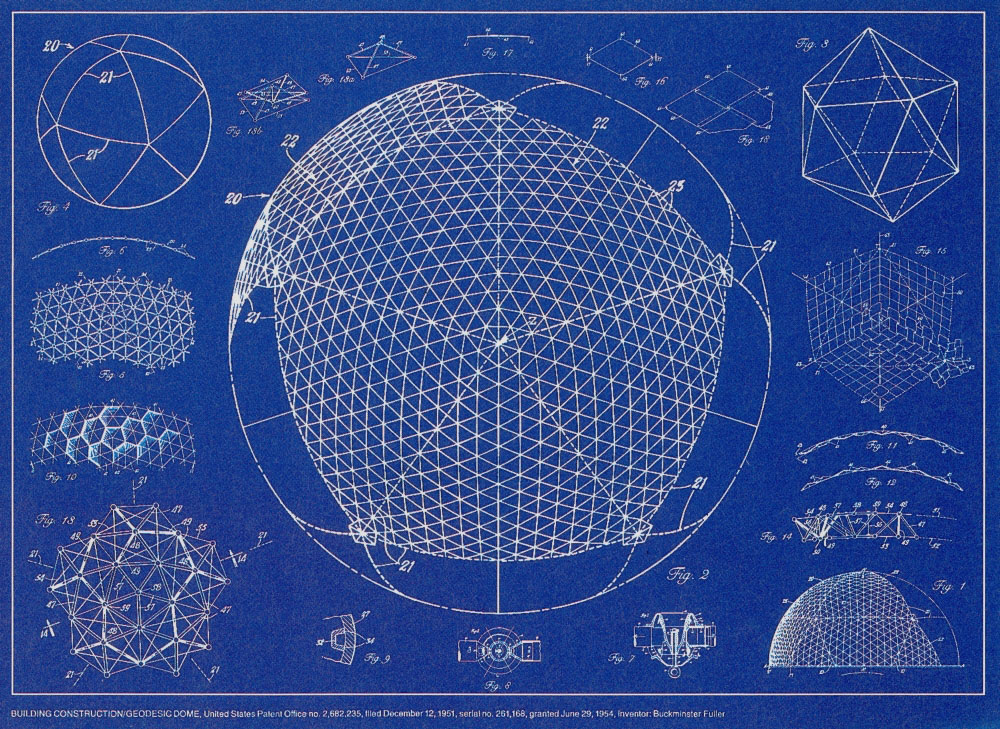
A blueprint by Buckminster Fuller for the first geodesic dome.

• “That opening sequence on the train, it’s got the dynamic of a wonderful pop video. It’s one of the world’s greatest actors who understood the power of small gestures.” Jah Wobble enthusing about Roy Budd, Michael Caine, and Mike Hodges’ baleful revenge drama, Get Carter.

• One of the BFI’s Halloween releases this year will be The Ballad of Tam Lin (1971), the blu-ray debut of a cult film that blends folk horror with modish melodrama. Direction by Roddy McDowall, music by Pentangle, and a cast that includes Ava Gardner and Ian McShane.

• New from A Year In The Country: Cathode Ray And Celluloid Hinterlands, a book exploring weird film and TV, not all of which is from the over-ploughed folk-horror furrows.

The whole notion of the Diggers kind of evolved out of the anarchism thing. And also there was more than a little social conscience. Because, by now, in ‘66, people started to come to the Haight Ashbury from all over. And that was when, in ‘66, it was still, really… Before the “Summer of Love,” it really was the Summer of Love. The “Summer of Love” [in 1967] was Life Magazine’s version. That’s what created the homeless on the streets and all that shit, because so many people came with absolutely no understanding of what they were about.

The role of the Diggers in this period was an outlaw, romantic, feed-the-people, anarchist, ‘Who’s in charge?—YOU ARE’, that kind of thing. That line in Apocalypse Now when he gets to the bridge and the little string of Christmas lights are hanging and he gets to one guy who’s guarding one end of the bridge and he says, Who’s in charge here? He says, I thought you were. And that’s so true. That is so true. Then Grogan, whenever anyone would ask, where’s Emmett Grogan… anyone could say “I’m Emmett Grogan.” So you could deflect a lot of shit.

Harvey Korspan of the San Francisco Diggers talking to Jay Babcock in another installment of Jay’s verbal history of the hippie anarchists

• “Buckminster Fuller patented the geodesic dome on June 29, 1954. Two decades later, it was everywhere in science fiction.”

• At Dennis Cooper’s: Spotlight on…Harry Mathews Tlooth (1966).

• Mix of the week: A mix for The Wire by Cheri Knight.

• Steven Heller’s font of the month is Bangel.

Tam Lin (1969) by Fairport Convention | Young Tambling (1971) by Anne Briggs | Tamlane (2016) by Dylan Carlson & Coleman Grey

Weekend links 629

vallee.jpg

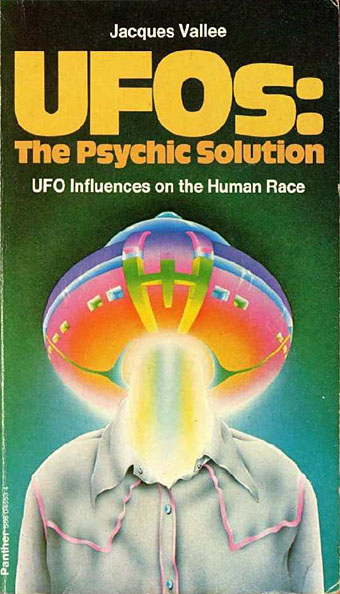
UFOs: The Psychic Solution (1977) by Jacques Vallée. A retitled reprint of The Invisible College (1975) with cover art by Peter Tybus.

• “In the summer of 1992…a curious experimental interstellar ambient-house album, made it to number one in the UK charts, promoted by a top ten single that was almost forty minutes long.” Darran Anderson navigates the noösphere with my favourite Orb album, U.F.Orb.

• Among the recent arrivals at Standard Ebooks, the home of free, high-quality, public-domain texts: Hope Mirrlees’ strange fantasy novel, Lud-in-the-Mist (1926).

• James Balmont’s guide to the intricate cinema of Hong Kong’s crime auteur, Johnnie To.

Shortlisted photos from the Astronomy Photographer of the Year Contest.

• At Dennis Cooper’s: Spotlight on…Jean Genet Miracle of the Rose.

• Steven Heller’s font of the month is Ambicase.

• New music: Two Sisters by Sarah Davachi.

• RIP Peter Brook and James Caan.

Unidentified Flying Object (1970) by UFO | Psychic And UFO Revelations In The Last Days (1994) by Bill Laswell & Pete Namlook | UFOnic (1995) by Sabalon Glitz

Weekend links 625

styrsky.jpg

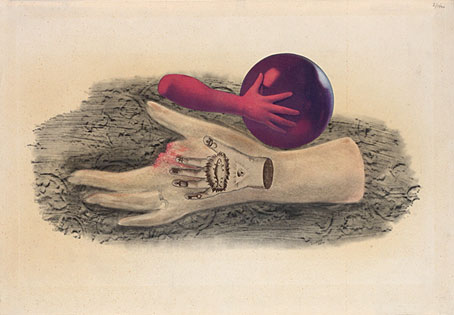
Hand (1940) by Jindřich Štyrský.

• “I love very much Symbolist painters like Odilon Redon, Ferdinand Knopf or Léon Spilliaert. Or Nordic European painters such as Munch or Gallen-Kallela. I like the way they often mix nature and mythology. Some Surrealist painters are very inspiring too: De Chirico, Tanguy, Toyen, Styrsky, or Dorothea Tanning, for instance.” Lucile Hadžihalilović talking to Mark Cousins about her new film, Earwig, and her approach to cinema.

• “It was no accident that Mishima chose to experiment with science fiction. It was a genre he had long admired. He adored Arthur C. Clarke, and lavished praise on Godzilla…” Alexander Lee on Yukio Mishima’s sole venture into science fiction, Beautiful Star.

• Old music: Roforofo Fight by Fela Kuti, a great favourite round here, is receiving a 50th anniversary reissue.

Readers of Berlin’s Third Sex were confronted with a whole fête galante of misfits, deviants, and sexual mutineers cavorting on the legal edgelands of society. There’s the “gathering of obviously homosexual princes, counts and barons” discussing Wagner, the women-only ball where a “dark-eyed Carmen sets a jockey aflame”, the drag act burlesquing Isadora Duncan, a café in the city’s north where Jewish lesbians play chess, gaggles of gay labourers meeting up to gossip before tending to their needlework, the Russian baron distributing alms to hustlers in the Tiergarten, a canal-side tavern where soldiers from the nearby barracks find gay men only too willing to pick up their tab, and the encrypted classified ads with which the lonesome and horny sought to make the vast metropolis just a little smaller.

James Conway on the pioneering sexology of Magnus Hirschfeld

• At Aquarium Drunkard: The Miles Davis Septet playing live at Chateau Neuf, Oslo, in 1971.

Industrial Symphony No. 1 by David Lynch & Angelo Badalamenti featuring Julee Cruise.

• Mix of the week: Ghosts & Goblins 1 by The Ephemeral Man.

• New music: The Homeland Of Electricity by Scanner.

• Steven Heller’s font of the month is Pufff.

• Galerie Dennis Cooper presents Ilse Bing.

• RIP Paula Rego and Julee Cruise.

Teacher Of Electricity (1970) by Old Gold | Electricity (1980) by Orchestral Manoeuvres In The Dark | Night Electricity Theme (2017) by Dean Hurley

Weekend links 624

griffiths.jpg

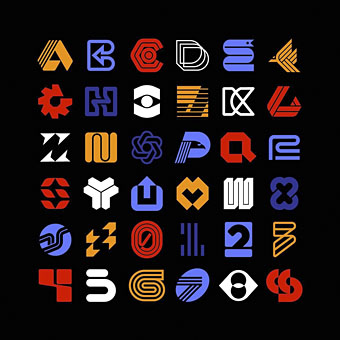
An alphabet designed by Ben Griffiths. Via.

• “From the cellular to the galactic, via Paleolithic cave markings to the trace impressions left by drone photography on our mind’s eye, incorporating dancing plagues, communist psychedelic witches, hyper-sexual fungi, chthonic descents, and skyward ascents, The Neon Hieroglyph weaves together a series of painterly and poetic considerations on a feminized history of the rye fungus Ergot, the chemical basis of LSD.” Coming soon from Strange Attractor: The Neon Hieroglyph, a book, LP and folio of prints by Tai Shani.

• “3rd From The Sun was the last album of Chrome’s imperial phase, and it cemented their status as one of the most inhuman and superhuman rock bands that America ever produced. More people need to recognize.” Agreed. (previously)

• “People often say, ‘How can you be so disciplined?’ It’s easy. Otherwise, I would have to go work for somebody else!” John Waters (again). Also here.

I’ve always thought that literature should be entertaining as well as instructive—a very old-fashioned idea but one that I adhere to. When I set out to write in this way—particularly in this way, a political way, if you want to call it that—I intend to make a donation, to try to give something. There doesn’t seem to me to be any point in giving more misery or exacerbating unhappiness through some kind of hyper-intellectual, pyrotechnical writing about unhappiness and the shit that we all find ourselves in. That’s been done plenty. I think first of all that it doesn’t need to be done any more and second of all there’s a kind of reactionary aspect to it which is that the emphasizing of misery without any anti-pessimism, as you put it, would be simply seduction into inactivity and political despair. In other words, to do politics at all on any level, especially on a revolutionary or on an insurrectionary level, there has to be some anti-pessimism—I won’t say optimism because that sounds so fatuous, futile; but anti-pessimism is a nice phrase. And there’s a deliberate attempt at that in the writing. Then again it’s a matter of my personality, I guess, inclined towards the notion of the healing laugh to some extent. We have an anarchist thinker in America, John Zerzan, who wrote an essay against humour which maybe is one of the things I was reacting against. Even if irony is counter-revolutionary which I think it might be to a certain extent I don’t see any way in which you could say that laughter itself is counter-revolutionary. This doesn’t make any sense to me unless you mean to get rid of language and thought altogether, which is just another form of nihilism. So as long as you’re going to accept culture on some level you’re certainly going to have to accept humour. And as long as you’re going to have to accept humour you might as well see humour as potentially revolutionary.

Peter Lamborn Wilson aka Hakim Bey, who died last month. Many of Wilson’s writings are available at The Anarchist Library. From 2008: A poem for Leonora Carrington

• “It’s such a fundamental question,” says Midori Takada, “why do humans need to make rhythm, and the space that structure creates?”

• “14 Warning Signs That You Are Living in a Society Without a Counterculture” by Ted Gioia.

• A trailer for Earwig, the new film from Lucile Hadžihalilović, based on a story by Brian Catling.

• New music: Aura by Hatis Noit, and Warmth Of The Sun by Pye Corner Audio.

• At Dennis Cooper’s: Spotlight on…SE Hinton Rumble Fish (1975).

• “Hear tracks from the 1980s Peruvian electronic underground”.

Intermittent Eyeball Fodder at Unquiet Things.

West Tulsa Story (1983) by Stewart Copeland | Kála/Assassins Of Hakim Bey (1997) by Coil | Neon Lights (2000) by Señor Coconut Y Su Conjunto