Weekend links 684

okamoto.jpg

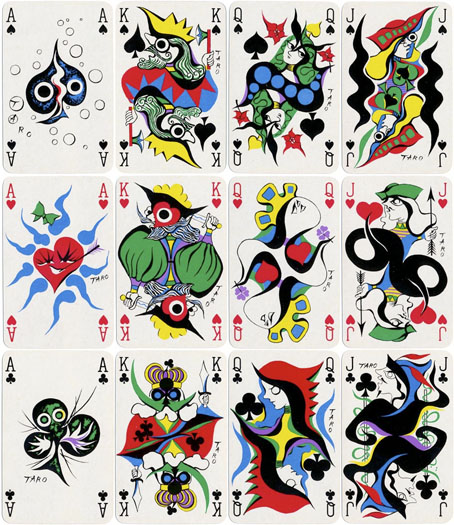
Playing cards designed in 1977 by Taro Okamoto.

• “This practice of looking does not prioritise academic or historical perspectives on art. It is divorced from the artist, the industry and the formal study of the arts. By paying attention to the form, title and other perceptible ‘clues’ in the work, this practice is primarily interested in using the intuitive, sensory, suggestive and aleatory to engage in conversation with a creative work. The point is not to develop an answer, an interpretation that ‘settles’ the ‘question’ of the painting, or to intellectualise the work in terms of form, style, history or the concerns of the artist. Rather, in this practice, a piece of art or writing becomes a test or opportunity for working one’s imagination—an exercise in making associations.” Aparna Chivukula on choosing art over wellness apps.

• “But with the discourse about the limitations of moralizing steadily growing, the question of an alternative naturally arises. The critics of self-righteousness and trauma mongering are for the most part not calling for a return to the amoral ironism that governed the Nineties and early Aughts—the sensibility that surely gave rise, at least in part, to the overgrowth of didacticism that followed. But if not this, then what? Where do we go from here?” Anastasia Berg on “the aesthetic turn”.

• “…by choosing ordinary creatures, the fabulist naturalises the stories in a world that is close to hand, which helps the writer communicate opinions that are often subversive.” Marina Warner on Kalilah wa-Dimnah and the animal fable.

• Coming soon from Strange Attractor: Austin Osman Spare, a revised and expanded edition of Phil Baker’s excellent biography of the artist/occultist.

• At Rarefilmm: The Marat/Sade (1967), Peter Brook’s film (previously) of the 1965 Broadway production of Peter Weiss’s play.

• New music: Hostile Environment by Creation Rebel, and Tone Maps by Field Lines Cartographer.

• Mixes of the week: Isolatedmix 122 by Mary Yalex, and XLR8R Podcast 810 by Zaumne.

• At Dennis Cooper’s: Pierre Clementi Day.

• Sade Masoch (1968) by Bobby Callender | On Sadism (1979) by Material | Sadistic (1995) by Stereolab

Weekend links 682

barbier.jpg

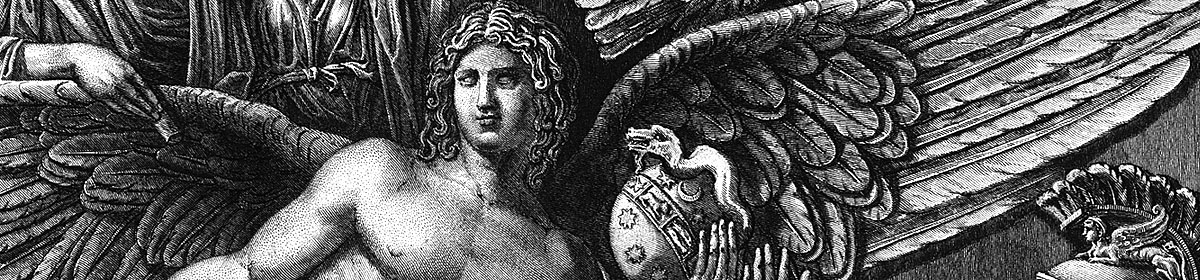
La Voie Lactée (1921) by George Barbier.

• Fun news of the week: “The Taylor Swift vinyl haunted by Britain’s weirdest musicians.” The “weirdness” is tracks from Happy Land: A Compendium of Electronic Music from the British Isles 1992–1996 which have been mispressed onto Swift’s latest, the re-recorded Speak Now. One of the offending pieces is Soul Vine (70 Billion People) by Cabaret Voltaire, a relatively understated instrumental from the Plasticity album which features samples from the Demon with a Glass Hand episode of The Outer Limits. “It’s possibly the most subversive thing we’ve ever done,” says Stephen Mallinder. Adventurous Swifties looking to broaden their horizons are advised to try The Crackdown next.

• “For McCarthy, violence is the signature of God: God, who cannot be seen, who is only indicated by an absence, who no amount of experimenting or observing will reveal, but whose existence is in evidence all around us, every day, through the apocalyptic and apophatic violence that makes up the very stuff of the world.” JC Scharl on the violent faith of Cormac McCarthy.

• Strange news of the week: Reclusive guitarist Master Wilburn Burchette (age 84) was found dead in a house with the body of his younger brother (age 76) after decades spent avoiding anyone showing an interest in his music. Numero Group, the label behind the recent reissues of Burchette’s albums, posted an interview from 2018.

• Takrar by Waref Abu Quba is “an experimental film that celebrates the timeless and intricate beauty of ancient craftsmanship. Filmed in Istanbul, the film takes us on a mesmerizing journey into the past, paying homage to Islamic, Ottoman, Greek, and Byzantine art forms.”

• “Could an industrial civilization have predated humans on Earth?” Probably not, but if it was in the deep past how would we know? Joel Froelich investigates.

• At Dennis Cooper’s: Visual evidence from almost every museum devoted to prestidigitation in the world (for Derek McCormack).

• At Spoon & Tamago: Osaka celebrates Star Festival with river of 40,000 LED lights evoking the Milky Way.

• At Unquiet Things: Even more sneak peeks from The Art of Fantasy.

• Mix of the week is DreamScenes – July 2023 at Ambientblog.

• At The Daily Heller: Sign writing and glass engraving.

• Out Of Limits (1963) by The Marketts | Trip Through The Milky Way–An Electronic Panorama (1969) by Raymond Moore | Milky Way (1971) by Weather Report

Weekend links 676

binnie.jpg

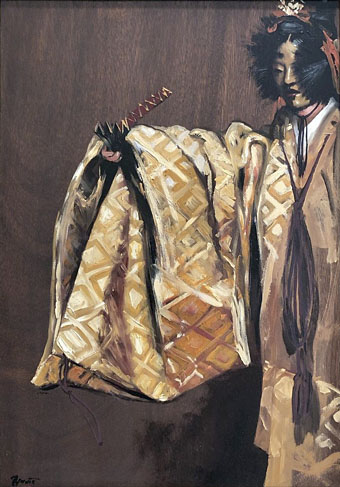
Sleeve Study, from Kakitsubata (1998) by Paul Binnie.

• “London was not a project for me. It was the curse that never stops giving.” Iain Sinclair talking to Matthew Stocker about his new book for Swan River Press, Agents of Oblivion.

• The Ultimate DMT Breakthrough Replication Compilation, a video guide to the DMT experience by Josie Sims. Related: Kristen French on what hallucinogens will make you see.

• At Spoon & Tamago: A return to Tokyo Genso’s depictions of an urban Japan transformed by vegetation and neglect.

• New music: The Shell That Speaks The Sea by David Toop & Lawrence English.

• At Bajo el Signo de Libra: San Sebastián de Mártir a Icono Homosexual.

• Cosmic views from the Milky Way Photographer of the Year, 2023.

• Nakamura Mitsue makes a Noh mask from a single block of wood.

• Mix of the week: A mix for The Wire by Eleni Poulou.

• At Dennis Cooper’s: Delphine Seyrig Day.

• Of Ancient Memory (The Oblivion Seekers) (1994) by Jarboe | Oblivion (2001) by Lustmord | Oblivion (2004) by Redshift

Weekend links 671

cassel.jpg

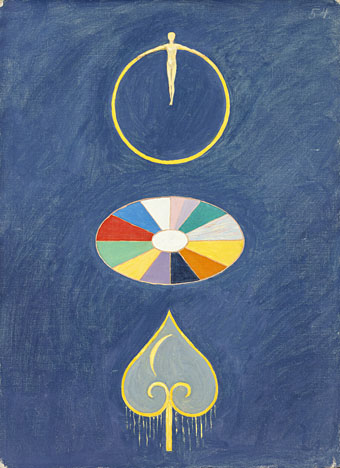
No. 54 (1915) by Anna Cassel.

• “I called it the treasure hunt: two years of tapes appearing from closets, letters dropping out of attics, persuading a film company to find the rushes of a TV show buried in a warehouse, paying a film director to digitise unused footage and a radio company to surface an old broadcast.” Nick Soulsby on pursuing the ghosts of Coil for his book about the group, Everything Keeps Dissolving.

• “It is likely that af Klint scholarship is on the brink of some radical changes regarding attribution and authorship.” Susan L. Aberth on the researches revealing collaborations between Hilma af Klint and other mystically-inclined women artists. It makes a change reading something about this group that isn’t completely dismissive about the beliefs that informed their work.

• New music: No Highs by Tim Hecker (“a beacon of unease against the deluge of false positive corporate ambient currently in vogue…”), and Seascape–polyptych by Jan Jelinek.

I think an unfortunate effect of Foucault’s work, as it was absorbed by academia, was that it made historians reluctant to call people or sexual acts in the past ‘homosexual’ or ‘gay’ since these terms ‘did not exist at the time’ or were recent creations. This gave some homophobes a spurious defence when suggestions were made as to the inclinations of their heroes, but it also—or so I thought—tended to downplay the reality of non-opportunistic homosexual desire as a constant in history, reducing it to recorded acts performed and then deeming these inadequate evidence anyhow, because they were assumed to have taken place in a fuzzy sexual universe.

If, as it seems to me, and as it seemed to Symonds and Carpenter, terms like ‘homosexual’ were invented in the effort to describe a type of person that has always existed, then they are in essence just a shorthand. Each term has its history, associations and effects, but—and perhaps this makes me an unsophisticated thinker—I think it’s the sexual feelings that fundamentally matter, and that these have existed across time. For that reason, I don’t find the Victorian sexual psyche, as far as it can be defined, alien or outlandish, or hard to speculate on. It is the product of sexual feeling filtered through observable social beliefs and conditions.

Tom Crewe talking to Amia Srinivasan about The New Life, Crewe’s debut novel which explores Victorian sex and sexuality

• “I’ve been tumbling down the rabbit-hole of toy theatre all my life, and I’m tumbling still.” Clive Hicks-Jenkins on the dark art of the toy theatre.

• At Public Domain Review: Jean Baptiste Vérany’s Chromolithographs of Cephalopods (1851).

• “Glass is perhaps the most frequently overlooked material in history,” says Katy Kelleher.

• At Cartoon Brew: Chris Robinson remembers the surreal animations of Run Wrake.

• At Unquiet Things: Of Dreams and Dark Pasts: Surrealist Painter Sofía Bassi.

• RIP Harry Belafonte.

• House Of Glass (1969) by The Glass Family | Heart Of Glass (1978) by Blondie | Slow Glass (1997) by Paul Schütze

Weekend links 670

mutzel.jpg

An octopus catching a lobster (1894) by Gustav Mützel.

• RIP Barry Humphries. He emailed me a couple of years ago in his capacity as a collector of fin-de-siècle art, hoping I might answer a question about a very obscure artist. If you require justifications for the blogging habit then add this to the list. Humphries’ first book, Bizarre (1965), is a more cerebral counterpart to Charles Addams’ Dear Dead Days, and a compendium of oddities that I’d buy if I ever saw it in a secondhand shop. RIP also to incendiary singer Mark Stewart.

• “Schulz gets compared to Kafka because of his dreamy, disconcerting stories, but in Balint’s book, a version of Schulz emerges that is closer to one of Kafka’s characters—a man on the run who can’t get past the city walls; an artist exiled by a shape-shifting, unknowable tormentor—than to Franz himself.” Leo Lasdun reviewing a new biography of Bruno Schulz by Benjamin Balint.

• “Instead of asking whether an octopus shows aspects of human intelligence, perhaps the better question is whether humans can show aspects of octopus intelligence.” David Borkenhagen on octopuses and what they might teach us about the perception of time.

• “Uproar was my element, I wanted to get people moving, the more they roared, the bolder I became.” The pioneering theatrical performances of Valeska Gert are explored at Strange Flowers.

• Digital copies of albums by the mighty Earth may currently be purchased at the group’s Bandcamp page for $1 each. I’ve got everything already but you may wish to sample something.

• Charles Drazin on the director who dared to tell uncomfortable truths: Lindsay Anderson at 100.

• Steven Heller on Commercial Art, a magazine from the 1920s that chronicled UK design.

• At Unquiet Things: The luminous drama of Frants Diderik Bøe’s bejewelled floral still lifes.

• New music: This Vibrating Earth by Field Lines Cartographer, and Draw/Orb by Extra.

• Mix of the week: XLR8R podcast 796 by Gold Panda.

• The Strange World of…Andrzej Korzynski.

• The Jewel In The Lotus (1974) by Bennie Maupin | Jewel (1985) by Propaganda | Black Jewelled Serpent Of Sound (1985) by The Dukes Of Stratosphear