Geneviève Vix’s Salomé

vix1.jpg

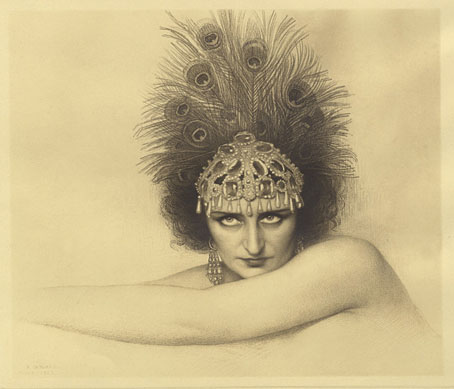
Geneviève Vix (1926) by P. Godard.

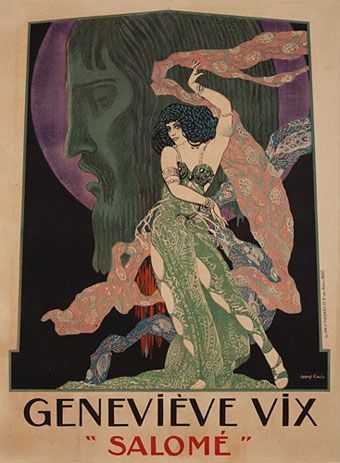
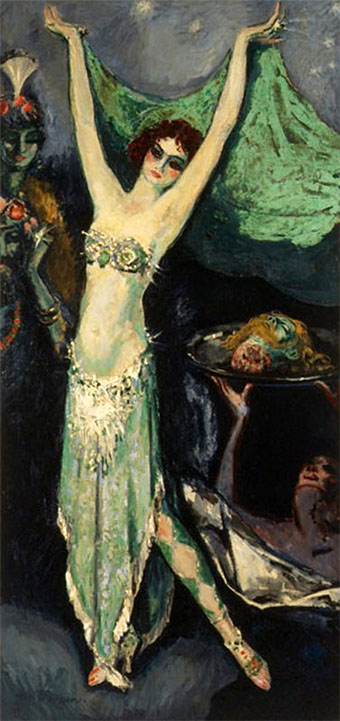
The poster below turned up recently at Beautiful Century, a promotional piece for the Richard Strauss opera in which the splendidly named French soprano Geneviève Vix (1879–1939) took the role of Salomé. The portrait of Mademoiselle Vix by Kees Van Dongen is of interest for the link it provides to a woman of the period who didn’t need to act Salomé, she was pretty much a femme fatale in her own right, the fiery Luisa Casati. Van Dongen was one of many artists commissioned to immortalise the heiress before her fortune ran out, and he painted her on at least two occasions. Some of the portraits can be seen in an eye-popping post at Fashion’s Most Wanted while over at Strange Flowers you’ll find the Scarlet Marchesa is a recurrent woman of consequence.

vix3.jpg

Geneviève Vix / Salomé (1920) by Jacques Carlu.

vix2.jpg

Mademoiselle Geneviève Vix dans le rôle de Salomé (1920) by Kees Van Dongen.

Elsewhere on { feuilleton }
• The Salomé archive

Henry Keen’s illustrated Webster

keen2.jpg

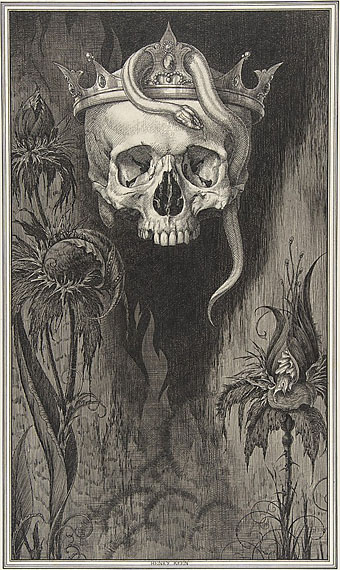
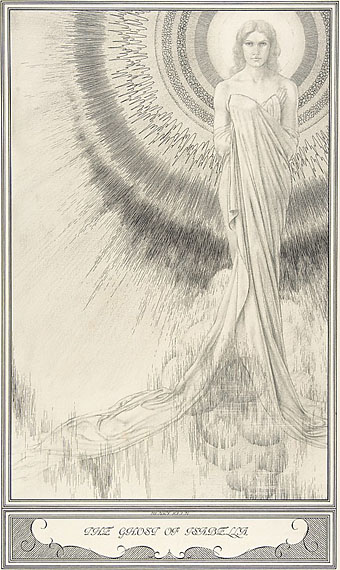
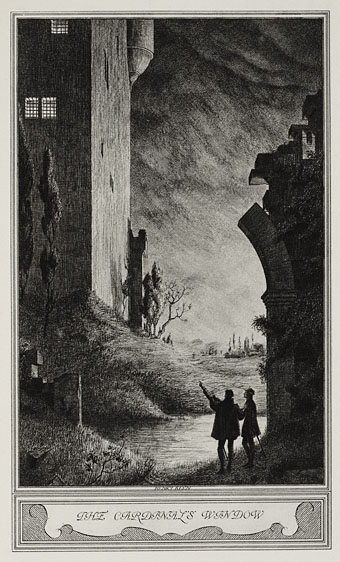
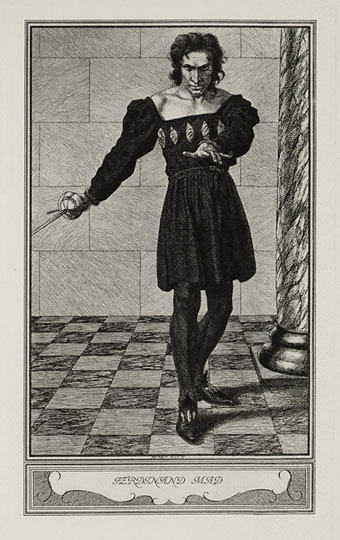
More gorgeous work from elusive British illustrator Henry Keen (1871–1935). These are some of the ink drawings Keen provided for a 1930 edition of John Webster’s Jacobean tragedies The Duchess of Malfi and The White Devil. In addition to eleven full-page illustrations there are decorative embellishments, and as usual it’s a shame there isn’t anywhere with a complete set of the artwork. I’m tempted to track down some of Keen’s books myself, this one seems especially good. That crowned skull is not only worthy of Carlos Schwabe, it makes me wonder why Webster wasn’t given more attention from earlier artists. Probably because the plays were too strong for 19th century tastes, violent revenge drama wasn’t what anyone wanted on stage at the time. Swinburne admired Webster’s work but then Swinburne wasn’t exactly a typical Victorian.

Thanks to ~Wunderkammer~ for the tip!

keen3.jpg

keen4.jpg

keen5.jpg

keen1.jpg

Elsewhere on { feuilleton }
• The illustrators archive

Previously on { feuilleton }
• Henry Keen’s Dorian Gray

Opium fiends

opium1.jpg

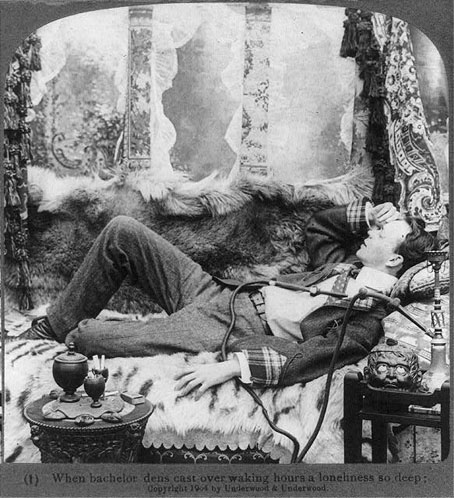
When bachelor dens cast over waking hours a loneliness so deep (1904).

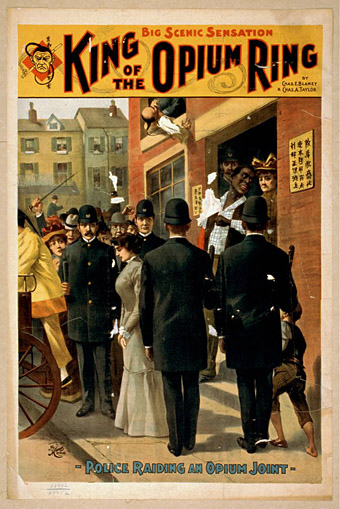
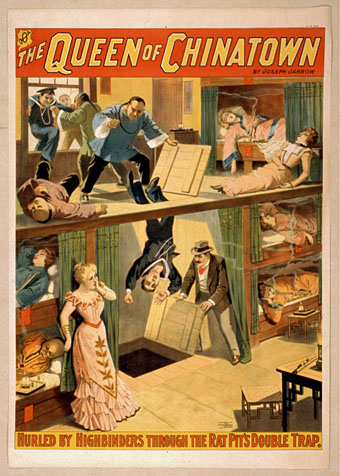
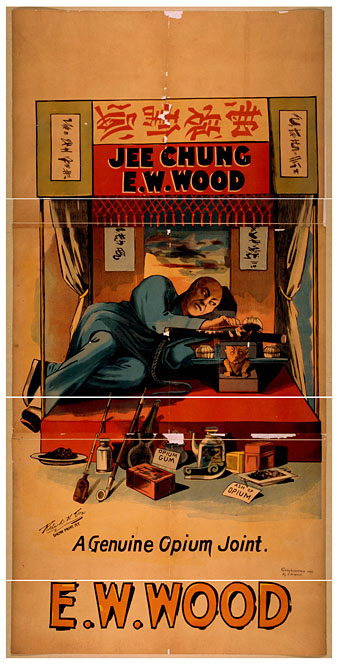
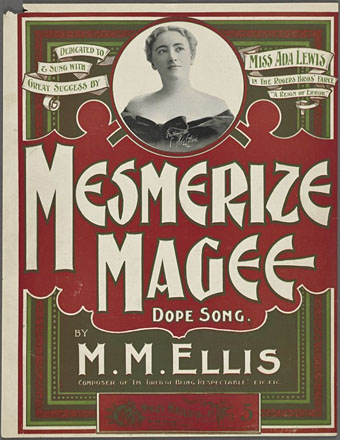
From morphine to opium. Despite drug addiction being an equal opportunities affair, many representations of opium dens in the late 19th and early 20th centuries tend to show women as the victims. This is probably chauvinistic in part—women being thought of as the weaker sex—but no doubt also connects to xenophobic fears about the white slave trade that fueled so much popular fiction of the time. The photo above at the Library of Congress is one exception with its young man chilling with a hookah in his fur-lined den, as you do. (He’s not necessarily smoking opium, of course…) The posters below, all from 1899, are also from the Library of Congress, and are more typical both in their sensationalism and in the dens being filled with white women.

As for Miss Ada Lewis, Mesmerize Magee was a “dope song” by Melville Ellis from a farce entitled A Reign of Error (1899), in which she recounts how her dope is paid for by a young policeman (the Magee of the title) who the lyrics describe as being “green as a pill”. When Magee worries about spending his wages in this fashion Ada has to wield her charms. And people think of 19th-century entertainment as being entirely wholesome and innocent…

opium2.jpg

opium3.jpg

opium4.jpg

opium5.jpg

Previously on { feuilleton }
• La Morphine by Victorien du Saussay
• Haschisch Hallucinations by HE Gowers
• The Mask of Fu Manchu
• The Dark Ledger
• Demon rum leads to heroin
• German opium smokers, 1900

Le Grand Macabre

topor1.jpg

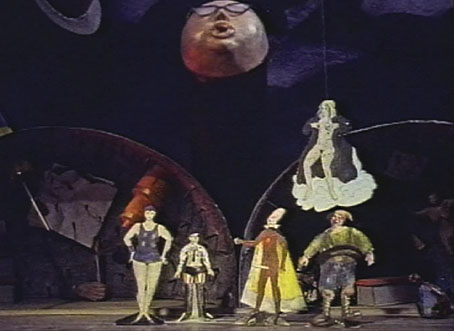
Yesterday I mentioned Leslie Megahey’s Ligeti film, All Clouds Are Clocks, an hour-long documentary based around an interview with György Ligeti filmed in 1976. A unique feature of that film was that Megahey returned to film Ligeti in the same room in 1991 where they discussed the composer’s work during the intervening period. Of these, Le Grand Macabre, written in the late 1970s, was the most ambitious piece.

topor2.jpg

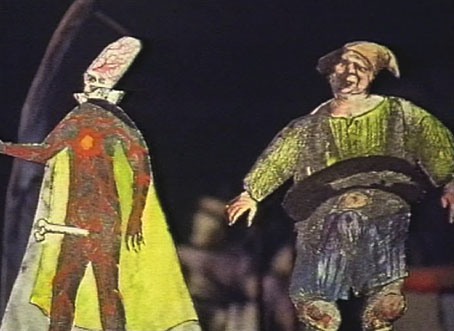
Bartók and Ligeti share some attributes: both were Hungarian, and both were forced to flee their native country. Both composers also wrote only one opera apiece. Le Grand Macabre is Ligeti’s opus, an absurdist drama based on Michel de Ghelderode‘s 1934 play, La Balade du grand macabre. In the film Ligeti explains that he didn’t want to repeat the mid-century concept of the anti-opera but was also dissatisfied with the traditional variety, hence Le Grand Macabre‘s description as an “anti-anti-opera”, a work that combines the tradition and its reaction.

topor3.jpg

Continue reading “Le Grand Macabre”

Leslie Megahey’s Bluebeard

bluebeard01.jpg

Back in the days when the BBC’s television output challenged its audience rather than pandered to it, Leslie Megahey was a name I always looked out for. During the 1970s and 80s, Megahey was one of the corporation’s outstanding producers and directors, and since his tastes often ran very close to mine seeing his name in a magazine listing was an alert for some essential viewing. Favourite Megahey documentaries would include his Omnibus film about (and interview with) György Ligeti in 1976, and the two-part Arena special about Orson Welles in 1982 that persuaded the director to talk at length for the first time about his career. Megahey’s arts films included drama documentaries about the French painters David and Gericault, and two dramas with painting themes, Cariani and the Courtesans (1987), and Schalcken the Painter (1979), the latter being an exceptional adaptation of the Sheridan Le Fanu ghost story. Duke Bluebeard’s Castle was one of the last of his BBC films, an adaptation of the Bartók opera that had this Bartók obsessive hopping with delight when it was screened in 1988.
bluebeard02.jpg

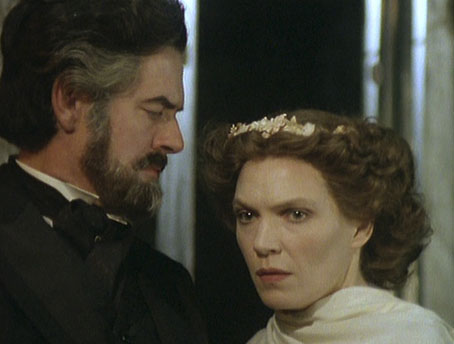
Bluebeard and Judith.

Bartók’s only opera was written in 1911, and is easier to adapt than most, being a single act of an hour or so in length with only two performers, Bluebeard (bass) and Judith (soprano). Given this it’s surprising there haven’t been more filmed versions. I wrote something a while back about the seldom-seen Michael Powell version; then there’s a version from 1981 by Miklos Szinetár scored by the London Philharmonic Orchestra with Georg Solti conducting. Megahey’s film also features the London Philharmonic with Adam Fischer conducting. Robert Lloyd and Elizabeth Laurence are the performers.
bluebeard03.jpg

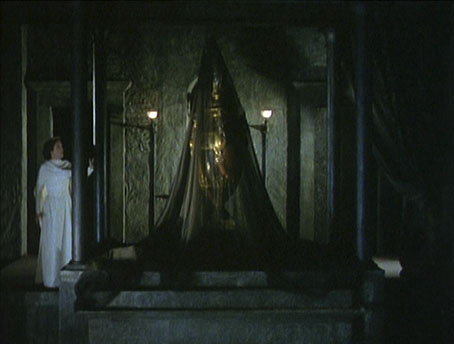
The libretto by Béla Balázs turns the old fairy tale into a psychodrama that’s also one of the first post-Freud operas, with the audience being asked in the prologue “Where is the stage? Is it outside, or inside?” Judith is ushered into the castle by Bluebeard to find seven locked doors: her curiosity and her demands to discover what lies behind the doors (or inside the mind of her husband-to-be) seals her fate. In some of the fairy tale versions the brothers of the bride arrive at the last moment to rescue their sister; not so here.

Continue reading “Leslie Megahey’s Bluebeard”