Night’s black agents

dulac.jpg

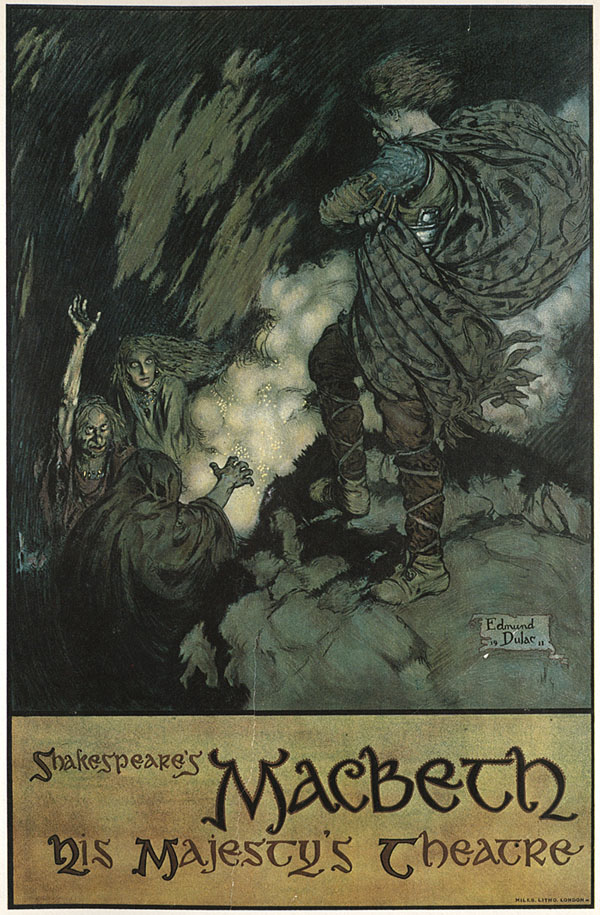
Poster by Edmund Dulac (1911).

This month sees a profusion of events marking the 400th anniversary of Shakespeare’s death so here’s my contribution, a rundown of Macbeths-I-have-seen on screen and stage. I’ve mentioned before that Macbeth and The Tempest are my favourite Shakespeare plays, two dramas concerned with magic of very different kinds. Macbeth is the more popular play, not least for being the more easily adaptable: the supernatural dimension may not suit every circumstance but the themes of treachery, fear, paranoia and a murderous struggle for power are universal. This list contains a wide range of adaptations but there are many film versions I’ve yet to see, including the most recent directed by Justin Kurzel.
welles.jpg

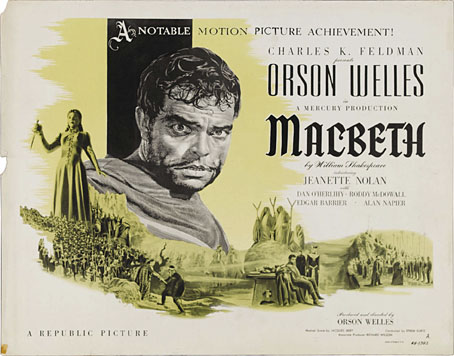
Macbeth (1948), directed by Orson Welles
Orson Welles as Macbeth
Jeanette Nolan as Lady Macbeth

I think the Welles adaptation was the first Macbeth of any kind that I saw so it’s fitting that it begins this chronological list. Famously shot over three hectic weeks on the sound stages of Republic Studios, and with sets made from props previously used in cheap westerns, the result is often eccentric. I’ve a lot of time for Welles as a director but this is one film of his that I’ve never enjoyed very much. His theatre performances (and productions) of Shakespeare began at school, and he was seldom precious with the texts: Chimes at Midnight is a fusion of several different plays while this version of Macbeth uses the same doctored script that he directed for the Voodoo Macbeth in Harlem in 1936. I don’t mind some editing—short scenes such as the witches’ meeting with Hecate are often excised—but some of Welles’ changes are made to support his belief that the witches are directly responsible for Macbeth’s actions, a theory I don’t agree with, and which I’ve never seen given credence elsewhere. This explains oddities such as the appearance of the witches at the very end of the film delivering words from the beginning of the play: “Peace! The charm’s wound up.”

Worse than this is the decision to have most of the cast speaking with vague Scottish accents (a “burr” Welles called it), something that would work with a Scottish cast but which courts disaster with a group of Americans working in haste. The accents may be warranted by the setting but the words of the play are English ones, free of common Scottish colloquialisms such as “ken”, “bairn” and the like. On the plus side, it’s good to see Harry Lime-era Welles performing Shakespeare, and the mist-shrouded production has a barbaric quality that Jean Cocteau appreciated. The forked staff that each witch carries is a detail that I’ve borrowed for drawings on a number of occasions.
joemacbeth.jpg

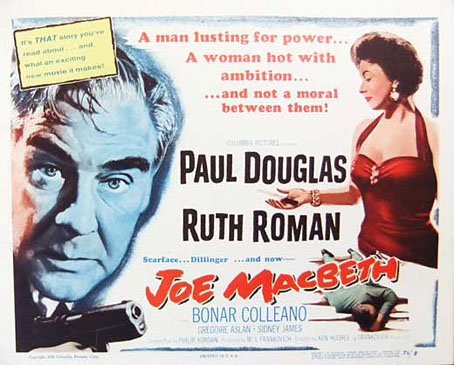
Joe MacBeth (1955), directed by Ken Hughes
Paul Douglas as Joe MacBeth
Ruth Roman as Lily MacBeth

The play reworked as a cheap gangster picture set in the Chicago of the 1930s but made in Britain with a partly American cast. I’ve only seen this once (and many years ago) but I recall it being pretty ludicrous, not least for another accent problem with the English actors doing bad impersonations of Chicago hoodlums. Anyone who grew up watching the Carry On comedy films has a hard time taking Sid James seriously in heavy roles, and here he plays the Banquo character, “Banky”. Joe MacBeth is chiefly notable today for being the first entry in the Macbeth-as-gangster sub-genre; after this there was Men of Respect (1990), Maqbool (2003, an Indian film set in Mumbai), and Macbeth (2006, an Australian film set in Melbourne), none of which I’ve yet seen.
Continue reading “Night’s black agents”

In Germany before the war

1: Fritz Haarmann (1879–1925)

hanover.jpg

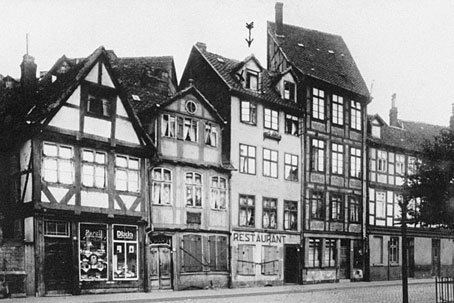
Arrow shows Haarmann’s attic residence in Rote Reihe, Hanover.

Haarmann was one of several serial murderers haunting Weimar Germany, variously nicknamed “the Butcher of Hanover”, “the Vampire of Hanover”, “the Wolf Man”, etc. for his sexual assault, murder and dismemberment of at least 24 boys and young men between 1918 and 1924. Haarmann also sold meat on the black market which led to rumours that some of the mince and other produce he sold was human flesh.

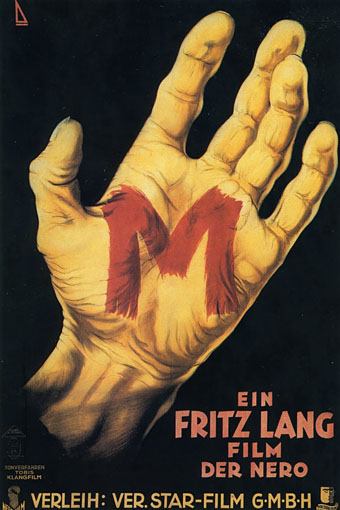
2: M (1931), a film by Fritz Lang.

m-poster.jpg

Thea von Harbou’s script for M is based in part on the Haarmann case although Lang’s child-killer is shown preying on girls rather than boys. Peter Lorre is superb in his first major role as the murderer, while Lang’s use of the new sound technology is remarkably inventive when compared to his stagey contemporaries in Hollywood.

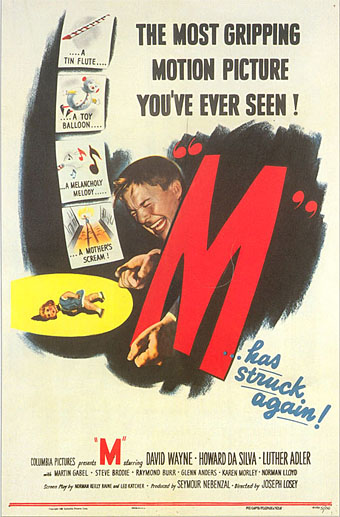
3: M (1953), a film by Joseph Losey.

m-1951.jpg

Lang’s masterwork reworked as a Los Angeles film noir by Joseph Losey before McCarthyism sent him to Europe. This is one noir I still haven’t seen even though a major sequence takes place in that cult location, the Bradbury Building.

Continue reading “In Germany before the war”

Shadowland covers

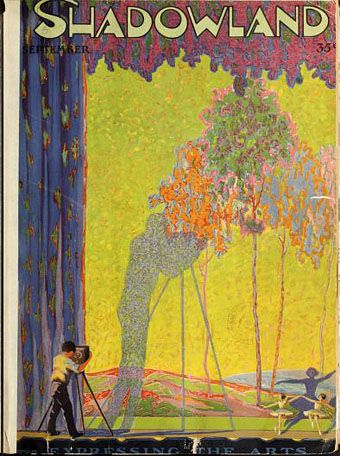
shadowland01.jpg

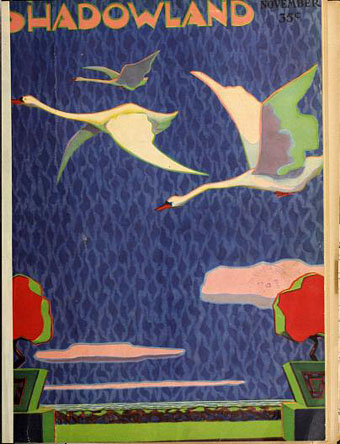
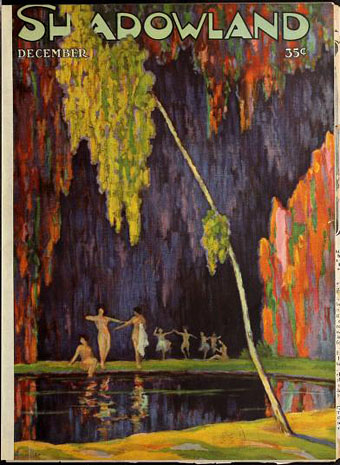
Not the horror magazine, this is an earlier American title that ran from 1919 to 1923. Shadowland covered the arts in general with a preference for stage and film. The thing that immediately sets it apart from other film magazines of the period is the cover art by AM Hopfmuller; many of the paintings resemble theatre backdrops or backgrounds for animated films. The Internet Archive doesn’t have a complete run, unfortunately—the examples here are from volumes 1, 7 and 8—but more of Hopfmuller’s work may be found on other sites. The magazine interiors are also worth a browse for their colour plates and art photographs. (Thanks to Kristian for the tip!)

shadowland02.jpg

shadowland03.jpg

Continue reading “Shadowland covers”

Edmund Dulac’s Tempest

dulac02.jpg

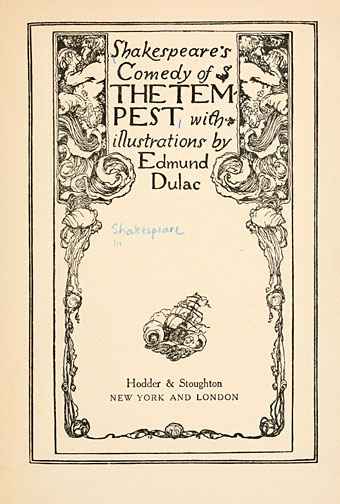
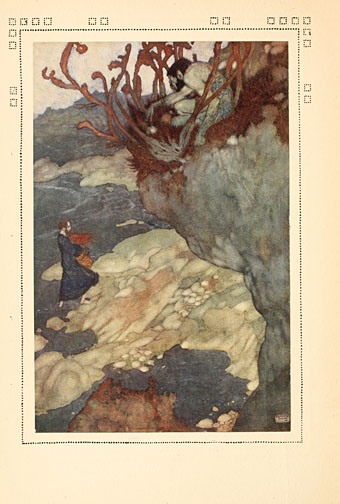
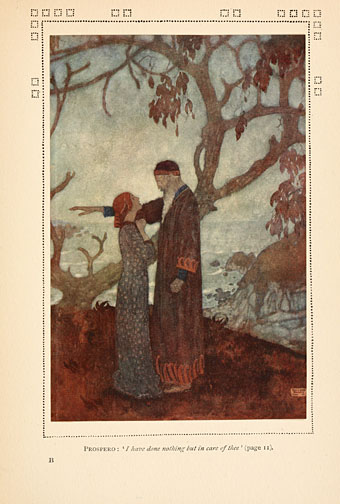
This is a copy of The Tempest that I managed to miss when I was looking for illustrated editions a few years ago. When Edmund Dulac is away from his beloved (and mythical) Arabia or Persia his work tends to resemble that of Arthur Rackham, and that’s what you get in this volume from 1915, a series of Rackham-like colour plates with a handful ink vignettes. Dulac shows us Ariel in his harpy form, and as the more familiar fairy being, while Caliban is depicted as a bearded troglodyte. Of note near the end is Prospero’s sword—which has a moon-shaped hilt of a type only seen in modern-day witchcraft or ritual magic—and the plate for “We are such stuff as dreams are made on”, a suitably strange and almost abstract rendering of a dissolving cosmos.

dulac01.jpg

dulac03.jpg

dulac04.jpg

Continue reading “Edmund Dulac’s Tempest”

Weekend links 290

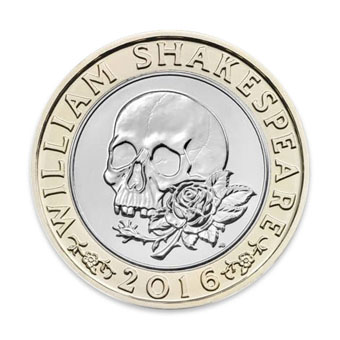
coin

The Royal Mint celebrates 400 years of William Shakespeare with new £2 coins. The “Tragedies” design gives Britain the Gothiest coin of all time.

• “I hate successful films that travel on an easy wave of ‘good taste’: for me, that is simply anti-culture.” Cinematographer Luciano Tovoli talks to Alexandra Heller-Nicholas about photographing Dario Argento’s masterwork, Suspiria.

• Mixes of the week: Für die Liebe II, an hour of ambient drift by Matthew Dekay, and Carwyn Ellis Mixtape No. 354 by The Voice Of Cassandre.

• Americans in Europe: Frances Mayes on the enduring mystique of the Venetian lagoon, and David Farley on the trail of Kafka in Prague.

“We’d read that Brion Gysin and William Burroughs had played around with some scientific equipment from Columbia University,” [Jim] Jarmusch recalls. It was “some kind of strobe light that they claimed, by placing eidetic pulses on the outside of your eyelids, could cause states of hallucination and trance. We found out how to check out this machine and experimented with … not fantastic results! In a way though, Luc [Sante] channels ghosts: he’s able to imagine and mentally reconstruct events and places from the past and weave them into stories. He can cross influences like Blaise Cendrars and JG Ballard with James M Cain and Raymond Roussel.”

[…]

If New York celebrates amnesia, perpetual transformation, accelerated obsolescence – and offers newcomers a blank slate, a chance to be born again – then Sante offers a mordantly heretical vision of the city. For him it’s full of layers and depths, of echoes and eerie reverberations, of occult whispers. “The tech crowd thinks that we can’t afford the past to be sitting on our shoulders. It’s a burden, a dead weight. We’ve got to innovate constantly. We have to … disrupt. But the 20th century is littered with valuable stuff – writers, ideas, daily certainties – that gets discarded and that needs to be picked up and looked at again.”

Sukhdev Sandhu profiles writer Luc Sante

The Edge Question for 2016: What do you consider the most interesting recent (scientific) news? What makes it important?

Bradley L. Garrett’s foreword for Secret Tunnels of England: Folklore and Fact (2015), a book by Antony Clayton.

Caitlin R. Green on the monstrous landscape of medieval Lincolnshire.

Mistaken Memories of Mediaeval Manhattan by Brian Eno.

Arche (live, 2013) by Master Musicians of Bukkake.

A Year In The Country returns for another year.

Kafka (1982) by Masami Tsuchiya | Manhattan (1984) by Seigen Ono | Tunnel (1997) by Biosphere