TV Wipeout revisited

tvwipeout.jpg

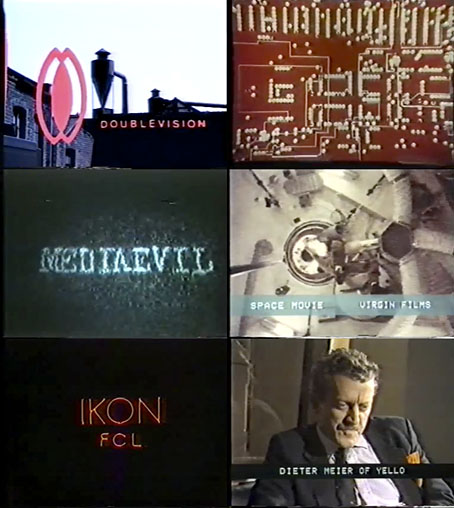
TV Wipeout, as detailed in an earlier post, was a one-off “video magazine” compiled and released on VHS by Cabaret Voltaire in 1984. This was the fourth title on the Cab’s own Doublevision label which was easily the best of the UK’s independent video labels at the time. Many of the other Doublevision releases have either been reissued on DVD or can be found online but TV Wipeout has remained elusive, in part because it contains material that would offend YouTube’s copyright restrictions. Cabaret Voltaire’s deal with Virgin Records enabled them to pad the running time with music promos and trailers for some of the films on Virgin’s own video label.

Back in 2012 I was able to find some of the more popular items but not the obscurities, a situation that’s now resolved by this YouTube playlist which has uploaded the entire cassette as a series of separate items. Most of the previously missing pieces will only be of interest to completists—some of them are scratch-video creations that look very dated today—but if you’re like me, and have waited over 30 years to see this thing in its entirety, it means your curiosity can now be assuaged. A couple of items by Cabaret Voltaire and Japan are still missing but they’re easily found elsewhere.

Update: As noted in the comments, the Japan clip was missing due to an oversight, and is now in place. I’m still getting a message saying the Cabaret Voltaire video is “blocked in your country on copyright grounds” so that must be UK-specific.

Previously on { feuilleton }
Cabaret Voltaire on La Edad de Oro, 1983
Doublevision Presents Cabaret Voltaire
Just the ticket: Cabaret Voltaire
European Rendezvous by CTI
TV Wipeout
Seven Songs by 23 Skidoo
Elemental 7 by CTI
The Crackdown by Cabaret Voltaire
Network 21 TV

Weekend links 263

nakayama.jpg

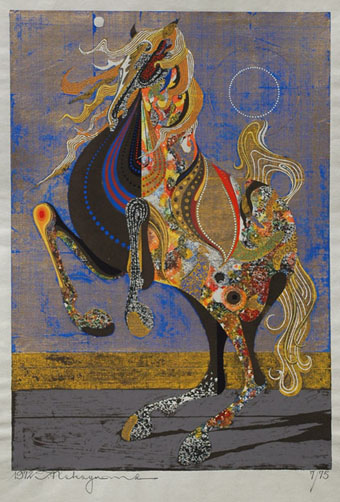
Dancing Horse (1972) by Tadashi Nakayama.

• The Wounded Galaxies Festival of Experimental Media takes place in Bloomington, Indiana, on October 7–11, 2015. The event is an offshoot of the earlier Burroughs Century, and the phrase “wounded galaxies” is one of Burroughs’ own. It’s also the partial title of Wounded Galaxies Tap At The Window, the most recent album by Cyclobe who will be performing at the festival. Cyclobe’s Stephen Thrower will be in London later this month for the launch of his new book, Murderous Passions: The Delirious Cinema of Jesús Franco, and a screening of Franco’s Vampyros Lesbos (1971).

• Gallery sites showcasing erotic art are often coy about the details of the work they’re exhibiting. That’s not the case with Artists Space, NYC, whose Tom of Finland: The Pleasure of Play is running from June 14–August 23, 2015.

• “I just loved the songs, and I didn’t mind the age in their voices, and I didn’t mind the fact that they were unaccompanied, it didn’t matter.” Shirley Collins talking to Ben Graham about her love of English folk music.

The more important question is what do we do with psychedelia now? I think the drugs themselves and the experiences they produce in individuals and for society are too important and vital to be pigeon-holed and taken hold of by a bloodthirsty media that always aims to reduce all experience to a few simple straplines for improved consumerism.

Dr Ben Sessa talking to Barnaby Smith about psychedelic drugs. Breaking Convention 2015, the Third International Conference on Psychedelic Consciousness, takes place at the University of Greenwich next month.

• “…if someone opens a door or if sunlight falls on them they shoot off the grid and suddenly you have a roomful of what sounds like sick bagpipes.” Will Gregory on the physicality of Moog synthesizers.

• Mixes of the week: The Necromancer-Queens of Neverland, an exotic collection by SeraphicManta, Secret Thirteen Mix 156 by Asusu, and an Ornette Coleman playlist.

• “In 2015, the thought of anything as incendiary as Scum or Made in Britain turning up on TV just seems bizarre.” Danny Leigh on the great Alan Clarke.

• More psychedelia: ‘Art That Transcends‘, my article for Communication Arts, has been posted on the magazine’s website.

Phantasmaphile recommends Thus Were Their Faces, a collection of short stories by Silvina Ocampo.

Earth filmed playing live in Brooklyn, NY, September 24, 2014. The full set, and a great performance.

• At Dangerous Minds: “How Far Will You Go?” Meet Smokey, the outrageously gay 70s cult rockers.

Peter Strickland on six films that fed into The Duke of Burgundy.

Things I Found In Records

Christopher Lee sings!

Polly On The Shore (1970) by Shirley & Dolly Collins | The Quiet Joys Of Brotherhood (1972) by Sandy Denny | The Banks of Red Roses (1988) by June Tabor

In the Mind’s Eye

itme.jpg

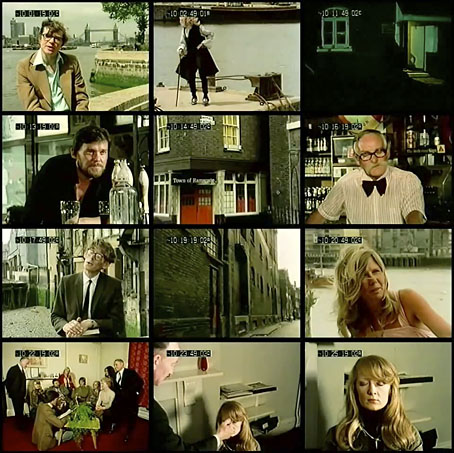
One of the posts last December concerned a short TV film by Alan Garner, To Kill a King, the final entry in the Leap in the Dark series which the BBC ran from 1973 to 1980. Each half-hour episode concerned the supernatural, presented in either drama or documentary form, which for me would have meant prime viewing but I don’t recall ever seeing the series. The Garner film was a strange piece of drama whereas In the Mind’s Eye (1977) is a documentary about ghosts presented by writer Colin Wilson. The film is almost more interesting for its production details than its subject, the Phantom Vicar of Ratcliffe Wharf, an alleged spectre whose murderous life is shown in a piece of unconvincing dramatisation. The Phantom Vicar was the invention of writer Frank Smyth who needed a supernatural story for the Frontiers of Belief section of Man, Myth and Magic during its publication as a part-work in the early 1970s. Smyth and friend describe hatching the tale then we hear a number of subsequent reports which show the story quickly became an East End legend. Between the interviews you get to see bits of the docklands area before the spirits of old London had been exorcised by redevelopment.

Previously on { feuilleton }
To Kill a King by Alan Garner
Dreaming Out of Space: Kenneth Grant on HP Lovecraft
MMM in IT
Terror and Magnificence

Owls and flowers

1: The pattern

pattern.jpg

A plate design by Christopher Dresser.


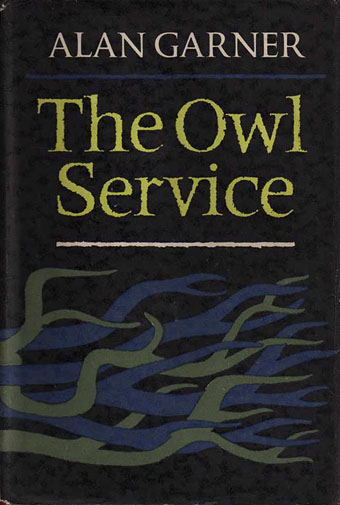
2: A novel by Alan Garner

garner.jpg

The Owl Service (1967). Cover design by Kenneth Farnhill.


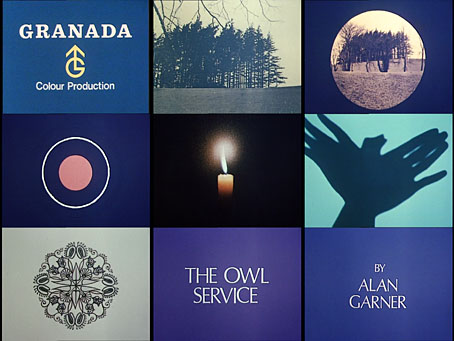
3: A Granada TV serial

granada.jpg

The Owl Service (1969). Eight episodes, written by Alan Garner, directed by Peter Plummer.


4: A diversion

clockwork.jpg

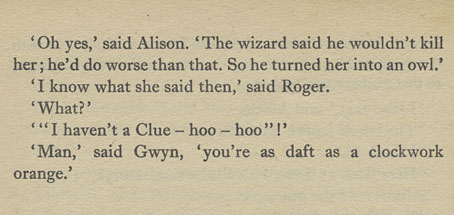
Chapter 8 of The Owl Service.

hills.jpg

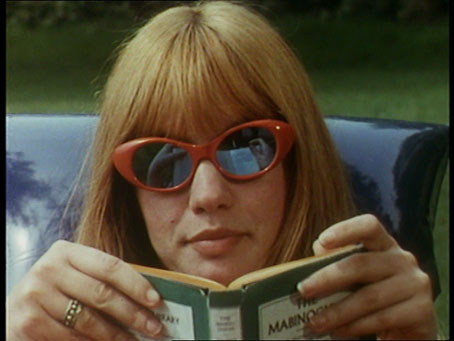
Gillian Hills as Alison in The Owl Service.

aco.jpg

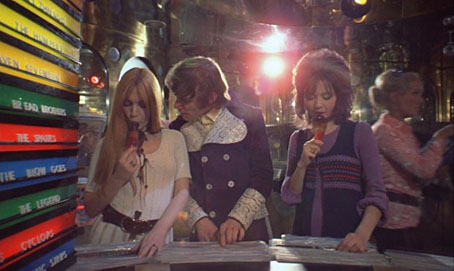
Gillian Hills (left) as Sonietta in A Clockwork Orange (1971).


5: A single by Pram

pram.jpg

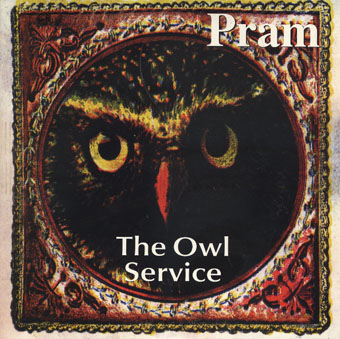
The Owl Service (2000) by Pram. Cover art by Mary Jo Bole.


6: Ghost Box

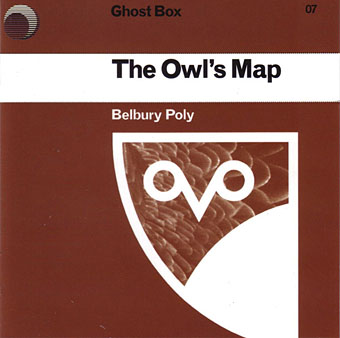
belbury.jpg

The Owl’s Map (2006) by Belbury Poly. Design by Julian House.

Track 1: Owls And Flowers

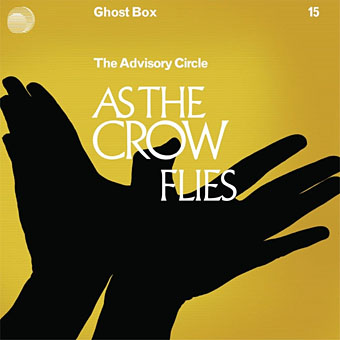
advisory.jpg

As The Crow Flies (2011) by The Advisory Circle. Design by Julian House.

Track 11: Learning Owl Reappears


7: A group

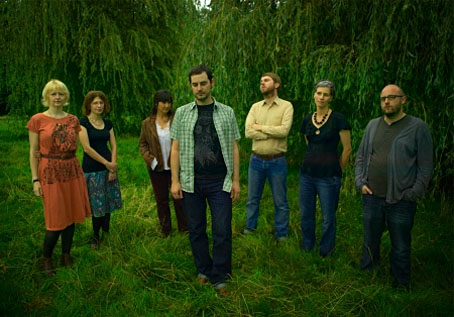
owlservice.jpg

The Owl Service.


8: A Folio Society edition

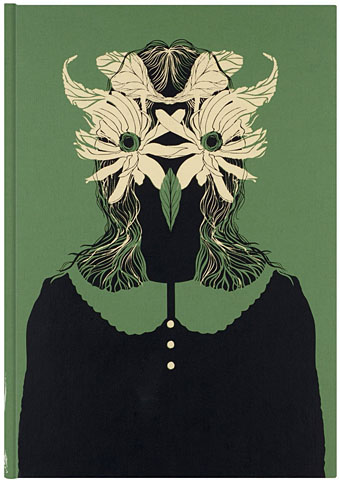
hopes.jpg

The Owl Service (2013) by Alan Garner, illustrated by Darren Hopes.


9: Twelve audiological pathways

ayitc.jpg

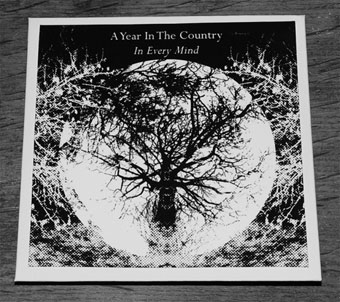
In Every Mind: Transmission Resonances, Volume 1 (2015) by A Year In The Country.

Transmission Resonances: Volume 1 takes as its wellhead the continuing reverberations of the 1969 cathode ray version of Alan Garner’s The Owl Service.

It pushes open the attic door from whence the scratching descends and travels to places that surprised, intrigued and even delighted our good selves when it was being shaped on our own particular audiological potters wheels.

Previously on { feuilleton }
To Kill a King by Alan Garner
Red Shift by Alan Garner

Weekend links 258

stalenhag.jpg

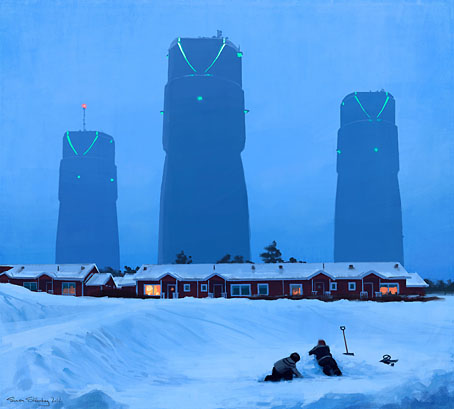
Simon Stålenhag‘s SF artwork will be published in book form if funding is secured. In the future everything will be crowdfunded for 15 minutes.

• Mixes of the week: FACT Mix 494 is a fantastic dub selection by Colleen; Secret Thirteen Mix 151 is by Sally Dige; Stephen Mallinder‘s return to the doom-laden Industrial music of the 1980s suits the post-election mood. Mallinder’s mix is helping promote Industrial Soundtrack for the Urban Decay, a documentary by Amélie Ravalec.

• “…it felt more like real life to me than the average hour-long television show.” Sopranos creator David Chase on what he enjoyed about Twin Peaks. Related: Twin Peaks Tarot cards.

Sound & Song in the Natural World edited by Tobias Fischer & Lara Cory. A book about animal music and communication with a 60-minute CD of field recordings.

• “The psychedelic renaissance has already begun, and for the most part I welcome it,” says Erik Davis in a wide-ranging interview with Sean Matharoo.

• It rumbles on: Brown Pundits on “An Embarrassment at PEN”. A useful collection of stories, reactions and polemic from the past two weeks.

Fanny and Stella: The Shocking True Story, a play by Glenn Chandler about Victorian London’s scandalous pair of cross-dressing men.

• Artist Charles Ray causes a problem for the Whitney Museum of American Art with his sculpture of a naked Jim and Huckleberry Finn.

• “Don’t believe Orson Welles,” says his biographer Simon Callow, “especially when he calls himself a failure.”

• A return to Adolph Sutro’s Cliff House features several photos I’d not seen before.

• More Tarot: Arcana: The Tarot Poetry Anthology is looking for funding.

• At Dangerous Minds: The ancient magic of the record label.

Foreign Movie Posters

Tarot (Ace of Wands theme, 1970) by Andy Bown | Distant Dreams (Part Two) (1980) by Throbbing Gristle | The Devil In Me (1982) by Stephen Mallinder