Weekend links 655

brauner.jpg

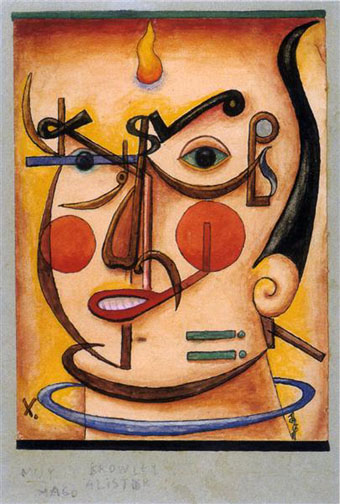
The Surrealist (1947) by Victor Brauner.

• At Dennis Cooper’s: Terry Ratchett presents…18 needlessly obscured avant-garde films by Thomas White, Teinosuke Kinugasa, George Barry, Standish Lauder, Helge Schneider, Dusan Makavejev, Oliver Herrmann, Mauricio Kagel, Mamoru Oshii, Gian Carlo Menotti, Pat O’Neill, Vera Chytilová, Shozin Fukui, Willard Maas, Djouhra Abouda and Alain Bonnamy, Juraj Herz, and Jay Schlossberg-Cohen.

• “When I’m convinced that a certain type of book is completely beyond the capacities of my temperament and my technical skills, I sit down at my desk and start writing it.” Italo Calvino discussing his approach to writing in 1983. The essay, The Written World and the Unwritten World, gives its title to a collection of previously unavailable Calvino pieces translated by Ann Goldstein. John Self reviewed the book.

• New music: Komplett Kollaps (A Dedication To Jóhann Jóhannsson) by Rúnar Magnússon, and Composition 1 by Deathprod.

Brann’s new book sweeps across the vast range of things that hold her interest. It thus invites us to enjoy the life of the mind and to live from our highest selves. A thoughtful encounter with this book will make you, I swear, a better person. The book includes chapters on Thing-Love, the Aztecs, Athens, Jane Austen, Plato, Wisdom, the Idea of the Good. The first half provides an on-ramp to the chapter titled “On Being Interested,” which falls in the dead centre of the book. This central chapter serves as more than a cog in the wheel: it is an ars poetica. Addressing issues of attention, focus, and interest itself, as well as how and where to deploy these functions throughout our lives, “Being Interested” offers a solution for any seeker intrigued by the notion that happiness is not an accident but a vocation. Brann characterizes the pursuit of happiness as “ontological optimism […] to be maintained in the face of reality’s recalcitrance.”

Peggy Ellsberg reviewing The Habit of Interestedness by Eva Brann

• “God told me I should take more LSD.” Sari Soininen on her acid-induced photographs.

• At Public Domain Review: The Procession of the Months by Walter Crane.

• At Smithsonian Magazine: See the chilling beauty of winter on Mars.

• Steven Heller’s font of the month is Edie & Eddy Slab.

• RIP Michael Snow, film-maker and musician.

Kollaps (1981) by Einstürzende Neubauten | Feed The Collapse (1992) by Main | Collapsing Inwards (2014) by Jóhann Jóhannsson

Weekend links 653

clarke.jpg

The Snow Queen (1916) by Harry Clarke.

• “…blogging remains my favourite format precisely because the writing so rarely feels like labour. Liberated from the need to pitch an idea or wield credentials, blogging—for a professional writer—frees you up to address topics outside your perceived expertise. It feels like a leisure activity because it’s leisurely—a ramble across fields of culture and knowledge, during which you sneak short cuts and trespass into areas you are not meant to go. A post doesn’t have to have a destination, a point. You can bundle or concatenate several different topics, push into adjacency things that don’t obviously or naturally belong together—like oddments inside a Cornell box. You can start somewhere and end up somewhere completely different, without any obligation to tie things up neatly.” Simon Reynolds reflecting on 20 years of the blogging thing, and neatly summarising the attractions of the medium. For some of us, anyway…

• At Smithsonian Magazine: “Structural colour was first documented in the 17th century, in peacock feathers, but it is only since the invention of the electron microscope, in the 1930s, that we have known how it works.” Tomas Weber on Andrew Parker’s nanotechnology developments which are creating some of the brightest hues in the world.

• “Bring back the Cailleach, beloved Scottish goddess of winter, shaking out the snow on the land. Bring back Mother Holda, with her wild geese and her snowflakes landing on the tongue like a gift from the sky…” Yvonne Aburrow would like to see the festival of Yule returned to its anarchic origins.

Merry Christmas Mr Lawrence, an extract from a recent audience-less concert by Ryuichi Sakamoto which he says is liable to be his last.

• At Unquiet Things: S. Elizabeth posts some of the pictures that couldn’t be fitted into The Art of Darkness.

• Mix of the week: A Tribute to Manuel Göttsching by Low Light Mixes.

• It’s the end of December so it must be time for Alan Bennett’s diary.

• RIP Mike Hodges.

Vale Berfrois.

Snow (1985) by Takashi Toyoda | Snowfall (2000) by Haruomi Hosono | Snowfall (2005) by Robin Guthrie & Harold Budd

Weekend links 652

colquhoun.jpg

Landscape with Antiquities (1955) By Ithell Colquhoun.

• “The ontological horror at the core of these stories is that the stone–which represents the natural world and the uses we carve out for it–is unknowable. It’s been here, affecting the land, whether erected as a monument or laid as bricks, for longer than we can fathom, and its inaccessible past has some frightening bearing on the present.” Sean McGeady on 50 years of stone-tape theory, from Nigel Kneale to Ben Wheatley. Also a reminder that Christmas ghosts on TV could be more than another adaptation of MR James.

• “Midnight is the time when one can recall, with ribald delight, the names of all the Great Works which every gentleman ought to have read but which some of us have not. For there is almost as much clotted nonsense written about literature as there is about theology.” At Wormwoodiana: That Black-Edged Light: A Note on HM Tomlinson.

• “Anxious but stubborn herself, she was a lucid observer of social awkwardness, her subject matter in her books being primarily worry: at disasters real and imagined (comet-fall, floods, unplanned chaos), but also at small-scale domestic panics (such as how to mollify unwanted guests).” Mark Sinker reviewing Tove Jansson, a new biography by Paul Gravett.

Dennis Cooper’s favourite fiction, poetry, non-fiction, film, art, and internet of 2022. Thanks again for the link here!

• “A is for Alphabet and Architecture.” Public Domain Review now has an index. Rather slight but still useful.

Ju-on: The Curse and four other Y2K J-Horror movies you may have missed: a list by James Balmont.

• At Smithsonian Magazine: Listen to the sound of a dust devil swirling around on Mars.

• Unquiet Things offers the latest accumulation of Intermittent Eyeball Fodder.

Stone God (1957) by Martin Denny | Sanctuary Stone (1973) by Midwinter | Children Of Stone (2006) by Espers

Weekend links 650

phillips.jpg

A detail from Tom Phillips’ cover design for Starless And Bible Black (1974) by King Crimson.

• RIP Tom Phillips. The term “polymath” is often used by monomaths to describe people who are proficient in two areas instead of just one. Tom Phillips was a model polymath, an artist whose work ranged wherever his curiosity took him, from conventionally realist portraiture to abstract painting and computer art, from collage, sculpture and stage design to 20 Sites n Years, a long-term photographic work. When Phillips decided to illustrate Dante’s Inferno he first translated the book himself; the Dante project subsequently evolved into a TV/film production made in collaboration with Peter Greenaway and Raúl Ruiz. As for A Humument, this is the artist’s book by which all others should be judged, a unique reworking of a Victorian novel which now exists in multiple editions and sub-works. Humument extracts became a kind of Phillips signature (you can see one at the top of this post), a series of often cryptic fragments and pronouncements that appeared in prints and paintings while also supplying the libretto for Phillips’ first opera, Irma, one of his many musical compositions. Some years ago I posted a quote by Brian Eno about his former art teacher; those words (from A Year With Swollen Appendices) are worth repeating:

It’s a sign of the awfulness of the English art world that he isn’t better known. Tom has committed the worst of all crimes in England. He’s risen above his station. You can sell chemical weapons to doubtful regimes and still get a knighthood, but don’t be too clever, don’t go rising above your station.

The smart thing in the art world is to have one good idea and never have another. It’s the same in pop—once you’ve got your brand identity, carry on doing that for the rest of your days and you’ll make a lot of money. Because Tom’s lifetime project ranges over books, music and painting, it looks diffuse, but he is a most coherent artist. I like his work more and more.

• “The most radical thing about Ever So Lonely is the instrumental when it breaks down and for eight glorious bars you’re dancing to a classical raga and loving it, whoever you are.” Sheila Chandra again on the fleeting pop career of Monsoon.

• Something to look forward to for next summer: Worlds Beyond Time: Sci-Fi Art of the 1970s, a book by Adam Rowe, curator of 70s Sci-fi Art at Tumblr.

• Mix of the week: Groove Orient: South Asian Elements in Psychedelic Jazz at Aquarium Drunkard.

• “Physicists create a wormhole using a quantum computer.” Natalie Wolchover explains.

Pattern Collider is a tool for generating and exploring quasiperiodic tiling patterns.

• “Infernal Affairs is still Hong Kong’s greatest crime saga,” says James Balmont.

Secret Satan, 2022, the essential end-of-year book list from Strange Flowers.

• Also no longer with us as of this week, comic artist Aline Kominsky–Crumb.

• New music: Violet Echoes by Subtle Energy.

Il Trio Infernale (1974) by Ennio Morricone | Firebird Suite: Infernal Dance Of King Kastchei (Stravinsky) (1975) by Tomita | Infernal Devices (2011) by Moon Wiring Club

Weekend links 649

chihuly.jpg

Niijima Floats: Mottled Blue Black Float with Silver Leaf (1991) by Dale Chihuly.

• “Blue whale songs fall below the range of human hearing. If you want to listen to one, to actually hear its ethereal patterns of wobbly pulses and haunting moans, you have to speed it up by at least two-fold. But according to Hildebrand and McDonald’s instruments, the tonal frequencies of the songs had been sinking to even greater depths for three straight years. ‘This is weird,’ Hildebrand thought. To figure out if it was just an anomaly or something more, Hildebrand and McDonald embarked on a quest to find some really old songs. Eventually they got their hands on some of the earliest known recordings, created by the Navy in the 1960s and stored on analog cassettes. They were floored. The frequencies had declined by 30 percent over 40 years.” Kristen French on a mysterious development in blue whale songs.

• “She didn’t see it as a game, or for divination, but as a model of the universe.” Joanna Moorhead on the Tarot designs of Leonora Carrington.

• “A collection of blogs about every topic”: ooh.directory. (Ta to whoever added this place to the list.)

• New music: Pop Ambient 2023 by Various Artists, and Aeolian Mixtape by Quinta.

• At Public Domain Review: The Tanzmasken of Lavinia Schulz and Walter Holdt.

• At Wormwoodiana: Mark Valentine on mazes and labyrinths. (Previously)

• At Spoon & Tamago: Paper-cut cityscapes by kirie artist Hiroki Saito.

• At Smithsonian Magazine: The Unrivaled Legacy of Dale Chihuly.

• Mix of the week: Neo-Medieval Mix by Moon Wiring Club.

• Old music: Back To The Woodlands by Ernest Hood.

• At Dennis Cooper’s: Jacques Rivette Day.

Weyes Blood’s favourite music.

(Gorgeous Curves Lovely Fragments Labyrinthed On Occasions Entwined Charms, A Few Stories At Any Longer Sworn To Gathered From A Guileless Angel And The Hilt Edges Of Old Hearts, If They Do In The Guilt Of Deep Despondency.) (2004) by Akira Rabelais | The Private Labyrinth (2008) by The Wounded Kings | Labyrinths (2018) by Jonathan Fitoussi & Clemens Hourrière