Copyright-free images

images.jpg

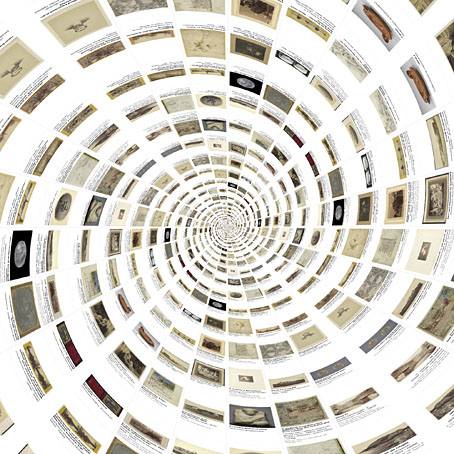
In recent discussions about AI ethics I’ve been seeing the same question raised by commenters, something like the following: “Okay, this stuff is bad…but if we shouldn’t use it then what can I use instead for my book cover/album cover/Substack article…?” This post is intended to provide one answer to the question, a guide to some of the more substantial alternatives for those who complain they can’t afford to hire a human being to decorate their work. Many of these archives have been around for years but searching for single images doesn’t always bring you to a useful copyright-free solution right away, especially if you’re using Google’s deteriorated service.

Wikimedia Commons. An obvious yet indispensible resource, especially for illustration research, and one that’s continually updated and improved. I only noticed recently that Wikimedia now has very large scans of Ernst Haeckel’s Kunstformen der Natur that are much better quality than the books at the Internet Archive.

The Internet Archive. And speaking of which… The Internet Archive has its own images section but for years now I’ve been mining the texts section looking for illustrated books. This isn’t an ideal solution for most purposes, not when the best material is often hidden under blank library covers, but persistence can be rewarding, especially where old engravings are concerned. Many of the 19th-century illustrations sold by stock libraries may be found here for free.

Gallica. The public face of the Bibliothèque Nationale of France, and a very useful resource despite being cursed with a slow and buggy interface. There’s also a Gallica app but you’re better off using the website.

Library of Congress. Excellent for anything to do with US history. Also a great selection of photochromes, among other things.

NYPL Digital Collections. “Explore 1,060,155 items digitized from The New York Public Library’s collections.”

Public Domain Image Archive. “Explore our hand-picked collection of 10,046 out-of-copyright works, free for all to browse, download, and reuse. This is a living database with new images added every week.”

Smithsonian Open Access & Smithsonian Image Gallery

Biodiversity Heritage Library. Animals and plants.

Wellcome Collection. Public domain medical (and related) images.

Metropolitan Museum of Art Open Access.

The Getty Museum Open Content.

The British Library Flickr Albums. A shame it’s Flickr, they really ought to have a dedicated site of their own for images.

Europeana. “Discover Europe’s digital cultural heritage.”

David Rumsey Map Collection. Maps, maps and more maps.

NASA Image and Video Library. NASA materials have always been free to use so long as you also credit their source.

ESO. ESO is the European Southern Observatory which is housed at a number of sites in the Chilean Atacama Desert. As with NASA, the high-resolution images created there are free to use so long as credit is included.

National Library of Medicine. “Images from the history of medicine.”

Pixabay. “Stunning royalty-free images & royalty-free stock.”

Pexels. “The best free stock photos, royalty free images & videos shared by creators.”

Unsplash. “All images can be downloaded and used for personal or commercial projects.”

Exotic Animal Photo Reference Repository. “Artists creating derivative or transformative works without Generative AI have blanket permission to reference these photos.”

Heidelberg Universitäts-Bibliotek: Art and satirical periodicals. An invaluable resource for European periodicals of the late 19th/early 20th centuries, with downloadable of scans of The Studio, The Yellow Book, Ver Sacrum, Pan, Jugend, and many other titles. Heidelberg is only one of many university libraries which now make parts of their collection available as free downloads. I’d love to point the way to the best of the others but I don’t have a useful list to hand. A recent discovery, however, is Polona, the site for the National Library of Poland which has a large quantity of prints and photographs as well as whole books. Happy searching!

Update: Added a few more links.

Weekend links 756

crane.jpg

A Diver (no date) by Walter Crane.

• At Worldbuilding Agency: The first part of a long interview with Bruce Sterling concerning “the pursuit of deliberate oxymorons as a creative strategy, worldbuilding in the context of history and futurity, Berlusconi on the moon and more”. With questions from Paul Graham Raven, and my cover art for Bruce’s Robot Artists and Black Swans.

• “With its focus on the 1970s career of Leonard Rossiter and its mordant metaphysics of the moist, Sophie-Sleigh Johnson’s Code: Damp might just be the most original book yet to emerge from Repeater publishing,” says Tim Burrows.

• “A definitive guide to the work of William S Burroughs’ on screen.” It’s a guide but it’s hardly definitive when there’s no mention of the four films Burroughs made with Anthony Balch.

• A catalogue of lots at the forthcoming After Dark: Gay Art and Culture online auction. Homoerotic art, photos, etc, also historic porn and a few garments worn by Divine.

• New music: Jay recommends the high-grade motorik en espanol dance-rock of Sgt Papers; Topology Of A Quantum City by Paul Schütze; Overtones by Everyday Dust.

• This week’s obligatory Bumper Book of Magic entry: Ben Wickey at Alan Moore World talks about his work on the book’s Great Enchanters comic strips.

• At Dennis Cooper’s it’s Malcolm Le Grice’s Day. Le Grice’s death was announced earlier this month.

• At The Wire: The magazine’s contributors’ charts showing their favourite music of the past year.

• A new website for the Sanborn Fire Maps and their decorated title pages.

• Mix of the week: DreamScenes – December 2024 at Ambientblog.

• At Public Domain Review: Albert Kahn’s autochromes.

Burroughs Called The Law (1960s) by William S. Burroughs | Language Is A Virus From Outer Space (Live) (1984) by Laurie Anderson | Burroughs Don’t Play Guitar (1996) by Islamic Diggers

Weekend links 749

carriage.jpg

Fantastic Sea Carriage (1556) by Johannes van Doetecum the Elder & Lucas van Doetecum, after Cornelis Floris the Younger.

• “Preiss and McElheny have acknowledged the influence of Jorge Luis Borges’s short story ‘The Library of Babel’ (1941), which offers a brilliant, brain-scratching disquisition on bibliotecas as conduits both of infinity and meaninglessness. I also found myself thinking of Arthur Fournier, in D. W. Young’s documentary The Booksellers (2019), who spoke of ‘the psychic dreaming that paper allows.'” Sukhdev Sandhu on The Secret World, a film by Jeff Preiss and Josiah McElheny about the books collected by Christine Burgin.

• Most people know Burt Shonberg’s paintings—if they know them at all—from their appearance in Roger Corman’s Edgar Allan Poe films. But Shonberg had a career outside the cinema, something explored in Momentary Blasts of Unexpected Light: The Visionary Art of Burt Shonberg, an exhibition currently running at the The Philosophical Research Society in Los Angeles.

Warriors (1996), an ad for Murphy’s Irish Stout directed by the Quay Brothers. Samurai warriors in an Irish pub scored to the theme from Yojimbo.

The Grand Jeu group have been neglected, at least in English-speaking history, from the general consciousness of “Surrealism” but they remain among its most interesting dissidents. The teenage Simplistes, led by [René] Daumal and [Roger] Gilbert-Lecompte, collectively experimented with consciousness and investigated wildly syncretic modes of destroying and recombining selves: diverse hermetic and occult systems, extrasensory perception, trances and somnambulism, mediumistic practice and collective dreaming.

[…]

The Grand Jeu was a project of paradox: artistic and ascetic, indulgent and severe, political, and mystical, ecstatic and negating, egoistic and selfless, graceful and violent. It sought to continually weave between collectivity and individuality, of art and life, multiplicity and unity, fed by a brew of political radicalism, inspired by Rimbaud’s germinal poetics of revolt and illumination, a utilitarian embrace of occult traditions and ideas, drug experimentation, Hindu sacred texts (Daumal would become an expert in Sanskrit) and some of Bergson’s philosophy. They were, in their own words, “serious players.” It was a mad mix, and in retrospect, clearly doomed to a short life—so, it turned out, were most its members.

Gus Mitchell on the “experimental metaphysics” of the Grand Jeu

• At Smithsonian magazine: Lanta Davis and Vince Reighard on the sculpted monsters and grotteschi that fill the Sacro Bosco at Bomarzo, Italy.

• At Bandcamp: George Grella compiles a list of “spooky sounds and spooky music, things to haunt nights and dreams”.

• At Colossal: Kelli Anderson’s amazing pop-up book, Alphabet in Motion: How Letters Get Their Shape.

• “The play that changed my life: Jim Broadbent on Ken Campbell’s electrifying epic Illuminatus!

• DJ Food browses some of the many album covers designed by the versatile Robert Lockhart.

Winners of the 2024 Nikon Photomicrography Competition.

• Mix of the week: XLR8R Podcast 873 by Andy Graham.

• The Strange World of…Lou Reed.

• The Internet Archive is back!

Warriors (1990) by Jon Hassell | Red Warrior (1990) by Ronald Shannon Jackson | Bhimpalasi Warriors (2001) by Transglobal Underground

Weekend links 748

leighton.jpg

• In Tate Britain yesterday afternoon I finally got a proper look at Frederic Leighton’s An Athlete Wrestling with a Python (1877). It’s been part of the Tate collection for years but I never used to see it there, my only sighting being a view through a glass door into a locked gallery where the exhibits were being rearranged. I put the statue into my adaptation of The Call of Cthulhu in 1988 (see this post). Virgil Finlay also borrowed the pose for a Tarzan illustration in 1941.

• At Smithsonian magazine: See the first section of the largest-ever cosmic map, revealed in stunning detail by the Euclid space telescope.

• At The Daily Heller: Your Next Stop, The Twilight Zone. An interview with Arlen Schumer about the TV series.

• At Wormwoodiana: Mark Valentine on Punch and the Surrealists.

• Mix of the week: DreamScenes – October 2024 at Ambientblog.

• New music: A House Where I Dream by Mattias De Craene.

• RIP Lillian Schwartz, pioneering computer animator.

• At Bandcamp: The Acid Mothers Temple Dossier.

• Where to start with Alan Garner.

Jim Reid’s favourite music.

The Twilight Zone (1963) by The Ventures | The Twilight Zone (1979) by The Manhattan Transfer | Twilight Zone (1998) by Helios Creed

Weekend links 747

burgher.jpg

Eden Flag with Solar-Anal Emblems and Hexes (2017) by Elijah Burgher.

• A note for regular readers that I’ll be in London for a couple of days next week, so the weekend post may be delayed by a day, if it arrives at all. I’ll be attending this event at The Century Club, Shaftsbury Avenue, a talk about The Moon and Serpent Bumper Book of Magic which will be published here and in the USA a few days from now. I’m told that copies of the book will be on sale if anyone wishes me to sign a copy.

• “Published two years before André Breton’s Manifeste du surréalisme (1924), which delineated the contours of the capital-S Surrealism movement, Les Malheurs represents a proto-Surrealist experiment par excellence.” Daisy Sainsbury on Les Malheurs des immortels (1922) by Paul Éluard and Max Ernst.

• “It has been two decades since Japan’s tidying boom began, and the nation remains as cluttered as ever. I know this because I live here.” Matt Alt in a long read exploring the Japanese cultivation of clutter. Don’t be shamed by minimalist interiors.

…with the Bumper Book, we wanted to present what we hope are lucid, coherent and joined-up ideas on how and why the concept of magic originated and developed over the millennia, a theoretical basis for how it might conceivably work along with suggestions as to how it might practically be employed—and, perhaps most radically, a social reason for magic’s existence as a means of transforming and improving both our individual worlds, and the greater human world of which we are components. And we wanted to deliver this in a way that reflected the colourful, psychedelic, profound and sometimes very funny nature of the magical experience itself. That, we felt, would be the biggest and most useful rabbit to pull out of the near-infinite top hat that we believe magic to be.

Alan Moore talking to Rob Salkowitz about the Moon and Serpent Bumper Book of Magic

• “When it comes to pure cinematic terror The Texas Chain Saw Massacre has no equal,” says Mat Colegate. I’d avoid being quite so definitive but it’s a film I’d put in a list of my favourite cinematic horrors.

• At Smithsonian Magazine: See 15 winning images from the Wildlife Photographer of the Year contest.

• At The Quietus: Lara Rix-Martin on the heavy existentialism of Soviet science fiction. Previously: Zone music.

• New music: Decimation Of I by Meemo Comma.

• Steven Heller’s font of the month is Exentrica.

Hex (1971) by Gil Mellé | Hex (1978) by Jon Hassell | Hexden Channel (2012) by Pye Corner Audio