The recurrent pose 36

gaetano.jpg

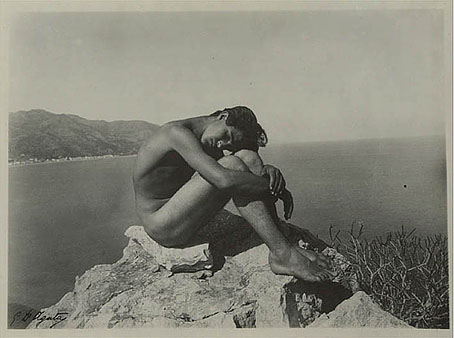
Another antique example of the Flandrin pose. Are you bored yet? Gaetano D’Agata (1883–1949) was one of the photographers who continued a tradition begun by Wilhelm von Gloeden for capturing the youth of Taormina, Sicily, in order to create tasteful prints for those who preferred their erotica to arrive with the vague excuse of Classical allusion. I’ve noted before that von Gloeden was possibly the first photographer to copy Flandrin’s painting, and his example led later photographers to copy him in turn, even borrowing his title, Cain, which reads into the painter’s work a Biblical meaning that seems misplaced. This picture comes from a Flickr selection which includes a similar rendering in postcard form, and also this rather cramped variation.

Elsewhere on { feuilleton }
The recurrent pose archive

Stonehenge panorama

stonehenge.jpg

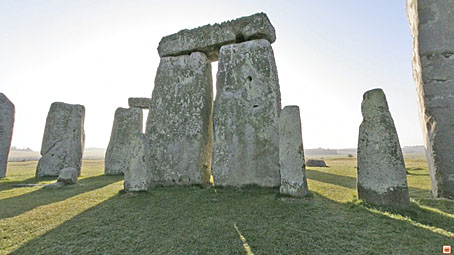
I would have posted this for the Solstice yesterday had it not been for the Chronophage. The panorama is at a BBC page since the corporation is one of the few organisations with the weight to gain permission to photograph the stones up close. Unless you’re an archaeologist or an English Heritage official your view is restricted to the path which surrounds the monument, something you can experience via Google Maps. There did used to be exceptions to this. I was fortunate to be at the Stonehenge Festival in 1982 which took place for a few days over Midsummer in one of the fields a short distance away. On Solstice Day the people from English Heritage let everyone—festival-goers and bemused tourists alike—wander inside the circle where a couple of pagan weddings took place. A couple of years later further festivals were prevented with heavy police action so I feel privileged to have been there on that day.

There was more Stonehenge recently at Bldg Blog with a post about Harold Egerton’s stunning photograph of the stones at night. And while we’re on the subject, let’s not forget Woodhenge, Seahenge , Timisoara’s Stonehedge, and the Ballardesque Carhenge.

Elsewhere on { feuilleton }
The panoramas archive

Serpentine pulchritude

carly.jpg

One of a great series by photographer Jean-François Carly showing male and female models adorned with snakes and little else. Makes a change from the usual state of affairs where men are more commonly depicted wrestling with serpents rather than wearing them.

Previously on { feuilleton }
Angelo Colarossi and son
Men with snakes

Weekend links 18

fini.jpg

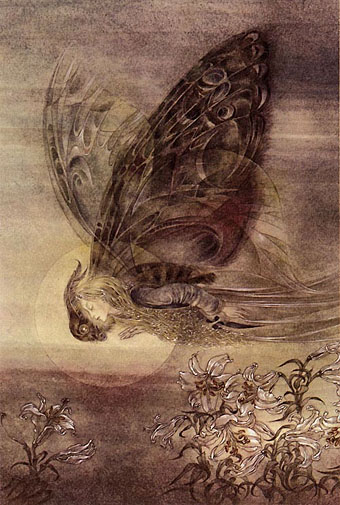
Rogomelec (1978) by Leonor Fini. Via.

Moving Through Old Daylight: A recording of Mark Fisher, Jim Jupp and Julian House of Ghost Box Recordings and Iain Sinclair in conversation at the Roundhouse, Camden, London, 5 June 2010. Topics under discussion included Nigel Kneale, TC Lethbridge, John Foxx, BBC Radiophonic Workshop, alchemies of sound, the homogenisation of culture, imagining space and the impersistence of memory.

The Surreal House, “a mysterious dwelling infused with subjectivity and desire” at the Barbican, London.

Ars Homo Erotica at the National Museum of Warsaw. Related: “(Gothenburg) Museum stops exhibition about homosexuality in religion“.

• A lot of people still arrive here looking for art by Zack aka Oliver Frey. Bike Boy, 96 pages of Frey’s exuberantly homoerotic comic strips, is published in August by Bruno Gmünder.

• “EM Forster was a virgin until the age of thirty-nine, when he had his first ‘full’ sexual experience (a ‘hurried sucking off’, Wendy Moffat informs us) with a passing soldier on a beach in Alexandria.”

• JG Ballard’s archive is accepted by the British Library, or “saved for the nation” as they rather grandiloquently describe the process. Samples from the documents to be preserved at the BBC and the Guardian.

• Shades of Ballard’s singing sculptures, Sun Boxes is a solar-powered audio installation by Craig Colorusso. There’s more at Designboom.

• Nathalie visited the MAXXI, Rome’s new museum of contemporary art designed by Zaha Hadid.

Stephen Pinker wants everyone to stop fretting over the alleged distractions of electronic media.

• “It basically comes from love”: John McLaughlin in conversation with Robert Fripp, 1982.

• More collections of print ephemera: Agence Eureka and Ephemera Magica.

The Serpent and the Sword, an Alan Moore rarity from 1999.

Gulliverovy Cesty (1968) at A Journey Round My Skull.

Within the Without: a new Thombeau Tumblr.

The Hidden Posters of Notting Hill Gate.

The Letters of Sylvia Beach reviewed.

• It’s Kubrick Season in St Albans.

Riot In Lagos (1980) by Ryuichi Sakamoto still sounds futuristic thirty years on.

The Thorns of Love by Antoni Maiovvi

maiovvi1.jpg

The Thorns of Love CD cover.

One of the consequences of having been so productive of late is having less time to update my web pages. The CD design section is now a year out of date so I’ll be trying to amend the situation as time allows.

The Thorns of Love by Antoni Maiovvi was released last month and is another of my designs for the Caravan label. The attention-grabbing photos are by Liz Eve whose work adorned earlier designs for 2562 and Pinch. It’s great to work with quality images like these, and Liz’s gory pictures are an ideal match for Maiovvi’s music, a series of lengthy compositions in a style which might be described as Giorgio Moroder scoring a Dario Argento horror movie. This is a fantastic album and the CD’s fourth track, Class Dagger, is one of the best new electronic pieces I’ve heard this year.

maiovvi2.jpg

The Thorns of Love vinyl sleeve.

The Thorns of Love was released on double-12″ vinyl as well as CD so I’ve also posted the vinyl art, something I need to go back and do for previous designs. Vinyl isn’t dead by any means, and it’s a pleasure to work for the larger format.

Antoni Maiovvi interviewed at Electrofreaks

Elsewhere on { feuilleton }
The album covers archive

Previously on { feuilleton }
Dead on the Dancefloor