Weekend links 398

deon.jpg

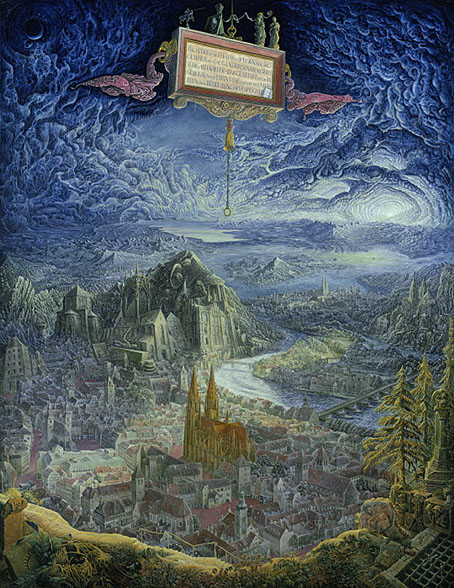
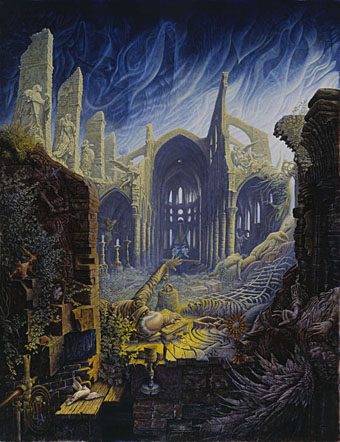
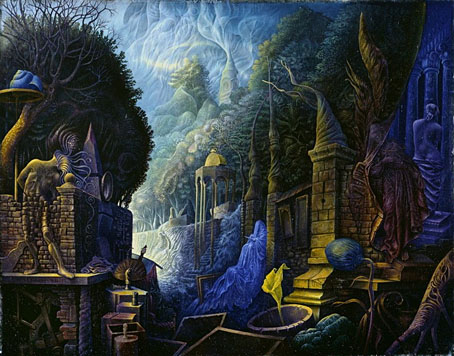
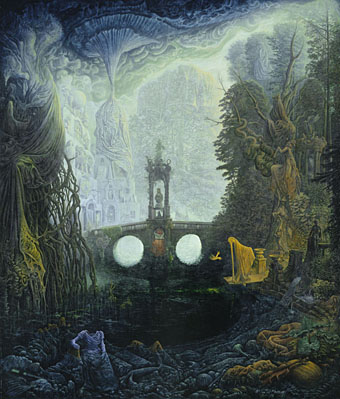
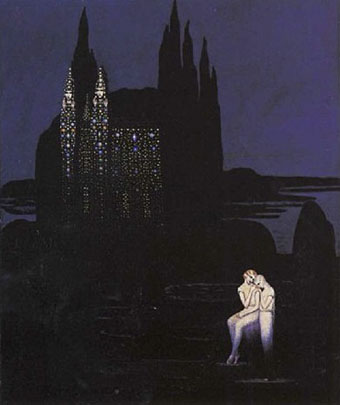
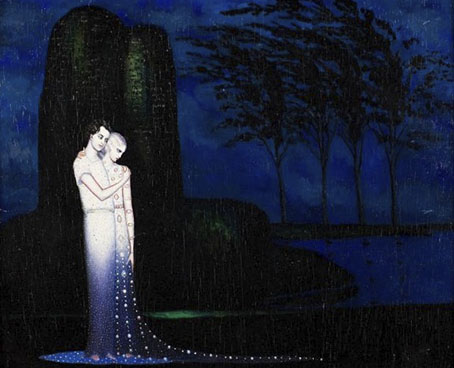
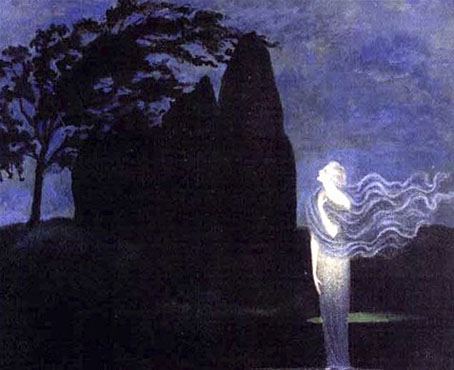
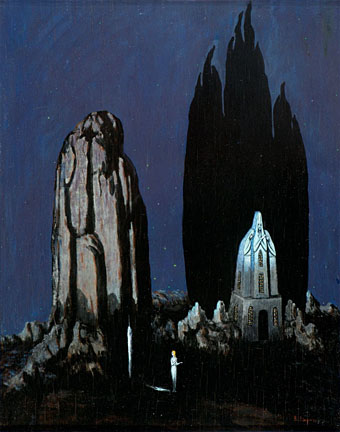
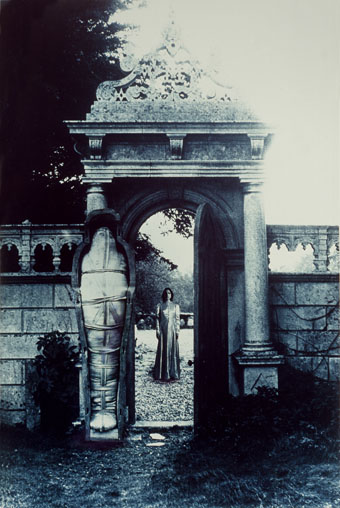
Untitled art by Felix D’Eon. Via Dangerous Minds.

• “The music inside lived up to the cover’s challenge: a collage of pop-culture nostalgia, hard-rock guitar, piano-driven melodies, stylised high vocals, strange musical structures and experimental sound pictures. Roxy Music’s eponymous album sounded like nothing else in 1971 and 1972—and like nothing else the group would ever attempt again.” Jon Savage on the creation of Roxy Music’s debut album.

• Behind the scenes of the BFI’s forthcoming Derek Jarman box-sets. Jarman appears in a rare acting role (not one of his strengths) in Dead Cat (1989) a short film by David Lewis which is only now being released on DVD.

• Rob Young’s long-awaited book about Cologne’s finest, Can, has finally been given a publication date. All Gates Open: The Story of Can will be published by Faber in May.

• At the Lever Gallery, London: UNCOVERED: Illustrating the Sixties and Seventies. Wallpaper magazine has a related feature about the exhibition.

Trim Tabroid [sic]: Yui Takada’s Instagram showing Japanese tabloid pages reduced to abstraction by careful pruning.

• On Fairy Tales: Carol Mavor and Marina Warner in discussion for the London Review Bookshop podcast.

• Mixes of the week: XLR8R podcast 527 by Peter Van Hoesen, and Secret Thirteen Mix 245 by Chikiss.

• Dubbing is a Must: Oli Warwick on the modern sound of leftfield dub.

This Book Is Bound in Lab-Grown Jellyfish Leather.

Cornelius’s Favourite Albums

Dubism (1976) by The Upsetters | Dub Fi Gwan (1979) by King Tubby | Dub Yalil (1995) by Natacha Atlas

The Mystery of Picasso

picasso1.jpg

I mentioned late last year that I’d written the booklet notes for a forthcoming DVD/blu-ray of The Mystery of Picasso (1956) by Henri-Georges Clouzot, a film receiving its blu-ray premiere this month courtesy of Arrow Academy. The discs are now on sale (UK only, I’m afraid) either online or anywhere that stocks Arrow titles. (Fopp is my preferred outlet.) For those outside the UK, the restored film is also available on iTunes. Clouzot’s film was regarded as an oddity in the 1950s, the director being best known for outstanding thrillers like The Wages of Fear and Les Diaboliques. Today The Mystery of Picasso is regarded as one of the great films about art for the way it successfully captures Picasso in a decade when he was still fervently productive, despite being in his 70s.

picasso2.jpg

Almost all films of this type favour the documentary approach, usually with a camera and interviewer dogging the subject’s footsteps while showing little of the creative process. Picasso wouldn’t have participated in anything like this—he was appalled by a documentary he saw about Matisse—but Clouzot persuaded him that a film could be made showing him drawing and painting in a studio environment. This approach had precedence in Paul Haessarts’ short film from 1949 (included among the disc extras) which showed Picasso in his studio at Vallauris; the film ends with a series of paintings on glass of various animals and human figures. Clouzot expanded on Haessarts’ idea with the full range of film technology: time-lapse, black-and-white stock, colour stock and Cinemascope. The works Picasso creates for the camera aren’t his best—how could they be when they were being produced at speed in sweltering, time-constrained conditions? But the film is a miraculous portrait of an artist whose name is still universally recognised almost fifty years after his death. By chance or design, it’s also a partial portrait of Clouzot himself who appears in several of the shots to discuss new camera setups.

There’s no need for me to say more about the film when I discuss it at length in the booklet. For a review of the disc contents, there’s a substantial appraisal here. For more about Henri-Georges Clouzot I recommend the study by Christopher Lloyd which was invaluable for its details about the film’s production.

Previously on { feuilleton }
Picasso-esque
My pastiches
Cubist Cthulhu

Weekend links 395

godwin.jpg

Love is a Martyrdom (1965) by Stephanie Godwin. See Joscelyn Godwin’s Flickr pages for more.

David Shire’s synthesizer score for Apocalypse Now was the first music recorded for the film but was abandoned when Shire was fired due to other commitments. 39 years later, his score has been released by La-La Land Records.

Moon Safari by “French band” Air was released in the UK on January 16th, 1998. Jeremy Allen looks back at an album that was more successful here than elsewhere.

• On the occasion of the US publication of Iain Sinclair’s The Last London, Geoff Nicholson presents an A to Z of the author and his works.

This is the story of how two artists fell in love with each other, with Kelmscott Manor, and with William Morris, the poet, craftsman, and socialist who had made it his home. As Kelmscott’s first tenants afer the Morris family, Edward and Stephani Scott-Snell rented the historic Oxfordshire house throughout the Second World War. There they created an aesthetic and erotic paradise based on a fantasy land called ‘Thessyros’, and produced a body of figurative painting unique for its time. Much of this was done under the influence of a legally-obtained drug they called ‘Starlight’, making many of their paintings  early examples of psychedelic art.

The Starlight Years is a book by Joscelyn Godwin about his artist-parents and their strange relationship

• Mixes of the week: FACT mix 634 by Minor Science, Secret Thirteen Mix 243 by Moa Pillar, and XLR8R Podcast 524 by Burnt Friedman.

• At The Smart Set: Marian Calabro pays a visit to the Brussels apartment where René and Georgette Magritte lived from 1930 to 1954.

Hormone Lemonade, a new album by Cavern Of Anti-Matter, will be released in March. The Quietus has a preview.

• At the Internet Archive: QZAP, the Queer Zine Archive Project; 551 downloadable publications from 1974 to 2015.

• At Dennis Cooper’s: Briefly recounting Tim Buckley‘s short, inconvenient stylistic trajectory.

• Musician and bookseller Richard Bishop recommends a handful of rare occult volumes.

• At Kickstarter: Arsgang, a short psychological horror film by Harry Edmundson-Cornell.

• “A Sloppy Machine, Like Me”: Michael Grasso on the history of video synthesizers.

• At Flashbak: 27 Snapshots of Manchester in the 1960s.

• At Strange Flowers: 18 books for 2018.

Love Is Strange (1956) by Mickey & Sylvia | Love Is Peace (1970) by Amon Düül | Love Is The Drug (1980) by Grace Jones

1918

dardel.jpg

The Dying Dandy by Nils Dardel.

Wishing you all a happy new year with a small selection of art from a century ago.

baumann.jpg

Schicksal by Fritz Baumann.

blumenfeld.jpg

Black Still Life by Genrich Matveevich Blumenfeld.

dechirico.jpg

Two Heads by Giorgio de Chirico.

Continue reading “1918”

The weekend artists, 2017

images.jpg

Art by Twins of Evil for the forthcoming blu-ray from Arrow Academy.

The laziest post of the year is invariably a review of the artists/designers/photographers featured on the weekend posts, so here’s another end-of-year list for you. Scroll down to see what caught my attention over the past twelve months.

mueck.jpg

Mass by Ron Mueck at the National Gallery of Victoria Triennial. Photo by Tom Ross.

possession.jpg

French poster by Basha (Barbara Baranowska) for Andrzej Żuławski’s extraordinary Possession (1981).

adam.jpg

I Had Sweet Company Because I Sought Out None. Collage by Helen Adam.

nakayama.jpg

Still of an Alive Painting by Akiko Nakayama.

Continue reading “The weekend artists, 2017”