Jeffrey Catherine Jones, 1944–2011

jones1.jpg

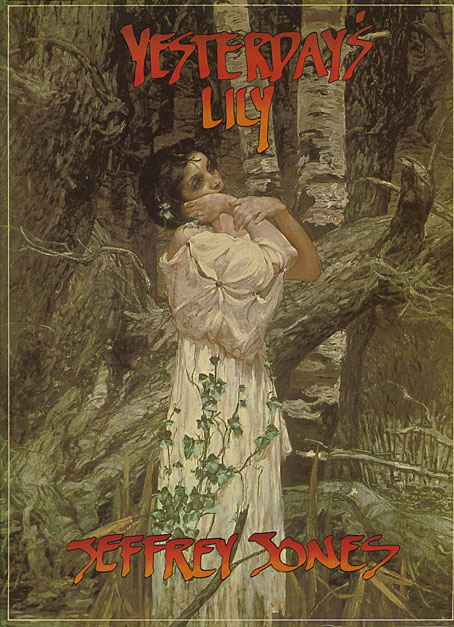
Yesterday’s Lily (1980), a collection of painting and illustration work published by Dragon’s Dream.

Artist Jeffrey Jones, whose death was announced this week, transitioned to Jeffrey Catherine Jones in the late 1990s so we’ll honour that here and won’t insist on referring to her as “he” as I’ve been seeing on some other websites. Jones’ work was significant for me mainly as a result of her participation in The Studio collective from 1975 to 1979, an affiliation of four artists—Jones, Barry Windsor-Smith, Mike Kaluta and Berni Wrightson—who shared a loft studio in New York City. The fruits of that relationship were recorded in one of my favourite art books, The Studio, in 1979. Of the four it was Barry Smith’s Pre-Raphaelite-inspired work which made the greatest impression at the time (especially Pandora), followed by Berni Wrightson’s Frankenstein illustrations. But Jones was the best painter in the group, with a style that blended influences from (among others) JM Whistler, Gustav Klimt and Frank Frazetta. There are galleries of paintings and drawings at the official website. Still to come is Better Things: Life & Choices of Jeffrey Jones, a documentary film by Maria Cabardo. Clips and trailers can be seen here.

• A selection of paintings at Golden Age Comic Book Stories
• The Studio Pt.1: Jeff Jones

Elsewhere on { feuilleton }
• The illustrators archive

Previously on { feuilleton }
• Roger Dean: artist and designer
• Berni Wrightson’s Frankenstein

In the Land of Retinal Delights

williams.jpg

In the Land of Retinal Delights (1968) by Robert Williams.

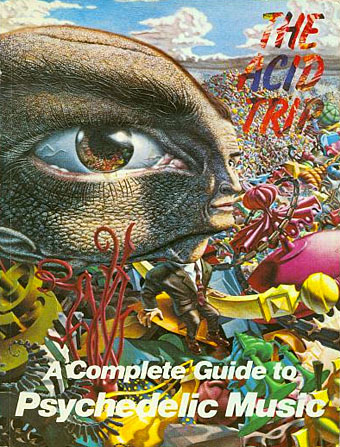
More psychedelia. I’d wanted to link to a decent version of this painting by Robert Williams for some time but it took a while for one to turn up. When people mention psychedelic art it’s usually concert posters they’re talking about. Williams’ super-detailed canvas is a good example of psychedelic painting when it conveys particular aspects of the hallucinogenic experience such as hyper-reality and a sense of physical distortion, something that the posters and album covers seldom convey. That said, Williams’ picture did appear as a cover illustration for The Acid Trip, Vernon Joynson’s guide to psychedelic music in 1984, setting that volume apart from similar books which are often spoiled by poor artwork.

• Robert Williams at Beinart

acidtrip.jpg

Elsewhere on { feuilleton }
• The fantastic art archive

Previously on { feuilleton }
• The art of Mati Klarwein, 1932–2002
• The art of LSD

The Divine Eros Defeats the Earthly Eros

baglione1.jpg

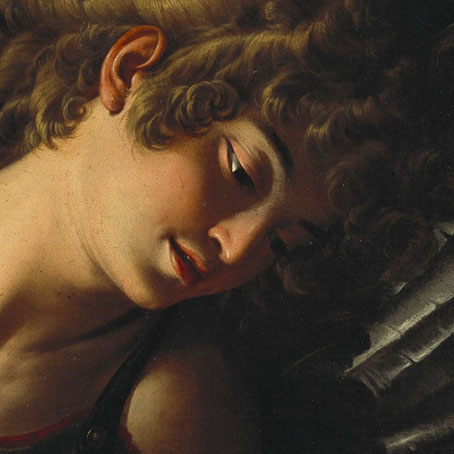
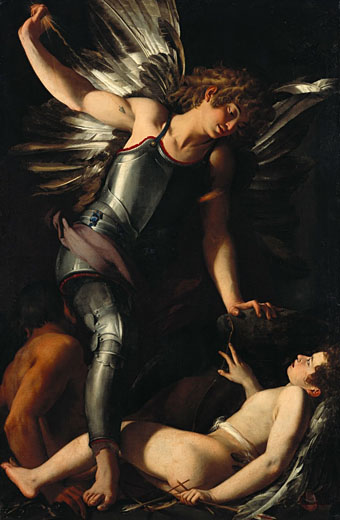
Another favourite painting receiving the Google Art Project high-res treatment. Giovanni Baglione’s picture (also known as Sacred Love versus Profane Love) was painted circa 1602 as a riposte to Caravaggio’s provocative Amor Vincit Omnia. Where Caravaggio showed Eros triumphing over worldly concerns Baglione gives us an image of religious propaganda which displeased the older artist. Salt was rubbed in the wounds when Baglione produced a second (and lesser) version which puts Caravaggio’s features on the figure of the Devil. There’s an irony in this spat in the way that Baglione’s noble aspiration is subverted by erotic tension, the victorious angel shown happily astride a vulnerable and capitulating youth. If someone had pointed this out to Caravaggio he might not have felt so aggrieved.

Both Amor Vincit Omnia and The Divine Eros Defeats the Earthly Eros are part of the Old Master collection at the Gemäldegalerie, Berlin, where they can be viewed side by side.

baglione2.jpg

Previously on { feuilleton }
• Chiaroscuro
• Angels 1: The Angel of History and sensual metaphysics

Deutsche Kunst und Dekoration #23

dkd23-01.jpg

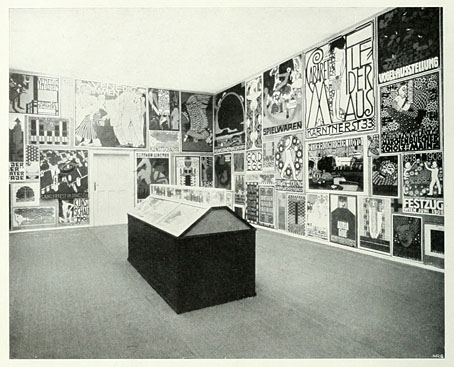
An exhibition of Wiener Werkstätte posters and graphics.

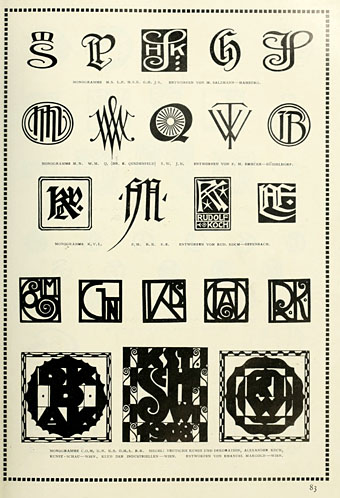
Continuing the delve into back numbers of Deutsche Kunst und Dekoration, the German periodical of art and decoration. Volume 23 covers the period from October 1908 to March 1909, and aside from some dull paintings the Wiener Werkstätte continue to dominate proceedings with photographs and graphics from exhibitions of their work; the slow evolution towards Art Deco continues.

As usual, anyone wishing to see these samples in greater detail is advised to download the entire number at the Internet Archive. There’ll be more DK&D next week.

dkd23-02.jpg

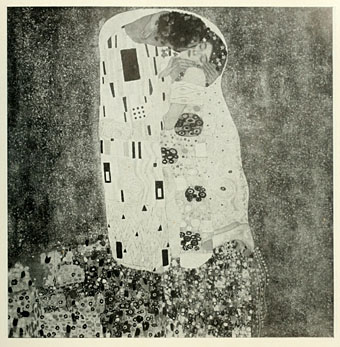
Gustav Klimt turns up again with his most famous work, The Kiss, here named Liebespaar.

dkd23-03.jpg

Continue reading “Deutsche Kunst und Dekoration #23”

Return of the Triumphant Phallus

salviati.jpg

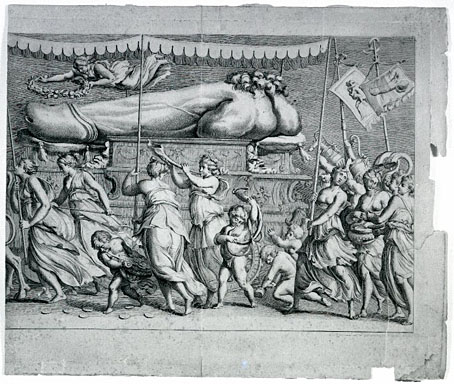
The Triumph of the Phallus (1700–1750).

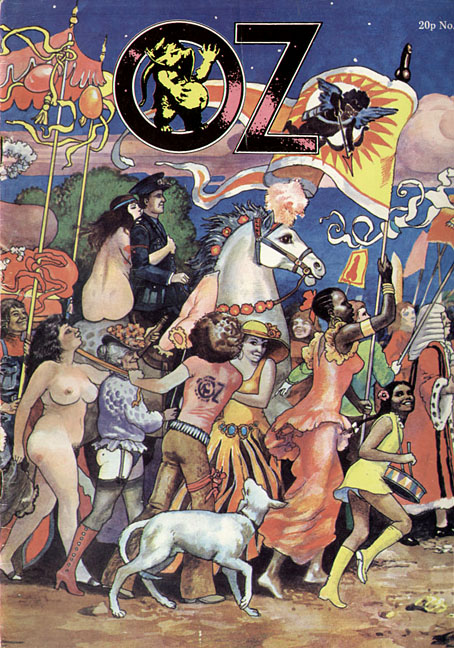
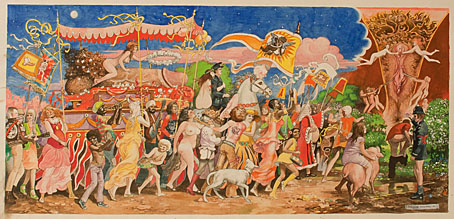
More phallic culture. I posted the above engraving a couple of years ago, an unattributed copy of a drawing by Francesco Salviati (1510–1563) which shows in three panels a giant phallus being driven by a festive crowd towards an equally prodigious vaginal opening. (See the three panels in full here.) A few months after that post I wrote something about British underground artist Jim Leon and failed at the time to notice that Leon had reworked the Salviati procession for a painting used in issue 36 of Oz magazine (July 1971).

oz36.jpg

As is evident, here, the magazine editors carefully cropped Leon’s art to avoid stretching the patience of distributors and vendors. The complete work was printed over two pages inside but in a two-colour version which is less than satisfactory. This issue of the magazine also featured Leon’s far more incendiary Necrophilia piece which was the one I selected for my earlier post. What finally made me recognise the link between Leon and Salviati was a posting of Leon’s original painting on the Maggs Counterculture Tumblr (below).

leon.jpg

Leon shortened the procession but follows the rest of the picture very closely. Given the reversal of Leon’s version it’s possible he may have traced an outline as a guide before starting work, some of the details are a precise match. Oz magazine, it should be noted, was aimed at a general readership yet frequently published erotic art by Leon and others in this kind of matter-of-fact manner, something that’s difficult to imagine anyone doing today outside the porn world. Think about that next time someone asserts that we’re living in an unprecedentedly over-sexed era. You can see the whole of Oz #36 here.

Previously on { feuilleton }
• The Choise of Valentines, Or the Merie Ballad of Nash His Dildo
• The art of Jim Leon, 1938–2002
• The fascinating phallus
• The Triumph of the Phallus
• Le Phallus phénoménal
• Phallic bibelots
• The New Love Poetry
• Phallic worship
• The art of ejaculation