Weekend links 657

foxx.jpg

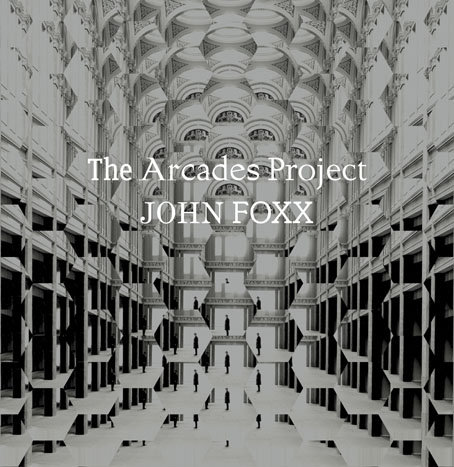
• Cover art for a new album by John Foxx which will be released on CD in March. This catches my attention for being based on Walter Benjamin’s compendious collection of esoterica, with the music being solo piano pieces. If the latter are anything like the albums Foxx recorded 20 years ago with Harold Budd then this is all very promising. Is the cover design by Jonathan Barnbrook? The typography and formal treatment of the photo suggest as much.

• “The new game was not providing access to everything but finding out how many expensively licensed properties you could cull from your service before people started to question how much they were paying a month.” Sam Thielman on the sudden unavailability of hundreds of classic Warner Brothers cartoons. Regarding his comment about the unplayability of Internet Archive videos: you download them and put them on a USB drive.

Frost Flowers on the Windows (1899) is a book that documents “the extraordinary power of windowpane frost to take ‘ice photographs’, images capable of expressing the ‘vital qualities’ of life forms close to the glass,” according to its author, Albert Alberg.

• New music: ev THe norTH, “a sound journey through the winter of the far north” by Lorenz Weber. (The encoding of the album title won’t display properly on this page.)

• RIP Yukihiro Takahashi, singer, songwriter and drummer with the fabulous Yellow Magic Orchestra. The space-disco video for YMO’s Rydeen never gets old.

• “I want an indescribable feeling”: composer Kali Malone on her search for the sublime.

• Old music: Roundtrip by Don Cherry & Jean Schwarz, a live performance in Paris, 1977.

• At Spoon & Tamago: Glass artist Genki Sudo crafts tentacle earbuds.

• At Unquiet Things: The Incandescent Otherworlds of Gervasio Gallardo.

• At Dennis Cooper’s: Acid Westerns Day.

Arcade (1987) by Chris & Cosey | The White Arcades (1988) by Harold Budd | Arcade (2018) by Philip Jeck
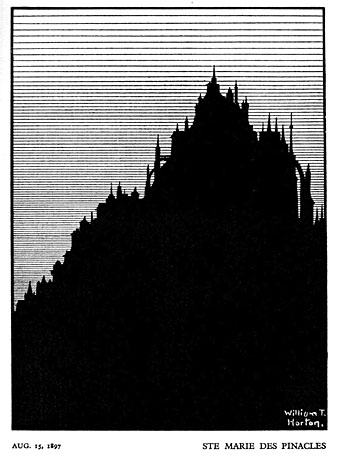
The art of William T. Horton, 1864–1919

horton01.jpg

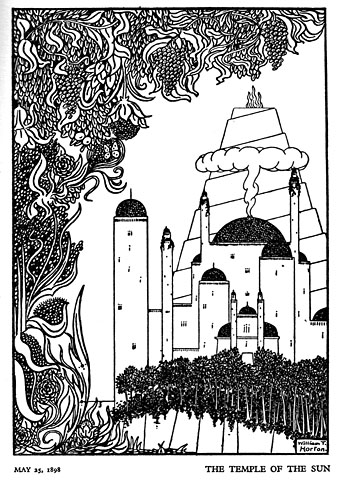
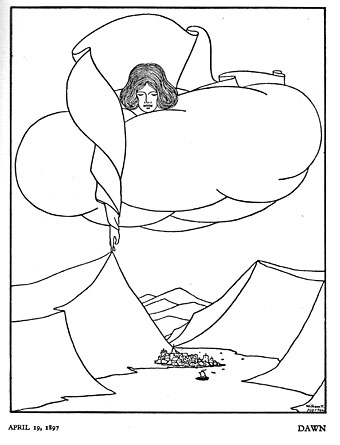
After mentioning William T. Horton last week I went looking for more of his artwork. The Internet Archive has a book I hadn’t seen before, William Thomas Horton: A Selection Of His Work by Roger Ingpen, but this has been uploaded with all the pages upside-down, a novel error even by the erratic standards of that site. I can correct things like this by downloading all the page scans then batch-rotating them using the Mac’s Automator application but few people would bother doing this (or know how to).

horton02.jpg

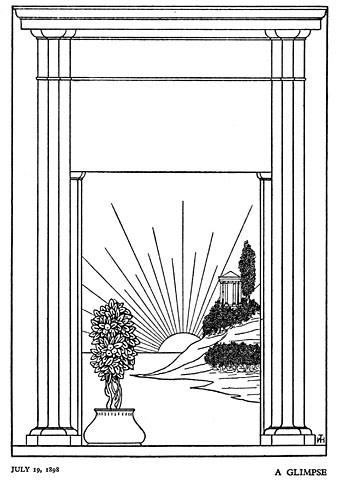
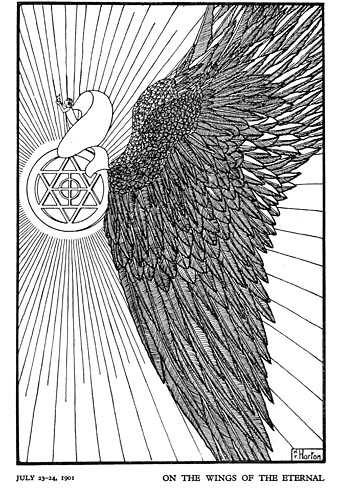
Happily, Wikimedia Commons has most of the artwork in a substantial Horton gallery. Horton never achieved the popularity of his contemporaries so if you’re not a book collector his art hasn’t always been easy to find. Some of his drawings can be crude or amateurish but at his best he had a flair for hieratic, mystical compositions in black-and-white that makes him a kind of British equivalent to Ephraim Moses Lilien. The Wikimedia gallery includes a section that purports to be Horton’s designs for a set of Tarot cards but I’m sceptical of the attribution. The drawings may have the names of the Major Arcana appended to them but all of the drawings (like the one below) appear to have been created for other reasons.

horton03.jpg

horton04.jpg

horton05.jpg

Continue reading “The art of William T. Horton, 1864–1919”

Weekend links 651

kleen.jpg

The Horror of Living (1907) by Tyra Kleen. Via

• “Voss suggests Af Klint was a pioneer of abstract painting, a label that fits in some ways – her work certainly isn’t representational in the normal sense – but jars in others. She saw her work as a spiritual calling, supercharged with meaning in ways most of her contemporaries struggled to grasp. Most, but not all. Af Klint socialised and collaborated with other visionary women. Some were artists, others were writers, but all were adherents of the new philosophies sweeping Europe in the late 19th century: spiritualism, Rosicrucianism, theosophy.” Madoc Cairns reviewing Hilma af Klint: A Biography by Julia Voss.

• “I want to insist on an amateur internet; a garage internet; a public library internet; a kitchen table internet. At last, in 2023, I want to tell the tech CEOs and venture capitalists: pipe down. Buzz off. Go fave each other’s tweets.” Robin Sloan looking for new avenues away from the corporate cul-de-sacs of social media.

• “Even when subjects take psychedelics in clinical environments devoid of nature…many of them still emerge with stronger relationships to the natural world.” Simran Sethi on the connections between psychedelic use and eco-activism.

• At A Year In The Country: A Shindig! Selection: From Celluloid Hinterlands to Children of the Stones via The Delaware Road and a Sidestep to the Parallel World of él Records.

• At Public Domain Review: Mighty Mikko: A Book of Finnish Fairy Tales and Folk Tales (1922) by Parker Hoysted Fillmore.

• “When coffee is all gone. It’s over.” Spoon & Tamago gets existential at Tokyo’s Museum of Wonky English.

The “S” Word: Spirtuality in Alternative Music is a book-length study by Matthew Ingram (aka Woebot).

• New music: Does Spring Hide Its Joy by Kali Malone (featuring Stephen O’Malley & Lucy Railton).

• Steven Heller’s font of the month is Geetype.

Spiritual Awakening (1973) by Eddie Henderson | Spiritual Blessing (1974) by Pharoah Sanders | Spiritual Eternal (1976) by Alice Coltrane

Weekend links 649

chihuly.jpg

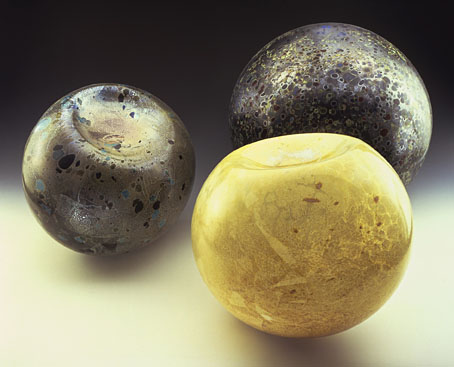
Niijima Floats: Mottled Blue Black Float with Silver Leaf (1991) by Dale Chihuly.

• “Blue whale songs fall below the range of human hearing. If you want to listen to one, to actually hear its ethereal patterns of wobbly pulses and haunting moans, you have to speed it up by at least two-fold. But according to Hildebrand and McDonald’s instruments, the tonal frequencies of the songs had been sinking to even greater depths for three straight years. ‘This is weird,’ Hildebrand thought. To figure out if it was just an anomaly or something more, Hildebrand and McDonald embarked on a quest to find some really old songs. Eventually they got their hands on some of the earliest known recordings, created by the Navy in the 1960s and stored on analog cassettes. They were floored. The frequencies had declined by 30 percent over 40 years.” Kristen French on a mysterious development in blue whale songs.

• “She didn’t see it as a game, or for divination, but as a model of the universe.” Joanna Moorhead on the Tarot designs of Leonora Carrington.

• “A collection of blogs about every topic”: ooh.directory. (Ta to whoever added this place to the list.)

• New music: Pop Ambient 2023 by Various Artists, and Aeolian Mixtape by Quinta.

• At Public Domain Review: The Tanzmasken of Lavinia Schulz and Walter Holdt.

• At Wormwoodiana: Mark Valentine on mazes and labyrinths. (Previously)

• At Spoon & Tamago: Paper-cut cityscapes by kirie artist Hiroki Saito.

• At Smithsonian Magazine: The Unrivaled Legacy of Dale Chihuly.

• Mix of the week: Neo-Medieval Mix by Moon Wiring Club.

• Old music: Back To The Woodlands by Ernest Hood.

• At Dennis Cooper’s: Jacques Rivette Day.

Weyes Blood’s favourite music.

(Gorgeous Curves Lovely Fragments Labyrinthed On Occasions Entwined Charms, A Few Stories At Any Longer Sworn To Gathered From A Guileless Angel And The Hilt Edges Of Old Hearts, If They Do In The Guilt Of Deep Despondency.) (2004) by Akira Rabelais | The Private Labyrinth (2008) by The Wounded Kings | Labyrinths (2018) by Jonathan Fitoussi & Clemens Hourrière

Weekend links 647

oneill.jpg

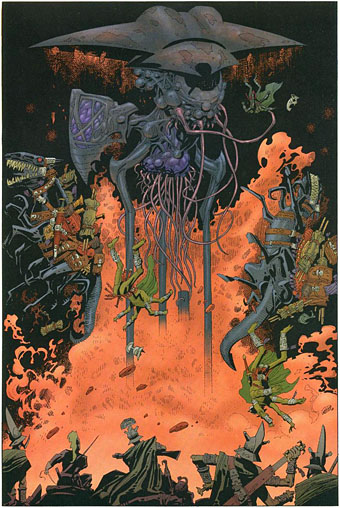
A local dispute on the planet Mars. Art by Kevin O’Neill from The League of Extraordinary Gentlemen.

• “…this image has puzzled enthusiasts of the scientific mystic’s works, both for its obscure provenance and cryptic symbolism. With its pastiche of Renaissance visual style and medieval caption — “A missionary of the Middle Ages tells that he had found the point where the sky and the Earth touch” — the illustration was once thought to have originated centuries before Flammarion published his text.” Hunter Dukes on the enduring mystery of the “Flammarion Engraving”.

• “For Spare, radio, and the waves that carried the music he loved to listen to, were more than just a metaphor for the spirit world. They were an active mode of conveyance for occult energies and vibrations – the swirling, ectoplasmic tendrils from which odd figures emerge in some of his most dense and haunting work.” Mark Pilkington explores Austin Osman Spare’s influence on the world of music.

• At Spine: Design studio Milk & Bone’s designer Alicia Raitt re-imagines all 14 of Kurt Vonnegut’s book covers to celebrate his 100th birthday.

• Farewell to Kevin O’Neill and Nik Turner, both of whom headed to the Western Lands this week.

Mean, moody and magnificent: film noir studio portraits – in pictures.

• Mix of the week: XLR8R Podcast 773 by Roméo Poirier.

• New music: Evergreen by Patrick Shiroishi.

Brainstorm (1972) by Hawkwind | Hurricane Fighter Plane (1985) by Inner City Unit | Brainstorm (1993) by Monster Magnet