The art of Henri van der Stok, 1870–1946

stok04.jpg

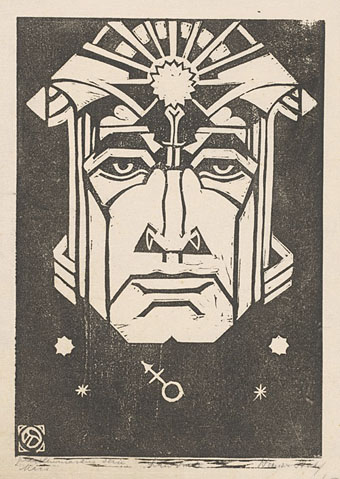
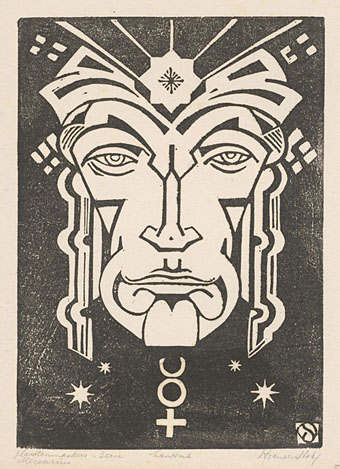
Mercurius.

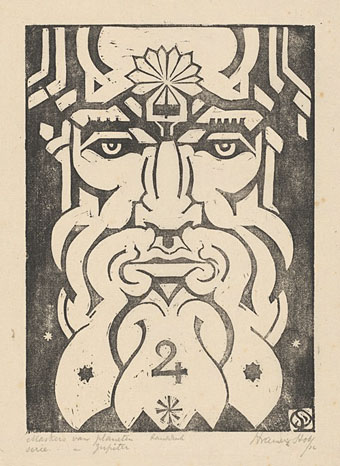
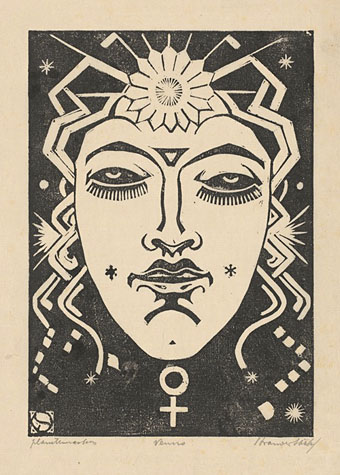
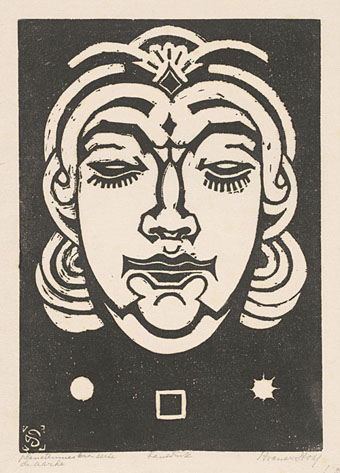
Work-related research this week turned up these mask and astrological prints by Henri van der Stok, a Dutch artist who specialised in woodcuts and stained glass. The masks represent planetary spirits, reminding me of the designs that Barney Bubbles created in 1973 for concert-going Hawkwind fans. Artvee has more by van der Stok but nowhere displaying his work seems to have a Taurus print to fill out the Zodiac set.
stok19.jpg

Venus.

Any time I see something by one of Aubrey Beardsley’s contemporaries (van der Stok was two years older) I wonder how Beardsley’s work might have developed if he’d managed to live past the age of 25. We can only guess, of course, and even then any speculation will be hazardous when everyone who established themselves in the 1890s had to face the challenges of Modernism, either by ignoring it or embracing the possibilities it offered. Van Der Stok’s early years were spent as a naval officer so he didn’t really have to worry about changing with the times. His designs sit easily among the stylisations of the Deco (or Moderne) period.
stok01.jpg

De Aarde.

stok03.jpg

Mars.

stok02.jpg

Jupiter.

Continue reading “The art of Henri van der Stok, 1870–1946”

Weekend links 681

hunter.jpg

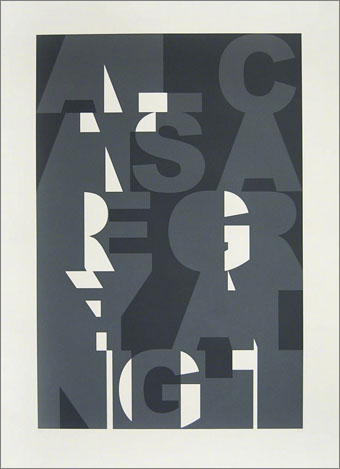
All Cats are Grey At Night (2009) by Kenny Hunter.

“They found ways to do the impossible”: Hipgnosis, the designers who changed the record sleeve for ever. Lee Campbell talks to Anton Corbijn about Squaring the Circle, Corbijn’s documentary about the Hipgnosis design team. Peter Christopherson is shown in the accompanying photo but Campbell doesn’t mention him at all, despite his having been an equal partner with Storm Thorgerson and Aubrey Powell from the mid-70s on. Many of those famous covers were photographed by Christopherson’s camera.

• A new book by Stephen Prince at A Year In The Country: “Lost Transmissions weaves amongst brambled pathways to take in the haunted soundscapes of electronica, the rise of the occult in the 1970s, cinema and television’s dystopian dreamscapes and hauntological work which creates and gives a glimpse into parallel worlds…”

• New music: Ambient Bass Guitar by John von Seggern, and Sturgeon Moon/Beaver Moon by Missing Scenes.

• How Samuel R. Delany Reimagined Sci-Fi, Sex, and the City.

• Mix of the week: Tranquility by A Strangely Isolated Place.

Galerie Dennis Cooper presents…Snow Globalists.

• The Strange World of…African Head Charge.

• Steven Heller’s font of the month is Baudot.

Nights on Earth.

Transmission (1979) by Joy Division | Clandestine Transmission (1994) by Richard H. Kirk | Transmission (1996) by Low

Weekend links 679

gay.jpg

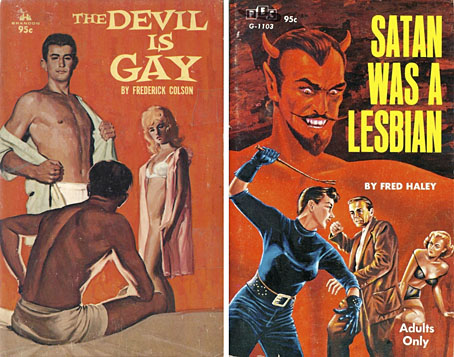
All this and the best tunes. Via.

• As noted last month, Space Ritual by Hawkwind turned 50 this year so here comes the inevitable reissue which in its most lavish edition will run to 11 discs. This isn’t as immediately attractive for me as the recent Calvert-era collection—I already own four different copies of Space Ritual, including the original vinyl—but I may feel differently a few months from now.

• At Wormwoodiana: Mark Valentine explores The Prophecies of N’Gai, something which sounds like a story from Weird Tales but isn’t.

• “Is function in the eye or mind of the beholder?” Steven Heller on Jacques Carelman’s Catalogue of Impossible Objects.

• At Spoon & Tamago: Yoko Tada began painting in her 80s. At 100 she’s publishing her first book.

• “The Magnificent Ambersons: rebirth for ruined Orson Welles masterpiece that rivalled Citizen Kane.”

At Wyrd Daze: Disco Rd 3: 23 pages 23 minutes. Free PDF, music mix, Discordianism, etc.

• A (brief) conversation with Milena Canonero, Wes Anderson’s costume designer.

• At Public Domain Review: Specimens of Fancy Turning (1869).

• New music: Móatún 7: Tetsu Inoue by Various Artists.

Arik Roper’s favourite album artwork.

• RIP Peter Brötzmann.

Table Turning (1973) by The Upsetters | Forever Turning (1995) by Scorn | Turning Towards Us (2008) by Redshift

Weekend links 677

cv-brody.jpg

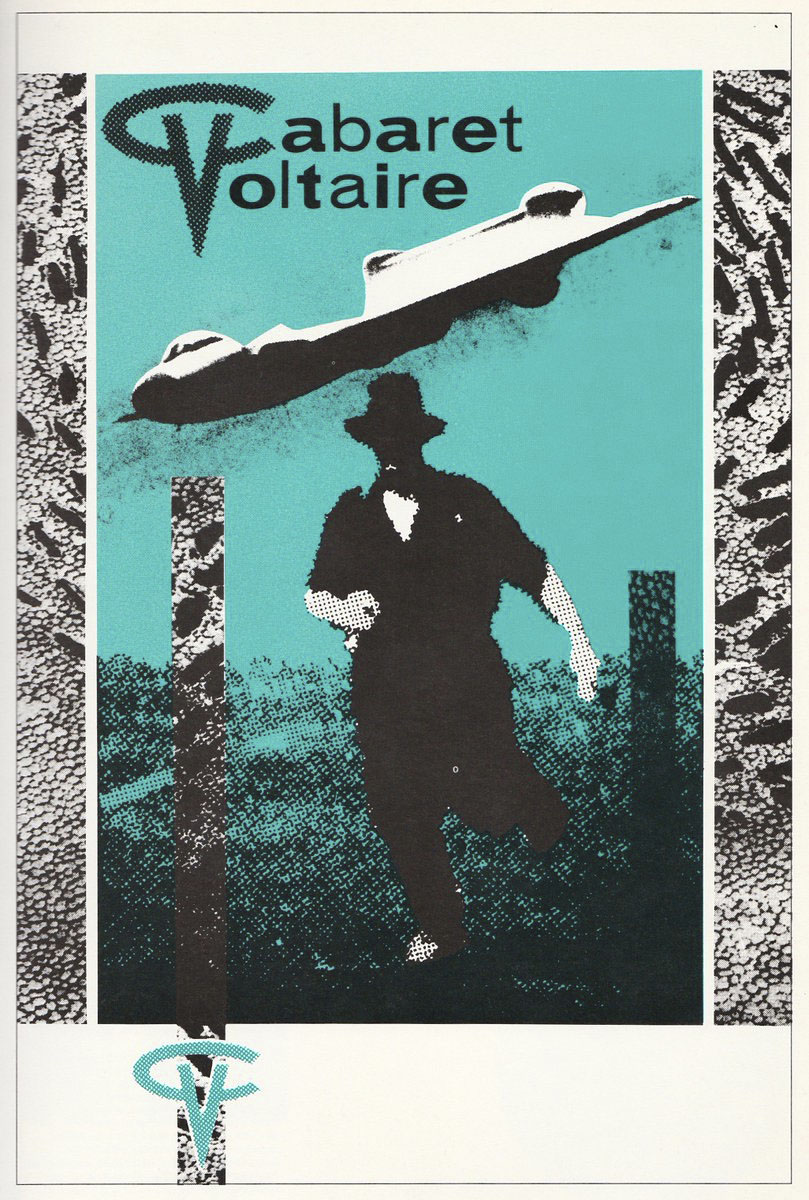
Design by Neville Brody, 1980.

• My work soundtrack for the past couple of weeks has been non-stop Cabaret Voltaire so this is pertinent. Neville Brody designed many of the group’s record sleeves in the 1980s as well as this poster and another one that I’ve only seen as a small picture in the first Brody book. He was also responsible for the CV logo which I never managed to find in badge form.

• “Anger’s preferred mode of artistry in his last decades was self-mythologising, and while he would return to filmmaking late in life, it was less as hierophant than totem—the worn keepsake of a once powerful magick.” Ryan Meehan remembers Kenneth Anger.

• New music: Waves by Ben Chasny and Rick Tomlinson, Topos by UCC Harlo, and Zango by WITCH.

Kafka’s perpetual redescription of his plight suggests that throughout his writing life he was less interested in finding a solution or even arriving at a single, definitive formulation of the problem than he was in exploring the implications and complications of his situation from new, unexpected angles and crafting an ever-expanding lexicon of figures for its inescapability.

Ross Benjamin, the translator of Franz Kafka’s diaries, on the neurotic concerns that Kafka turned into art

• “Why are men seemingly always naked in ancient Greek art?” Sarah Murray investigates.

Artists for Bibi: an auction in aid of Arthur Machen’s great-great-granddaughter.

• At Public Domain Review: Unidentified Floating Object: Edo Images of Utsuro-bune.

• Steven Heller’s font of the month is Acorn.

• Old music: Moon Journey by Mort Garson.

• RIP Tony McPhee.

Kafka (1964) by The Rowdies | Kafka (1982) by Masami Tsuchiya | Kafka (Main Title) (1992) by Cliff Martinez

Covering Maldoror

roy.jpg

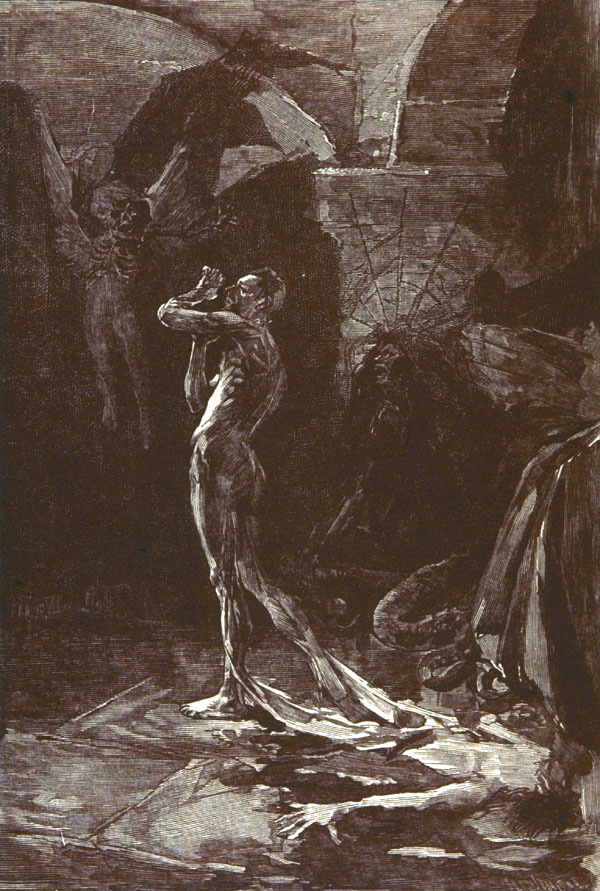
This illustration by José Roy is a frontispiece created for a rare edition of Les Chants de Maldoror published by Genonceaux in 1890. Roy (1860–1924) was a French artist whose work receives little attention today but his Maldoror illustration happens to be the first of its kind, and a picture that serves the text better than some of those being produced a few years later. The detail of a flayed man stepping out of his skin prefigures Clive Barker by almost a century, a further example of the ways in which Lautréamont’s baleful masterpiece was ahead of his time.

maldoror01.jpg

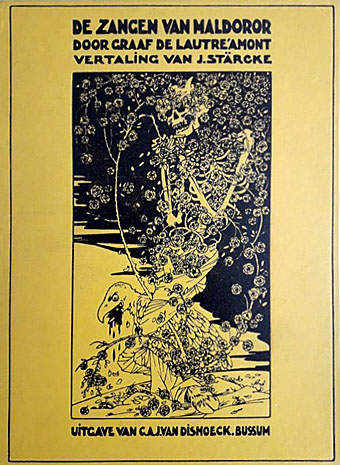
Netherlands, 1917. Cover art by WF Gouwe.

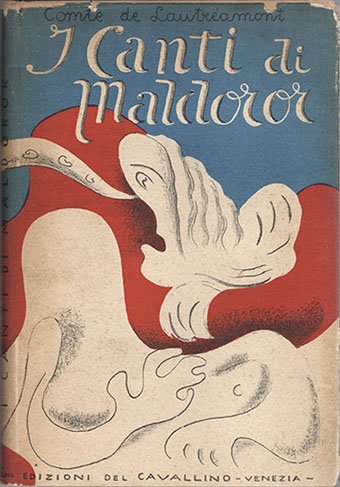
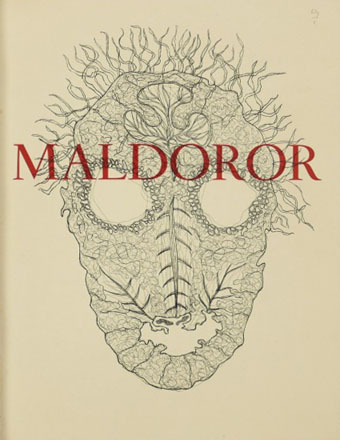
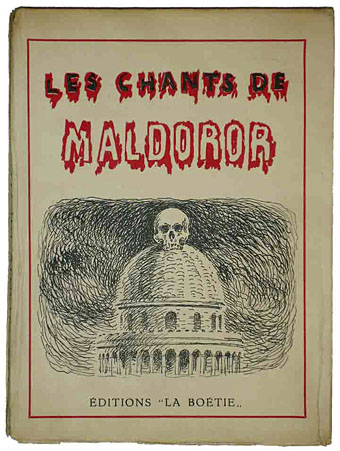
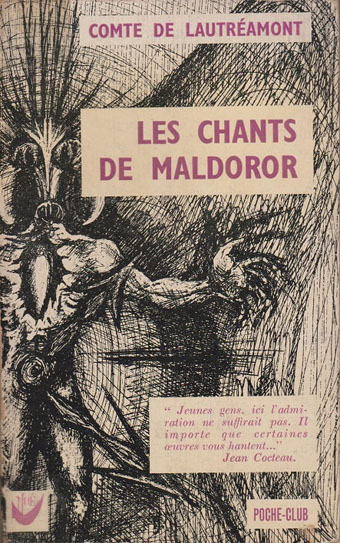
Previous posts here have concerned illustrated editions of Maldoror but this one is all about the covers. Literary classics aren’t always very rewarding in this respect but Maldoror’s textual and imaginative wildness has prompted an assortment of illustrative choices that range from the appropriate to the bewilderingly arbitrary. The following covers are a selection of the more notable examples, avoiding those without pictures or ones that use photographs of the book’s enigmatic author, Isidore Ducasse.

maldoror02.jpg

Italy, 1944. Cover art by Mario De Luigi.

maldoror26.jpg

France, 1947. Cover and interior illustrations by Jacques Houplain.

Salvador Dalí was the first well-known artist to illustrate Maldoror but his 1934 edition was published with plain black boards. Houplain’s illustrations follow the text more closely than do those by Dalí, Magritte or Bellmer, all of whom remain preoccupied with their own obsessions.

maldoror03.jpg

Belgium, 1948. Cover and interior illustrations by René Magritte.

maldoror04.jpg

France, 1963. Cover art by Paul Jamotte.

Continue reading “Covering Maldoror”