Weekend links 558

morghen.jpg

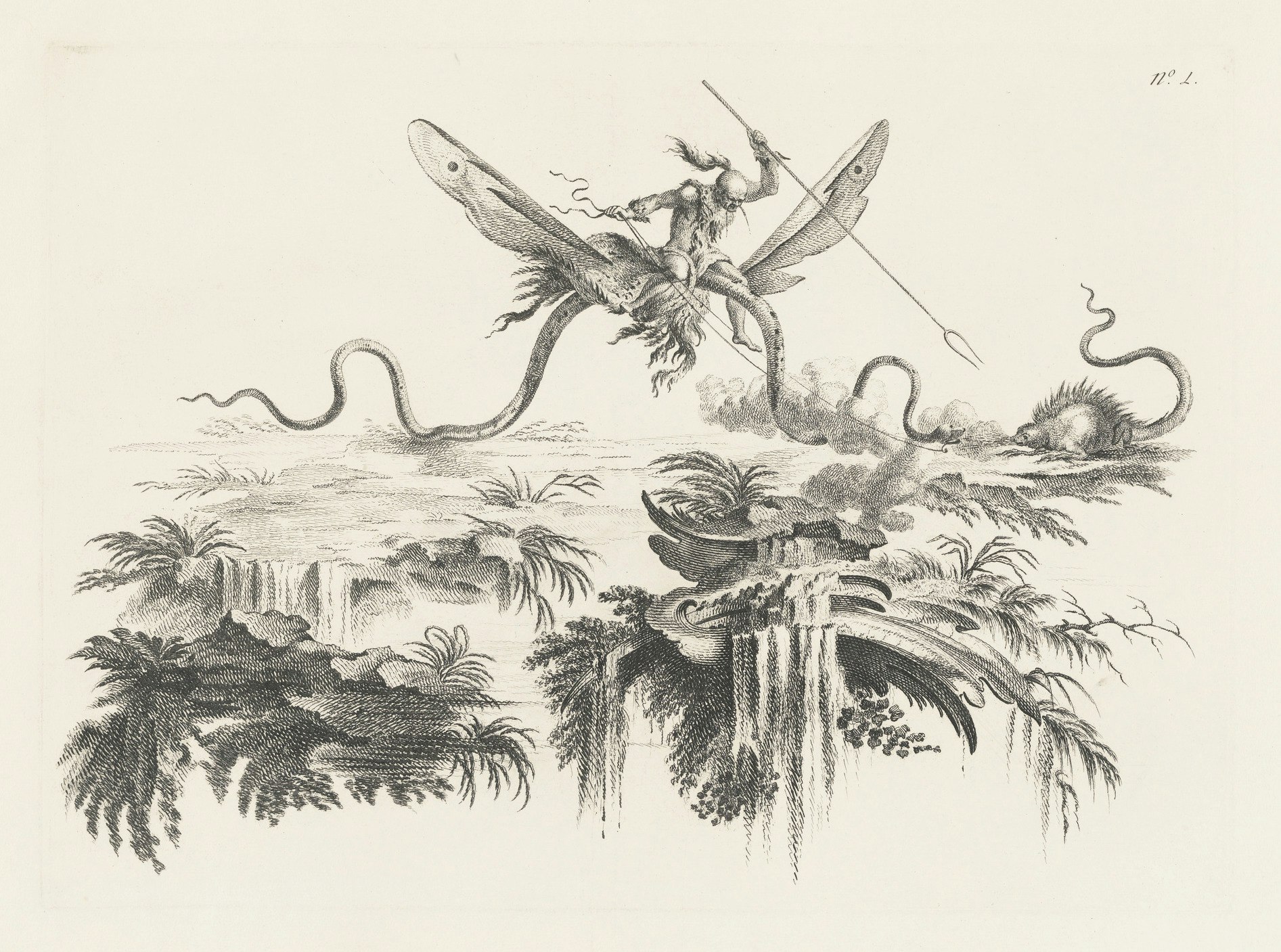
• One of the earliest posts here concerned The Suite of the Most Notable Things Seen by Cavaliere Wild Scull, and by Signore de la Hire on Their Famous Voyage from the Earth to the Moon (1776) by Filippo Morghen, a series of prints which depict the fantastic inhabitants, fauna and flora of the Moon. Morghen shows the Earth’s satellite to be a tropical place very similar to 18th-century conceptions of the New World or the Far East. Back in 2006 you couldn’t see copies of the prints as large or as detailed as this set at The Public Domain Review.

• “Last Call preserves the poignant irony that the trust and vulnerability that once made gay bars synonymous with gay community were also vectors of death, both in the form of murder and, later, HIV/AIDS.” Jeremy Lybarger on Elon Green’s study of the murders of four gay men in New York City in the 1990s.

• “No one in American letters ever pushed back against power over such a long time as [Lawrence] Ferlinghetti,” says John Freeman. Related: Ferlinghetti’s travel journals.

• New music with literary associations: Invisible Cities by A Winged Victory For The Sullen, and Star Maker Fragments by TAK Ensemble & Taylor Brook.

• Old music with no literary associations: The first of the forthcoming releases of live recordings by Can will be a 1975 Stuttgart concert.

• “The 120 Days of Sodom: France seeks help to buy ‘most impure tale ever written'”.

• The Joy of Circles: Vyki Hendy looks at some recent concentric cover designs.

• At Spoon & Tamago: Sculpted sushi made entirely from natural polished stones.

• My Hungry Interzone: Brian Alessandro on coming out and reading Naked Lunch.

• Andy Thomas maps Jah Wobble’s interdimensional dub.

• Mix of the week: XLR8R Podcast 684 by Ben Bondy.

• At Dennis Cooper’s: Jim Jarmusch Day.

• Circles (1966) by Les Fleur De Lys | Circles (1970) by Blonde On Blonde | Carry On Circles (2006) by Tuxedomoon
Weekend links 557

grygar.jpg

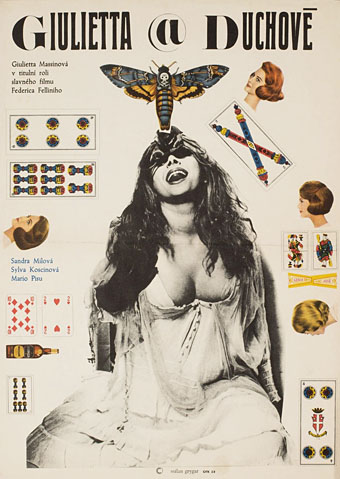
Poster by Milan Grygar for the 1969 Czech release of Fellini’s Juliet of the Spirits.

• “By encouraging composers to engage with sound as something more than just ‘notes on a keyboard’, the result [of the Buchla] was the kind of intricate sound design last heard in musique concrète. Works such as Morton Subotnick’s, Silver Apples of the Moon (1967) show a futurism completely absent on Wendy Carlos’ otherwise highly influential Switched-on Bach (1968), which used the keyboard-controlled Moog modular as if it were merely a glorified organ.” Oli Freke on the evolution of the synthesizer.

• “As humans began settling more consistently in one place to grow and thrive, the penis—or, more specifically, its erect form, the phallus—often came into use as a protector of fields that would prove fertile. In contrast to the comparative prudery of today, the phallus adorned everything from gods to shrines to personal homes and jewellery.” Emily Willingham on penial evolution in the animal kingdom.

• “The Trumpets of Jericho is, in part, so uniquely unsettling because it allows the woman in question to narrate her own horror. She is eager to give birth not to meet her child but so that she can go ahead and kill it.” Reed McConnell on the writings of Unica Zürn and (once again) Leonora Carrington.

At the center of it all, there was one director whom everyone knew, one artist whose name was synonymous with cinema and what it could do. It was a name that instantly evoked a certain style, a certain attitude toward the world. In fact, it became an adjective. Let’s say you wanted to describe the surreal atmosphere at a dinner party, or a wedding, or a funeral, or a political convention, or for that matter, the madness of the entire planet—all you had to do was say the word ‘Felliniesque’ and people knew exactly what you meant.

In the Sixties, Federico Fellini became more than a filmmaker. Like Chaplin and Picasso and the Beatles, he was much bigger than his own art. At a certain point, it was no longer a matter of this or that film but all the films combined as one grand gesture written across the galaxy. Going to see a Fellini film was like going to hear Callas sing or Olivier act or Nureyev dance. His films even started to incorporate his name—Fellini Satyricon, Fellini’s Casanova. The only comparable example in film was Hitchcock, but that was something else: a brand, a genre in and of itself. Fellini was the cinema’s virtuoso.

Martin Scorsese on “Il Maestro”, Federico Fellini

• At Dennis Cooper’s: For Your Crushed Right Eye: The instrumental films of Takahiro Iimura, Tetsuji Takechi, Toshi Matsumoto, Masao Adachi and Takashi Ito.

• “We wanted people to see that we exist.” Joan E. Biren, the photographer who recorded lesbian life in the 70s.

•New music: Alkisah by Senyawa, and Bishintai by Unknown Me.

• Mix of the week: XLR8R Podcast 683 by Laila Sakini.

• Phallus Dei (1969) by Amon Düül II | Sidereal Hands At The Temple Of Omphalos (1996) by Scenic | Starman (feat. Peter Brötzmann) (2017) by Phallus Dei

Piranesi record covers

piranesi12.jpg

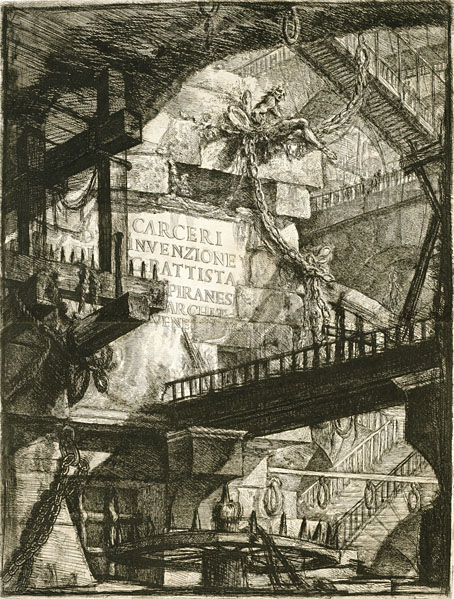
Title page for the Carceri d’Invenzione (second state), 1761.

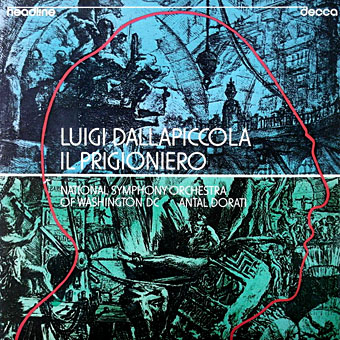
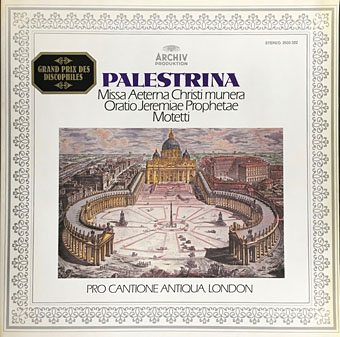
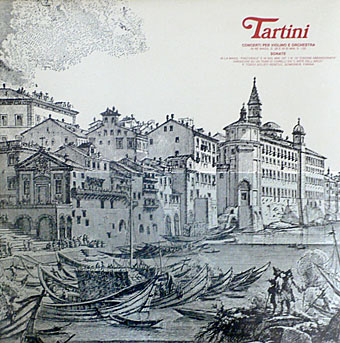
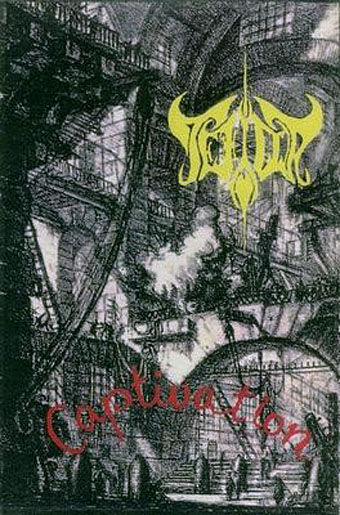
Continuing an occasional series about artists or designers whose work has appeared on record sleeves. Giovanni Battista Piranesi (1720–1778) is a cult figure here so this is an inevitable post even if there isn’t a great deal to look at. Many of the record covers that use Piranesi etchings are for classical releases, which isn’t so surprising. The prints that comprise the Vedute di Roma were Piranesi’s most popular works, and remain so today despite their exaggerations of the true size of Rome’s monuments and ruins. But I thought the Carceri d’Invenzione (aka The Prisons) might be more popular, especially in the metal world where dark and gloomy imagery is de rigueur. There may be more examples, of course, since I’m having to rely on Discogs which doesn’t always note the work of uncredited artists. I suspect that architecture alone isn’t attractive enough for the metal hordes, however vast and tenebrous that architecture might be. The covers I’ve done for metal bands have always had to incorporate figures—human or otherwise—or some kind of occult symbolism. The most prominent musical piece based on Piranesi’s Prisons is also a classical work, one of the Bach cello suites recorded by Yo-Yo Ma in 1998. Ma’s album, Inspired By Bach, was accompanied by six films from different directors; the film for Suite No. 2, The Sound of the Carceri by François Girard, shows Ma playing the piece inside a CGI rendering of Piranesi’s colossal spaces. Copies of Girard’s film come and go on YouTube so this one may not stay around.

piranesi01.jpg

Luigi Dallapiccola: Il Prigioniero (1975); National Symphony Orchestra Of Washington DC, Antal Dorati.

piranesi02.jpg

Palestrina: Missa Aeterna Christi Munera / Oratio Jeremiae Prophetae / Motetti (1976); Pro Cantione Antiqua, London.

piranesi03.jpg

Tartini: Concerti Per Violino E Orchestra / Sonate (1981); P. Toso, I Solisti Veneti, C. Scimone, E. Farina.

piranesi04.jpg

Captivation (1994) by Tefilla.

Continue reading “Piranesi record covers”

Weekend links 556

wilson.jpg

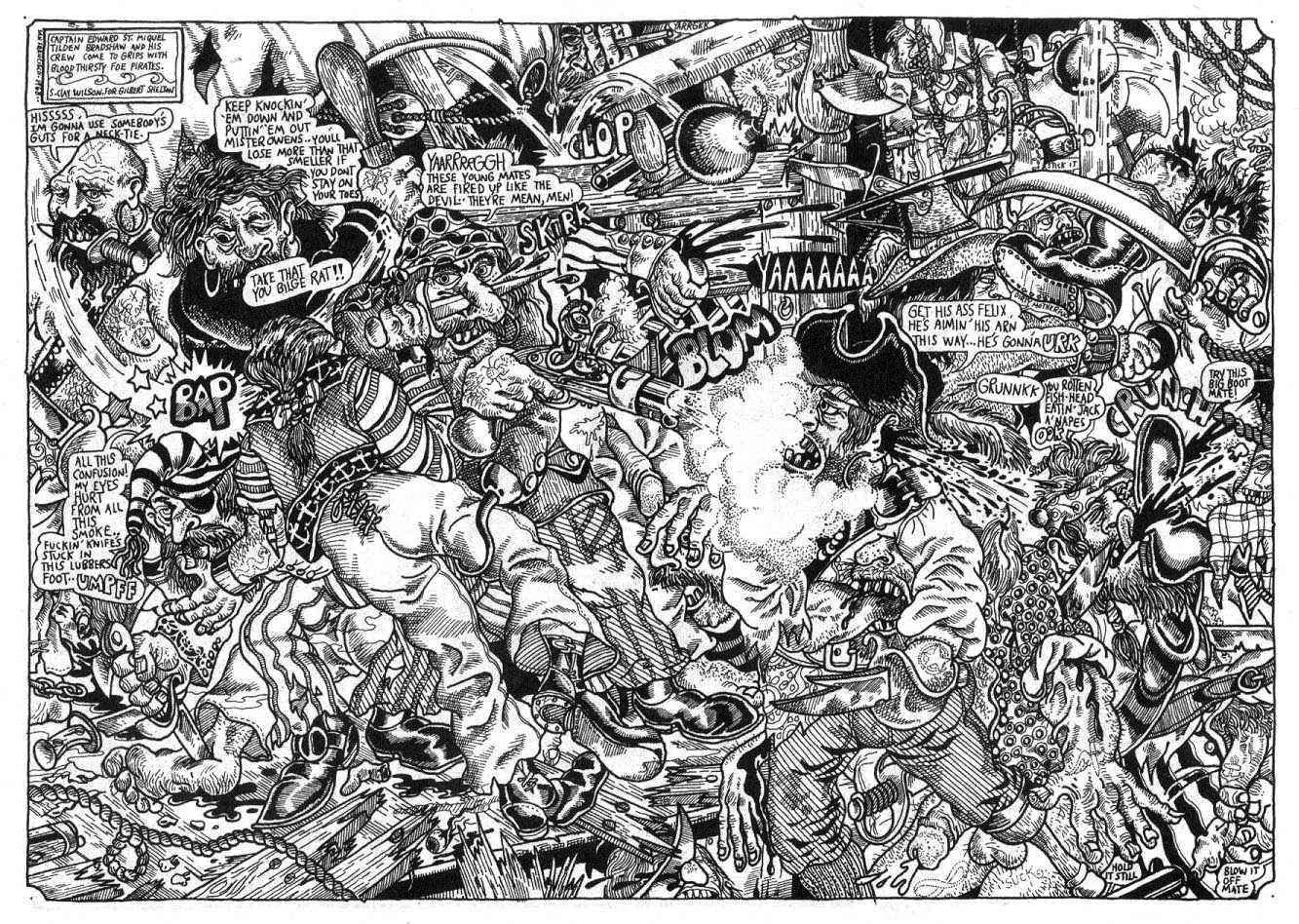
Captain Edward St. Miquel Tilden Bradshaw and his Crew Come to Grips with Bloodthirsty Foe Pirates by S. Clay Wilson, Zap Comix no. 3, 1968.

• RIP S. Clay Wilson, the wild man of American comics. The scene of mayhem above is typical in being barely coherent at a small size; click for a larger view. Patrick Rosenkranz at The Comics Journal describes Wilson as “the most influential artist of his generation…creating an extensive body of work that will defy authority and offend propriety until the end of days”. When Moebius was writing in the 1980s about the founding of Métal Hurlant he had this to say about the American undergrounds: “They were the first in the world to use comics as a means of communication, to express real emotions. Before, comics were used only to do stories, entertainment. They had some great moments but they were all very conventional. The American Underground showed us in Europe how to express true feelings, how to tell something to the reader through the comics. They blew the minds of the few professionals in Europe who saw them.” Also at TCJ, the S. Clay Wilson Interview. Wilson sent me a postcard once. I wish I knew what the hell I’d done with it.

• Michael Hoenig, synthesist for Agitation Free and (briefly) Tangerine Dream, plays one of the pieces from his debut album of electronic music, Departure From The Northern Wasteland, on a radio show in 1977. Hoenig’s album is long overdue a remastering and re-release.

• “My job, which the BBC has tasked me to do, is to provoke people and ask them, ‘Have you thought about looking at the world this way?'” Adam Curtis talks to Michael J. Brooks about his new TV series, Can’t Get You Out Of My Head.

m_chat.jpg

{ feuilleton } celebrates its 15th birthday today. Monsieur Chat, the mascot of this place, is happy about that but then Monsieur Chat is happy about most things.

• At Greydogtales: Opening The Book of Carnacki. A call for contributions to a collection of new stories about William Hope Hodgson’s occult detective. I’d be tempted if I didn’t already have more than enough to keep me occupied.

• “I’m being asked to talk about it a great deal at the moment, with the pandemic.” Roger Corman and Jane Asher on filming The Masque of the Red Death.

• New music: Cygnus Sutra by Mike Shannon, “a soundtrack to a fantasy/sci-fi epic not yet written”.

• A trailer for The Witch of King’s Cross, a documentary about occult artist Rosaleen Norton.

• At Dennis Cooper’s: Spotlight on…Hans Bellmer & Paul Eluard The Games of the Doll (1949).

• RIP also this week to Rowena Morrill, fantasy artist, and to Chick Corea.

• “Computers will never write good novels,” says Angus Fletcher.

• DJ Food on Zodiac posters by Funky Features, 1967.

• Mix of the week: Fact Mix 794 by Lutto Lento.

• Annie Nightingale’s favourite music.

• Zodiac (1984) by Boogie Boys | From The Zodiacal Light (2014) by Earth | Zodiac Black (2017) by Goldfrapp

A Can pin

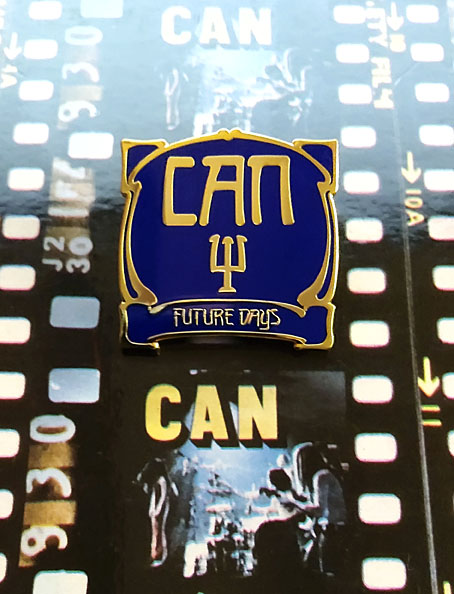
pin1.jpg

I’ve always liked badges, and I especially like the enamel pin variety even though I tend to buy them then not wear them very much for fear of losing them. This handsome item arrived a couple of days ago from an eBay seller, and is the first Can-related pin I’ve come across. After Kraftwerk, Can were the most popular of the German groups in the Britain of the 1970s but I’ve never seen any Can badges or anything else related to them from that decade aside from the records. The resurgence of interest in German music—Krautrock, if you must—has prompted the badge manufacturers who populate eBay, Etsy and elsewhere to create a number of items based on the record covers of Can, Neu!, Harmonia and others. The quality isn’t always very good but then badges in the 1970s were often crude designs as well. You can’t go wrong with a simple logo but shrinking an album cover down to 25 mm isn’t always a good idea. A couple of years ago I bought three Can badges from another eBay seller; two of them, with logo designs taken from sleeves, were okay but the third, based on the Future Days album cover was poorly printed. This pin equivalent is much better, as well as being one of the few Can sleeves you could transform in this manner. The raised gold lines are a good match for the Art Nouveau-styled design by Ingo Trauer and Richard J. Rudow which was embossed on the original German pressing. The group may have been popular in Britain but UA gave British Can-heads a flat sleeve.

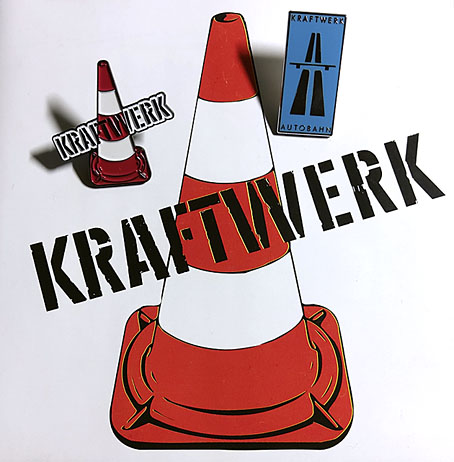
pin2.jpg

The same eBay seller also makes these Kraftwerk pins which I bought a while ago. I’d still prefer to have the traffic cone without the band name—something that only aficionados would recognise—but it was good to find a pin based on the early years of the group’s career, the period which Kraftwerk themselves have long disowned. The seller recently added a new design with the same traffic cone in green as it is on the Kraftwerk 2 album cover, but the green cone was only a variation on a theme, the orange leitkegel is the ubiquitous and definitive icon of the pre-Autobahn years.

Previously on { feuilleton }
• Holger’s Radio Pictures
• Jaki Liebezeit times ten
• Can esoterics
• Can soundtracks
• The kosmische design of Peter Geitner
• Reworking Kraftwerk (again)
• Leitkegel
• German gear
• Autobahnen
• Ralf and Florian
• Can’s Lost Tapes
• Reworking Kraftwerk
• Autobahn animated
• Sleeve craft
• Who designed Vertigo #6360 620?
• Old music and old technology
• A cluster of Cluster
• Aerodynamik by Kraftwerk