Weekend links 681

hunter.jpg

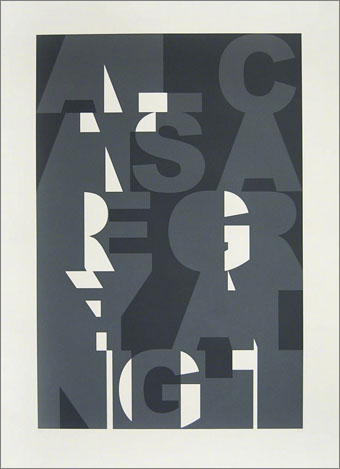
All Cats are Grey At Night (2009) by Kenny Hunter.

• “They found ways to do the impossible”: Hipgnosis, the designers who changed the record sleeve for ever. Lee Campbell talks to Anton Corbijn about Squaring the Circle, Corbijn’s documentary about the Hipgnosis design team. Peter Christopherson is shown in the accompanying photo but Campbell doesn’t mention him at all, despite his having been an equal partner with Storm Thorgerson and Aubrey Powell from the mid-70s on. Many of those famous covers were photographed by Christopherson’s camera.

• A new book by Stephen Prince at A Year In The Country: “Lost Transmissions weaves amongst brambled pathways to take in the haunted soundscapes of electronica, the rise of the occult in the 1970s, cinema and television’s dystopian dreamscapes and hauntological work which creates and gives a glimpse into parallel worlds…”

• New music: Ambient Bass Guitar by John von Seggern, and Sturgeon Moon/Beaver Moon by Missing Scenes.

• How Samuel R. Delany Reimagined Sci-Fi, Sex, and the City.

• Mix of the week: Tranquility by A Strangely Isolated Place.

• Galerie Dennis Cooper presents…Snow Globalists.

• The Strange World of…African Head Charge.

• Steven Heller’s font of the month is Baudot.

• Nights on Earth.

• Transmission (1979) by Joy Division | Clandestine Transmission (1994) by Richard H. Kirk | Transmission (1996) by Low

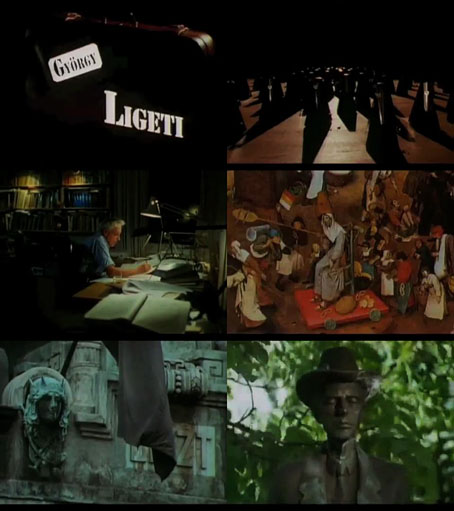
György Ligeti, a film by Michel Follin

ligeti1.jpg

2023 is the centenary of György Ligeti’s birth so here’s an hour-long French documentary about the composer directed by Michel Follin. György Ligeti was made in 1993, two years after Leslie Megahey’s BBC crew had paid a return visit to Ligeti’s apartment to film an update to the Omnibus profile from 1976, All Clouds Are Clocks. The two documentaries complement each other rather well, although you’ll have to take my word for this since Megahey’s film has yet to appear on any video site. Both films interview Ligeti at the studio table where he wrote many of his compositions, and where he talks about his musical interests and intentions.

ligeti2.jpg

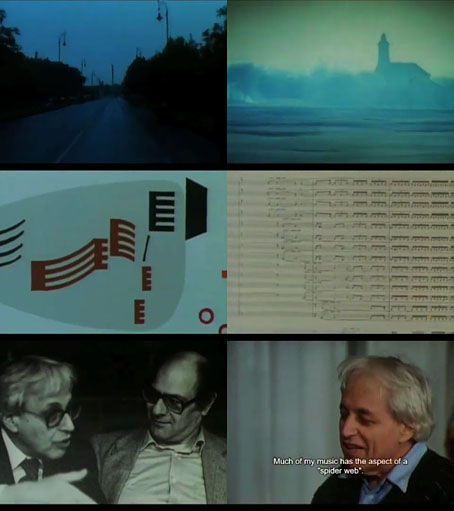
The two films differ in their approach to the world outside Ligeti’s window. Megahey concentrated on the music, illustrating a number of lengthy recording extracts with footage of melting clocks, a wooden puppet, etc, whereas Follin attends to the biography, with Ligeti relating his personal history while also describing the evolution of his musical ideas. Ligeti’s youth was a tumultuous one, encompassing the upheavals of the Second World War, during which he lost half his family to the Holocaust, and the later Communist years in Hungary when the kinds of modern music that he was trying to write were proscribed by the State. It’s good to see him confirm the importance of Bartók’s music to his growth as a composer. Ligeti’s oeuvre contains many Bartók-like moments but I’ve often thought that regarding these as any kind of influence or reference might be a lazy comparison based on a shared nationality.

All of this reminds me that I recently picked up a copy of the 5-disc Ligeti Project in a charity shop but still haven’t listened to it all the way through. Charity shops can be useful (and cheap!) sources of modern composition if you don’t mind trawling week after week through iterations of the classics. Secondhand shops were my first introduction to music like this, providing the opportunity to sample the recordings of those mysterious names at a bargain price. Bargains are still to be found if you’re patient, as with the Ligeti box. Other recent discoveries include Without Sinking by Hildur Guðnadóttir, and Memoryhouse, the first album by Max Richter, both of which were bought for a fraction of their usual asking price.

(A note about the film subtitles. These are an amateur translation which fails to recognise the names of Gyula Krúdy—the writer whose work Ligeti describes finding at an early age—and Paul Hindemith, the German composer.)

Previously on { feuilleton }
• Le Grand Macabre
• A playlist for Halloween: Orchestral and electro-acoustic
• Metronomes

Weekend links 680

wijdeveld.jpg

15 Miles into the Earth (1944) by Hendrik Wijdeveld.

• “He realized that there were individuals around him who had never appeared in the great altarpieces and frescoes, individuals who had been marginalized by the cultural ideology of the previous two centuries. And there were hours of the day—transient, yet unequivocal in their lighting—which had never been reproduced, and which were pushed so far from habit and use that they had become scandalous, and therefore repressed.” Pasolini on Caravaggio.

• “Reading Albert Camus and Mikhail Bulgakov by day, by night, crucially, they were listening to Chic, Kraftwerk, Donna Summer, Michael Rother and Grace Jones in the clubs.” Graeme Thomson on the atmosphere and influences that helped create my favourite album by Simple Minds, Empires And Dance. Borges was also a minor influence, apparently, which wasn’t something I knew until this week. I like it when your favourite things join up this way.

• “This being England, a ‘tea shop’ is not a shop that sells tea. That would be a tea merchant. A tea shop serves tea.” Mark Valentine on the perennial connections between rambling and tea-drinking.

Talking about generations as if they really existed and had sway over people is much more respectable and widespread than the belief that events and personalities are governed by the movements of the planets. But is there really much more substance and reality to “generations”? If not “a bunch of bullshit”, the discourse of generations is certainly generative of bullshit: tenuously grounded overviews and opinion pieces, specious analysis and analogies, platitudes and truisms. And yet, like astrology, it is a fun game to play along with. And far more than astrology, it’s a mode of talk that partially constitutes its object: generalizing about a generation actually brings it into semi-existence, shaping how people perceive themselves and how they are perceived by earlier or later generations. What may just be an illusion, a shaky set of alleged affinities, becomes a social fact.

Simon Reynolds analyses the generation game

• More Milton Glaser: PDFs of the Glaser Gazette, a memorial publication in three parts: Vol 1 | Vol 2 | Vol 3

• New music: Tractatus Lyra-Organismus by Lyonel Bauchet, and Grounded Rectangle by Ambidextrous.

• “A digital archive of graphic design related items that are available on the Internet Archives.”

• DJ Food found a handful of psychedelic posters by Nicole Claveloux.

• “Rights to Jorge Luis Borges’s work go to his wife’s nephews.”

• “Is this the earliest known phallic art?”

• Young Generation Dub (1976) by Augustus Pablo | Chile Of The Bass Generation (1990) by Mental Cube | Invisible Generation (1992) by Cabaret Voltaire

Telepathic Heights by Hawksmoor

hawksmoor.jpg

No designer credited but probably the work of Adrian Self.

Too much unanticipated website wrangling has set my work back this week, but in the meantime I’ve enjoyed listening to more of the mostly-electronic music of Cabaret Voltaire (inevitably), plus the mostly-electronic music of Hawksmoor (James McKeown), whose latest album, Telepathic Heights, arrived a few days ago. According to the promotional copy this one “follows a path along the electronic skyways first created by the German/Krautrock electronic pioneers of the 1970s such as Cluster, Ash Ra Tempel, Roedelius and Michael Rother”. And so it does to an extent, although Hawksmoor’s buzzing timbres and synthesized rhythms are closer to those created by The Human League on their first two albums, Reproduction and Travelogue, a percussive pulse which an early reviewer of the League’s music compared to steamhammers in a mineshaft. The early League records, and the first album by Marsh & Ware as the B.E.F., Music For Stowaways, have always been cult items round here, so anything that approaches them is liable to catch my attention. Hawksmoor’s other albums push further buttons of interest with subjects that include Nicholas Hawksmoor’s churches (no surprise there), JG Ballard’s Concrete Island and The Crystal World, the psychogeography of Milton Keynes, and Old Weird Britain. I’m looking forward to seeing what future paths this 21st-century Hawksmoor chooses to follow.

Telepathic Heights is out now on Soul Jazz.

Previously on { feuilleton }
• Talking time: Cabaret Voltaire interviews
• Serious houses: The Lud Heat Tapes, 1979
• German gear
• Old music and old technology
• A Clockwork Orange: The Complete Original Score

Fender guitar catalogue, 1976

fender01.jpg

Another post prompted by 70s Sci-Fi Art, and a publication that’s very typical of its decade. The Fender guitar catalogue for 1976 showcases its product range with a series of illustrations that carefully pastiche the kind of art you’d find in books of fairy tales. Selling rock’n’roll equipment in this manner wasn’t a trend-setting step by 1976, not with the punk hordes on the march, but corporations are seldom ahead of the general culture. The cover art by Ruby K. Lee is a copy of one of Kay Nielsen’s drawings for East of the Sun and West of the Moon. Lee also provides one of the interior drawings, with the rest of the art being the work of Bruce Wolfe. (There may be another artist involved since one of the illustrations lacks a credit.) This looks like a huge amount of effort for a small product catalogue but the illustrations were also part of an ad campaign with accompanying storybook copy. It’s good to see Busorama being used for all the headings. I’ve been using this font myself for its associations with the 1970s.

fender02.jpg

Since I keep borrowing tips from 70s Sci-Fi Art I’ll note again that Adam Rowe’s Worlds Beyond Time: Sci-Fi Art of the 1970s will be published by Abrams next month.

fender03.jpg

fender04.jpg

fender05.jpg

Continue reading “Fender guitar catalogue, 1976”