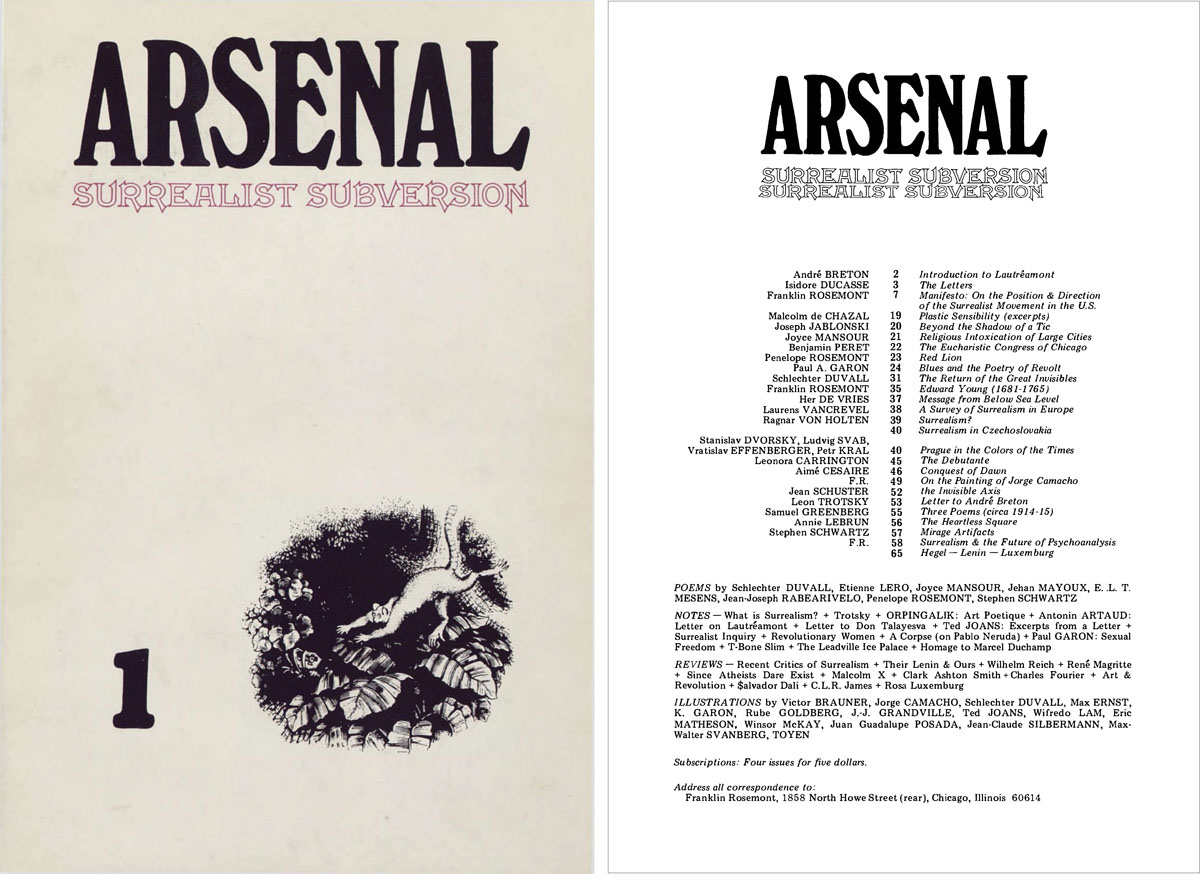
Arsenal: Surrealist Subversion

arsenal1.jpg

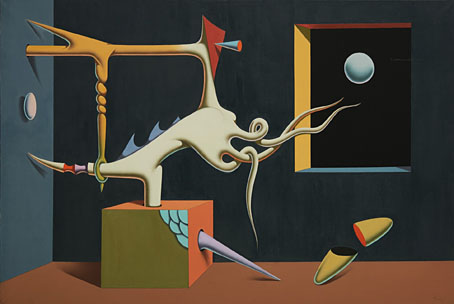
It’s the “S” word again. I said at the beginning of this month that I was looking forward to seeing where this interest led, and here we are. My recent reading has included Penelope Rosemont’s Surrealist Women (1998), a comprehensive study that I’d dipped into in the past but hadn’t gone through properly until now. In the section devoted to activities since the 1960s Rosemont mentions a magazine, Arsenal: Surrealist Subversion, which she produced with her husband, Franklin Rosemont, as part of their work with the Chicago Surrealist Group. Arsenal had more of an erratic schedule than most magazines, managing four issues that appeared in 1970, 1973, 1976 and 1989. I really didn’t expect there to be copies of such an obscure publication available anywhere but, once again, the invaluable Internet Archive has scans of the first three issues.
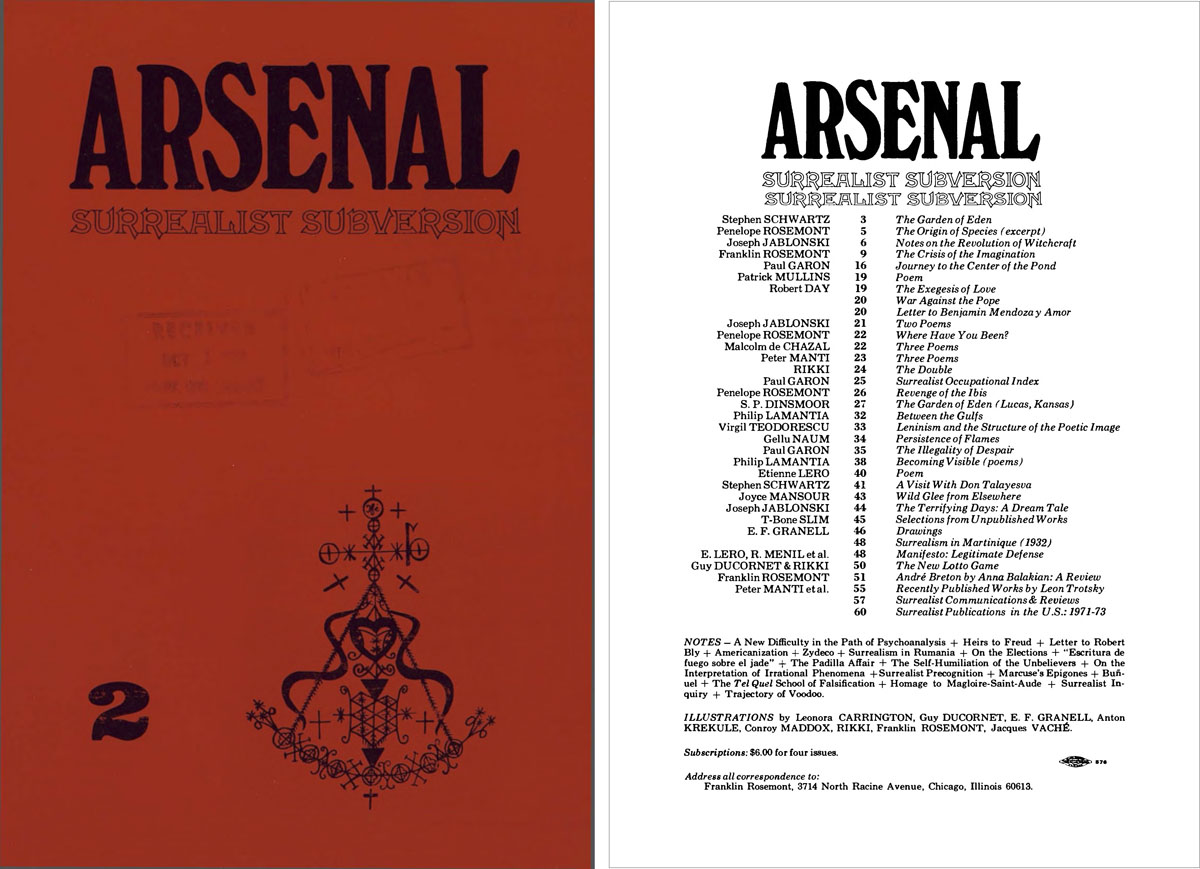
arsenal2.jpg

Arsenal proves to be a curious mix of the kind of material you’d expect from a Surrealist publication—poetry, essays, drawings, collages, significant quotes—together with chunks of Marxist politics and Freudian business that seem to have strayed in from another magazine. The latter material isn’t so unwarranted, being a reflection of André Breton’s original concerns, but committed Marxists of whatever stripe have never had much time for Surrealist art-creation and game-playing, while Freud himself was nonplussed by Breton’s attempts to interest him in the activities of the Parisian Surrealists. Breton casts a long shadow here; the Rosemonts had met him in Paris in the mid-60s, and many of the articles (also their combative attitudes) have a Bretonian cast.
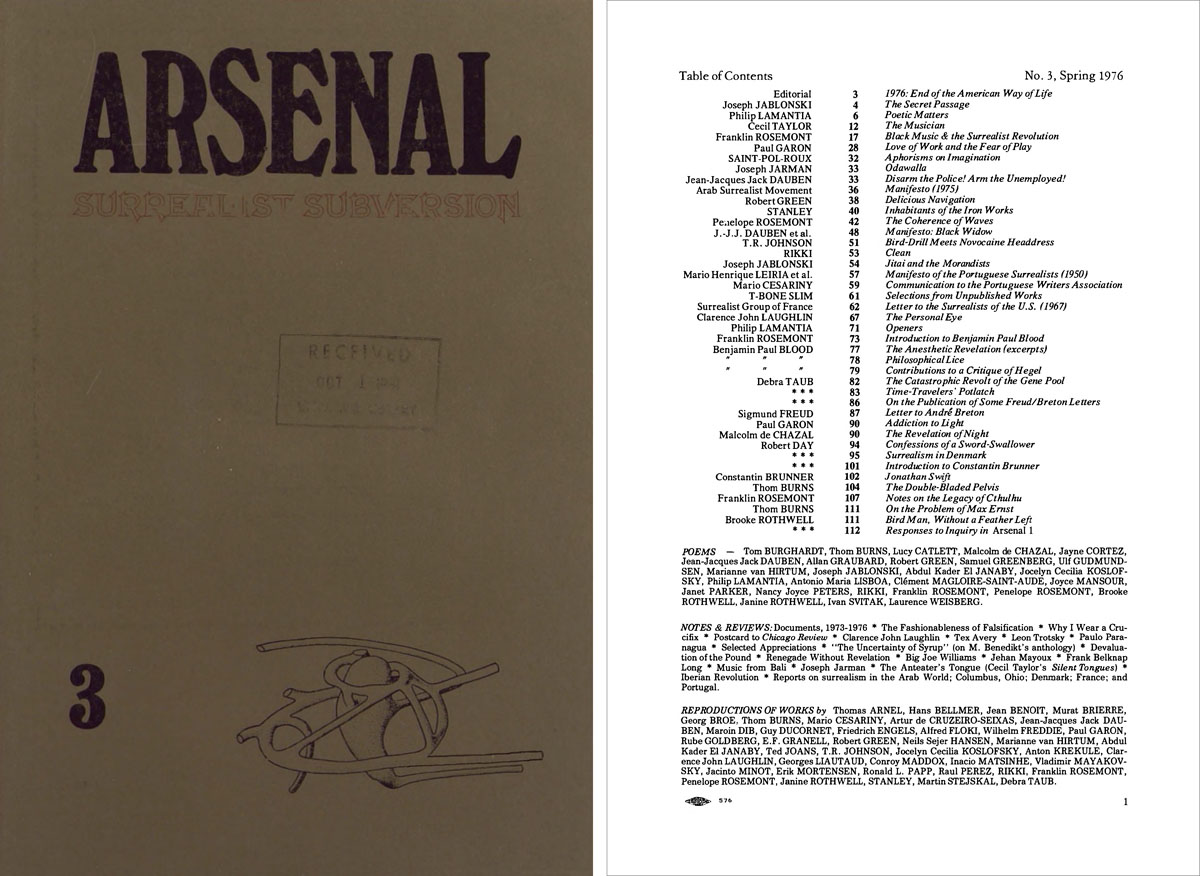
arsenal3.jpg

Elsewhere, Arsenal breaks new ground with a Surrealist appraisal of blues musicians, music being a form that Breton and Louis Aragon had dismissed in the 1920s as “too confusing” for incorporation into the Surrealist project. The magazine also reprints a couple of comic strips, including a page of Little Nemo in Slumberland which may be the first acknowledgement from inside Surrealism of Winsor McCay’s dream-worlds as Surrealist precursors. And after posting Breton’s musings about “The Great Transparent Ones” these mysterious beings surface once again. Not only the Great Transparent Ones but also HP Lovecraft’s Great Old Ones in a piece by Franklin Rosemont about the Cthulhu Mythos. Rosemont draws attention to the obvious similarity between the names of Breton and Lovecraft’s beings, while also noting Lovecraft’s prowess as a transcriber of dreams. In doing so he complains about Lovecraft circumscribing his imagination by resorting to the story structures of the pulp magazines. Lovecraft was never a member of any avant-garde literary circle, however, unlike Clark Ashton Smith, who also receives further mention in these pages; if it wasn’t for Weird Tales we never would have heard of HP Lovecraft and there wouldn’t be a Cthulhu Mythos. This fault-picking is typical of many other pieces in the magazine, the book reviews in particular where a kind of petulant bad temper is the predominant tone. You probably can’t expect much else from a magazine that names itself after a store of weapons but the cumulative effect makes it seem that the road to the Marvellous must be paved with razor blades and broken glass. To their credit, the editors did print in the third issue some of the negative reviews they received for the previous two, including the inevitable dismissals from hardline Communists. Despite all this I’d still like to see how things developed (or came to an end) in the fourth and final issue.

• Further reading: I Could Dream In French: An Interview With Penelope Rosemont.

Elsewhere on { feuilleton }
The Surrealism archive

Previously on { feuilleton }
First Papers of Surrealism
The original Cabaret Voltaire
View: The Modern Magazine

Weekend links 710

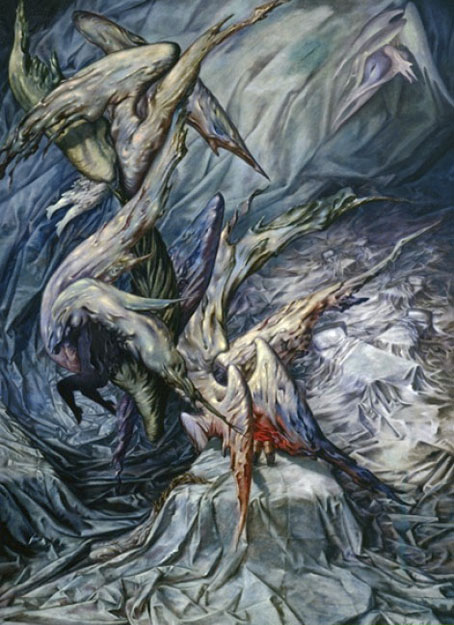
Menace (1974) by Ivan Tovar.

• “I find myself going back to Early Water more and more in recent years. It should be better known.” B. Sirota reviewing the one-off musical collaboration between Michael Hoenig and Manuel Göttsching. (Previously.) It should indeed be better known.

• At Unquiet Things: “Come for the cosmic awe, stay for the skeletons in spacesuits”; S. Elizabeth talks to Adam Rowe about the science-fiction art of the 1970s.

• “The architectural style wars have started all over again.” Owen Hatherley on the unending debate between traditionalists and modernists.

• At Public Domain Review: Clear Shadows (1867), a book of Japanese silhouette portraits by Ochiai Yoshiiku.

• New music: Flux Gourmet Original Motion Picture Soundtrack by Various Artists, and Volta by Loula Yorke.

• Meta machine mantras: Steve Barker on the birth of the Buddha Machine.

Cosmohedron, a short animated film by Duncan Hatch.

• Mix of the week: isolatedmix 125 by Sa Pa.

Chelsea Wolfe’s favourite music.

• At Dennis Cooper’s: Mirrorers.

A Silhouette Of A Man And A Wasp (1995) by Add N To (X) | A Silhouette Approaches (2005) by Robin Guthrie & Harold Budd | Silhouette (2015) by Julia Holter

Weekend links 709

tanning.jpg

Guardian Angels (1946) by Dorothea Tanning.

• “If photographs can outlive their subjects, and memory works like photography, do images somehow endure in the brain after death? Could these undead memories be recovered with the right technologies?” Speculative fiction from 1899 in Dr Berkeley’s Discovery by Richard Slee and Cornelia Atwood Pratt.

• Mix of the week: Astral Loitering: Excursions In New Age, 1970–1989: 210 minutes of well-chosen selections that continue where I Am The Center left off. In a similar zone, albeit more recent, there’s the regular monthly report from Ambientblog, DreamScenes—January 2024.

• At American Scientist: The Source of Europe’s Mild Climate: “The notion that the Gulf Stream is responsible for keeping Europe anomalously warm turns out to be a myth”. An article from 2006 that you’d think would be more widely known today.

The Anomalist: “World News on UFOs, Bigfoot, the Paranormal, and Other Mysteries at the Edge of Science”. Too many of the links lead to worthless tabloid filler but the headlines can be fun.

• Coming soon from Strange Attractor: Two-Headed Doctor: Listening for Ghosts in Dr John’s Gris-Gris, a book by David Toop which analyses the Doctor’s voodoo-themed debut album.

• At Unquiet Things: Beyond The Shadows Of The Labyrinth: Exploring the Groovy Kaleidoscope of Ted CoConis’ Art.

• DJ Food unearths a batch of Portuguese Hauntology via Prisma Sonora Records.

• At Dennis Cooper’s: John Waters Day (restored/expanded).

• New music: Moon by Retep Folo & Dorothy Moskowitz.

New Age (live) (1969) by The Velvet Underground | New Age (1980) by Chrome | 1966 – Let The New Age Of Enlightenment Begin (2014) by Sinoia Caves

Forbidden reproductions

magritte2.jpg

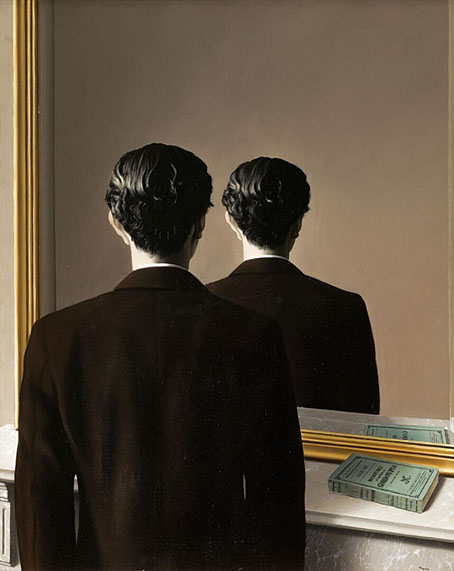
La Reproduction Interdite (1937) by René Magritte.

English translations of the title of Magritte’s painting vary, with Not to be Reproduced and Reproduction Prohibited being two of the most popular. I prefer Reproduction Forbidden, a title that sounds more serious, and with a use reinforced by Forbidden Games, the English title of a René Clement feature film, Jeux Interdits. Whatever the translation, this is one of Magritte’s most popular inventions, one that people like recreating.


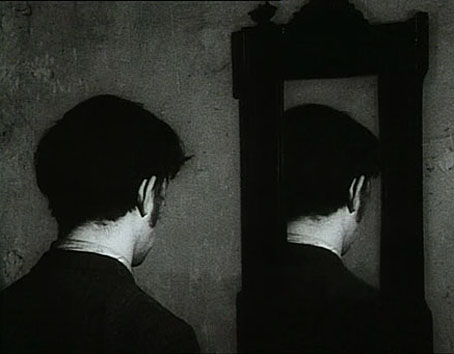
The Flat (1968).

flat.jpg

Jan Švankmajer’s short has more justification for copying the painting than some of the examples which follow. Švankmajer and Eva Švankmajerová were members of the long-running Prague Surrealist group, and The Flat is very much a Surrealist piece, with a man trapped inside a room where none of the mundane objects behave as he expects. In addition to the overt Magritte quote there’s an appearance by Švankmajer’s film-directing friend, Juraj Herz, as a bowler-hatted man carrying a chicken.


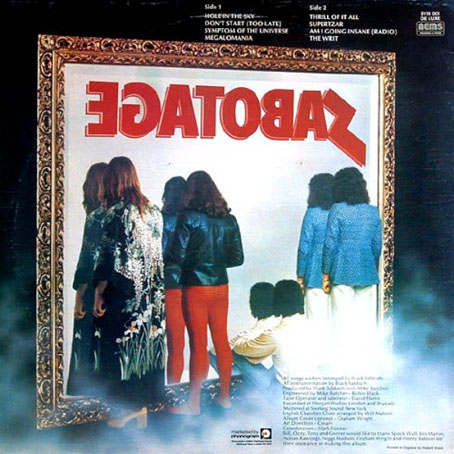
Sabotage (1975) by Black Sabbath.

sabotage.jpg

The front cover is the Magritte idea but with them all facing away from the mirror.


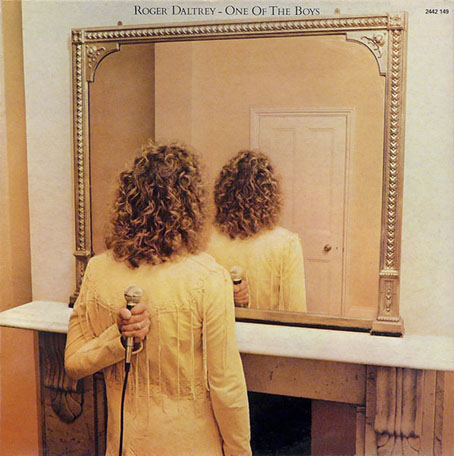
One Of The Boys (1977) by Roger Daltrey.

daltrey.jpg

One of the things that makes Magritte’s original work so well is the blank space in the mirror which directs attention to the impossible reflection. I suspect that if design group Hipgnosis had been asked to imitate the painting they would have done something similar, avoiding the lacklustre effect achieved here by photographer Graham Hughes. Hipgnosis acknowledged their own debt to Magritte in the title of their first book, Walk Away René in 1978, and often constructed whole sets for photo shoots. Hughes tried another Magritte-like effect for the back cover of the Daltrey album but with diminished success.


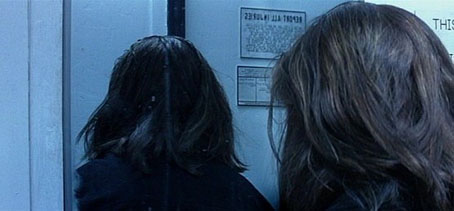
Dolores Claiborne (1995).

dolores.jpg

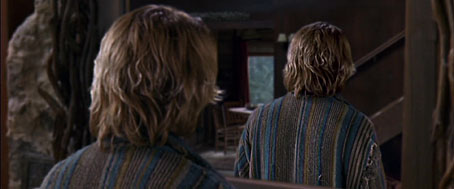
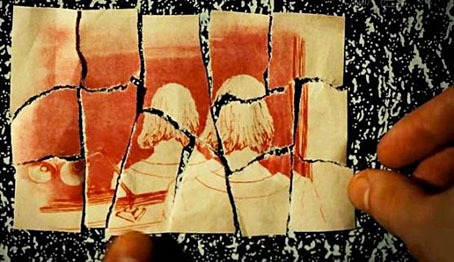
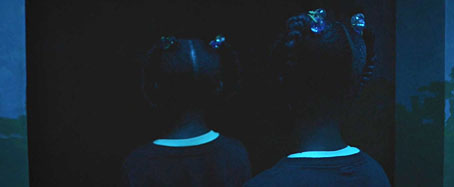
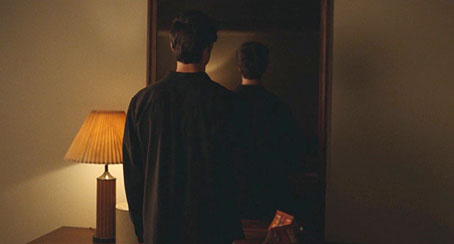
The following images are from films (and a TV series), two of which are coincidentally based on Stephen King stories. To date I’ve only seen Secret Window which isn’t one I’d recommend. Are there any more forbidden reproductions out there?


Secret Window (2004).

secret.jpg


The Double (2013).

double.jpg


Us (2019).

us.jpg


Euphoria (2019).

euphoria.jpg


Update: Added Sabotage and Euphoria.

Elsewhere on { feuilleton }
The Surrealism archive

Previously on { feuilleton }
René Magritte, Cinéaste
Magritte: The False Mirror
Magritte, ou la lecon de chose
René Magritte album covers
Monsieur René Magritte, a film by Adrian Maben
George Melly’s Memoirs of a Self-Confessed Surrealist
The Secret Life of Edward James
René Magritte by David Wheatley