Weekend links 424

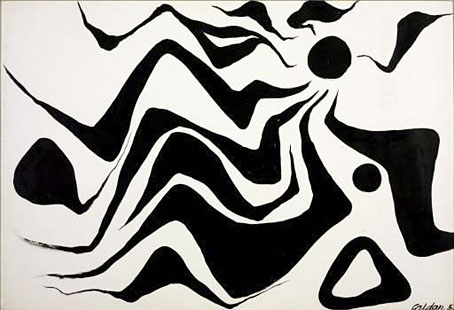
calder.jpg

Black Sun (1953) by Alexander Calder.

• “But Berlin Alexanderplatz transcends its genre elements, largely because of Döblin’s deep lack of hope about what can be expected of human beings.” Adam Kirsch on Alfred Döblin’s Berlin.

• “I occasionally dream of finding books that do not seem to exist (yet), and sometimes remember their titles,” says Mark Valentine.

• “I don’t read fiction.” He does, however, own 11,000 books. Alan Garner on writing a memoir of his wartime childhood.

What is it that I really like? I mean that’s the question that I think every musician and artists and everybody actually, is asking themselves; what they really like. And that means the emphasis is on REALLY like, meaning how do you push aside what you’ve been told, what you’ve been taught, what your friends like, and how much you like something because your friends like it or because it’s socially popular at the moment, or your girlfriend likes it or any of those ideas.

Jon Hassell (again) in an interview at Ableton

• How Alexander Calder sparked a modern fascination with mobiles (sculptures, that is, not telephones).

• Deep in Italy, one man’s Surrealist mini-city sleeps: Francky Knapp on Tomaso Buzzi’s La Scarzuola.

• “Even before electricity, robots freaked people out”: Lisa Hix on the history of clockwork automata.

Nicolas Winding Refn’s website devoted to neglected/abandoned films was launched this week.

• Mixes of the week: FACT Mix 664 by Lucy, and XLR8R Podcast 552 by Thomas Fehlmann.

Jean-Paul Goude‘s best photograph: an androgynous Grace Jones.

Marquis de Sade: 112 pages, 100 erotic illustrations.

The world’s most beautiful libraries

Sade Masoch (1968) by Bobby Callender | I’ve Seen That Face Before (Libertango) (1981) by Grace Jones | Black Sun (2011) by Demdike Stare

Weekend links 422

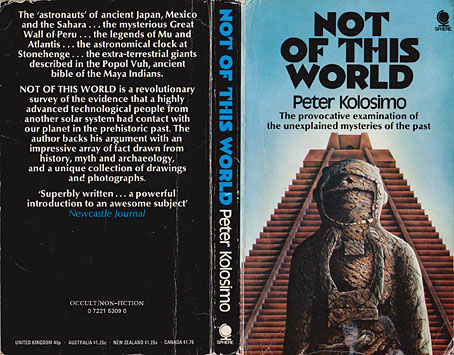
kolosimo.jpg

Wu Ming, a communist writing collective known for its historical fiction, sees Kolosimo as using pseudohistory as a tool to shake people from their belief that capitalist society is natural and transhistorical, opening minds to other possibilities for how humans can live. They regret that popular proponents of his theories today, like Graham Hancock and Erich von Däniken, are unable to recognize the political motivations behind his project: “Nothing of his radicality survives in today’s copycats… Every corner has been blunted, the heresy has become telegenic, but we know that the revolution will not be televised.”

The secret history of Marxist alien hunters by AM Gittlitz

I received the Sphere edition of Peter Kolosimo’s book as a Christmas present in 1974, and being 12 years old at the time took its theories fairly seriously. As a work of pseudohistory it’s as poor as the books of Erich von Däniken but I always liked the title, and it happens to be the place I first encountered the mysterious words “Popol Vuh”, a name that would acquire a very different significance a few years later. Kolosimo also joins Kenneth Grant in taking HP Lovecraft’s work as a thin fictionalisation of supposed fact. For a serious dismantling of Not of This World see this review (the first of three parts) by “skeptical xenoarchaelogist” Jason Colavito.

• The Archons are back: Erik Davis talks with Gnostic scholar Matthew Dillon about religious mourning, the Nag Hammadi library, sex-magick Jesus, the Gnostic Eden, David Icke’s lizards, and the power of the Archons as an allegory of contemporary technological and political power.

Crystal Voyager (1973) is a surfing film by David Elfick that ends with a 23-minute sequence of slow-motion waves set to Echoes by Pink Floyd. Some of the same footage later appeared in the final scenes of Peter Weir’s The Last Wave (1977).

• Sweet artifice: “Dandies in the age of decadence favoured synthetics over nature, nowhere more so than in perfumery’s fabulous counterfeits,” says Catherine Maxwell.

• Now for a lampshade solo: Pascal Wyse on how the Radiophonic Workshop built the future of sound.

• Wilde about Paris: Alex Dean on the sex, drink and liberation of Oscar Wilde’s “lost” years.

Bee in the City: the vanguard of an invading army from Planet Bee.

• Five books that most inspired Alexander McQueen.

Colin Newman‘s favourite albums.

Echoes (1969) by Leon Thomas | Echo Waves (1974) by Ash Ra Tempel | Not Of This World (1988) by Danzig

Weekend links 421

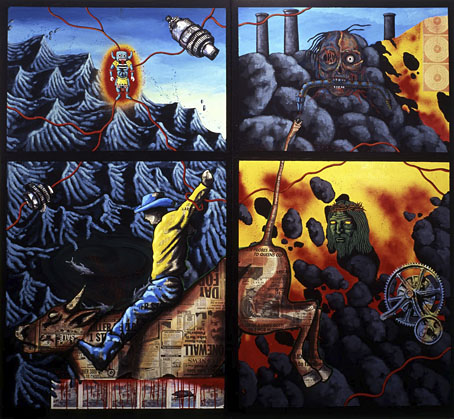
wojnarowicz.jpg

The Death of American Spirituality (1987) by David Wojnarowicz.

Dau: “Art imitating life on an unprecedented scale”. Siddhant Adlakha on a colossal Russian feature-film project that sounds like a real-life equivalent of Synecdoche, New York. Adlakha’s piece, which claims that Dau is finished, was written a year ago but there’s still no sign of the film itself. Wikipedia has more details and links.

Metropolis Magazine from Phantasm Press is a facsimile republication of the 32-page theatre programme produced for the UK premier of Fritz Lang’s feature film.

Children Of The New Dawn is a preview of the score for Mandy by the late Jóhann Jóhannsson. From last year: The Drowned World (live) by Jóhann Jóhannsson.

Grand Panorama of a Whaling Voyage ’Round the World (1848) by Benjamin Russell & Caleb Purrington is the longest painting in North America.

• “This summer, there is only one book to take to the Terminal Beach”: Applied Ballardianism: Memoir from a Parallel Universe by Simon Sellars.

• “La série des Fredi en trois volumes est une étude sincère et consciencieuse de l’inversion sexuelle.”

• “The Book was Mallarmé’s total artwork, a book to encompass all books,” says Sylvia Gorelick.

• At BLDGBLOG: Graphic Inferno, art by Rico Lebrun based on Dante’s Divine Comedy.

• Mixes of the week: XLR8R Podcast 549 by Hólmar, and FACT Mix 661 by Kelly Lee Owens.

• “Dealing with creative block? A deck of cards might help,” says Abigail Cain.

The Instagram account archiving exquisite interiors from vintage porn.

Polish composers report from Outer Space

Wind From Nowhere (1994) by Uzect Plaush | Slolooblade : The Drowned World (1994) by Mo Boma | Inner Space Memorial for JG Ballard (2014) by Janek Schaefer

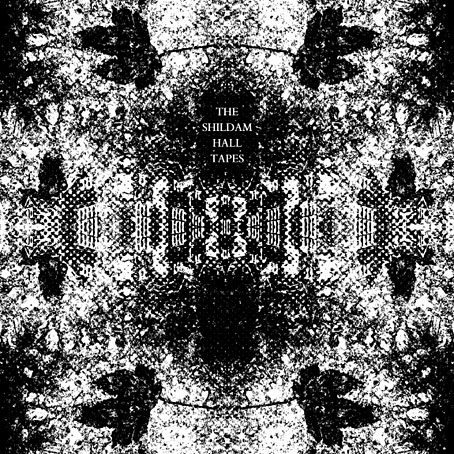
The Shildam Hall Tapes

shildam.jpg

The conceit of a “soundtrack for an imaginary film” dates back at least as far as Gandharva by Beaver & Krause, although only the second half of that album was the imaginary soundtrack, and a rather vague one at that. (A variation on the Gandharva suite did become genuine soundtrack music, however, when Robert Fuest asked Gerry Mulligan to rework his sax improvisation for The Final Programme in 1973.) The imaginary soundtrack idea didn’t really catch on until the late 80s and early 90s, with serious efforts such as Barry Adamson’s excellent Moss Side Story emerging alongside an increasing and often lazy use of the term “imaginary soundtrack” as a descriptor employed by journalists writing about instrumental electronic albums.

The Shildam Hall Tapes is neither lazy nor mis-labelled being the latest in this year’s themed compilation albums from A Year In The Country, and a collection described as “reflections on an imaginary film.”

In the late 1960s a film crew began work on a well-funded feature film in a country mansion, having been granted permission by the young heir of the estate. Amidst rumours of aristocratic decadence, psychedelic use and even possibly dabbling in the occult, the film production collapsed, although it is said that a rough cut of it and the accompanying soundtrack were completed but they are thought to have been filed away and lost amongst storage vaults.

Few of the cast or crew have spoken about the events since and any reports from then seem to contradict one another and vary wildly in terms of what actually happened on the set. A large number of those involved, including a number of industry figures who at the time were considered to have bright futures, simply seemed to disappear or step aside from the film industry following the film’s collapse, their careers seemingly derailed or cast adrift by their experiences.

Little is known of the film’s plot but several unedited sections of the film and its soundtrack have surfaced, found amongst old film stock sold as a job lot at auction—although how they came to be there is unknown. The fragments of footage and audio that have appeared seem to show a film which was attempting to interweave and reflect the heady cultural mix of the times; of experiments and explorations in new ways of living, a burgeoning counter culture, a growing interest in and reinterpretation of folk culture and music, early electronic music experimentation, high fashion, psychedelia and the crossing over of the worlds of the aristocracy with pop/counter culture and elements of the underworld.

The Shildam Hall Tapes takes those fragments as its starting point and imagines what the completed soundtrack may have sounded like; creating a soundtrack for a film that never was.

Track list:
1) Gavino Morretti—Dawn of a New Generation
2) Sproatly Smith—Galloping Backwards
3) Field Lines Cartographer—The Computer
4) Vic Mars—Ext – Day – Overgrown Garden
5) Circle/Temple—Maze Sequence
6) A Year In The Country—Day 12, Scene 2, Take 3; Hoffman’s Fall
7) The Heartwood Institute—Shildam Hall Seance
8) David Colohan—How We’ll Go Out
9) Listening Center—Cultivation I
10) Pulselovers—The Green Leaves of Shildam Hall

I’ve always enjoyed this kind of thing when it’s done well, as in Barry Adamson’s case, so was already predisposed to the new collection even before hearing it. The cumulative effect is much better than anticipated, thanks in part to a few deviations from earlier A Year In The Country compilations. The opening piece is by Gavino Morretti, a newcomer to the AYITC stable, and a musician whose albums to date are all in the imaginary soundtrack sub-genre. Morretti provides a marvellous piece in the Goblin/Fabio Frizzi manner that effortlessly conjures a title sequence of mists, coloured filters and Art Nouveau typefaces.

The following contributions range from the spookily atmospheric (Sproatly Smith, A Year In The Country, The Heartwood Institute) to electronic numbers such as The Computer by Field Lines Cartographer which suggests some kind of paranormal investigation like those in The Stone Tape and The Legend of Hell House. The biggest surprise for me was David Colohan’s How We’ll Go Out which is another electronic work, and very different to his earlier folk-oriented compositions. If, like me, you’ve been missing the “ghost” quotient among the recent releases on the Ghost Box label, then The Shildam Hall Tapes is a very welcome substitute: sinister, perfectly-pitched and leaving enough gaps in the scenario for the imagination to operate. I’m no doubt biased towards the format but for me this is the best A Year In The Country compilation to date so I’m now wondering what the follow-up will be like.

The Shildam Hall Tapes will be available for pre-order at Bandcamp from 10th July, and released on the 31st.

Previously on { feuilleton }
Audio Albion
A Year In The Country: the book
All The Merry Year Round
The Quietened Cosmologists
Undercurrents
From The Furthest Signals
The Restless Field
The Marks Upon The Land
The Forest / The Wald
The Quietened Bunker
Fractures

Weekend links 418

vertigo.jpg

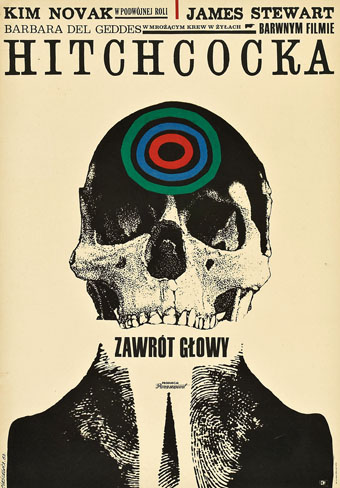
Poster by Roman Cieślewicz for the 1963 Polish release of Vertigo. Via The Hitchcock Zone.

• Alfred Hitchcock’s Vertigo is sixty years old this year. It’s a film I’ve always found to be preposterous and very over-rated, despite the considerable strengths of its cast, production, etc; consequently, any claims to its being an unalloyed masterpiece (such as being voted the best film of all time in the 2012 Sight & Sound poll) have been difficult to accept. For the latest anniversary, David Thomson examined the film in the light of changing social attitudes.

• Currently seeking funding at Unbound: Stars, Fools and Lovers: An illustrated guide to the art and history of the Tarot by Joanna Ebenstein, Laetitia Barbier and Mark Pilkington. Another Tarot-related book, Pamela Colman Smith: The Untold Story by Stuart R. Kaplan with Mary K. Greer, Elizabeth Foley O’Connor and Melinda Boyd Parsons, will be published next month.

• Everybody wants to talk to Jon Hassell at the moment, which is no bad thing: recent interviews have appeared at The Vinyl Factory, Red Bull Radio and Vice.

• Coming soon from Lazarus Corporation: England’s Dark Dreaming by Paul Watson.

• Sean Kitching on The Strange World of Charles Hayward (This Heat et al).

• At Dennis Copper’s: The title sequences of 56 mostly horror movies.

• Stone circles: Adam Scovell chooses 10 notable cinematic examples.

• “You gotta be selfish. It’s a terrible thing,” says David Lynch.

Wolf’s Kompaktkiste shows off a serious record collection.

Boy with Cat (1966), a short film by Donald Richie.

• Mix of the week: Secret Thirteen Mix 256 by Nina.

Tank (2018), a short film by Stu Maschwitz.

Phantom Islands—A Sonic Atlas

Letraset, design and music

• Vertigo (1988) by Flash Cero | Psyko (Themes from Psycho and Vertigo) (1993) by Laika & The Cosmonauts | Vértigo Magnético (2014) by Liquidarlo Celuloide