Weekend links 561

ghostbox.jpg

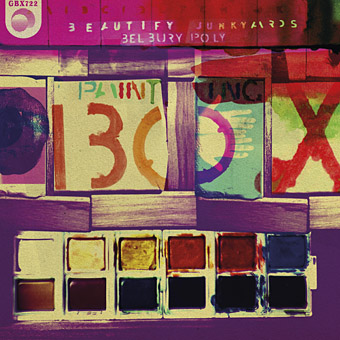
The next release on the Ghost Box label, Painting Box is a collaborative seven-inch single by Beautify Junkyards and Belbury Poly, the A-side of which is a cover of a song by The Incredible String Band. Available on 30th April. Design, as always, is by Julian House.

• “What is good for you as a person is often bad for you as a writer. People will tell you that this not true, and some of the people who will tell you that are also writers, but they are bad writers, at least when they try to convince you, and themselves, that the most important thing for a fiction writer to have is compassion.” Brock Clarke on the case for meanness in fiction.

• The week in non-human intelligence: “Life beyond human has to play by the rules of natural selection,” says David P. Barash, and Thomas Moynihan on dolphin intelligence and humanity’s cosmic future.

Ilia Rogatchevski speaks with historian Juliane Fürst about her new history of Soviet hippies and the counterculture of the former USSR.

• Mushroom with a view: Karen Schechner at Bookforum talks with Bett Williams about her mycological journey.

• Retro instinct versus future fetish: Fergal Kinney on Stereolab’s Emperor Tomato Ketchup 25 years on.

• At Dennis Cooper’s: Spotlight on…JG Ballard: The Atrocity Exhibition (1970).

This is Hexagon Sun: A feature-length video on Boards of Canada.

• Mix of the week: The Ides by The Ephemeral Man.

• New music: Gyropedie by Anne Guthrie.

Paintbox (1967) by Pink Floyd | Orgone Box (1989) by Haruomi Hosono | God Box (1996) by Paul Schütze & Andrew Hulme

Weekend links 560

martin.jpg

The Fallen Angels Entering Pandemonium, from ‘Paradise Lost’, Book 1 (c.1841) by John Martin.

• “Hergé’s heirs sue artist over his Tintin/Edward Hopper mashups.” The complaint is that the paintings of Xavier Marabout besmirch Tintin’s character by making him seem…human? Silly. I’d sooner complain that Hergé’s ligne claire drawing style is an awkward match for Hopper’s realism. And besides which, isn’t Tintin gay? There’s a lot of wish-fulfilling slash art showing Tintin and Captain Haddock in a closer relationship than Hergé ever would have wanted. This Canadian magazine cover by Normand Bastien dates from 1987.

• “Everyone wanted to make products that looked fast and angry and maybe wanted to lay eggs in your brain.” Alexis Berger tells S. Elizabeth how she avoided years stuck in a design office by becoming a jeweller instead.

• New music: Chiaroscuro by Alessandro Cortini, and Frequencies For Leaving Earth Vol. 4 (One-Hour Loop) by Kevin Richard Martin & Pedro Maia.

The Willows is less a flight of fancy and more an attempt to articulate the ways in which what we dubiously still call “nature” is at once an object of human systems of knowledge and yet also something that undermines those same systems. Thus if The Willows is indeed a classic of “supernatural horror” (as HP Lovecraft would famously note), we might also be justified in calling it “natural horror” as well. In Blackwood’s wonderfully slow, patiently constructed scenes of atmospheric suspense, there is the sense of an impersonal sublime, a lyricism of the unhuman that shores up the limitations of anthropocentric thinking, as well as evoking the attendant smallness of human beings against the backdrop of this deep time perspective.

Eugene Thacker on how Algernon Blackwood turned nature into sublime horror

• Women of Letters: John Boardley talks to Lynne Yun, Deb Pang Davis, Coleen Baik and Duong Nguyen about their typographic designs.

• At Google Arts & Culture: Music, Makers & Machines: A brief history of electronic music.

• At The Public Domain Review: The Universe as Pictured in Milton’s Paradise Lost (1915).

• Beyond the Perseverance drone: Chloe Lula on the sounds of space.

• At Wormwoodiana: Colour magazine (1914–1932).

Wyrd Daze Lvl.4 FOUR STAR is here.

• At Dennis Cooper’s: Hell.

O Willow Waly (1961) by Isla Cameron And The Raymonde Singers | Cool Iron (1972) by The Willows | The Willows (2005) by Belbury Poly

Weekend links 559

fukuda.jpg

Cover art by Toshiyuki Fukuda for the Japanese edition of the new novel by Kazuo Ishiguro.

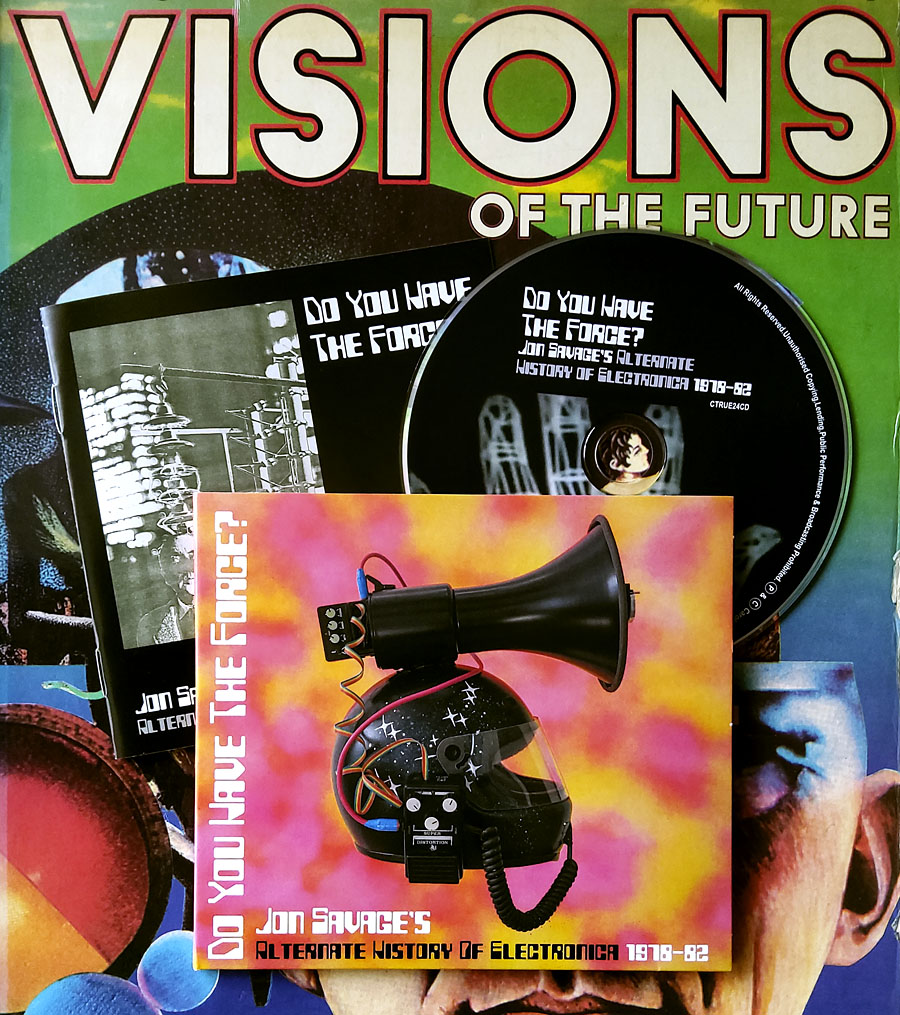
• “The story here is how between 1978 and 1982, this impulse shed its novelty genesis and its spoils were divvied up between gay producers making high-energy soundtracks for carnal abandon, and quiet Hawkwind fans smoking spliffs in Midlands bedrooms.…this excellent compilation offers fresh understandings of a period in sonic history where the future was up for grabs.” Fergal Kinney reviews Do You Have the Force? Jon Savage’s Alternate History of Electronic Music, 1978–82.

DJ Food continues his history of mini CDs with Oranges And Lemons, the 1989 album by XTC which was released in the usual formats together with a limited edition of three small discs in a flip-top box. The cover art by Dave Dragon is a good example of the resurrected groovy look.

• “If Austin Osman Spare, William Burroughs, Mary Butts and Kathy Acker got together for a séance, the transcript could well look like this.”

• How Leonora Carrington used Tarot to reach self-enlightenment: Gabriel Weisz Carrington on his mother’s quest for mythic revelations.

• Mixes of the week: Sounds Unsaid at Dublab with Tarotplane, and To Die & Live In San Veneficio by SeraphicManta.

• At Dennis Cooper’s: 5strings presents…Solve et Coagula: An introduction to Israel Regardie.

• The Joy of Silhouettes: Vyki Hendy chooses favourite shadow-throwing cover designs.

Emily Mortimer on how Lolita escaped obscenity laws and cancel culture.

Freddie deBoer has moved his writing to Substack.

• New music: Wirkung by Arovane.

• Children Of The Sun (1969) by The Misunderstood | Children Of The Sun (1971) by Hawkwind | Children Of The Sun (2010) by The Time And Space Machine

Switched On again

stereolab.jpg

This week I’m electrically possessed by Stereolab, thanks to the arrival of the fourth volume in the Groop’s Switched On series of compilation albums. As with the earlier releases, the new album collects deleted EPs, singles and other scarcities. I already had a third of this one on the First Of The Microbe Hunters EP but it’s good to finally have on disc B.U.A. (aka Burnt Umber Assembly), a previously unreleased piece from the Amorphous Body Study Centre recordings, together with more of the tour singles such as The Underground Is Coming and Free Witch And No-Bra Queen. The latter may well allude in its title and cover art to Pravda, La Survireuse, Guy Peellaert’s freedom-loving biker-hippie whose persona was modelled on Françoise Hardy. (Stereolab’s borrowings are often overt but I’ll give them the benefit of the doubt on this one.) Pravda or not, the animation that Peellaert produced with Gallien Guibert would have made a great video for the song if it was a little longer. Guibert has an updated version of the film here.

Weekend links 558

morghen.jpg

• One of the earliest posts here concerned The Suite of the Most Notable Things Seen by Cavaliere Wild Scull, and by Signore de la Hire on Their Famous Voyage from the Earth to the Moon (1776) by Filippo Morghen, a series of prints which depict the fantastic inhabitants, fauna and flora of the Moon. Morghen shows the Earth’s satellite to be a tropical place very similar to 18th-century conceptions of the New World or the Far East. Back in 2006 you couldn’t see copies of the prints as large or as detailed as this set at The Public Domain Review.

• “Last Call preserves the poignant irony that the trust and vulnerability that once made gay bars synonymous with gay community were also vectors of death, both in the form of murder and, later, HIV/AIDS.” Jeremy Lybarger on Elon Green’s study of the murders of four gay men in New York City in the 1990s.

• “No one in American letters ever pushed back against power over such a long time as [Lawrence] Ferlinghetti,” says John Freeman. Related: Ferlinghetti’s travel journals.

• New music with literary associations: Invisible Cities by A Winged Victory For The Sullen, and Star Maker Fragments by TAK Ensemble & Taylor Brook.

• Old music with no literary associations: The first of the forthcoming releases of live recordings by Can will be a 1975 Stuttgart concert.

The 120 Days of Sodom: France seeks help to buy ‘most impure tale ever written'”.

• The Joy of Circles: Vyki Hendy looks at some recent concentric cover designs.

• At Spoon & Tamago: Sculpted sushi made entirely from natural polished stones.

• My Hungry Interzone: Brian Alessandro on coming out and reading Naked Lunch.

• Andy Thomas maps Jah Wobble’s interdimensional dub.

• Mix of the week: XLR8R Podcast 684 by Ben Bondy.

• At Dennis Cooper’s: Jim Jarmusch Day.

Circles (1966) by Les Fleur De Lys | Circles (1970) by Blonde On Blonde | Carry On Circles (2006) by Tuxedomoon