Weekend links 686

bickus.jpg

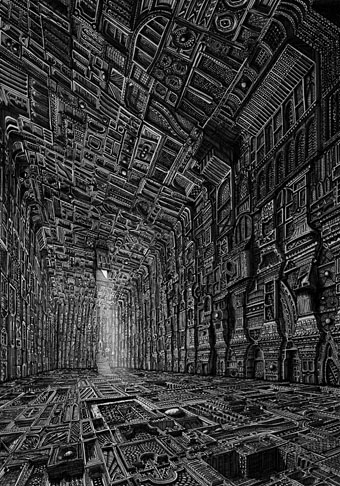
The Great Lab (2020); speculative architecture by Gytis Bickus. “This room is where the majority of the hallucinogenic substances are archived, within the walls & floors. It seems as though the architecture itself is being affected by the hallucinogenic substances stored within its fabric.”

• “They ran the recording through a vocoder, so it sounded staticky, like a voice infused with white noise, and put it at the end of the song. Then they went home.” Mark Dent on Change The Beat by Beside (aka Bee-side or Beeside), a song produced by Bill Laswell & Michael Beinhorn that includes one of the most sampled vocal lines in hip-hop. A great piece of audio-archaeology: I knew the sample but had no idea this song was its source. I only got to hear the Change The Beat very recently when I found a copy of Materialism, a collection of early Laswell productions, in a charity shop.

• At Unquiet Things: Artist, Chemist, Goofball: Catching Up With Tyler Thrasher.

• DJ Food looks at psychedelic posters created for London’s Middle Earth club.

His last commissioned work for Radio Berlin was a fantastical play he had composed himself. The transcript, titled “Lichtenberg: A Cross-Section,” ranks among the strangest things that he ever wrote. Beings who live on the moon are charged with the task of investigating the career of Georg Christoph Lichtenberg, a prominent physicist of the German Enlightenment. The moon beings have uncanny names—Labu, Quikko, Sofanti, and Peka—and they convene as the Moon Committee for Earth Research, which deploys odd contraptions for its work, each of them “easier to use than a coffee grinder.” There is a “Spectrophone,” which permits them to hear and see everything that happens on Earth; a “Parlamonium” that translates human speech into music; and an “Oneiroscope” that allows the researchers to observe human dreams. With the aid of these devices, the moon beings seek to understand why humans are so afflicted with misery. Their investigations finally reach the tentative conclusion that even if humans are unhappy, “perhaps it is their unhappiness that allows them to advance.” To honour the scientific achievements of Herr Lichtenberg, they conclude by naming a crater in his honour, a crater from which shines a “magical light that illumines the millennium.”

Peter E. Gordon on Walter Benjamin’s radio years

• At Dennis Cooper’s: Spotlight on…Brigid Brophy In Transit (1968).

15 lighthouses from the Smithsonian Magazine Photo Contest.

Sathnam Sanghera’s favourite songs.

• RIP William Friedkin and Jamie Reid.

• New music: The Long Song by Drøne.

Lighthouse (1978) by Tim Blake | Walk To The Lighthouse (1980) by John Carpenter | The Lighthouse (1994) by Hector Zazou ft. Siouxsie
The exposition moiré

expo2000-1.jpg

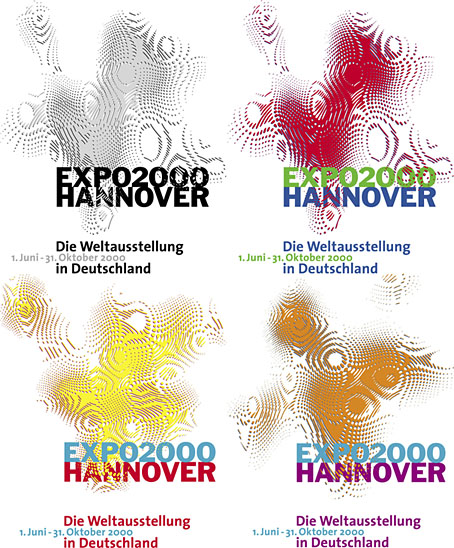
Logos designed by QWER, Iris Utikal and Michael Gais.

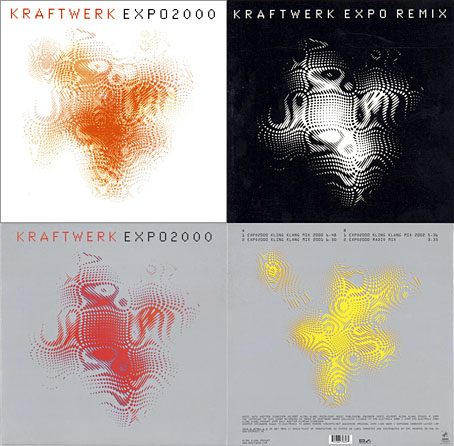
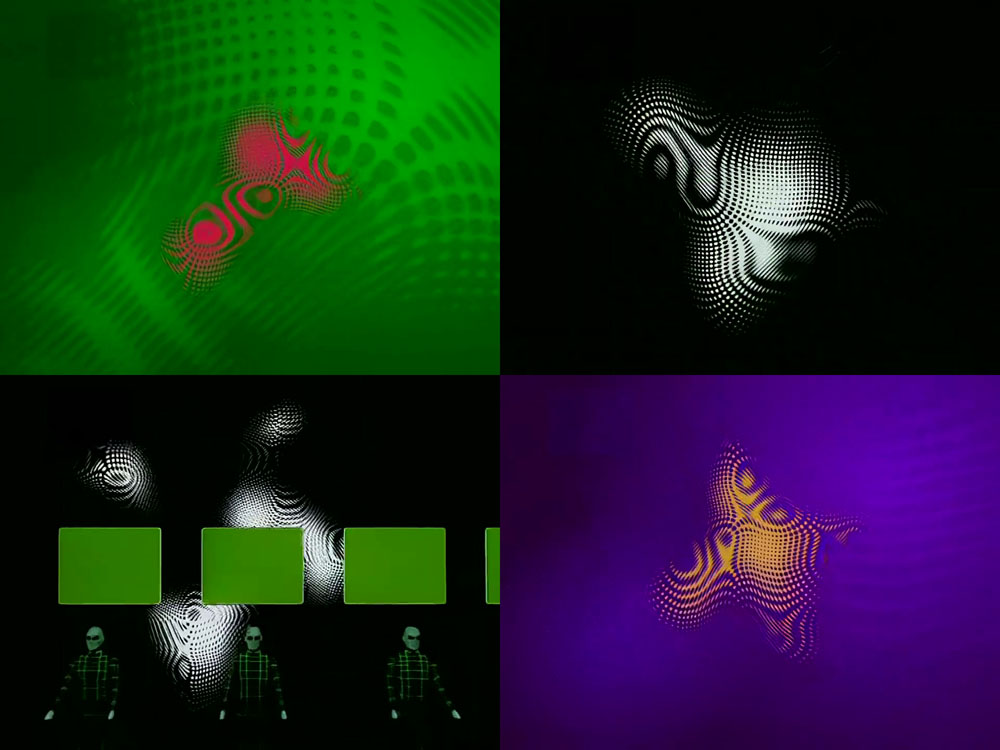
Hannover’s Expo 2000 wasn’t very successful as expositions go but it had an attractive logo, a combination of bold sans-serif type with a moiré background pattern which ideally had to be seen in its animated form. World expositions tend to be concerned with technical innovations and novelties, and this animated design was certainly novel, if impossible to replicate in print. All the static versions of the logo are essentially screenshots of the moving version, with the moiré image frozen at a various places to generate many shape and colour variations. Not all of these are satisfactory. I think it was Matisse who said that anyone can put two colours together; the real challenge is putting three together in a harmonious manner.

expo_logo.gifThe pattern was a little more animated on the original exposition website, albeit reduced to this tiny gif. The site is mostly intact and browsable at the Internet Archive, a primitive thing by today’s standards but Expo 2000 was the first world exposition with a dedicated website, something which really did set it apart from its predecessors. Many of the exposition’s buildings and exhibits would have seemed bizarre or alarmingly ugly to the people who attended the Paris Exposition Universelle in 1900 but much that was on display in Hannover would at least have been comprehensible to a visitor from the past. Trying to explain what “a website” was to someone in 1900, even a futurologist like HG Wells, would have required considerable effort.
expo2000-2.jpg

Video for Expo 2000 by Kraftwerk.

Ephemerality is a distinguishing characteristic of world expositions, all those splendid pavilions and eye-catching constructions don’t last very long even though the events themselves involve years of planning. A list of exposition features that have managed to survive would be a disparate collection, taking in well-known landmarks like the Eiffel Tower, Seattle’s Space Needle and the Atomium in Brussels, architectural projects such as the Grand Palais in Paris and the Biosphere in Montreal, and one-off oddities like the Unisphere in Queens and the cement dinosaurs in Crystal Palace Park. If Expo 2000 is remembered for anything today it’s the one-off song that Kraftwerk wrote for the occasion, Expo 2000, which arrived with graphics and visuals based on the expo logo. Kraftwerk had been hired at great cost to create the jingles in different languages that accompany the animated logo. This is turn led to the song, the group’s first new studio composition in 14 years.

expo2000-4.jpg

I thought these abstract images were a good match for Kraftwerk, I prefer them to the other designs for the single which show the four computer-generated figures that later appeared on the cover of Minimum-Maximum. The CD case at the top left was made with lenticular plastic which imitated the moiré effect of the animated logo. I didn’t buy this one when I had the chance, choosing instead the “enhanced” version which came with a minuscule copy of the video in a CD-ROM section. Like most CD-ROM singles, the audio tracks still play but the enhanced section no longer works. Welcome to the future.

Continue reading “The exposition moiré”

Weekend links 684

okamoto.jpg

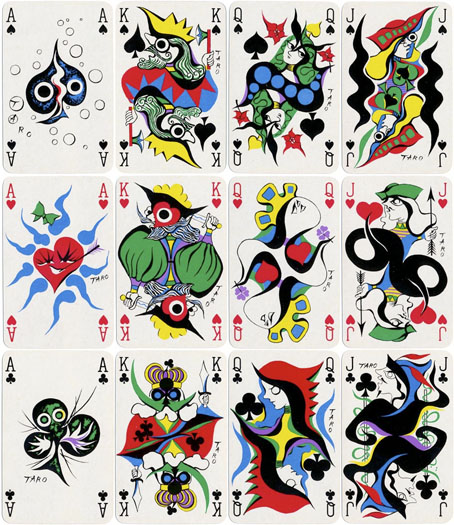
Playing cards designed in 1977 by Taro Okamoto.

• “This practice of looking does not prioritise academic or historical perspectives on art. It is divorced from the artist, the industry and the formal study of the arts. By paying attention to the form, title and other perceptible ‘clues’ in the work, this practice is primarily interested in using the intuitive, sensory, suggestive and aleatory to engage in conversation with a creative work. The point is not to develop an answer, an interpretation that ‘settles’ the ‘question’ of the painting, or to intellectualise the work in terms of form, style, history or the concerns of the artist. Rather, in this practice, a piece of art or writing becomes a test or opportunity for working one’s imagination—an exercise in making associations.” Aparna Chivukula on choosing art over wellness apps.

• “But with the discourse about the limitations of moralizing steadily growing, the question of an alternative naturally arises. The critics of self-righteousness and trauma mongering are for the most part not calling for a return to the amoral ironism that governed the Nineties and early Aughts—the sensibility that surely gave rise, at least in part, to the overgrowth of didacticism that followed. But if not this, then what? Where do we go from here?” Anastasia Berg on “the aesthetic turn”.

• “…by choosing ordinary creatures, the fabulist naturalises the stories in a world that is close to hand, which helps the writer communicate opinions that are often subversive.” Marina Warner on Kalilah wa-Dimnah and the animal fable.

• Coming soon from Strange Attractor: Austin Osman Spare, a revised and expanded edition of Phil Baker’s excellent biography of the artist/occultist.

• At Rarefilmm: The Marat/Sade (1967), Peter Brook’s film (previously) of the 1965 Broadway production of Peter Weiss’s play.

• New music: Hostile Environment by Creation Rebel, and Tone Maps by Field Lines Cartographer.

• Mixes of the week: Isolatedmix 122 by Mary Yalex, and XLR8R Podcast 810 by Zaumne.

• At Dennis Cooper’s: Pierre Clementi Day.

Sade Masoch (1968) by Bobby Callender | On Sadism (1979) by Material | Sadistic (1995) by Stereolab

Evoluon

evoluon1.jpg

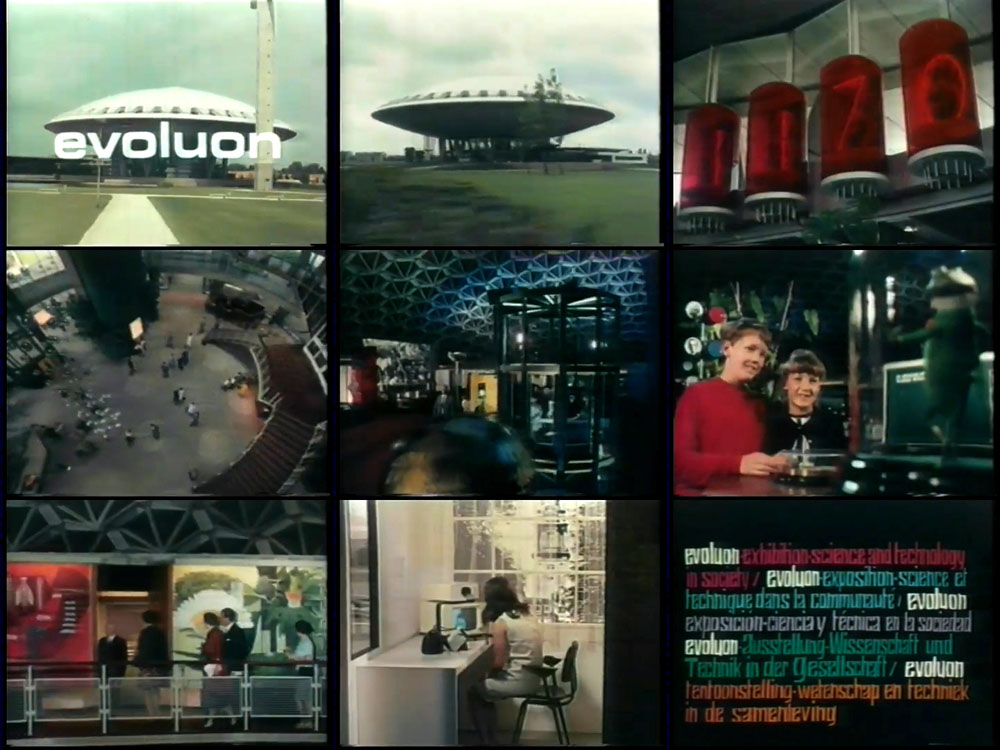
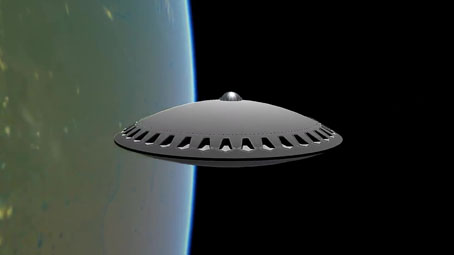
“Evoluon”: a Space Age name for a Space Age building in Eindhoven, Holland, constructed in 1966 by the Dutch electrical and electronics company, Philips. The building was designed by Leo de Bever and Louis Christiaan Kalff, and functioned for a number of years as a science museum, combining exhibits of innovative gadgetry with a three-dimensional representation of “the future” familiar from exposition architecture. I’d guess that Kalff was responsible for the flying-saucer shape, having already designed a range of lamps for Philips with similar shapes in the 1950s.

evoluon2.jpg

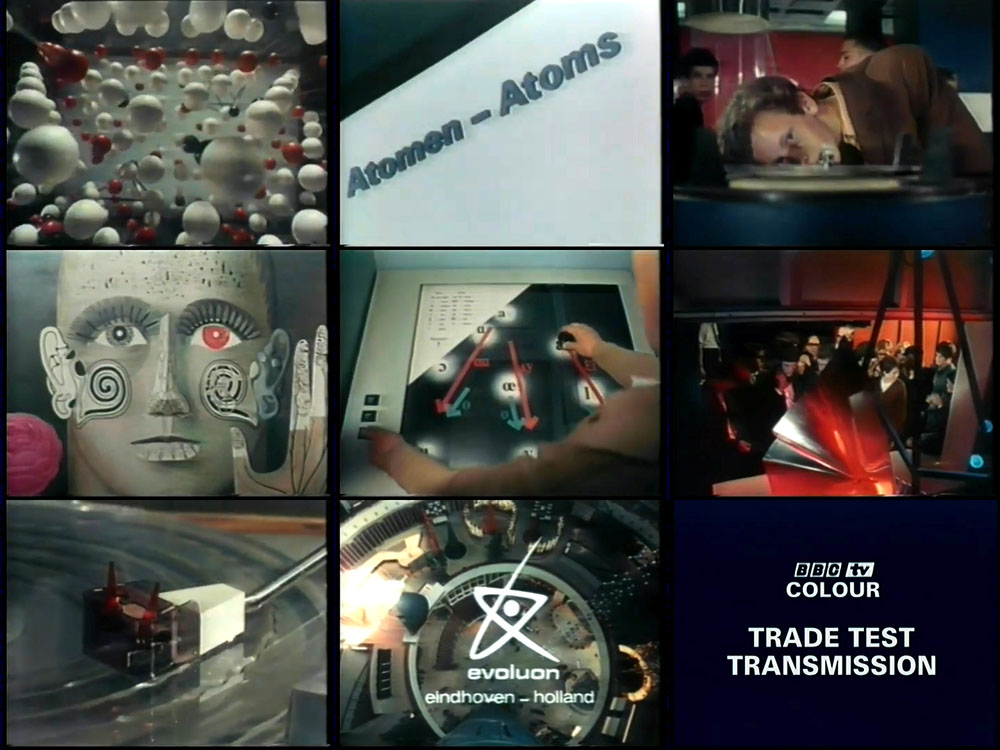
Bert Haanstra’s Evoluon was a short promotional film which was broadcast regularly by the BBC from 1968 to 1972 for trade test purposes, although I don’t recall ever seeing it before. Being someone who’s always liked architecture that looks like it fell out of a science-fiction magazine (preferably with a name to match: Skylon, Atomium, Space Needle, etc), an exhibition centre shaped like a flying saucer would have made an impression. British TV schedules were often empty during the daytime so films like this were broadcast for the benefit of TV retailers who needed something better than the testcard flickering on the screens of their brand-new colour boxes. As a science museum Evoluon looks like it was more fun to visit than the London Science Museum, with a profusion of interactive exhibits. (Although this isn’t to say that the London museum isn’t worthwhile, I went there several times in the 1970s. They have many large historical exhibits in the bigger halls, including the re-entry module from Apollo 10.) The music in Haanstra’s film isn’t much better than the bland testcard soundtracks but you do hear a snatch of eerie sound produced by a Cristal Baschet when the unique instrument makes a brief appearance. Philips’ own record division had many more suitable soundtracks at this time via their very collectable Prospective 21e Siècle recordings of avant-garde music. Most of these records aren’t easy listening by any means but the series was aiming at the same idea of a shiny future filled with surprising novelties.

spacelab.jpg

And speaking of “futuristic” music, a computer-generated Evoluon may be seen flying through the 3-D concert visuals for Spacelab by Kraftwerk who also played one of their recent concerts inside the building. I thought they could have done more with the visuals for this number, and with some of the other videos in the 3-D collection. Maybe they look better through 3-D glasses. I wouldn’t know, my eyesight has always been (and will remain) resolutely two-dimensional.

Previously on { feuilleton }
The world of the future
Space Needle USA

Weekend links 683

inshaw.jpg

She Did Not Turn (1974) by David Inshaw.

• “Pauline Kael compared Bruce Lee to Fred Astaire; I think the comparison works better with Rudolf Nureyev. Astaire had a besuited, playful grace, while Nureyev was shirtless, dramatic, and muscular. Astaire moved with athletic modesty, while Lee’s bravura dominated the screen.” Micah Nathan on 50 years of Enter the Dragon.

• New music: This Stolen Country Of Mine by Alva Noto, and Denshi Ongaku No Bigaku (The Aesthetics of Japanese Electronic Music) Vol.1 by Cosmocities Records.

• At Cartoon Brew: A profile of Sally Cruikshank. The spooky psychedelia of Face Like a Frog has long been a favourite round here.

• “My Life in a Hop, Skip and a Jump!” Clive Hicks-Jenkins answers a few questions about his art.

• At Public Domain Review: Hokusai’s Illustrated Warrior Vanguard of Japan and China (1836).

• More martial arts: Tom Wilmot on Bruce Lee’s greatest fight scenes at Golden Harvest.

• Submissions to the Astronomy Photographer of the Year Awards.

• At Dennis Cooper’s: Lucrecia Martel Day.

• RIP Jane Birkin.

Enter The Dragon (1974) by The Upsetters | Dragon Power (A Tribute To Bruce Lee) (1978) by JKD Band | Edit The Dragon (1985) by Colourbox