Aubrey in LIFE

life.jpg

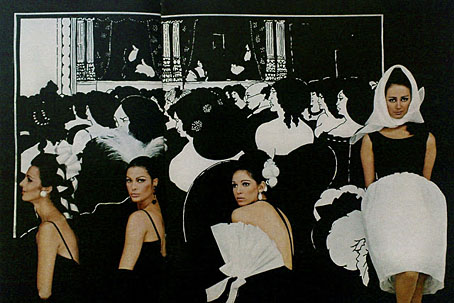
Turned out for a big night at the opera like Beardsley’s Wagnerites, girls wear bare-backed blacks by Trigère. Coiffed heads are by Hugh Harrison and Halston of Bergdorf Goodman’s; Halston also made the pouf-skirted dress. (Photo session by Milton Green & Joe Eula.)

Being determined to catalogue every last piece of Beardsley trivia from the 1960s, I’m compelled to note this post which I’d missed at Sweet Jane’s Pop Boutique a couple of years ago. An earlier post here showed one of the photos from a LIFE fashion feature using Aubrey’s drawings but the Sweet Jane post has scans of all the photos, plus accompanying text. This was published in February 1967, a few months after the summer exhibition at the V&A in London which introduced Beardsley’s work to a new generation, an exhibition which set in motion a wave of popular interest in his work.

I’m intrigued by the way the colour of the women’s bodies emerges from the drawings given the date when the magazine appeared. I’ve long seen 1966 as a very black-and-white year in graphic and aesthetic terms, whereas 1967 is obviously full-colour; the difference between the sleeves of the Beatles’ (Beardsley-derived) Revolver and Sgt Pepper albums are only two of the more prominent examples. These fashion photos could be regarded as being caught mid-way between the shift from one state to another. There are more shots of the Wagnerites above on this page. Thanks to Ian for drawing my attention to the Sweet Jane post.

Elsewhere on { feuilleton }
The Aubrey Beardsley archive

Planète magazine covers

planete01.jpg

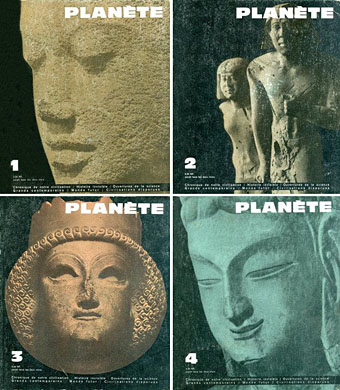
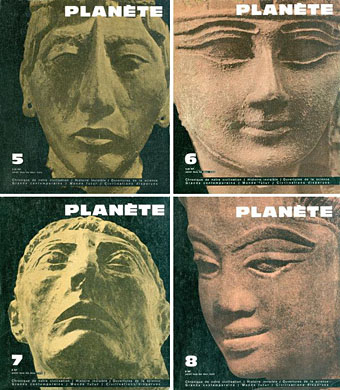
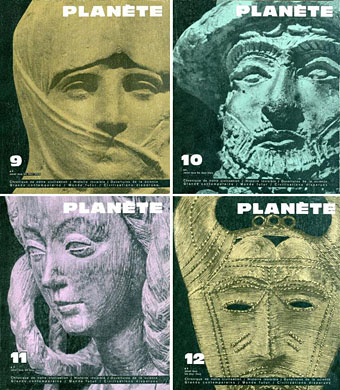
Planète was a French magazine of “Fantastic realism” which ran throughout the 1960s. I’ve never seen a copy but sight of the immediately recognisable covers has always fascinated because this was the magazine established in the wake of the huge success of The Morning of the Magicians (1960), a unique “Introduction to Fantastic Realism” by Louis Pauwels and Jacques Bergier. Rather than enthuse at length about The Morning of the Magicians I’ll simply point you to this piece by the late RT Gault from his now-defunct website.

Pauwels and Bergier’s book was oft-imitated but never equalled during the 1970s. Where later authors such as Erich von Däniken tended to plough a single, narrow furrow, Pauwels and Bergier leapt breathlessly from one subject to another: alchemy in the 20th century, Forteana, a lengthy examination of the occult preoccupations of the Third Reich, speculations about nuclear physics, speculations about biological mutation, Hollow Earth theories, etc, etc, all the time dropping quotes from HP Lovecraft, Arthur Machen and Albert Einstein. It’s a very heady mix which is great fun to read even though there’s nothing like a solid argument that comes out of it all.

planete02.jpg

Planète continued the blend of Futurology and fringe philosophy while using the magazine format to print translations of science fiction and fantasy stories; among other things it was notable for bringing the stories of Jorge Luis Borges to a wider audience in France. The magazine’s name may have been science fictional but the magazine as a whole is closer to the kind of borderline sf/art magazine that New Worlds became under Michael Moorcock’s editorship in the late 1960s. I’ve never seen Moorcock or anyone connected with New Worlds mention Planète but the covers at least pre-empt the style adopted by New Worlds during its large-format run: consistently bold typography and imagery that only obliquely relates to the contents.

planete03.jpg

All these covers are from Noosfere where the story contents for each issue are also listed. No credits for the designer, unfortunately. If anyone knows who was responsible for the magazine design then please leave a comment.

Continue reading “Planète magazine covers”

The Salivation Army, a film by Scott Treleaven

salivation1.jpg

I think of the area of magic as a metaphor for the homosexual situation. You know, magic which is banned and dangerous, difficult and mysterious. I can see that use of magic in the Cocteau films, in Kenneth Anger and very much in Eisenstein. Maybe it is an uncomfortable, banned area which is disruptive, and maybe it is a metaphor for the gay situation.

Derek Jarman, in conversation with Simon Field and Michael O’Pray, 1985

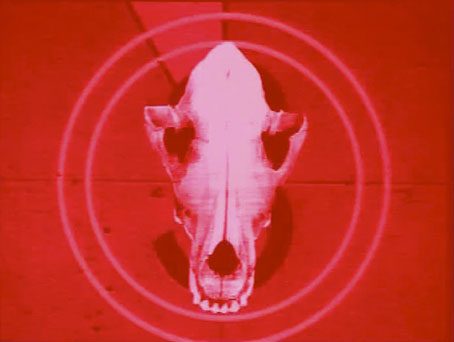
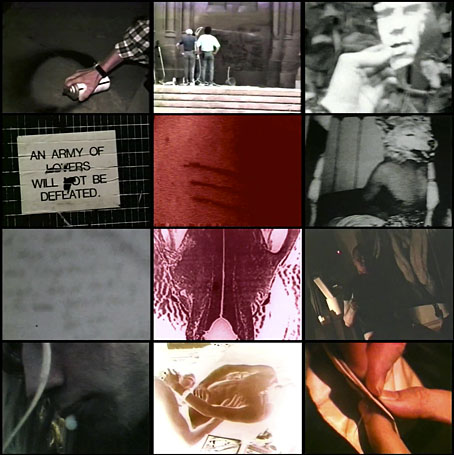
Derek Jarman’s face appears briefly in The Salivation Army (2002), a short history/memoir by Canadian artist Scott Treleaven concerning This Is The Salivation Army, a zine Treleaven produced with a small group of friends from 1996 to 1999. The film itself is credited as the ninth issue, and makes me sorry to have missed the zine in its original incarnation.

salivation2.jpg

The season of Jarman films which is currently running in London is entitled Queer Pagan Punk, and will include a screening of Treleaven’s film next month, along with Glitterbug (1994). The phrase “Queer Pagan Punk” encapsulates the ethos of This Is The Salivation Army, and Treleaven’s narration describes the origin of his zine in a familiar sense of unfocused rage, and also the alienation he and his friends felt towards the vapidities and conformity of contemporary gay culture. Being someone who’s always loathed clubbing, and the consumerist drivel that fills so many gay magazines, this is music to my ears; I just wish the zine been around in the 1980s. The shadow of the Temple of Psychic Youth—which was around in the 1980s—hangs heavily over this project; Derek Jarman had his own connections with PTV/TOPY, of course, being an ally of Throbbing Gristle, and later of Coil. The fanzine may have run its course but Treleaven continues to explore queer paganism in his artwork. The Salivation Army can be seen at Vimeo.

Previously on { feuilleton }
Just the ticket: Cabaret Voltaire
Abrahadabra
The art of Scott Treleaven

The Trials of Oz

oztrial.jpg

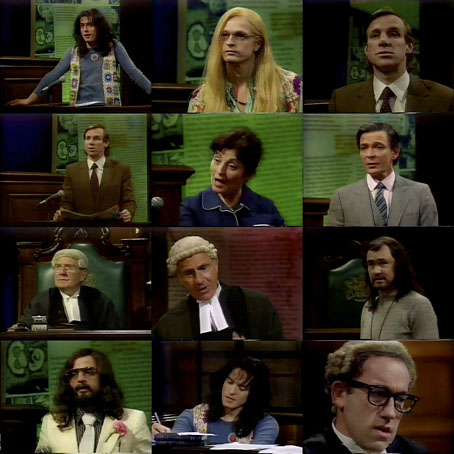
If it’s a surprise to see Cockney geezer Phil Daniels masquerading as the erudite (and non-Cockney) Thomas De Quincey in The Art of Tripping, it’s even more of a surprise to see Hugh Grant in wig and hippy gear as Richard Neville in this 1991 dramatisation of the obscenity trial against Neville’s Oz magazine. Grant wasn’t exactly unknown when this was made but it was prior to Four Weddings and a Funeral so the casting didn’t seem very notable at the time.

The play was written by Geoffrey Robertson QC from the trial transcripts to coincide with the 20th anniversary of a long and very public trial. Robertson in 1971 was an assistant to John Mortimer, the magazine’s lawyer, so the reconstruction may be taken to be an accurate one. In addition to Grant as Neville, Simon Callow plays Mortimer, Nigel Hawthorne is prosecutor Brian Leary, and Leslie Phillips is Judge Michael Argyle. Among the witnesses there’s Alfred Molina as George Melly (yet again; see yesterday’s post), and Nigel Planer as DJ John Peel, both of whom were called to testify that the notorious “School Kids” issue of Oz wasn’t an obscene publication. The trial, like the earlier drug busts against the Rolling Stones, was as much about the State trying to clobber a bunch of anarchist upstarts as anything that involved the pros and cons of antiquated laws. The three defendants—Neville, Felix Dennis and Jim Anderson—were also accused of “conspiring to corrupt public morals”; the obscenity issue was merely a pretext for getting the longhairs into the dock.
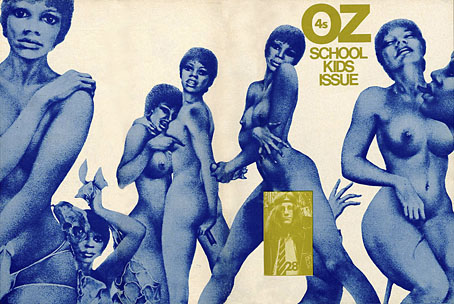
oz28.jpg

Oz 28 (1970). Art by Raymond Bertrand.

This isn’t a lavish production—it’s stylised to the extent that the public gallery is made up of cardboard figures—but it’s good to know that there’s a (rough) copy out there after my tape of the original broadcast developed a fault. (Update: It’s now on YouTube.) Not available, unfortunately, is the live studio discussion that followed in which Jonathan Dimbleby spoke to Geoffrey Robertson, Germaine Greer and others about the trial. The discussion featured a delicious moment when Dimbleby referred to Greer’s feminist issue (no. 29) as “C-Power Oz“. “Come on, Jonathan,” said Greer, “it was Cunt Power Oz!” Dimbleby then spluttered “Anyone can say ‘Cunt Power Oz‘…” and hastily moved on the discussion. (Update: The studio discussion is also on YouTube!)

A year after his TV appearance Geoffrey Robertson was in Manchester Crown Court appealing an earlier ruling of obscenity against David Britton’s Lord Horror (1990) novel. I was in the public gallery on that occasion, and it was an education seeing how little had changed since the Oz trial, with a similarly Philistine and deeply ignorant judge presiding. Robertson overturned the ruling against the novel but a ruling against one of Savoy’s Meng & Ecker comics was upheld. In 1995 we were back in court attempting to argue for a jury trial against further rulings of obscenity, this time against one of my own comics, Hard Core Horror 5. (That issue is now the opening section of the Reverbstorm book.) We failed that time thanks to a magistrate who was even less inclined to listen to any argument.

The Oz trial may seem quaint and farcical today but the issues remain pertinent: some forms of art will always be in conflict with laws that are out-of-date, badly written or maliciously applied. And once you’re standing in a courtroom your opinion about the situation is of no consequence; you’re at the mercy of the people who make the rules.

Previously on { feuilleton }
Martin Sharp, 1942–2013
Raymond Bertrand paintings
Raymond Bertrand’s science fiction covers
The art of Bertrand
Oz magazine, 1967–73

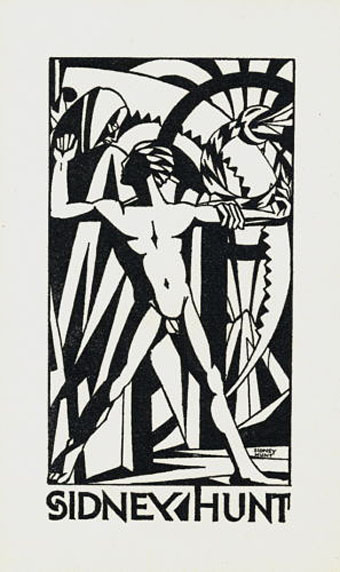
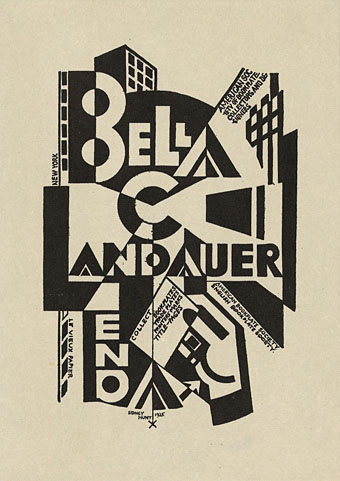
The art of Sidney Hunt, 1896–1940

hunt01.jpg

Ganymede Before Zeus (1921).

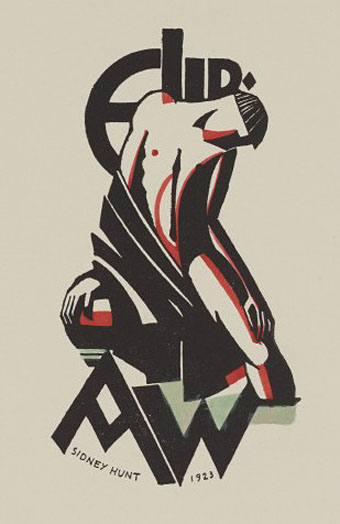
Another of those artists about whom detail remains tantalisingly remote if the web is your primary research tool. Hunt was a British Modernist who also edited an avant-garde magazine, Ray, from 1926–27. Most of the works here are bookplates from around 1923, many of them distinctly homoerotic which adds to their interest. The note at Wikipedia is unsourced but tells us that his output included “experimental prose-poem fantasies of 18-year-old hermaphrodites”. Maybe these, and more of his work, will turn up eventually.

hunt02.jpg

hunt03.jpg

hunt04.jpg

Continue reading “The art of Sidney Hunt, 1896–1940”