Weekend links 427

davis.jpg

Inside an O’Neill Cylinder, an orbital megastructure. Painting by Don Davis, 1975.

• RIP Lindsay Kemp: dancer, actor, choreographer and (if we have to drop names) mentor to David Bowie and Kate Bush. Kemp’s work has been featured here on a number of occasions, particularly his landmark productions of an all-male Salomé, and Flowers, A Pantomime for Jean Genet. There was also considerable overlap with Kemp’s troupe and the films of Derek Jarman via appearances by Kemp himself, David Haughton and the irrepressible Jack Birkett. The Genet production was filmed in 1982, and is now available on DVD. (There’s also a rougher copy with unmatched audio and video.) From 1970: Pierrot in Turquoise, or The Looking Glass Murders, a Commedia dell’arte performance for Scottish TV featuring David Bowie. And reversing roles, Mick Rock’s video for Bowie’s John, I’m Only Dancing featuring Kemp and company.

• At Expanding Mind: Erik Davis in conversation with activist and writer David Nickles about “the DMT Nexus, psychedelic militancy, extraction tek, the Statement on Open Science for Psychedelic Medicines, MAPS, and the trouble with for-profit psilocybin companies”.

• From the end of August to January 2019: Spellbound at the Ashmolean; “Spellbinding stories, fascinating objects…from crystal balls and magic mirrors to witch bottles and curse poppets”.

On Earth, as on the International Space Station, the collective misperception of a flat plane helps build community and culture. We are all equal in our geometric relationship to one another. The reality, of course, is that we do not stand parallel. Each of our bodies corresponds with a distinct radial vector on the surface of a sphere, pointing away from a common center that we can never perceive or occupy. Our vectors diverge by imperceptible angles.

In “inside-out” worlds like the Bernal Sphere and the concave Earth, the situation is reversed. Our feet all point outward, into an inaccessible, but technologically habitable void, while our heads point inward, some of us apparently “upside-down.” Standing, we rise toward a visible center, which can be reached simply by climbing a hill, strapping on wings, and jumping into the air, as low-tech as Icarus.

The Shape of Space by Fred Scharmen

Michael Moorcock again, interviewed this time by Bernard Braden in 1968. I think this one was for a Braden TV series which was never broadcast.

• “Stupid things are best”: Neil Fox on Conny Plank: The Potential of Noise, a documentary about the great music producer.

• Mixes of the week: XLR8R Podcast 556 by Helios, and An Ode to Eris with An Other Ode to Eris by The Ephemeral Man.

• A monstrous primer on the works of HP Lovecraft by Emma Stefansky. With illustrations by Michael Bukowski.

Silent Agents by Julius-Christian Schreiner: photographs of hostile architecture from around the world.

• Back to the Futuro: Mark Hodgkinson on the spaceship house that landed in Yorkshire.

• The Great Chinese Art Heist by Alex W. Palmer.

Rhizome: a new recording by Drew McDowall.

The Starman Tarot

Mad Pierrot (1978) by Yellow Magic Orchestra | Spellbound (1981) by Siouxsie And The Banshees | Sphere (2011) by Emptyset
Weekend links 426

slinger.jpg

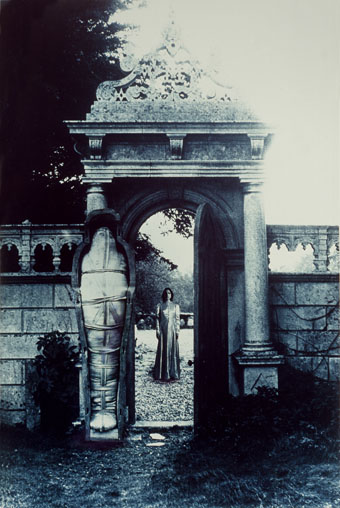
Self Preservation (1970–77), a collage by Penny Slinger from the series An Exorcism.

• RIP John Calder, one of the most important British publishers of the last century whose death was acknowledged in the Washington Post (and in the Telegraph, a paper that would have given him no support during his censorship battles) but at the time of writing hasn’t been mentioned at all in the increasingly useless Guardian. The omission in the latter seems even more surprising when Calder himself wrote obituaries for the paper, and they ran an archive piece two weeks ago for the 50th anniversary of Calder & Boyars’ successful court defence of Last Exit to Brooklyn. “Publishing is an industry run by capitalists now.

• Another 50th anniversary: David Bushman asked Alan Moore for his memories of Patrick McGoohan’s superb TV series The Prisoner.

Michael Moorcock in conversation with Hari Kunzru at Shakespeare and Company, Paris.

Stephen O’Malley presents Acid Quarry Paris – In Session with Richard Pinhas (Heldon).

• When a rock is a stone: Louise Steinman on finding Robert Smithson’s Spiral Jetty.

• Victorians, Vaults, and Violet Water: a profusion of links at Greydogtales.

• Mix of the week: FACT mix 666 by Róisín Murphy.

• The amazing adventures of Melinda Gebbie.

Starbirthed

Exorcism (1971) by Lucifer | The Final Calling (Physical Exorcism) (1984) by CTI | Exorcism Of The Hippies (2010) by Mater Suspiria Vision

A view over Yuggoth

yuggoth2.jpg

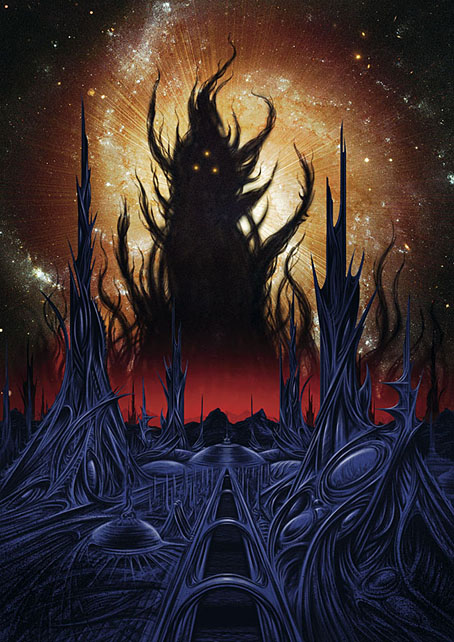
I mentioned in the post about the Sherlock Holmes illustrations that the next book from Editorial Alma featuring my work would be another Lovecraft collection. One of the illustrations in the new volume was of the planet Yuggoth, a world known to human beings as Pluto. In Lovecraft’s mythos Yuggoth has long been an outpost of advanced alien civilisations, particularly the fungoid crustaceans of The Whisperer in Darkness and the splendidly-titled sonnet sequence Fungi from Yuggoth. I’d broached this subject a couple of times in the past, first with a panel in my Haunter of the Dark comic strip (the Shining Trapezohedron is described as being brought to Earth from Yuggoth) then with a photocopy collage of Haeckel organisms for the first Starry Wisdom collection.

Yuggoth is one of several alien outposts in Lovecraft’s fiction, allied in its remoteness from humans with the underwater city of R’lyeh and the Antarctic city in At the Mountains of Madness. All these locations suggest exotic architecture so they’ve long been some of my favourite features in Lovecraft’s work, hence this new piece which I couldn’t resist doing after completing work on the Alma book. Since I acquired a Wacom tablet four years ago I’ve become so used to using it for line drawing that working with it now feels as natural as working with pens and inks. But digital painting was something I still didn’t feel happy with. This is mainly because the brush options in Photoshop are limitless, and one thing I’ve never liked with art materials is too much choice. When I was working with physical media I used to use a minimum of pens and brushes so what I really wanted from Photoshop was a single brush that would do what I wanted without having to swap tools all the time when working. This view of Yuggoth is the result of having finally settled (by chance, as it happened) on a brush that does everything I want without getting in the way. The drawing was completely improvised so as a composition it has some flaws; it could also have been developed a lot more to bring out highlights and details. But as an experimental piece it worked out well and also didn’t take too very long to do. When I have the time I’ll be doing more with this new brush.

Elsewhere on { feuilleton }
The Lovecraft archive

Weekend links 423

howe.jpg

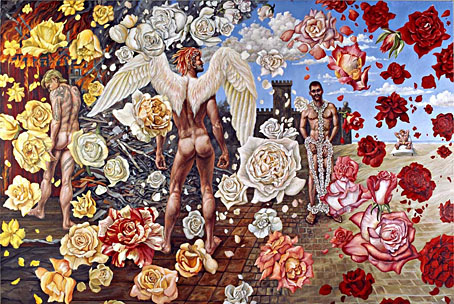
The Miracle (Genet’s Dream) (2001) by Delmas Howe.

• “Zachary Lipton, an assistant professor at the machine learning department at Carnegie Mellon University, watched with frustration as this story transformed from ‘interesting-ish research’ to ‘sensationalized crap’.” Oscar Schwartz on how the media gets AI alarmingly wrong.

• The Aesthetics of Science Fiction: what does SF look like after cyberpunk? Very Brutalist if you ask Rick Liebling, although the first example shown in his piece—the Brunel University Lecture Centre—appears briefly as future architecture in A Clockwork Orange.

• At Expanding Mind: Erik Davis talks with philosopher and religious studies professor Dustin Atlas about ancient skepticism, Madhyamaka Buddhism, the taste of honey, Montaigne, Robert Anton Wilson, and the path of doubt.

• At Muddy Colors: Part 1 of their choices for best fantasy book covers of the year so far, a list which includes my cover for Moonshine by Jasmine Gower. Thanks!

• Soundtracking with Edith Bowman, episode 84: director Todd Haynes on the music of Wonderstruck, I’m Not There, Carol and Far From Heaven.

• Mixes of the week: FACT mix 663 by Space Afrika, Secret Thirteen Mix 262 by Mieko Suzuki, and Black Minimalism, a playlist by David Toop.

• Two minutes, eight barrels: drone and GoPro footage of surfer Koa Smith riding the waves of the Namibia shoreline.

• David Lynch’s Sacred Clay: Shehryar Fazli reviews Room to Dream by David Lynch and Kristine McKenna.

Charlotte Higgins on myths, monsters and the maze: how writers fell in love with the labyrinth.

• Monstrous Geometries in the Fiction of HP Lovecraft by Moritz Ingwersen.

Listen to the mournful wails of planets and moons.

• A Peel Session by Laika

Surf Ride (1956) by Art Pepper | Surf (1976) by Tim Blake | Surfside Sex (1982) by Patrick Cowley

Bibliothek des Hauses Usher

rottensteiner.jpg

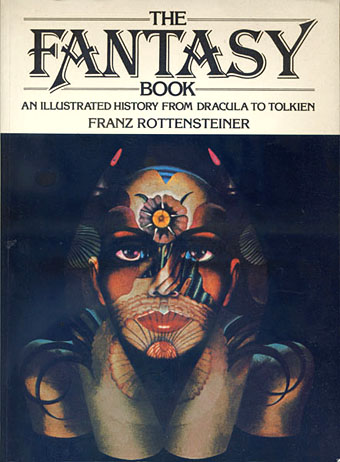
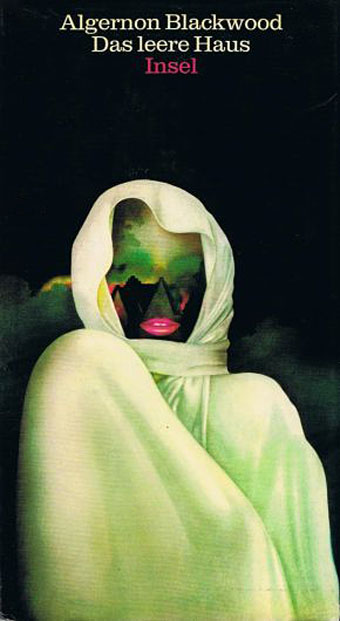
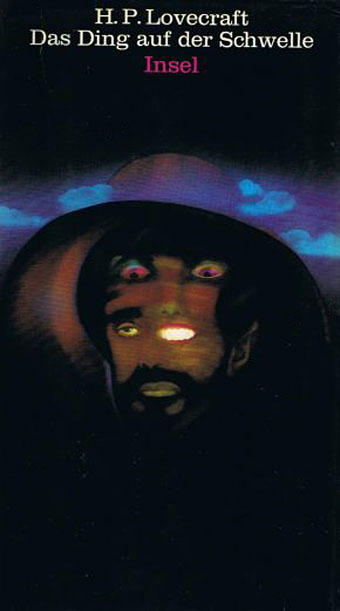
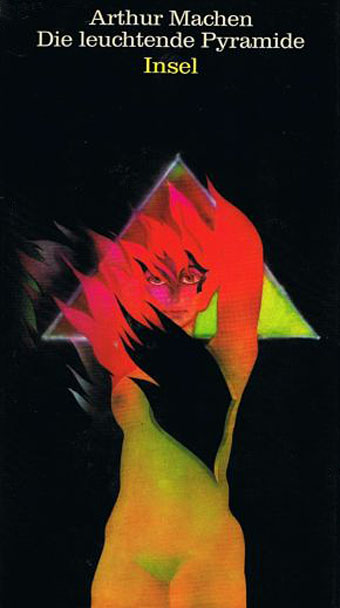
As promised a couple of weeks ago, this book-cover post is one of several that originates with Franz Rottensteiner’s horizon-expanding The Fantasy Book: The Ghostly, the Gothic, the Magical, the Unreal (1978). Rottensteiner’s study was important for me not only for its introduction to many hitherto unknown writers but also for its wide-ranging collection of illustrations and cover designs. Most of the artwork has since become very familiar but a few examples were by artists or designers I hadn’t encountered elsewhere. Hans Ulrich Osterwalder was one of these, his art for a series of German horror titles appearing inside the book and, in the case of the US edition of The Fantasy Book, on the cover. Searching for Osterwalder’s work a few weeks ago I was delighted to discover that the German covers were part of a series of horror/dark fantasy reprints for the Bibliothek des Hauses Usher imprint from Insel Verlag, for which Osterwalder created many more striking and unusual covers.

Bibliothek des Hauses Usher published 26 novels or story collections from 1969 to 1975. I thought at first that this was a paperback series but all the books were hardbacks with uniform black covers and white spines. The imprint logo is a rather ordinary looking House of Usher cracking down the middle (a nod to Arkham House, perhaps) with a slogan on the back cover borrowed from Ambrose Bierce: “Can such things be?” Each volume was printed on light green paper, at least until the paper stock ran out. The last three volumes were printed on white paper then on green again when further stocks were found.

page.jpg

Osterwalder’s work on this series stands out for being innovative, surreal and free of the cliches that persist on horror titles. Most of the artwork is illustrative of the contents but it manages this without being too overt or obvious which isn’t an easy thing to do. The list of authors is an interesting mix as well (if you overlook the typically lamentable absence of women writers): many of the names are those you’d expect in a series such as this but there are also some such as Jean Ray and Stefan Grabiński who you wouldn’t find in an Anglophone series. Grabiński was a Polish writer of weird fiction who receives a mention in Rottensteiner’s book (and is a favourite of China Miéville) but whose work is still largely unknown to Anglophone readers. Just as obscure to English readers is Thomas Owen who was a Belgian writer (real name Gérald Bertot) and a friend of Jean Ray’s. Tartarus Press published a collection of Owen’s stories in 2012 but I’ve not read it so can’t vouch for their quality.

All 26 covers are shown below in their order of publication. Hans Ulrich Osterwalder still works as an artist and designer, and has a website here. Franz Rottensteiner was interviewed at 50 Watts a few years ago.

usher01.jpg

usher02.jpg

usher03.jpg

Continue reading “Bibliothek des Hauses Usher”