George Platt Lynes revisited

lynnes1.jpg

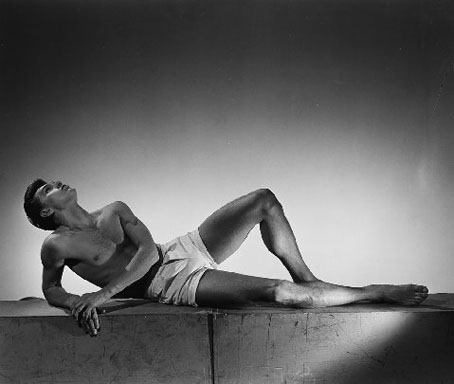
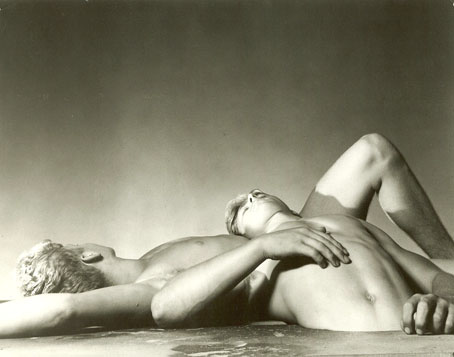
Untitled (reclining with bathing trunks), circa early 1950’s.

Photographs by George Platt Lynes have appeared here before, as have links to exhibitions at Wessel + O’Connor Fine Art. The latter are showing prints by the former in a new exhibition that opens today, and if I’m unlikely to visit their gallery any time soon I still enjoy passing on the news. Unlike many of the gallery press releases I receive, the ones from Wessel + O’Connor are always of interest, and their site is generous with its display of the work on offer. (They also sent me a card from their Czanara show which I was very pleased to receive.)

lynnes2.jpg

Buddy Stanley and Tex Smutney (1941).

Most of the prints on this occasion tend away from the artier side of Lynes’ work towards outright beefcake (for the artier side, see this post). Among the nudes there’s one of the famous photos from a session Lynes made with Yul Brynner in 1942, pre-fame and with hair but sans clothes. See that photo, and more, here.

Previously on { feuilleton }
Balanchine, Lynes and Orpheus
The recurrent pose 17
George Platt Lynes

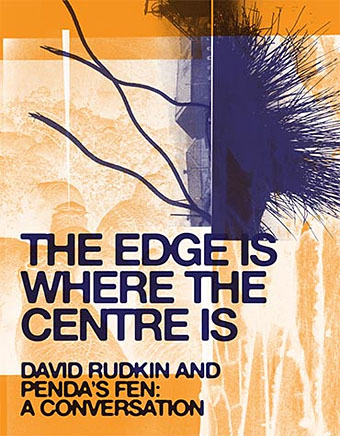
The Edge Is Where The Centre Is

pf1.jpg

Design by Rob Carmichael.

“I am afflicted by images, by things that are seen, pictures of things. They are extraordinary, momentary, but they stay with me.” (David Rudkin, 1964)

“The pattern under the plough, the occult history of Albion – the British Dreamtime – lies waiting to be discovered by anyone with the right mental equipment.” (Rob Young, Electric Eden)

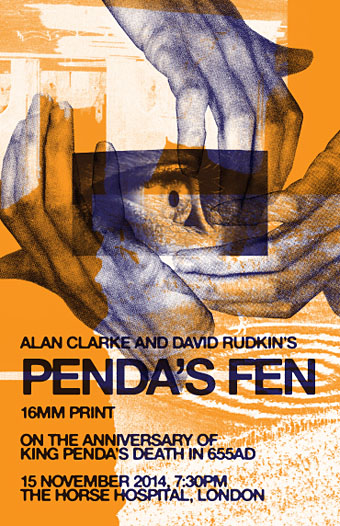
Penda’s Fen, written by David Rudkin and directed by Alan Clarke, is one of the key films in the pantheon of what has been called The Old Weird Albion. A radical archaeology of Deep England, a work of dark pastoral, a praise-song to anarchistic transformation, as militant a rejection of imperial identity as Lindsay Anderson’s If…, it culminates with perhaps the most euphoric revelation in British cinema: “My race is mixed. My sex is mixed. I am woman and man, light with darkness, nothing pure!”

The Edge Is Where The Centre Is, the first book devoted to this visionary and never-commercially-released film, has at its heart a rare and far-ranging interview with Rudkin (b. 1936), a writer who for more than fifty years has, in the words of Gareth Evans, “charted a vast topology of viscerally-realised primary narratives for our troubled times”. It also features new essays by its editors — Gareth Evans, William Fowler and Sukhdev Sandhu – that explore the film’s status as a radical horror film, an experimental topography, a work that anticipates subsequent political debates about Englishness. (more)
pf2.jpg

What could be more essential than a book (and poster) devoted to my No. 1 Cult Thing Of All Time? My copies are already on order. Even better, this is a publication from the same team—editor and designer—that produced The Twilight Language of Nigel Kneale last year, a celebration of another British television dramatist that sent me on a full-scale re-viewing of Kneale’s major works.

There’s no need to enthuse about Penda’s Fen when I did all that four years ago but there’s a couple of points worth making in the light of this publication. The first is that it’s surprising that a wider reappraisal of Rudkin and Clarke’s film has lagged behind the resurrection of so many other British TV dramas, especially those that deal with rural horror, those that share a mythic resonance or impart an atmosphere of dread. Surprising because almost all the recent resurrections—the BBC ghost films (one of which was written by Rudkin), Robin Redbreast, The Children of the Stones, etc.—are primarily entertainments with little subtextual meat on their bones. That’s not to say that a subtext can’t be found if you apply the usual academic tools but Alan Garner’s adaptation of Red Shift is one of the few films of this school that has much going on under the surface.

Penda’s Fen doesn’t need a subtext when so much of its polemic is out in the open. It’s one of the most interesting of these films in being so directly political on several levels at once, even when it’s also being directly metaphysical: a call for disobedience and nonconformity on a sexual as well as a social level that (unlike Ken Loach et al) manages to generate a succession of indelible images.

This leads to the second point, the comparison made above to Lindsay’s Anderson’s If…. The similarity between the two films has always been unavoidable for me when If…. is another film that sits at the top of the cult list (see this post). Both films share a rejection of school and society, and also share an approach to sexuality that was very unusual for the late 60s/early 70s. The difference between the two films lies in their conclusions: If…. ends with riot and massacre, and while this may be a cathartic moment Lindsay Anderson wrote in the published script: “It doesn’t look to me as though Mick can win. The world rallies as it always will, and brings its overwhelming firepower to bear on the man who says ‘No.'” By contrast, Stephen in Penda’s Fen defeats his mental demons. If the final shot is of him walking down the hill into darkness we can at least feel he’s on his way to a better life. “Cherish the flame.”

The Edge Is Where The Centre Is is limited to only 200 copies so if you’d like a copy I’d suggest you place your order now.

Previously on { feuilleton }
Afore Night Come by David Rudkin
White Lady by David Rudkin
The Horror Fields
Robin Redbreast by John Bowen
Red Shift by Alan Garner
Children of the Stones
Penda’s Fen by David Rudkin
If….
David Rudkin on Carl Dreyer’s Vampyr
Weekend links 234

dezso.jpg

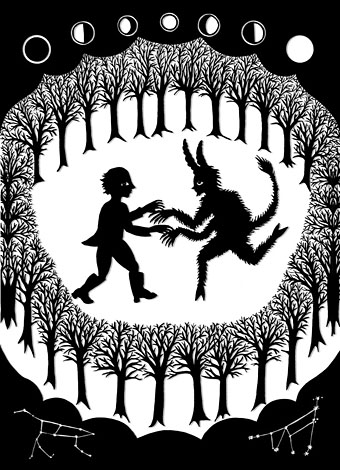
The Devil in the Green Coat by Andrea Dezsö, an illustration for a new, uncensored edition of the Grimm Brothers’ Fairy Tales.

• That { feuilleton } object of cult attention, Penda’s Fen, a 1974 television film by David Rudkin directed by Alan Clarke, continues its long journey out of the shadows. To coincide with a screening in London of a 16mm print, Sukhdev Sandhu looks back at a unique drama, and examines its connections to other British films of the period. There’s still no sign of a DVD release although rumours persist. Related: Penda’s Fen at A Year In The Country.

• “One of the reasons I’m sure I found the horror genre congenial is that it’s almost always focused on the body. The body is the center of all horror films.” David Cronenberg talking to Calum Marsh about his novel, Consumed.

• Mix of the week: Antony Hegarty’s Future Feminist Playlist, and Secret Thirteen Mix 134 by James Ginzburg & Yair Elazar Glotman. Related: Nimbes by Joaniele Mercier & James Ginzburg.

• Another week, another Kickstarter: Suzanne Ciani: A Life in Waves is a planned feature-length documentary about the American synthesist and composer.

• “[Marjorie] Cameron’s connections to Scientology and powerful men once drew headlines, but now her art is getting its due,” says Tanja M. Laden.

Jay Babcock found a Hawkwind Tarot spread in International Times for 1971. Is this an overlooked Barney Bubbles design?

• “Tempered in the flames of hell”: Helen Grant on the precursors of Robert Louis Stevenson’s The Bottle Imp.

Hawthonn: Phil and Layla Legard (and others) remember John Balance with a special musical project.

Derek Jarman Super 8 by James Mackay, a book of stills from Derek Jarman’s Super 8 films.

• “Coltrane’s free jazz wasn’t just ‘a lot of noise’,” says Richard Brody.

This might be the world’s first book on colour palettes.

Paris 1971 (1971) by Suzanne Ciani | The Fifth Wave: Water Lullaby (1982) by Suzanne Ciani | Blue Amiga (2014) by NeoTantrik & Suzanne Ciani

Peter Christopherson Photography & The Art of John Balance Collected

coil1.jpg

Look at it this way / In ten years’ time / Who’ll care? / Who’ll even remember?

Coil, The Dreamer Is Still Asleep

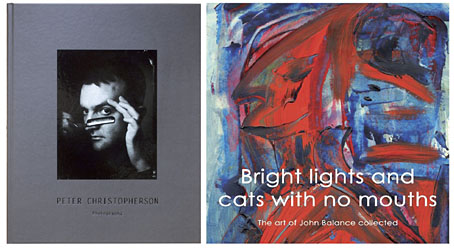
Coil’s John Balance died ten years ago today, bringing an end to two decades of a project that, in its earliest stages, was his own solo musical venture. Ten years on, Coil and Balance have hardly been forgotten: in addition to Coil’s continuing influence in the music world, Jeremy Reed & Karolina Urbaniak recently announced Altered Balance: A Tribute to Coil, a memorial volume whose publication is followed this week by two Coil-related art books from Timeless Editions:

Peter Christopherson: Photography

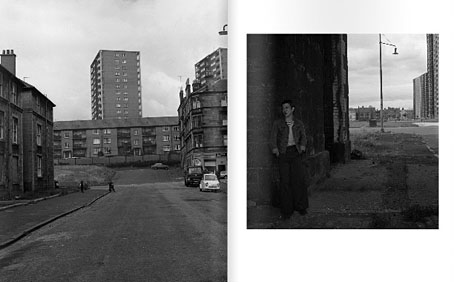
The legendary unpublished photographic work of Peter Christopherson. The b/w photos featured in the book run the gamut from personal fetishes to social commentary on 1970s UK, portraits of bands, friends and strangers. There are both snapshots and highly staged scenarios. Approximately 95% of this material is published here for the first time ever. Foreword by Claus Laufenburg and a short personal reminiscence by Thighpaulsandra. B/W hardbound, 27 x 33.5 cm, 284 pages.

Bright Lights And Cats With No Mouths: The Art of John Balance Collected

The first ever extensive overview of art (drawings, paintings and sketches) created by John Balance. The artworks featured in the book are both finished elaborate hallucinatory pieces as well as quick sketches with a good sprinkling of Balance’s often underestimated humour. Homages to idols and inspirations next to idiosyncratic magical dreamscapes executed in a wide variety of styles and mediums Compiled by Liam Thomas and Thighpaulsandra. With text by Val Denham and Jeremy Reed. Full colour throughout. 29 x 29 cm, 248 pages.

Both books are limited editions, and given the obsessive nature of Coil collectors they’ll probably sell out very quickly. Both volumes are significant, albeit for very different reasons. Peter Christopherson had a long career as a photographer, famously as one-third of the Hipgnosis design partnership, but outside his professional work, and publicity shots for Throbbing Gristle, Psychic TV and Coil, his personal work was always more alluded to than seen. One of the Hipgnosis books mentions his involvement with a group who staged realistic accident and trauma scenes for medical workers but little of this material has been seen until now. Elsewhere in the collection there are shots that resemble some of those that did surface occasionally, also some recurrent obsessions: thuggish youths, violent death, urban dereliction and male bodies. Still no sign of the photos of the Sex Pistols that (we’re told) Malcolm McLaren deemed too heavy.

The John Balance book fascinates simply for showing work that was even more hidden, and hardly alluded to at all. John and I did talk about his artistic endeavours once during our sporadic communications—the 3D scenes on the Musick To Play In The Dark albums were his creations using some PC program whose name I forget—but there was never a hint that he’d produced so much. The publisher sent me a link to their preview pages (here & here) so a few samples follow.

pc1.jpg

Continue reading “Peter Christopherson Photography & The Art of John Balance Collected”

MCMLXX

data70.jpg

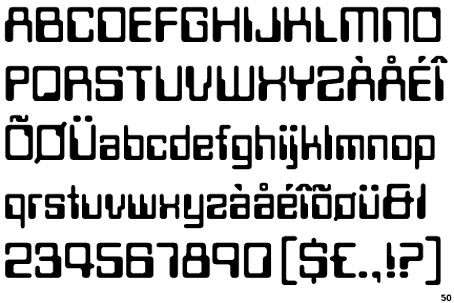
Data 70, a typeface by Bob Newman.

The presence of electronic artists Data 70 in the Spatial mix at the weekend had me thinking about the preponderance of cultural items that were given “70” as a suffix in the 1960s or in the year 1970. The air of futuristic optimism in the 60s drew attention to the birth of a new decade in a manner that hadn’t really happened before, and certainly didn’t happen for 1980 by which time the optimism had been sunk by a decade of political and fuel crises, and the end of the space race.

Data 70 take their name from the “futuristic” computer-like typeface designed by Bob Newman in 1970. Newman’s typeface wasn’t the first of the Space Age designs—Colin Brignall’s Countdown appeared in 1965—but Data 70 was everywhere in the 1970s. Data 70 (the group) dedicated a piece of music to Newman.

A few more 70s follow. These are only the ones I’ve been able to remember or stumble across so I’m sure there are more. And note: to qualify for this micro-category something has to be named “70” only where the suffix signifies modernity or the future, no Expo 70 (the world’s fair in Osaka) or anything annual that happened to be labelled 70 as part of a series.

boccaccio.jpg

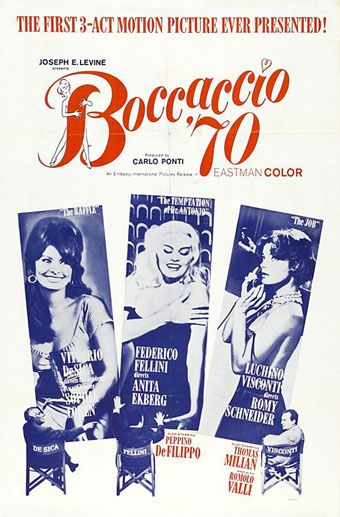
Boccaccio 70 (1962).

The label might imply the future but the predominant tone of these entries is sex. Boccaccio 70 set things in motion by updating the Decameron to modern Italy. Despite the claims of the poster, anthology films are nothing new, and this one has four stories directed by Vittorio De Sica, Federico Fellini, Mario Monicelli and Luchino Visconti. Italo Calvino was one of the writers.

Continue reading “MCMLXX”