Weekend links 66

kunz.jpg

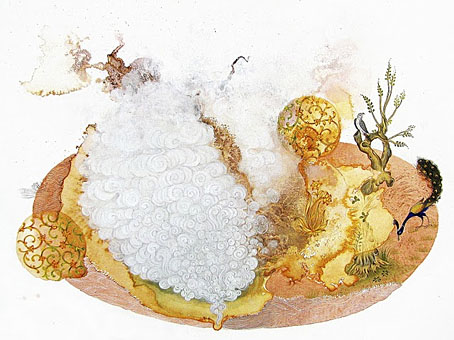
A design by Emma Kunz (1892–1963).

• Following the news this week it’s worth reminding people of a great post put together by Adam Curtis back in January, Rupert Murdoch—A portrait of Satan. One detail there concerns the death of chat show host Russell Harty in 1988. This week the London Review of Books posted an extract from Alan Bennett’s diaries referring to the Harty episode where he notes how the tabloid practice of getting private phone numbers from the police was common and widespread, not simply the actions of a single newspaper. For more about the deathbed hounding of Russell Harty (and Bennett’s loathing of Murdoch) see Writing Home. Related: Dennis Potter shortly before his death discussing his desire to kill Rupert Murdoch.

• Don’t get mad, get even: Hakim Bey’s Black Djinn Curse: “How to invoke a terrible curse on a malign institution.” See also: Black magic as revolutionary action.

Village Voice talks to Linda Manz about her experience as a young actor in Days of Heaven, The Wanderers and Out of the Blue.

Truth Wins Out infiltrates the “ex-gay” clinic run by Michelle Bachmann’s husband.

Free Situationist booklets by Larry Law. Related: films by Guy Debord at Ubuweb.

• Have tea with Doctor Dee in Mortlake, London, next Wednesday.

Publisher Peter Owen: Sixty years of innovation.

Wilhelm Reich: the man who invented free love.

A conversation with Brian Eno by Ben Sisario.

The mysterious minaret of Jam, Afghanistan.

Stereolab cover designs at Hardformat.

Orgone Accumulator (1973) by Hawkwind | Cloudbusting (1985) by Kate Bush | Orgasmatron (1986) by Motörhead | Orgasmatron (1993) by Sandoz | Orgone Donor (2004) by Deathprod.

Network 21 TV

network21.jpg

What was Network 21? It’s easiest to grab an explanation from the people responsible:

NeTWork 21 was a pirate television station which broadcast a 30mns program on Fridays from midnight throughout April to September 1986 in London. It had never been done before, and has not been done since anywhere in the UK. The broadcasts took place on channel 21 of the UHF band, slightly below ITV, using a low powered transmitter covering 8-10 miles across London. Program content was literally hand made, shot with a Sony Video 8 camera, edited on Low Band U-Matic, and broadcast on VHS. They showed slices of London’s artistic buzzing underground life as well as casual glimpses of everyday life, something which the normal television stations never showed. We would also offer slots to whoever was willing to appear on pirate TV, saying, showing or doing whatever they wanted, with no pre/post-production censorship of any kind. Because of our low tech approach, we could easily film people, situations and events with minimum disruption and maximum interaction. We were also free to choose program content and style according to our own mood, without having to worry about ratings, advertisers or good taste standards. (more)

In 1986 the UK only had four TV channels, and none of them ran through the night so theoretically there was plenty of space available for other broadcasters. In practice any unauthorised activity was always swiftly curtailed. Those of us outside London could only read about these illicit broadcasts but now it’s possible to jump back in time to the gloomy heart of Thatcherite Britain via the Network 21 YouTube channel. All the clips are fairly short and lean heavily towards the (for want of a better term) Industrial culture familiar from the early RE/Search publications, Simon Dwyer’s sorely-missed Rapid Eye, and Cabaret Voltaire’s “television magazine” TV Wipeout: William Burroughs (reading at the London Final Academy event in 1982), Brion Gysin, Psychic TV, Diamanda Galás, Derek Jarman et al. There’s also Roz Kaveney on passion, and Simon Watney with a news item related to the AIDS crisis in the US. The network website has complete listings for each broadcast.

Previously on { feuilleton }
ICA talks archived
The Final Academy

Muto: The Exterface Manifesto

muto1.jpg

In which French photographers Exterface extend their particular brand of erotic styling into the world of online publications. Muto is a typically high-quality production (requires registration with Issuu), the theme this time being the hothouse of the 1970s when the word “clone” was as much associated with gay bars as with the products of science fiction. What was once a visual cliché now seems fresh (and hot!) amid the clichés (twinks and bears) which took its place. With retromania one of the buzzwords du jour there’s no reason why erotic photography shouldn’t get in on the act, is there?

Via Homotography.

Elsewhere on { feuilleton }
The gay artists archive

Previously on { feuilleton }
Let’s get physical: Bruce of Los Angeles and Tom of Finland
Exterface

Weekend links 64

magritte.jpg

The Sixteenth of September (1956) by René Magritte.

To Magritte admirers, The Sixteenth of September is a deceptively realistic work painted in 1956, one of a series in which the artist plays tricks with light and time of day. It shows a crescent moon impossibly shining through the dark mass of a tree, against a dawn sky.

To [Marc] Bolan fans, the painting has an entirely different significance: 16 September 1977 was the date the singer was returning home in the small hours from a night out, in a Mini driven by his girlfriend Gloria Jones. […] Fans say the tree in the painting closely resembles the sycamore the car crashed into, and the moon was at the same phase on 16 September 1977. (more)

• New Yorkers finally got a successful vote for gay marriage making New York state the sixth and largest in the US giving full marriage rights to its gay citizens. One of America’s conservative journals, National Review, made the striking point that forty years ago New York was in the vanguard of gay liberation while Spain under Franco was a dictatorship with no gay rights at all. No one then would have bet on Spain beating New York to gay marriage rights as it did in 2005. Allow me to note that we still only have civil unions here in the UK.

• Related: Queer Beacon: LGBT spaces in New York City by Kian Goh, and at Scientific American: The Intelligent Homosexual’s Guide to Natural Selection and Evolution, with a Key to Many Complicating Factors by Jeremy Yoder.

• A pair of intrepid photographers breach the midnight security at St Paul’s Cathedral to bring back photos of the building rooftop. Related (and looking like a good location for a British equivalent of Stalker), photos of the disused Thorpe Marsh Power Station, Yorkshire.

• Mixtape of the month: the ATP I’ll Be Your Mirror collection by Portishead, a great blend of rock, rap and electronic odds-and-ends. Also a dash of Alan Moore & Stephen O’Malley.

Eddie Campbell is blogging again. Welcome back to the madhouse, Eddie. His smart and witty daughter, Hayley Campbell, continues to file regular bulletins from her London bunker.

• Your Tumblrs this week: Fuck Yeah Ken Russell and Fuck Yeah Powell & Pressburger.

Robot Flâneur: Exploring Google Street View.

Paris Visages by Marco Gervasio.

• “Push the button, Max!

Written On The Forehead (2011) by PJ Harvey.

Weekend links 63

solaris.jpg

Polish poster by Andrzej Bertrandt for Andrei Tarkovsky’s 1972 film of Solaris.

• Stanisław Lem’s Solaris receives its first ever direct English translation by Bill Johnston (only on Audible for the moment), all previous editions having been sourced from a poor French translation. An all-too-common state of affairs for non-English fiction where bad or bowdlerised translations persist for years.

• Now that Minnesota politician Michelle Bachmann is running for US president it’s a good time to examine her views when (theoretically) her actions could one day impact on us all. The Daily Beast gathered together some of her worst pronouncements, including the following about gay people: “It’s a very sad life. It’s part of Satan, I think, to say that this is gay.” Her husband describes his attempts to counsel (ie: cure) gay teenagers with the words “Barbarians need to be educated.” It’s no surprise that both these people find confirmation of their views in the usual narrow interpretation of Christian doctrine. Not all American Christians are this ignorant or offensive, of course. The Heartland Proclamation calls for “an end to all religious and civil discrimination against any person based on sexual orientation and gender identity and expression”.

Journalist Andrew Sullivan in 2003 proposed a label for people like Bachmann: “I have a new term for those on the fringes of the religious right who have used the Gospels to perpetuate their own aspirations for power, control and oppression: Christianists. They are as anathema to true Christians as the Islamists are to true Islam.” It’s a term that ought to have more widespread use.

solaris-czech.jpg

Czech poster for Solaris. No designer credited.

• Probing the secrets of psilocybin: “Scientists at the Johns Hopkins University School of Medicine have zeroed in on the dose levels of the ‘sacred mushroom’ chemical capable of yielding positive, life-changing experiences, while minimizing the chance of transient negative reactions in screened volunteers under supportive, carefully monitored conditions.”

• Rick Poynor relates a visit to the Frederic Marès Museum, Barcelona, home to the 50,000 objects Marès collected over his lifetime. Further details of the collection can be found at the museum website.

In her 1969 essay “The Pornographic Imagination,” [Susan] Sontag insisted that Story of O could be correctly defined as “authentic” literature. She compared the ratio of first-rate pornography to trashy books within the genre to “another somewhat shady subgenre with a few first-rate books to its credit, science fiction.” She also maintained that like science fiction, pornography was aimed at “disorientation, at psychic dislocation.”

If so, that aim is far more interesting than what most generic “mainstream” novels set out to do. No one could describe O as predictable or sentimental. Its vision was dark and unrelenting; everything about it was extreme. Sontag also compared sexual obsession (as expressed by Réage) with religious obsession: two sides of the same coin.

Carmela Ciuraru on the story of The Story of O by Pauline Réage.

• “No hay banda! There is no band. It is all an illusion.” David Lynch will be opening a Club Silencio in Paris (Montmartre, of course). Facebook pages here and here.

• Sad to say that Chateau Thombeau is now closed but Thom has begun a more personal journal here.

• Picture galleries of the Vorticists at the Tate here and here. Related: Into the Vortex.

• Illuminated Persian pages from 1604 at BibliOdyssey.

• Tape drawings by Chris Hosmer.

• Miles Davis and co. at the Isle of Wight Festival, 1970: part 1 | part 2 | part 3 | part 4