Weekend links 110

janke.jpg

Til Eulenspiegel by Urban Janke. From Twenty Postcards of the Wiener Werkstätte at 50 Watts.

Rorschach Audio by Joe Banks is “essential reading for everyone interested in air-traffic control, anechoic chambers, artificial oxygen carriers, audio art, bell-ringing, cocktail parties, cognitive science, communications interference, compost, the death penalty, Electronic Voice Phenomena, evangelism, evolutionary biology, experimental music, ghosts, the historiography of art, illusions of sound and illusions of language, lip-reading jokes, nuclear blast craters, predictive texting, singing hair, sonic archives, sound design, steam trains, tinnitus, the Turing Test, Victorian blood painting, visual depth and space perception, ultrasonic visual music, ventriloquism, voices and warehouse fires and robberies.”

• “Freud did not understand female sexuality. Klimt did. Klimt’s women please themselves. The realization that women have an independent sexual life was an insight in art.” Eric Kandel discusses his new study The Age of Insight: The Quest to Understand the Unconscious in Art, Mind, and Brain, from Vienna 1900 to the Present.

• Three new books already mentioned here receive further attention: Stan Persky on Christopher Bram’s Eminent Outlaws : The Gay Writers Who Changed America. | Matthew Aquilone on Paul Russell’s The Unreal Life of Sergey Nabokov. | Karin L. Kross on the new translation of the Strugatsky’s Roadside Picnic.

The creative writing moment/movement baffles me and it intrigues me. What does it signify, all this creative longing? And why through language? Specifically fiction, poetry, memoir? […] The crazy part of it is that we are breeding professional, competent, homogenised writers who will go on to teach writing that is professional, competent and homogenised. The intriguing part of it is whether this movement towards creativity and self-expression is really the start of a kind of Occupy – that it could be dangerous and confrontational, not homogenised at all.

Dangerous? But then they won’t get published and win awards and get film deals and… Jeanette Winterson prepares to teach creative writing at Manchester University.

The Underground New York Public Library is a visual library featuring the Reading-Riders of the NYC subways.

Hob by No Man: “Constructed from soundtrack noises from both version of Quatermass and the Pit.”

Stephen Thrower talks about his soundtrack music for The Erotic Films of Peter De Rome.

John Waters surprises everyone by hitchhiking across the US.

• Sounds & the City: An interview with Julia Holter.

The Dead Dream of the Dirigible.

Meditation (1979) by Edward Artemyev.

Weekend links 108

newyorker.jpg

Bob Staake’s cover illustration acknowledges President Obama’s statement last week in favour of gay marriages.

• Related to the above: Gay rights in the US, state by state, an infographic and a useful riposte to people like Orson Scott Card (yes, him again) who claim that gay Americans are equal in everything but the right to marry. On the same theme, “Now Obama’s come out on same-sex marriage, maybe so will I,” says Edmund White (yes, him again), and Eric Berkowitz, author of Sex & Punishment: 4,000 Years of Judging Desire, who writes that “In the period up to roughly the thirteenth century, male bonding ceremonies were performed in churches all over the Mediterranean.”

• The fifth edition of A Humument by Tom Phillips will be published soon by Thames & Hudson. The Tom Phillips website has just been relaunched in a form which now incorporates the notes I made in December about Phillips’ album cover designs.

• The Greenfriars are encouraging people to follow their example and get involved with their local communities (the habits are optional). Kudos for the choice of a Dürer knot.

The action centres on the arrival of a man who may or may not be a prophet, or the devil, or just a violent con-man, in a rotting, rain-drenched Hungarian hamlet. This is the “estate”, apparently some sort of failed collective, where all hope has been lost and all the buildings are falling down. It is inhabited by a cast of semi-crazed inadequates: desperate peasants cack-handedly trying to rip each other off while ogling each other’s wives; a “perpetually drunk” doctor obsessively watching his neighbours; young women trying to sell themselves in a ruined mill; a disabled girl ineptly attempting to kill her cat.

Sátántango by László Krasznahorkai is published in a new translation by George Szirtes

• The Quietus interviewed Kevin Shields following the long-awaited reissue of the My Bloody Valentine catalogue.

• The first volume of Russ Kick’s Graphic Canon (to which I’m a contributor) has been sighted in the wild.

Rise of the Living Type: Stylised 17th century floriated letterforms & grotesque mask sprinkles.

Ed Jansen’s Camera Obscura III, a tour of museums, galleries and venues, 2009–2011.

• io9 reports on the new translation of Roadside Picnic by Arkady & Boris Strugatsky.

Shanghai Expression: Graphic Design in China in the 1920s and 30s.

Liberty Realm, a monograph of drawings by Catharyne Ward.

• 100 mins of Adrian Sherwood‘s best dub productions.

Strange Flowers checked into the Chelsea Hotel.

Chelsea Girls (1967) by Nico | Chelsea Morning (1968) by Fairport Convention | Chelsea Hotel #2, Rufus Wainwright sings Leonard Cohen.

Lindsay Kemp’s Salomé

kemp1.jpg

Fragments are all you get with this one, unfortunately, but how tantalising they are. Lindsay Kemp’s 1975 stage production of Oscar Wilde’s play was probably the queerest there’s been to date, with Kemp himself playing Herod’s doomed daughter under a heap of silks and feathers. These stills from a sequence of Super-8 shots of the performance arrive courtesy of Nendie Pinto-Duchinsky, director of the forthcoming Kemp documentary Lindsay Kemp’s Last Dance, a film whose title echoes Ken Russell’s film of the Wilde play. The connections circulate wildly (so to speak) around Kemp’s production: prior to this performance Kemp had acted for Ken Russell, while two of the other actors went on to work with Derek Jarman (as did Kemp). John the Baptist (above) was played by David Haughton who appeared as Ariel in Jarman’s Jubilee; Jack Birkett’s grinning features (bottom, right) appear in many of Jarman’s films. All the more reason to wish these clips were longer.

The Kemp documentary YouTube channel has a few more items related to Kemp’s stage work, notably another tantalising sequence of stills from Flowers (1974), an adaptation of Genet’s Our Lady of the Flowers that also featured Haughton and Birkett.

Update: Thanks to Suzanne in the comments for pointing to her video which includes further film moments including Salomé performing with a live snake à la Salammbô.

kemp2.jpg

kemp3.jpg

kemp4.jpg

Elsewhere on { feuilleton }
The Salomé archive

Previously on { feuilleton }
Mister Jarman, Mister Moore and Doctor Dee
Saint Genet

Weekend links 107

schwabe.jpg

Le Faune (1923) by Carlos Schwabe.

• “When I recently attended a conference in China, many of the presenters left their papers on the cloud—Google Docs, to be specific. You know how this story ends: they got to China and there was no Google. Shit out of luck. Their cloud-based Gmail was also unavailable, as were the cloud lockers on which they had stored their rich media presentations.” Ubuweb’s Kenneth Goldsmith on why he doesn’t trust the Cloud.

• “I’m a poet and Britain is not a land for poets anymore.” A marvellous interview with the great Lindsay Kemp at Dangerous Minds. Subjects include all that you’d hope for: Genet, Salomé, David Bowie, Ken Russell, Derek Jarman, The Wicker Man and “papier maché giant cocks”.

• “As early as the 1950s, Maurice Richardson wrote a Freudian analysis which concluded that Dracula was ‘a kind of incestuous-necrophilious, oral-anal-sadistic all-in wrestling match’.” Christopher Frayling on the Bram Stoker centenary.

Björk gets enthused by (among other things) Leonora Carrington, The Hourglass Sanatorium and Alejandro Jodorowsky’s YouTube lectures.

• Before Fritz Lang’s Metropolis there was Algol – Tragödie der Macht (1920). Strange Flowers investigates.

marsh.jpg

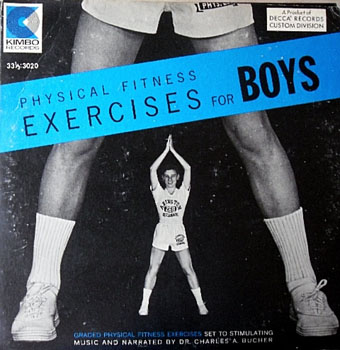
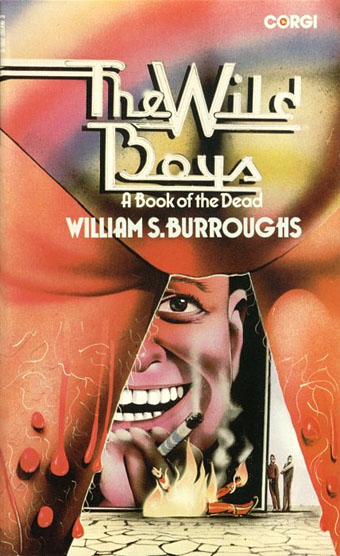
David Marsh recreates famous album covers using Adobe Illustrator’s Pantone swatches.

• New titles forthcoming from Strange Attractor Press. Related: an interview with SAP allies Cyclobe.

• 960 individual slabs of vinyl make an animated waveform for Benga’s I Will Never Change.

• An exhibition of works by Stanislav Szukalksi at Varnish Fine Art, San Francisco,

Keith Haring‘s erotic mural for the NYC LGBT Community Center is restored.

The Situationist Times (1962–1967) is resurrected at Boo-Hooray.

• Doors Closing Slowly: Derek Raymond‘s Factory Novels.

Will Wilkinson insists that fiction isn’t good for you.

• More bookplates at BibliOdyssey and 50 Watts.

The Top 25 Psychedelic Videos of All Time.

Flannery O’Connor: cartoonist.

• RIP Adam Yauch.

• Their finest moment: Sabotage (1994) by Beastie Boys.

Weekend links 106

oshiro.jpg

Gold Head 2 (2011) by Kouji Oshiro.

Josef Hartwig’s 1922 Bauhaus chess set. Contemporary copies can be bought from Naef Spiele but they’re not cheap. Related: Bauhaus: Art as Life, a major exhibition at the Barbican, London. Related, related: Art as life by Fiona MacCarthy.

• Rattera is a new font by Barnbrook Design for Fuse 1–20, Taschen’s collection of the experimental typography publication. Related: The Fuse poster explained.

Genesis (1981), video feedback and computer animation by Ron Hays with an electronic score by Ragnar Grippe.

Deadly Doris, a recording by Malcolm Mooney-era Can from the forthcoming Lost Tapes collection.

• “How did a pop band end up in a museum” Sasha Frere-Jones on Kraftwerk.

Philip Glass & Robert Wilson on how they made Einstein on the Beach.

• An astonishing aerial photo of post-quake San Francisco in 1906.

• More electronic music: Buddha Machine’s SoundCloud page.

My Baby, music and video from Julia Holter & Jib Kidder.

Homotography‘s photos can now be browsed at Pinterest.

Deviates, Inc., a Tumblr.

• Raoul Björkenheim live: Apocalypso pt. 1 | Apocalypso pt. 2 | 1-2-11 DMG, NYC