Weekend links 629

vallee.jpg

UFOs: The Psychic Solution (1977) by Jacques Vallée. A retitled reprint of The Invisible College (1975) with cover art by Peter Tybus.

• “In the summer of 1992…a curious experimental interstellar ambient-house album, made it to number one in the UK charts, promoted by a top ten single that was almost forty minutes long.” Darran Anderson navigates the noösphere with my favourite Orb album, U.F.Orb.

• Among the recent arrivals at Standard Ebooks, the home of free, high-quality, public-domain texts: Hope Mirrlees’ strange fantasy novel, Lud-in-the-Mist (1926).

• James Balmont’s guide to the intricate cinema of Hong Kong’s crime auteur, Johnnie To.

Shortlisted photos from the Astronomy Photographer of the Year Contest.

• At Dennis Cooper’s: Spotlight on…Jean Genet Miracle of the Rose.

• Steven Heller’s font of the month is Ambicase.

• New music: Two Sisters by Sarah Davachi.

• RIP Peter Brook and James Caan.

Unidentified Flying Object (1970) by UFO | Psychic And UFO Revelations In The Last Days (1994) by Bill Laswell & Pete Namlook | UFOnic (1995) by Sabalon Glitz

Weekend links 628

eckman-lawn.jpg

Collage art by Alex Eckman-Lawn at Unquiet Things.

• “…I love those niches and fringes in the creative world. I believe they deserve our support. But in most instances, this support must be driven by our generosity, philanthropy, and commitment to our core values—and not merely by profit seeking. Because as soon as profit maximization enters the picture, these outliers on the distribution curve don’t make the cut.” Ted Gioia explores the myth of “the Long Tail”.

• “Here we were, an Italian, an Englishman and an American in Munich, three foreigners in a foreign land—it was an accident we got together in the first place.” Pete Bellotte talking to Jude Rogers about the recording of I Feel Love by Donna Summer, a cult item in these quarters. Most of the history is very familiar but I didn’t know that Bellotte is a Mervyn Peake obsessive.

The radical, revolutionary homoerotic art of Sadao Hasegawa. Writing about the artist in 2007 I said that “a decent collection of his work for a western audience is long overdue”; we finally have such a thing courtesy of Baron Books.

• At Wormwoodiana: Undefined Boundary: The Journal of Psychick Albion, a magazine by the creators of the Coil zine, Man is the Animal, that “aims to celebrate the visionary, psychedelic and numinous in Britain”.

Dennis Cooper’s favourite fiction, poetry, non-fiction, film, art, and internet of 2022 so far. Thanks again for the link here!

• New music: Devotional by The Lord + Petra Haden, Dreamtides by Field Lines Cartographer.

Fall Into Sleep by K Of Arc.

Psychic Fire (1975) by Master Wilburn Burchette | The Psychic (1995) by David Toop | Psychic Wounds (2020) by Trees Speak

Luminous Procuress

luminous01.jpg

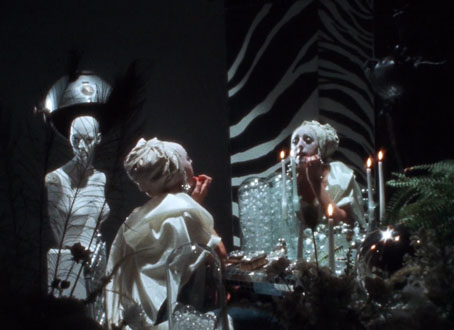
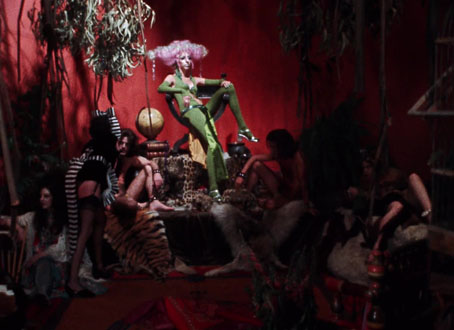
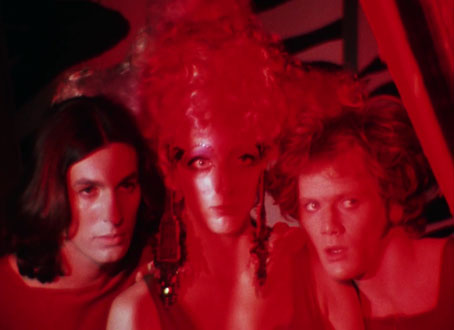
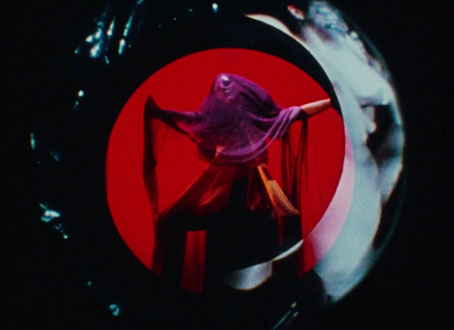
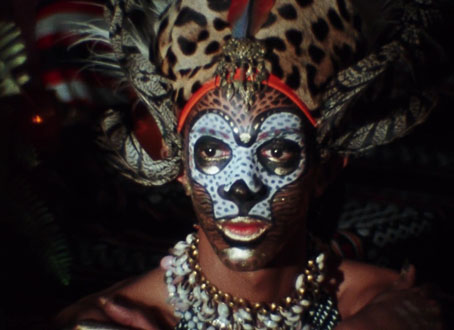
How to describe this one? Inauguration of the Pleasure Dome, pt 2? Bargain-basement Satyricon? The latter is probably more apt, Kenneth Anger’s longer films are more formal than Luminous Procuress. Steven Arnold’s only feature film resembles something made by the extras from a Fellini extravaganza after they’ve stayed overnight at Cinecittà; a series of artfully-arranged tableaux (artful arrangement being Arnold’s forte), together with a hardcore sex-scene (hetero) that seems out of place beside the relatively chaste antics elsewhere:

Luminous Procuress is an altogether extraordinary, individualistic phantasmagoria. It was filmed entirely in San Francisco over a two-year period, and describes the adventures of two wandering youths in San Francisco who visit the home of a mysterious woman, the Procuress. She is an elegant emblem of sorcery, her vivid features glowing under bizarre, striking maquillage, and one is not certain who she is or where she intends to lead the protagonists. Although the language she speaks is vaguely Russian, it appears that the Procuress has psychic powers. She discerns a sympathetic response to her on the part of the youths, and by magical means, conducts them through fantastic rooms, on a psychic journey. Through strange passageways, one voyages with the Procuress and her charges, glimpsing hidden nightmares and panoplied chambers of revelry, where celebrants, ornately festooned, dance and make love before unseen gods… (more)

luminous02.jpg

Arnold’s film follows the low-budget form by being shot without synchronised sound, so the dialogue, such as it is, has been dubbed on later. Rather than try and match words to the improvised scenes Arnold instead gives his characters foreign voices, most of which are mumbling and may not even be saying anything intelligible in their own language. This spares us any Warhol-like amateur theatricals while augmenting the dream-like atmosphere. The music by Warner Jepson is the icing on a very unusual cake. Jepson was a serious electronic composer whose rather abrasive debut album, Totentanz, was included in the Creel Pone catalogue of electronic obscurities in 2005. For the film Jepson provides swathes of synthesizer doodling interspersed with arrangements for keyboards and voices. All this and the Cockettes too. Salvador Dalí loved it.

luminous03.jpg

luminous04.jpg

luminous05.jpg

Continue reading “Luminous Procuress”

Weekend links 625

styrsky.jpg

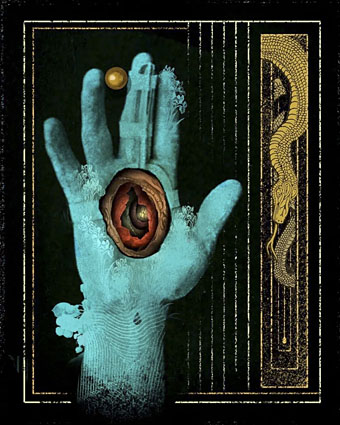
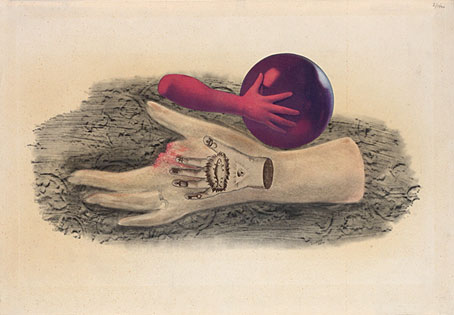
Hand (1940) by Jindřich Štyrský.

• “I love very much Symbolist painters like Odilon Redon, Ferdinand Knopf or Léon Spilliaert. Or Nordic European painters such as Munch or Gallen-Kallela. I like the way they often mix nature and mythology. Some Surrealist painters are very inspiring too: De Chirico, Tanguy, Toyen, Styrsky, or Dorothea Tanning, for instance.” Lucile Hadžihalilović talking to Mark Cousins about her new film, Earwig, and her approach to cinema.

• “It was no accident that Mishima chose to experiment with science fiction. It was a genre he had long admired. He adored Arthur C. Clarke, and lavished praise on Godzilla…” Alexander Lee on Yukio Mishima’s sole venture into science fiction, Beautiful Star.

• Old music: Roforofo Fight by Fela Kuti, a great favourite round here, is receiving a 50th anniversary reissue.

Readers of Berlin’s Third Sex were confronted with a whole fête galante of misfits, deviants, and sexual mutineers cavorting on the legal edgelands of society. There’s the “gathering of obviously homosexual princes, counts and barons” discussing Wagner, the women-only ball where a “dark-eyed Carmen sets a jockey aflame”, the drag act burlesquing Isadora Duncan, a café in the city’s north where Jewish lesbians play chess, gaggles of gay labourers meeting up to gossip before tending to their needlework, the Russian baron distributing alms to hustlers in the Tiergarten, a canal-side tavern where soldiers from the nearby barracks find gay men only too willing to pick up their tab, and the encrypted classified ads with which the lonesome and horny sought to make the vast metropolis just a little smaller.

James Conway on the pioneering sexology of Magnus Hirschfeld

• At Aquarium Drunkard: The Miles Davis Septet playing live at Chateau Neuf, Oslo, in 1971.

Industrial Symphony No. 1 by David Lynch & Angelo Badalamenti featuring Julee Cruise.

• Mix of the week: Ghosts & Goblins 1 by The Ephemeral Man.

• New music: The Homeland Of Electricity by Scanner.

• Steven Heller’s font of the month is Pufff.

• Galerie Dennis Cooper presents Ilse Bing.

• RIP Paula Rego and Julee Cruise.

Teacher Of Electricity (1970) by Old Gold | Electricity (1980) by Orchestral Manoeuvres In The Dark | Night Electricity Theme (2017) by Dean Hurley

Weekend links 621

foghorn.jpg

Holmes’s fog-horn apparatus, 1875.

• “Have scientists designed the perfect chocolate?” According to Betteridge, the answer would have to be “no”, even more so when the scientists only seem to have reinvented the Flake which Cadbury have been making since 1920. But the story does tell you something about “edible metamaterials” and even “edible holograms”.

• “In The Foghorn’s Lament, I talk about someone called The Fogmaster, who apparently used to do guerrilla foghorn performances…his ringtones are still available.” Jennifer Lucy Allan on foghorns past and present.

• “The story of Les Rallizes Dénudés is almost that of fan fiction. Fans know some basic details and the rest is conjecture and imagination.” Patrick St. Michel explores the occluded history of the Japanese rock band.

The Wharton completist may recognize some of the raw material for these stories in her earlier works. For instance, she used the Greek myth of Demeter and Persephone in a 1912 verse play before finding its subtle final expression in “Pomegranate Seed,” in which the ghostly letters keep the New York lawyer figuratively tethered to the underworld. And a 1926 volume of poems contained an experimental riff on a dead woman returning home on All Souls’ Day, published over a decade before Wharton revisited the holiday in her final short story. The ghost story form transforms both these familiar materials and her evergreen themes: Once some donnée becomes a ghost story, what may have been just an amusing character study acquires a participatory element, since readers must meet her halfway in becoming scared. To do so involves truly contemplating what exactly it is in these texts—and it is never the literal ghosts—that elicits a chill.

Krithika Varagur on Edith Wharton’s ghosts

Gaspar Noé’s favourite films. Elsewhere, Noé and Dario Argento talk about Noé’s latest feature, Vortex, while later this month Arrow are giving Enter the Void an overdue UK blu-ray release.

• Gay utopia: recent photographic portraits by Matthew Leifheit of Fire Island.

• Yogaville, 1993: more historic film of Alice Coltrane performing.

• At Dennis Cooper’s: The Maysles Brothers Day.

Sugar Chocolate Machine (1967) by The Beatstalkers | Chocolate Machine (1993) by Sandoz | Chocolate Jesus (1999) by Tom Waits