The life and work of Derek Jarman

angelic.jpg

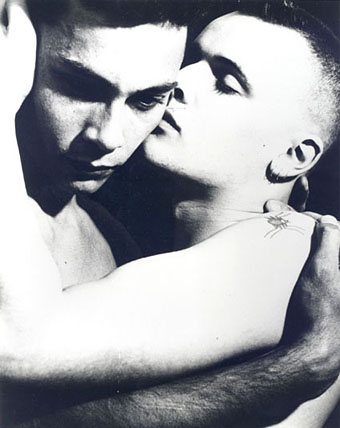
The Angelic Conversation, 1985.

An unseen woman recites Shakespeare’s sonnets—fourteen in all—as a man wordlessly seeks his heart’s desire. The photography is stop-motion, the music is ethereal, the scenery is often elemental: boulders and smaller rocks, the sea, smoke or fog, and a garden. The man is on an odyssey following his love. But he must first, as the sonnet says, know what conscience is. So, before he can be united with his love, he must purify himself. He does so, bathing a tattooed figure (an angel, perhaps) and humbling himself in front of this being. He also prepares himself with water and through his journey and his meditations. Finally, he is united with his fair friend.
The Picture of Dorian Gray II

dorian_film.jpg

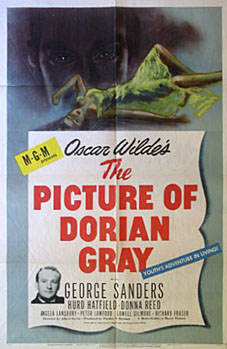
Oscar Wilde’s novel was filmed by Albert Lewin in 1945, a great adaptation with Hurd Hatfield playing Dorian, George Sanders as the aphoristic Lord Henry and Angela Lansbury as Sybil Vane. Lewin made a number of respectably arty films during the Forties and Fifties but Dorian Gray has always seemed the best to me, even if I am biased towards the story.

dorianbefore.jpg

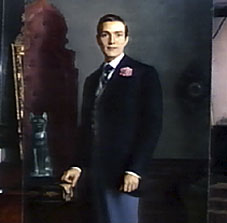
The film was shot in black and white but views of the painting were shown in colour. For the final view of Dorian’s decayed portrait he commissioned the hyper-real artist Ivan Albright (1897–1983) whose shockingly grotesque picture (below) provides a memorable climax to the film. That painting now resides in the Art Institute of Chicago.

albright.jpg

Update: added a “before” view of the painting.

Update 2: added a link to a recent Wikipedia copy of the “after” picture that’s larger than previously available versions.

Elsewhere on { feuilleton }
The Oscar Wilde archive