The Telephone Box

telephonebox.jpg

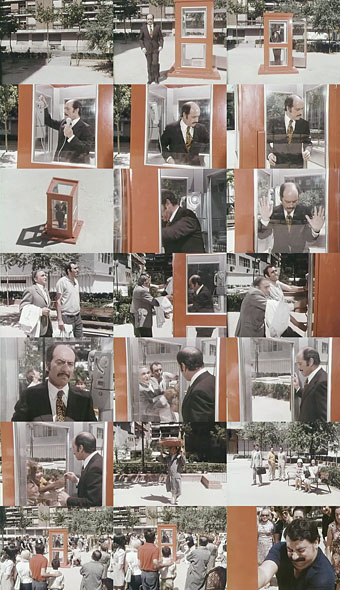
Ah, The Telephone Box, or La Cabina, to give Antonio Mercero’s half-hour film its original Spanish title. Made in 1972, I saw what was probably the first UK TV screening sometime around 1980, and for years afterwards was asking people whether they ever saw that film about the guy stuck in a phone box. Eventually I got in on tape following another TV screening and would foist it on anyone who hadn’t seen it. Thom at Form is Void linked to a YouTube copy a while back, and Stephen Gallagher reminded me of it a few hours ago, so here it is, one of those simple but memorable dramas in which a small problem escalates into a nightmare.

Previously on { feuilleton }
Les Temps Morts by René Laloux

Weekend links 107

schwabe.jpg

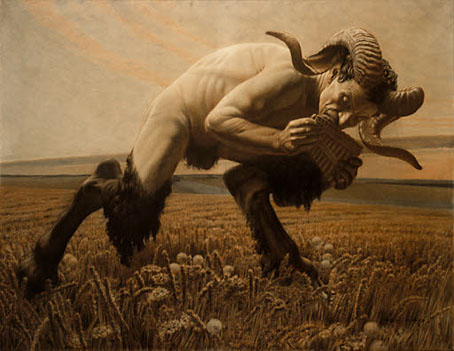
Le Faune (1923) by Carlos Schwabe.

• “When I recently attended a conference in China, many of the presenters left their papers on the cloud—Google Docs, to be specific. You know how this story ends: they got to China and there was no Google. Shit out of luck. Their cloud-based Gmail was also unavailable, as were the cloud lockers on which they had stored their rich media presentations.” Ubuweb’s Kenneth Goldsmith on why he doesn’t trust the Cloud.

• “I’m a poet and Britain is not a land for poets anymore.” A marvellous interview with the great Lindsay Kemp at Dangerous Minds. Subjects include all that you’d hope for: Genet, Salomé, David Bowie, Ken Russell, Derek Jarman, The Wicker Man and “papier maché giant cocks”.

• “As early as the 1950s, Maurice Richardson wrote a Freudian analysis which concluded that Dracula was ‘a kind of incestuous-necrophilious, oral-anal-sadistic all-in wrestling match’.” Christopher Frayling on the Bram Stoker centenary.

Björk gets enthused by (among other things) Leonora Carrington, The Hourglass Sanatorium and Alejandro Jodorowsky’s YouTube lectures.

• Before Fritz Lang’s Metropolis there was Algol – Tragödie der Macht (1920). Strange Flowers investigates.
marsh.jpg

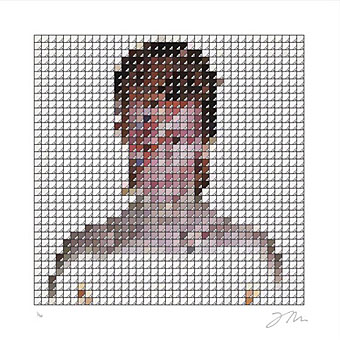
David Marsh recreates famous album covers using Adobe Illustrator’s Pantone swatches.

• New titles forthcoming from Strange Attractor Press. Related: an interview with SAP allies Cyclobe.

• 960 individual slabs of vinyl make an animated waveform for Benga’s I Will Never Change.

• An exhibition of works by Stanislav Szukalksi at Varnish Fine Art, San Francisco,

Keith Haring‘s erotic mural for the NYC LGBT Community Center is restored.

The Situationist Times (1962–1967) is resurrected at Boo-Hooray.

• Doors Closing Slowly: Derek Raymond‘s Factory Novels.

Will Wilkinson insists that fiction isn’t good for you.

• More bookplates at BibliOdyssey and 50 Watts.

The Top 25 Psychedelic Videos of All Time.

Flannery O’Connor: cartoonist.

• RIP Adam Yauch.

• Their finest moment: Sabotage (1994) by Beastie Boys.

Swords against death

huell.jpg

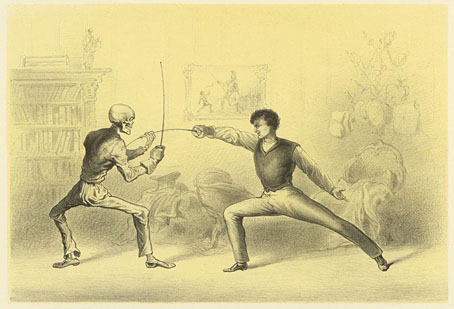
Earlier this week Mr BibliOdyssey posted a link on Twitter to a blog entry of his from 2008, a collection of prints by Dutch artist Alexander Ver Huell (1822–1897). If I’d seen his post originally I didn’t recall it so this swordfight gives me an opportunity to draw attention to Ver Huell’s macabre and diabolical work. This unwinnable duel brings to mind the battle with the band of skeletons from Ray Harryhausen’s Jason and the Argonauts (1963), one of my favourite things in the whole world when I was 10. Given how many of the pictures in the Men with swords archive have a quasi-classical theme it’s perhaps appropriate to list Jason and co. among them.

jason.jpg

Three Fragments of a Lost Tale

frame.jpg

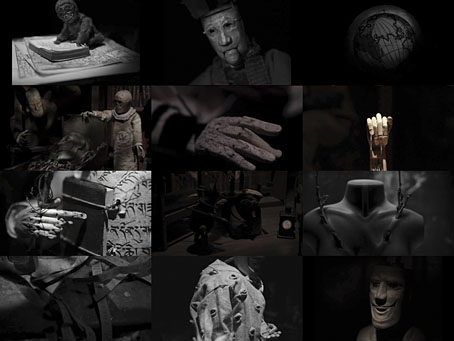
I hadn’t come across sculptor John Frame’s animated work before so my thanks to John Burridge for the recommendation. Three Fragments of a Lost Tale is part of a larger project, The Tale of The Crippled Boy, which is described at Frame’s website. Being a collection of fragments, this film is necessarily mysterious although I seldom worry about that. One quality of animation I’ve always enjoyed is its ability to convey the disjunctions and strange atmospheres of dream states, something it often does more effectively than anything else.

Previously on { feuilleton }
Brothers Quay scarcities
Achilles by Barry JC Purves
The Torchbearer by Václav Švankmajer

Weekend links 106

oshiro.jpg

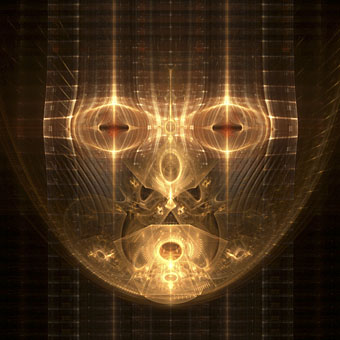
Gold Head 2 (2011) by Kouji Oshiro.

Josef Hartwig’s 1922 Bauhaus chess set. Contemporary copies can be bought from Naef Spiele but they’re not cheap. Related: Bauhaus: Art as Life, a major exhibition at the Barbican, London. Related, related: Art as life by Fiona MacCarthy.

• Rattera is a new font by Barnbrook Design for Fuse 1–20, Taschen’s collection of the experimental typography publication. Related: The Fuse poster explained.

Genesis (1981), video feedback and computer animation by Ron Hays with an electronic score by Ragnar Grippe.

Deadly Doris, a recording by Malcolm Mooney-era Can from the forthcoming Lost Tapes collection.

• “How did a pop band end up in a museum” Sasha Frere-Jones on Kraftwerk.

Philip Glass & Robert Wilson on how they made Einstein on the Beach.

• An astonishing aerial photo of post-quake San Francisco in 1906.

• More electronic music: Buddha Machine’s SoundCloud page.

My Baby, music and video from Julia Holter & Jib Kidder.

Homotography‘s photos can now be browsed at Pinterest.

Deviates, Inc., a Tumblr.

• Raoul Björkenheim live: Apocalypso pt. 1 | Apocalypso pt. 2 | 1-2-11 DMG, NYC