Weekend links 521

parent.jpg

Au Lion d’or (1965) by Mimi Parent.

• After the recent announcement of Jon Hassell’s health issues it’s good to see he has a new album on the way at the end of July. Seeing Through Sound (Pentimento Volume Two) follows the form of the first volume, Seeing Through Pictures (2018), in reworking elements of earlier recordings into new forms. Not remixes, more reimaginings, and a process that Hassell has been applying to his own work for many years, most notably on his collaboration with Peter Freeman, The Vertical Collection (1997). The latter is an album which is impossible to find today and really ought to be reissued, together with more scarcities from the Hassell catalogue.

• Death of a typeface: John Boardley on Robert Granjon’s Civilité, a type design intended to be the national typeface of France but which fell out of favour. It wasn’t completely forgotten however; I was re-reading Huysmans’ À Rebours a couple of weeks ago, and Civilité is mentioned there as being a type that Des Esseintes chooses for some of his privately-printed books.

• At Plutonium Shores: Kurosawa versus Leone in A Fistful of Yojimbo. Christopher Frayling makes a similar analysis in his landmark study, Spaghetti Westerns (1981), but I didn’t realise that Leone had based so many of his shots on Kurosawa’s film.

• More lockdown art: Seen from Here: Writing in the Lockdown is a collection of new writing edited by Tim Etchells and Vlatka Horvat. A PDF book whose sales will go to support the Trussell Trust, a UK food bank charity.

• The week’s culture guides: Ben Cardew on where to start with the back catalogue of Miles Davis, and Hayley Scanlon on where to begin with the films of Yasujiro Ozu.

• “We can no longer ignore the potential of psychedelic drugs to treat depression,” says Robin Carhart-Harris.

• At Dangerous Minds: Laraaji returns with a new album, Sun Piano, and a preview of the same, This Too Shall Pass.

• Mixes of the week: The Ivy-Strangled Path Vol. XXI by David Colohan, and XLR8R Podcast 647 by The Orb.

Penelope Rosemont on the humorous Surrealism of Mimi Parent.

• At Dennis Cooper’s: Jeff Jackson presents Free Jazz Day.

The Golden Lion (1967) by Lomax Alliance | Dread Lion (1976) by The Upsetters | Gehenna Lion (1982) by Chrome

The Heat of a Thousand Suns by Pierre Kast

kast1.jpg

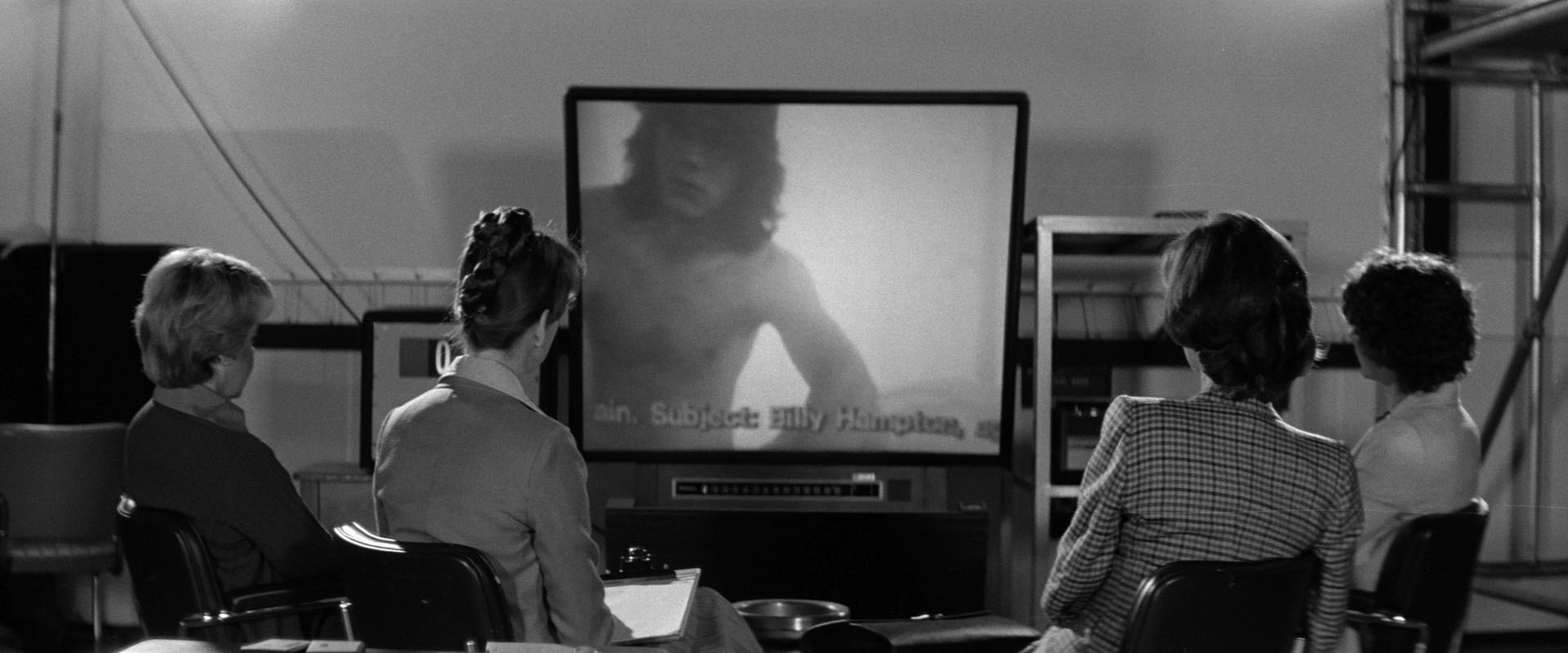
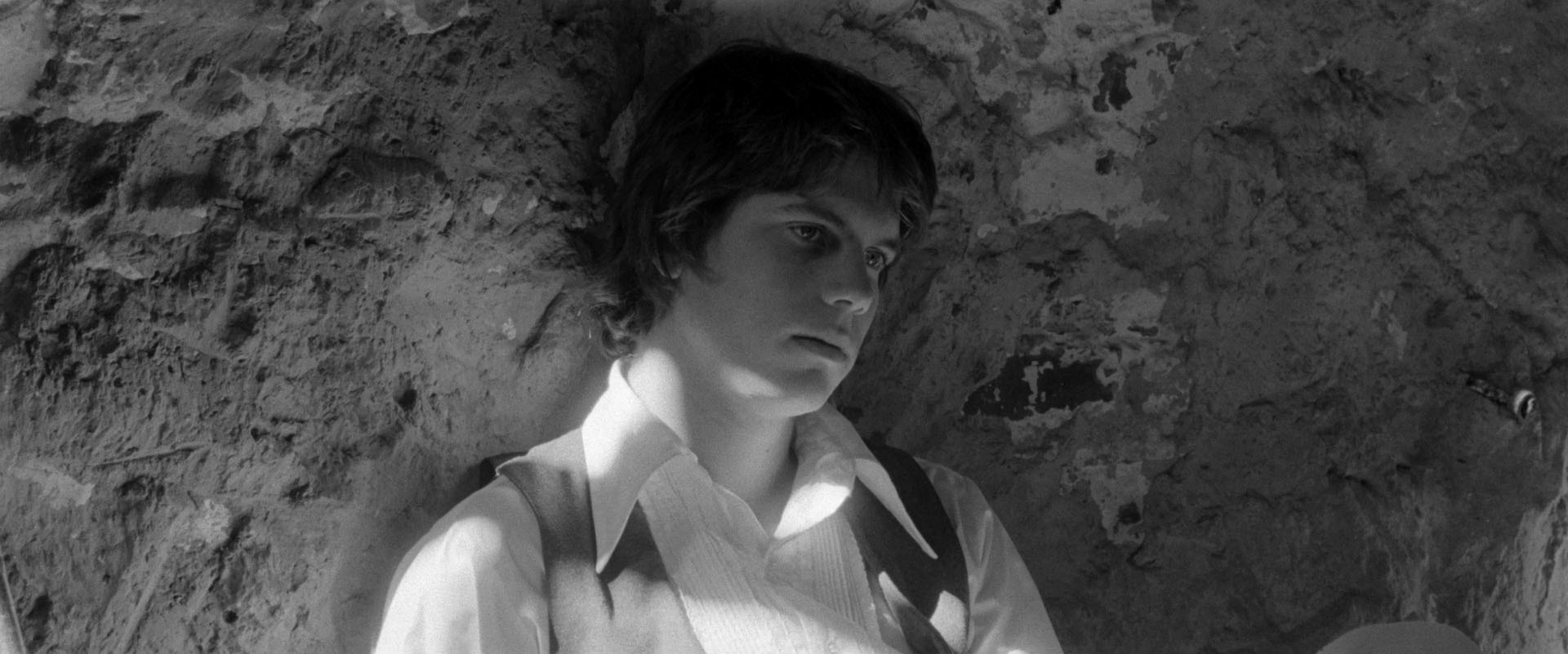
In an earlier post I mentioned how invaluable I’d found Philip Strick’s Science Fiction Movies, a large-format study published in 1976. Like Denis Gifford’s Pictorial History of Horror Movies (1973), the book was intended as a cheap introduction to a popular genre but Strick wasn’t content to limit himself to familiar titles, offering instead a remarkably eclectic list of films, many of which are barely science fictional at all: Last Year at Marienbad, The Saragossa Manuscript, The Hour of the Wolf, Teorema, The Discreet Charm of the Bourgeoisie, and so on. For my teenage self, and no doubt many other readers, this was my first encounter with these and other titles, and it was Strick’s descriptions that kept me on the lookout for them for many years (over 20 in the case of Saragossa). Strick’s equanimity treated cinema as a global medium, not one where Hollywood dominates the marketplace and all the conversation. Other films under discussion were definitely SF but unviewable to those of us who without access to an arts cinema, and little hope of ever seeing them on TV, European obscurities such as La Jetée, Fantastic Planet, Je t’aime, je t’aime and The End of August at the Hotel Ozone. Despite the book’s age, and the relative ease with which anyone can now see films such as these, a few scarcities remain, one of which I watched for the first time last week.

kast2.jpg

The Heat of a Thousand Suns/La Brûlure de Mille Soleils (1965) is a 25-minute animated film written and directed by Pierre Kast that Strick not only describes but further tantalises the reader with a pair of stills, which may account for its title having lodged in my memory all this time. Strick discusses the film between two other animations that are now very familiar: The Green Planet, an early work by Piotr Kamler, and Les Jeux des Anges by Walerian Borowczyk. (If all this sounds like wilful obscurantism on Strick’s part, on the previous page he discusses a pair of classic Hollywood features, This Island Earth and Forbidden Planet.) Kamler’s film is a humorous one, while Borowczyk’s is strange and disturbing; Kast’s film is pitched somewhere between the two:

A young man in the far future becomes bored with the solar system he knows too well and goes for an unrepeatable trip to the stars, in the company of his robots and his cat. On a remote planet he encounters a tranquil civilization where something has only to be wished for, and it happens; he meets a girl, they fall in love, and their romance is frustrated by his complete inability to recognize the different standards of her society where sexual groups of eight comprise a family. Put together from paintings by a Spanish surrealist artist, Eduardo Luiz, whose suffused landscapes and delicate tapering figures provide the perfect balance to the gentle melancholy of the hero’s monologue, the film has the same touch of scorn at its centre as was evident in Kast’s other science-fiction works, Amour de Poche (1957) and Les Soleils de l’Ile de Pâques (1971), although its twinkling conclusion is more in keeping with his romantic comedy Vacances Portugaises (1961). It’s one of the most effective screen versions so far of science fiction’s crusade not so much for a better world as for better people on it.

Strick also mentions a detail about the production that I’d forgotten, namely the editing being the work of La Jetée director, Chris Marker. The latter’s credit makes the inclusion of a space-faring cat both funny and fitting although the animal is unconcerned by interstellar travel, and spends most of its time asleep. Another notable name is electronic composer Bernard Parmegiani who provided the score for this and other films by Kast; he also scored several shorts by Piotr Kamler and Borowczyk’s Jeux des Anges.

kast3.jpg

Now that I’ve finally seen Kast’s film I wouldn’t say it was worth the wait but it was definitely worth watching. The animation is very minimal, with most of the shots being still images that the camera wanders over. The SF scenario is very conventional, as are the trappings: a pointed rocket, bleeping robots, aliens that look and behave like Earth people even if they do have eight sexes. The film distinguishes itself much more with its design, the Giacometti-like figures, and the interior of the spacecraft which pre-empts Barbarella with its lavish chambers filled with period decor and artwork. Despite Strick’s praise, Kast’s conventionality seems a missed opportunity when animation can do so much more than ape live-action cinema. Piotr Kamler’s films, in particular Labyrinth (1969) and Chronopolis (1983), offer science-fiction scenarios that are remote from our own lives and preoccupations; so too with Borowczyk’s Jeux des Anges, a film whose industrial nightmare is closer to David Lynch than Barbarella. Kast does have a late surprise, however, although this may only mean anything to those familiar with Chris Marker’s photography.

The Heat of a Thousand Suns is on YouTube but with no subtitles for its French narration. The copy I watched was from this page which includes a subtitle file. I suspect this may be a DVD rip, and therefore immoral, but the same probably applies to the YouTube version as well. The choice is yours.

Previously on { feuilleton }
A Pictorial History of Horror Movies by Denis Gifford
Saragossa Manuscript posters
Marienbad hauntings
Chronopolis by Piotr Kamler
Les Jeux des Anges by Walerian Borowczyk

Weekend links 520

teleplasmiste.jpg

Cover art by Ethel le Rossignol for To Kiss Earth Goodbye by Teleplasmiste.

• I’ve been listening to London Zoo by The Bug this week so two new releases by The Bug’s beatmaster, Kevin Martin, seem well-timed. Martin’s music isn’t all pummelling rhythms and abrasive noise, he also favours doomy ambience, as demonstrated on his landmark compilation album, Isolationism (1994). The new releases, Frequencies For Leaving Earth, Vols 1 & 2, are isolationist in multiple senses of the word, being further products of lockdown life, with the second volume described as reflecting Martin’s “ongoing obsession with scarce sci-fi scores”.

• “It was designed to run counter to formalist & Hollywood Structuralist definitions & expectations.” M. John Harrison in a discussion about his cycle of Viriconium novels and stories. Harrison’s new novel, The Sunken Land Begins To Rise Again, will be published at the end of this month.

• Mix of the week: 31st May 2020 (Lovecraft 2) by French Rock Sampler, a recording of Warren Hatter’s radio show devoted to French underground, synth and progressive music of the 1970s. The current season may be heard each Sunday at 3pm (London time) on Resonance FM.

This is a very important book. It may even be a historic book, one with which gay history can arm itself with more sufficient factual veracity as to start vanquishing at last the devil known as queer studies. Queer studies is that stuff that is taught in place of gay history and which elevates theory over facts because its practitioners, having been unsuccessful in uncovering enough of the hard stuff, are haughtily trying to make do. […] It is not only breathtaking to read this all in a work the likes of which so many Americans long to have written about our own gay history, but when one finishes reading it, one utters an audible huge sigh of relief. Of course this is how it was! Why did we all not know and accept this instinctively without having to create and/or buy into the Foucaultian and Butlerian (to name but two) nightmares with the obtuse vocabularies they invented and demanded be utilized to pierce their dark inchoate spectacles of a world of their own imaginings. Homosexuality did not exist because there was no word for it, say they. What bushwa.

The late Larry Kramer in 2009 reviewing Before Wilde: Sex between Men in Britain’s Age of Reform by Charles Upchurch

• I mentioned in April that I’d designed the CD and vinyl packaging for Roly Porter’s latest album, Kistvaen. It’s another monumental release, and it’s out now. Hear it for yourself at The Quietus.

To Kiss Earth Goodbye, the new album from Teleplasmiste, features cover artwork by Ethel le Rossignol, and a previously unheard trance recording of occultist Alex Sanders.

• “It’s impossible to completely quantify the effect of I Feel Love on dance music.” John Doran on Donna Summer and Giorgio Moroder’s finest moment.

• More film lists: 10 great Japanese film noirs selected by Matthew Thrift, and the 15 best Czech horror films selected by Jason Pirodsky.

Mark Blacklock selects a top ten of four-dimensional novels (one of which isn’t a novel at all but a short story by Ian McEwan).

• At Dennis Cooper’s: BDSM.

Angry (2008) by The Bug feat. Tippa Irie | Insane (2008) by The Bug feat. Warrior Queen | Fuckaz (2008) by The Bug feat. Spaceape

The Marvellous

melly.jpg

The marvellous is always beautiful. Anything marvellous is beautiful. In fact only the marvellous is beautiful.

George Melly (above) quoting André Breton’s declaration from the first Surrealist Manifesto, 1924

Two posts in one week—quelle surprise. This is partly because I’m trying to get WordPress to post updates to Twitter, something that hasn’t been possible for many years without going through the long-winded process of signing up as a Twitter developer. Anything that limits my involvement with Twitter’s burning café feels like a positive thing at the moment, so thoughts that I previously cast into the flames may find their expression here instead.

svankmajer.jpg

The two screengrabs are from recent re-viewings. George Melly’s short guide to Surrealism for the BBC’s Arena, and Jan Švankmajer’s equally short BBC profile have both been featured here in the past, but my recent purchase of a box of blu-rays from Švankmajer’s shop has prompted a journey back into the Surrealist praxis via whatever books and videos I have to hand. It’s been interesting looking again at René Passeron’s Encyclopedia of Surrealism (1975), a book which for many years was more interesting for the 24-page section devoted to the precursors of Surrealism, all the artist-eccentrics, architects, illustrators, Mannerists, and (especially) the Symbolists whose works I spent most of the 1980s pursuing. Today there are more threads to be followed in the Surrealist section of Passeron’s study so I’m looking forward to seeing where they lead. As for The Marvellous, the Švankmajer discs are this with and without the capital “M”. I recommend them.

Update: And the post didn’t announce itself at Twitter which isn’t so surprising; I’ll keep working at this behind the scenes. Social media is the anti-Marvellous.

Moirage, a film by Stan VanDerBeek

vanderbeek1.jpg

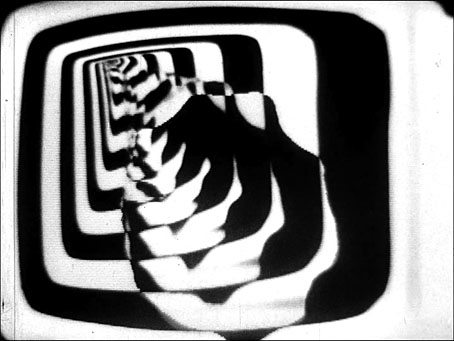
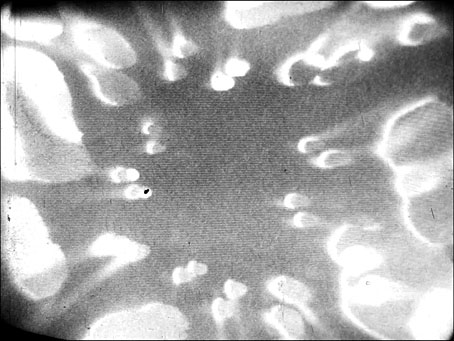
Further proof that if you wait long enough (almost) everything turns up eventually. In 2011 I mentioned a fruitless search for Moirage (1970), a short film by Stan VanDerBeek, and here it is, in a rather scratched print at the Internet Archive. The film proves to be as I expected, an abstract work that animates the kinds of patterns that would have been deemed Op Art in the few years before LSD use became widespread, but which were unavoidably psychedelic by the time VanDerBeek came to make his film.

vanderbeek2.jpg

The patterns were provided by Gerald Oster, a biophysicist who used his discoveries in photochemical research to create works of art. My Studio Vista guide to Op Art lists two Oster studies in its bibliography: a book, The Science of Moiré Patterns (1959), which included sheets of overlays for the reader to play with; and an article co-written with Yasunori Nishijima, Moiré Patterns, for Scientific American (May, 1963). (The magazine also had a moiré pattern as its cover illustration.) I was playing with moiré interference myself a few weeks ago so this discovery is a timely one. My experiments involved vector graphics, a much more versatile medium for creating these effects than the printed sheets that Oster and his colleagues had to create. I’d been thinking of using the patterns as part of a book design but haven’t decided yet whether they’re suitable.

Elsewhere on { feuilleton }
The abstract cinema archive