Scarabus, a film by Gérald Frydman

scarabus1.jpg

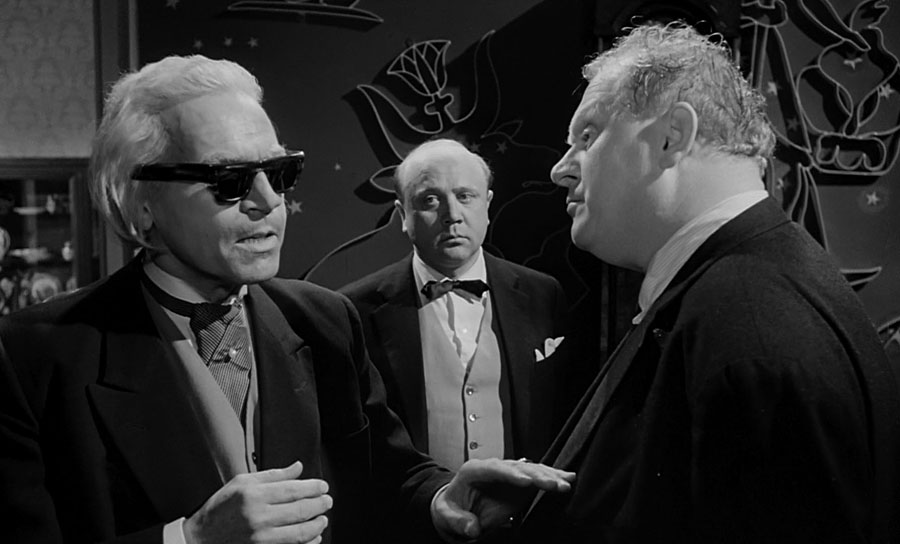
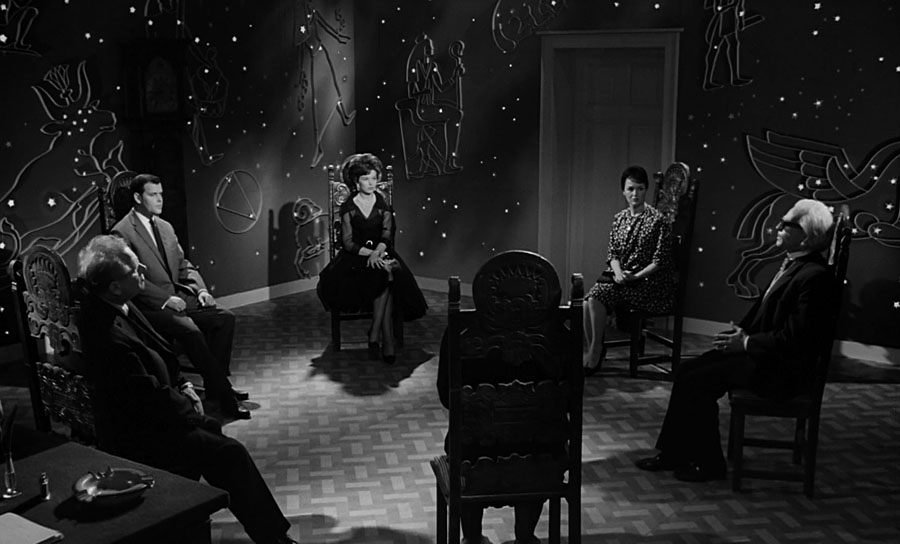
Another tip from Philip Strick’s Science Fiction Movies (1976) (previously) that’s also another short animated film I hadn’t seen before. Gérald Frydman is a Belgian director, and Scarabus (1971) was his debut film. As with a number of the selections in Strick’s book, Scarabus tends more towards Surrealism than science fiction, although this always depends how broadly you define SF: identical men in black clothes populate a crumbling urban environment where much of the architecture is inside out and upside down, and unidentified yellow blobs clutter the place. Airships drift overhead while the men interact with each other, sometimes in a violent manner. The meaning may be elusive but it’s all very well done, and the film was later chosen to accompany the French theatrical screenings of Alain Resnais’s Providence. That’s what I call a good night out.

scarabus2.jpg

Previously on { feuilleton }
Labirynt by Jan Lenica

Weekend links 522

moesman.jpg

Self-Portrait (1935) by Johannes Hendrikus Moesman.

• At Bibliothèque Gay, René Bolliger (1911—1971), an artist whose homoerotica is being celebrated in an exhibition, Les Beaux Mâles, at Galerie Au Bonheur du Jour, Paris, next month. There are more beaux mâles in a new book of photographs, Hi, Hello!, by Roman Duquesne.

• The summer solstice is here which means it’s time for Dennis Cooper‘s favourite fiction, poetry, non-fiction, film, art and internet of the year so far. As before, I’m flattered to be listed in the internet selection. Thanks! Also at DC’s, Michael Snow Day.

• “I hope Roger Corman is doing okay,” I was thinking last week while rewatching one of Corman’s Poe films. He’s been overseeing the production of three new features during the lockdown so, yes, he’s doing okay. I loved the Cries and Whispers anecdote.

• “Unsettling and insinuating, fabulously alert to the spaces between things, Harrison is without peer as a chronicler of the fraught, unsteady state we’re in.” Olivia Laing reviewing The Sunken Land Begins to Rise Again by M. John Harrison.

The original Brain label release of Aqua (1974), the first solo album by Tangerine Dream’s Edgar Froese, had a different track list and different mixes from the Virgin releases. The album has never been reissued in this form.

• New music at Bandcamp: Without Thought, music for an installation by Paul Schütze; and Hatching Under The Stars, songs by Clara Engel.

Deborah Nicholls-Lee on Johannes Hendrikus Moesman (1909–1988), “the erotic Dutch surrealist you should have heard of”.

Kate Solomon on where to start with the Pet Shop Boys. I’d also recommend Introspective.

• Dalí in Holographic Space: Selwyn Lissack on Salvador Dalí’s contributions to art holograms.

• At Spoon & Tamago: An obsession with retro Japanese round-cornered windows.

John Boardley on the “writing mistresses” of the calligraphic golden age.

Mark Duguid recommends Michael Reeves’ Witchfinder General (1968).

• The favourite music of Crammed Discs boss, Marc Hollander.

• Occult/erotic prints by Eleni Avraam.

Aqua: Every Raindrop Longs For The Sea (Jeder Tropfen Träumt Vom Meer) H2O (1973) by Achim Reichel | Aqua (1979) by Dvwb | Aqua (1981) by Phew

Topsychopor by Roland Topor

topor00.jpg

Published in Paris in 1964, “a game in the form of a psychological test produced by Topor with the help of Jean Suyeux”. A red box measuring 41 x 32 cm, containing 6 “decor boards” or stages which depict a street, a region of rocks, a cemetery, a bedroom, a plain and an island; plus two sheets of pre-cut characters: a fire, a clock, an eye, a shell, two Citroën autmobiles (a 2CV and a DS), a wolfman, a blind man, a baby, a naked man, Death, a sleeping woman, and a truncated man.

topor01.jpg

“Sans prétendre atteindre à la rigueur d’un vrai test psychologique, TOPSYCHOPOR en utilise les principes. Il comprend six planches-décors et treize personnages ou objets. Le jeu consiste à choisir un décor et à y placer un ou plusieurs éléments découpés. ll suffit alors de se reporter au tableau des interprétations pour découvrir—avec horreur ou ravissement—ce que ce choix signifie. Le personnage ou l’objet choisi en premier lieu indique la tendance dominante du caractère du joueur, les éléments choisis ensuite viendront nuancer et compléter la première interprétation, selon un ordre d’importance décroissant. Certains objets ou personnages paraîtront peut-êtrc étranges; cela ne doit pas étonner, ils ont été voulus tels afin de faciliter les interprétations. Vous verrez d’ailleurs que vous vous familiariserez vite avec TOPSYCHOPOR et bientôt vous ressentirez la tentation de jouer avec lcs personnages sans plus vous soucier de leur signification. Car ce jeu cache son jeu, un jeu auquel vous vous prendrez. Pour l’interprétation des récits que vous ferez alors, vous pourrez toujours consulter votre psychiatre habituel.”

Rules of the game (autotranslated): “Without claiming to achieve the rigor of a real psychological test, TOPSYCHOPOR uses its principles. It includes six decor boards and thirteen characters or objects. The game consists of choosing a decor and placing one or more cut elements in it. It is then enough to refer to the table of interpretations to discover—with horror or delight—what this choice means. The character or object chosen in the first place indicates the dominant tendency of the player’s character, the elements then chosen will come to qualify and complete the first interpretation, in order of decreasing importance. Some objects or characters may appear strange; that should not surprise, they were wanted such in order to facilitate the interpretations. You will see that you will quickly become familiar with TOPSYCHOPOR and soon you will feel the temptation to play with the characters without worrying about their meaning. Because this game hides its game, a game that you will take. For the interpretation of the stories that you will then make, you can always consult your usual psychiatrist.”

topor02.jpg

I don’t have a copy of this, unfortunately (and please don’t tell me you have one to sell). Picture searches kept turning up links to film festivals which was a little confusing until I realised that there’s a short film by Antonin Peretjatko, Mandico et le TOpsychoPOR, about a man encountering the game.

topor03.jpg

Continue reading “Topsychopor by Roland Topor”

Jiří Barta: Labyrinth of Darkness

barta1.jpg

A new purchase. It’s excessive and wasteful to order DVDs from South Korea but when this is the only available option you have no choice. Jiří Barta: Labyrinth of Darkness is a Korean clone of a deleted disc that was originally released in the US by Kino, and which I’d managed to miss when it was still easy to find. The collection gathers all of the Czech animator’s short films from 1978–89 plus his 53-minute masterwork, The Pied Piper (1986), a film whose Expressionist puppets and decor steal the familiar folk tale away from picture-book cuteness and return it to its darker roots. The subtitle “Labyrinth of Darkness” suggests that all the films tend towards horror which isn’t really the case, although anyone disturbed by animated shop mannequins may be unnerved by Club of the Discarded (1989). Barta’s films can be dark but they’re also wry or quirky: The Design (1981) is a wordless fable about the imposition of social uniformity by contemporary architecture, while The Extinct World of Gloves (1982) cleverly uses anthropomorphism to pastiche a range of cinematic genres. Barta is still active today but most of his recent films have been advertising commissions and a child-friendly feature, Toys in the Attic, the marketplace being resistant to animation that’s too strange or personal. I still hope we might one day see his feature-length film of The Golem but there’s been no news about this since a preview was released in 2002:

“Everyone is expecting a fairytale about that legend. Our interpretation is a little bit different, because we start from another point of view, which is Gustav Meyrink’s Golem…It is much more interesting, but I think that this is the reason why we have not moved forward, why the whole project has stopped, why some producers have disappeared, appeared and disappeared again.” (via)

barta2.jpg

The unavailability of the Kino disc of Barta’s films is part of a worrying trend for those of us who like to own physical copies of scarce films. Many DVDs released ten or more years ago are now deleted and—in the case of my precious Piotr Kamler collection—impossible to find, while the films they contain are of such minority interest there’s little hope of seeing them on blu-ray any time soon. In the hierarchy of cinematic value, feature-length dramas always receive the most attention while documentaries, shorts, animations and experimental films are subject to the greatest neglect. Yes, “everything is now on YouTube” (except when it isn’t), but invariably compromised by low resolution, a lack of subtitles, or blighted by TV watermarks. And everything on YouTube is only there for as long as the uploader maintains their channel or until someone files a copyright complaint; previous posts here are filled with links to videos that are now deleted, so the Koreans are doing everyone a service by keeping Barta’s films in circulation. The same goes for the great René Laloux whose science-fiction features, Time Masters (1982) and Gandahar (1987), are currently available with English subs only from South Korea. The quality of this Jiří Barta disc leaves much to be desired but it’s still better than YouTube.

Previously on { feuilleton }
Jiří Barta’s Pied Piper
Gloves
More Golems
Barta’s Golem