Edward Judd, 1932–2009

dtecf.jpg

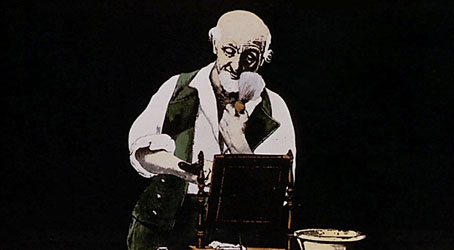
Like the creations of the late Oliver Postgate, Edward Judd haunts my childhood imagination via the handful of very British science fiction and sf/horror movies he starred in during the 1960s. He did a great deal of acting before and after this—in the Seventies he was a very ubiquitous TV character actor—but it’s his run of genre films which remains notable. In these roles he was always the stalwart Everyman, usually with another older actor as co-star who supplies the requisite scientific explanations.

The first of these, The Day the Earth Caught Fire (1961), was a Val Guest production which followed the success of Guest’s Quatermass films in visiting another space-born calamity upon the world, this time an unprecedented heatwave caused by nuclear tests which throw the earth off its orbit. The film opens with a Ballardesque view of the River Thames parched to a thin stream, and features some great shots later of Judd stumbling through an abandoned, dust-strewn capital. The location work in the Daily Express building on Fleet Street adds to the realism, as does a strong script and decent performances.

Continue reading “Edward Judd, 1932–2009”

Eonism and Eonnagata

deon.jpg

The Chevalier d’Eon wins a fencing bout.

I’ve known of the cross-dressing Charles-Geneviève-Louis-Auguste-André-Thimothée d’Eon de Beaumont—or the Chevalier d’Eon (1728–1810) to give him his title—for some time thanks to a typically witty and informative entry by Philip Core in Camp: The Lie that Tells the Truth (1984). The nobleman rubs shoulders there with the equally flamboyant Henry Paget (1875–1905), Fifth Marquess of Anglesey, known as “the Dancing Marquess”, and Romain de Tirtoff, better known as illustrator and designer, Erté, who we see in a photo dressed as “Claire de Lune”. Aside from his status as a historical curio, and a failed attempt by Havelock Ellis to borrow his name to describe transvestism—Eonism, the Chevalier seems less celebrated than he might be. So it’s a pleasure to hear that theatre director Robert Lepage has created a new stage production, Eonnagatta, based on the Chevalier’s colourful life:

For a long time now, the actor and experimental theatre director Robert Lepage has been fascinated by the life of the Chevalier d’Eon, an 18th-century French soldier who had a flamboyant career as a diplomat and secret agent for Louis XV, and spent much of his adult life dressed as a woman. Officially, the Chevalier’s skirts were worn as a professional disguise: his exceptionally fine features allowed him to pass easily for a woman, and thus move around undetected as a spy. But the Chevalier didn’t just do it for the job. He was a genuine cross-dresser, an 18th-century transvestite.

Lepage’s fascination has now led to Eonnagata, a daring collaboration inspired by the life of the Chevalier that gets its British premiere next week. The work has been put together by four very different, and internationally acclaimed, artists: there’s Lepage, the choreographer Russell Maliphant, the dancer Sylvie Guillem and the fashion designer Alexander McQueen. That’s quite a team – and the result is a unique hybrid of their art forms. How would they describe it? Maliphant gives it a go: “It’s not pure dance: it doesn’t have Sylvie doing splits or amazing falls. But it’s not pure theatre, either.” (More.)

deon2.jpg

Eonnagata.

Continue reading “Eonism and Eonnagata”

Cosmic Zoom

cosmic.jpg

Cosmic Zoom (1968) is a short, semi-animated film by Eva Szasz, one of the many great shorts financed by the National Film Board of Canada. When I wrote about this in 2006 there was only a low-res version available for viewing on the NFB site while Powers of Ten (1977), a very similar film by Charles and Ray Eames, could be seen on YouTube. Three years on and Powers of Ten has disappeared behind a registration wall but Cosmic Zoom can now be seen in higher quality on the newly relaunched NFB site. A shame about the annoyingly obtrusive onscreen logo but it’s worth browsing the site for more of their excellent animations, not least the work of Norman McLaren. The time when these shorts would regularly turn up on UK TV are long gone so it’s good to know that they’re now available for viewing any time we wish.

Previously on { feuilleton }
Norman McLaren
Cosmic Zooms

Symphonie Diagonale by Viking Eggeling

eggeling.jpg

This early piece of abstract cinema from 1924 is available for viewing in several locations—YouTube and Ubuweb have copies—but the best version can be seen at Europa Film Treasures. The film was originally silent so don’t feel too bad about watching with the sound off or with your own score to replace those which were added later.

Born in Sweden to a family of German origin, Viking Eggeling emigrated to Germany at the age of 17, where he became a bookkeeper, and studied art history as well as painting. From 1911 to 1915 he lived in Paris, then moved to Switzerland at the outbreak of World War I. In Zurich he became a associated with the Dada movement, became a friend of Hans Richter, Jean Arp, Tristan Tzara, and Marcel Janco. With the end of the Great War he moved to Germany with Richter where both explored the depiction of movement, first in scroll drawings and then on film. In 1922 Eggeling bought a motion picture camera, and working without Richter, sought to create a new kind of cinema. Axel Olson, a young Swedish painter, wrote to his parents in 1922 that Eggeling was working to “evolve a musical-cubistic style of film—completely divorced from the naturalistic style.” In 1923 he showed a now lost, 10 minute film based on an earlier scroll titled Horizontal-vertical Orchestra. In the summer of 1923 he began work on Symphonie Diagonale. Paper cut-outs and then tin foil figures were photographed a frame at a time. Completed in 1924, the film was shown for the first time (privately) on November 5. On May 3, 1925 it was presented to the public in Germany; sixteen days later Eggeling died in Berlin. For more on Eggeling see the book Viking Eggeling 1880–1925 by Louise O’Konor.

Elsewhere on { feuilleton }
The abstract cinema archive