More Brothers Quay scarcities

quay4.jpg

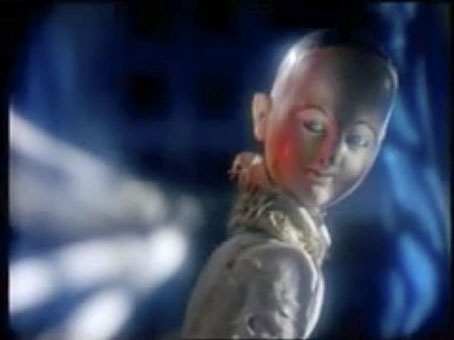
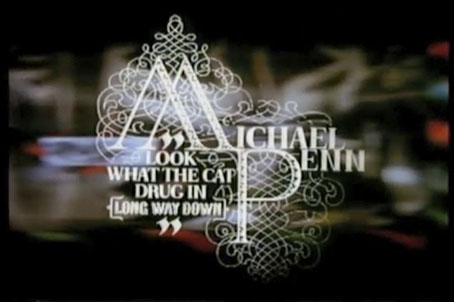
Look What the Cat Drug In (Long Way Down) (1992).

More short films by the Brothers Quay that haven’t yet appeared on their DVDs. Look What the Cat Drug In is a music video for Michael Penn that I was unable to find last time I did a YouTube trawl. It’s a good one.

quay1.jpg

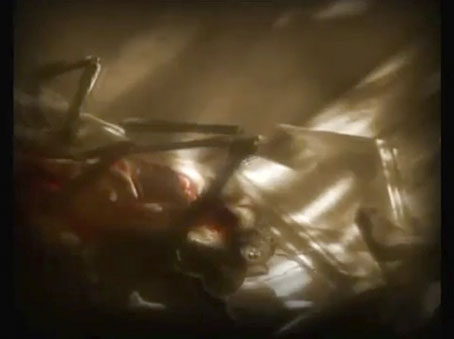
Dolls (1994).

A 30-second warning about the perils of AIDS, made for the Partnership for a Drug Free America. Watch for the bizarre detail of a puppet snorting coke. The Quays made a lot of commercials and idents during the 1990s but few of them surface.

quay2.jpg

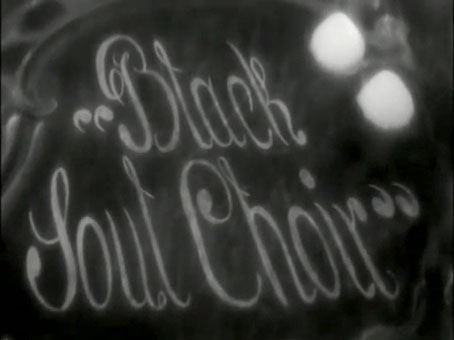
Black Soul Choir (1996).

A music video for 16 Horsepower featuring animated nails and pieces of chalk.

quay3.jpg

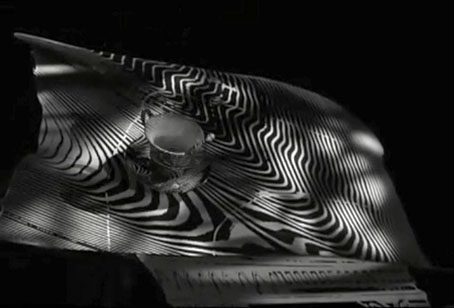
Alice in Not So Wonderland (2008).

Another short warning—climate change this time—made for Live Earth. How much of the message makes it through the surrealism is debatable but it’s good to see the Quays’ take on Lewis Carroll.

quay5.jpg

The Metamorphosis (2012).

Mikhaïl Rudy plays a piano piece by Leos Janácek (the subject of an earlier Quays film) while Gregor Samsa deals with his traumatic awakening. The previous scarcities post found a trailer for this piece which apparently runs for 33 minutes. The version linked here is only the first 5 minutes but it gives a better idea of the film as a whole.

Elsewhere on { feuilleton }
The Quay Brothers archive

Weekend links 263

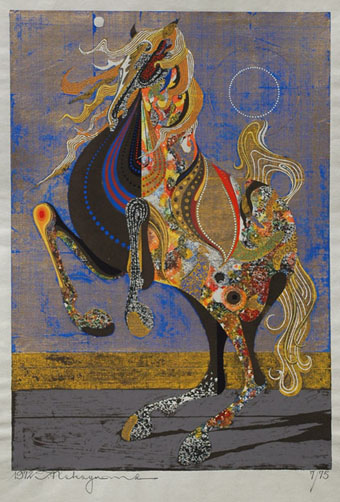
nakayama.jpg

Dancing Horse (1972) by Tadashi Nakayama.

• The Wounded Galaxies Festival of Experimental Media takes place in Bloomington, Indiana, on October 7–11, 2015. The event is an offshoot of the earlier Burroughs Century, and the phrase “wounded galaxies” is one of Burroughs’ own. It’s also the partial title of Wounded Galaxies Tap At The Window, the most recent album by Cyclobe who will be performing at the festival. Cyclobe’s Stephen Thrower will be in London later this month for the launch of his new book, Murderous Passions: The Delirious Cinema of Jesús Franco, and a screening of Franco’s Vampyros Lesbos (1971).

• Gallery sites showcasing erotic art are often coy about the details of the work they’re exhibiting. That’s not the case with Artists Space, NYC, whose Tom of Finland: The Pleasure of Play is running from June 14–August 23, 2015.

• “I just loved the songs, and I didn’t mind the age in their voices, and I didn’t mind the fact that they were unaccompanied, it didn’t matter.” Shirley Collins talking to Ben Graham about her love of English folk music.

The more important question is what do we do with psychedelia now? I think the drugs themselves and the experiences they produce in individuals and for society are too important and vital to be pigeon-holed and taken hold of by a bloodthirsty media that always aims to reduce all experience to a few simple straplines for improved consumerism.

Dr Ben Sessa talking to Barnaby Smith about psychedelic drugs. Breaking Convention 2015, the Third International Conference on Psychedelic Consciousness, takes place at the University of Greenwich next month.

• “…if someone opens a door or if sunlight falls on them they shoot off the grid and suddenly you have a roomful of what sounds like sick bagpipes.” Will Gregory on the physicality of Moog synthesizers.

• Mixes of the week: The Necromancer-Queens of Neverland, an exotic collection by SeraphicManta, Secret Thirteen Mix 156 by Asusu, and an Ornette Coleman playlist.

• “In 2015, the thought of anything as incendiary as Scum or Made in Britain turning up on TV just seems bizarre.” Danny Leigh on the great Alan Clarke.

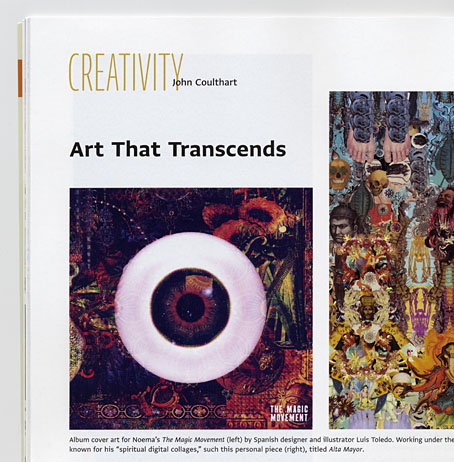
• More psychedelia: ‘Art That Transcends‘, my article for Communication Arts, has been posted on the magazine’s website.

Phantasmaphile recommends Thus Were Their Faces, a collection of short stories by Silvina Ocampo.

Earth filmed playing live in Brooklyn, NY, September 24, 2014. The full set, and a great performance.

• At Dangerous Minds: “How Far Will You Go?” Meet Smokey, the outrageously gay 70s cult rockers.

Peter Strickland on six films that fed into The Duke of Burgundy.

Things I Found In Records

Christopher Lee sings!

Polly On The Shore (1970) by Shirley & Dolly Collins | The Quiet Joys Of Brotherhood (1972) by Sandy Denny | The Banks of Red Roses (1988) by June Tabor

The Big Fix!

fix1.jpg

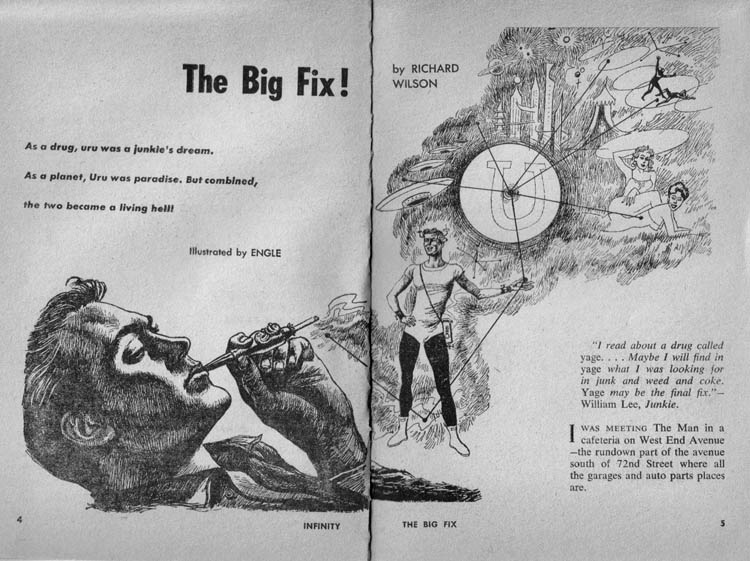
One of the stories that was new to me in recent book purchase, Strange Ecstasies (1973), was The Big Fix by Richard Wilson, a science-fiction piece about a junkie in New York City looking for something newer and better than the heroin habit he’s trying to quit. The story first appeared in Infinity Science Fiction for August 1956 but the first half of the narrative seemed so unlike the usual SF fare of the time that I kept flicking back to the copyright page to check the date. The Big Fix of the title (or The Big Fix! as it was in the magazine) is a substance named uru given to the narrator by Jones, an alien in disguise; smoking the drug induces a telepathic conversation with Jones followed by a journey through space to his home planet. In the second half of the story we discover why Jones (or Joro as he’s known at home) is transporting low-lifes from New York and offering them a chance to live on his world. The explanation is as pedestrian in SF terms as an episode of Star Trek, a factor which makes the first half of the story seem all the more striking, replete as it is with junk-life details, contemporary slang and discussion of the (for the time) very obscure South American drug known as yage, aka ayahuasca. Was this written from Wilson’s personal experience or had the details been lifted from a contemporary authority?

fix2.jpg

A few minutes of searching turned up the solution in an illustrated spread from the magazine: the original printing opened with a paragraph from Junkie (1953) by William Burroughs (credited as William Lee) which not only explains the accuracy of the drug and slang details but also why Wilson was mentioning yage. Burroughs’ connections with (and influence upon) the SF world are well-documented but this is a surprising example—maybe the first—of his influencing a story before he was known as William Burroughs. I wonder now if he ever knew about this instance himself, or if the excising of the Junkie paragraph from subsequent reprints marooned the detail in the magazine. At the end of the story there’s more contemporary relevance when the narrator has managed to return to Earth and is helping some researchers with their mescaline experiments, a process whose higher status he attributes to “the Huxley effect”.

Elsewhere on { feuilleton }
The William Burroughs archive

Previously on { feuilleton }
More trip texts

More trip texts

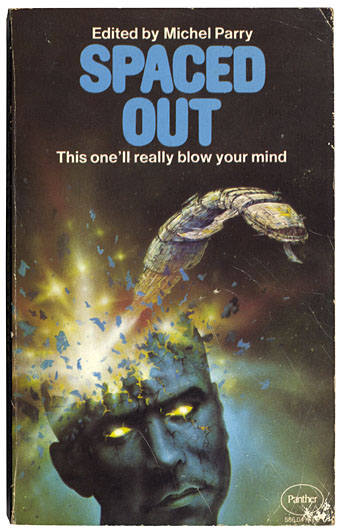
parry1.jpg

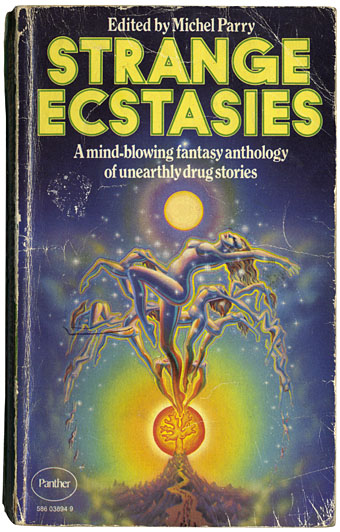
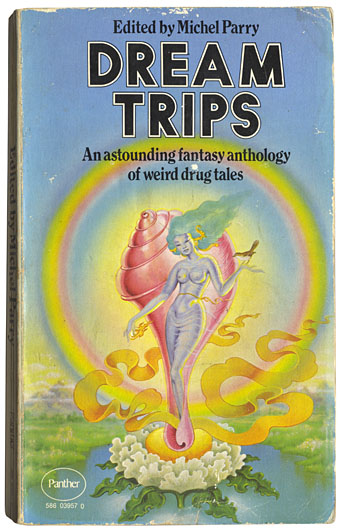
More psychedelia of a sort. Anthologist Michel Parry, who died last year, was a familiar name to British readers of fantasy, horror and science fiction for his themed collections: Beware of the Cat (1972; horror stories about cats), The Devil’s Children (1974; horror stories about children), The Hounds of Hell (1974; horror stories about dogs), Jack the Knife (1975; Jack the Ripper stories), The Supernatural Solution (1976; occult investigators), Sex in the 21st Century (1979), and so on.

Parry also compiled multi-volume anthologies throughout the 1970s, two of which have always stood out for me: the Mayflower Books of Black Magic Stories ran to six volumes presenting a wide range of occult fiction that included a number of obscure tales from Victorian and Edwardian writers; for Panther Books he compiled three collections of drug-related fantasy and SF stories that are just as varied, and may even be unique for the way they place authors as such as Lord Dunsany and Norman Spinrad together in the same volume. Both series are very much of their time—occult psychedelia!—and are worth seeking out, if you can find them. I emphasise the last point because it’s taken me a while to find a copy of Strange Ecstasies that wasn’t being offered for bizarrely inflated prices; my paperback habit has its limits… None of these anthologies have been reprinted so they’ll become increasingly scarce. For more invented drugs, there’s a good list at Wikipedia.

parry2.jpg

Cover art by Bob Haberfield.

Strange Ecstasies (1973)
The Plutonian Drug (1934) by Clark Ashton Smith
The Dream Pills (1920) by FH Davis
The White Powder (1895) by Arthur Machen
The New Accelerator (1901) by HG Wells
The Big Fix (1956) by Richard Wilson
The Secret Songs (1962) by Fritz Leiber
The Hounds of Tindalos (1929) by Frank Belknap Long
Subjectivity (1964) by Norman Spinrad
What to Do Until the Analyst Comes (1956) by Frederik Pohl
Pipe Dream (1972) by Chris Miller

parry3.jpg

Cover art by Bob Haberfield.

Dream Trips (1974)
The Hashish Man (1910) by Lord Dunsany
As Dreams Are Made On (1973) by Joseph F. Pumilia
The Adventure of the Pipe (1898) by Richard Marsh
Dream-Dust from Mars (1938) by Manly Wade Wellman
The Life Serum (1926) by Paul S. Powers
Morning After (1957) by Robert Sheckley
Under the Knife (1896) by HG Wells
The Good Trip (1970) by Ursula K. Le Guin
No Direction Home (1971) by Norman Spinrad
The Phantom Drug (1926) by AW Kapfer

parry4.jpg

Cover art by Brian Froud.

Spaced Out (1977)
The Deep Fix (1964) by Michael Moorcock
All the Weed in the World (1961) by Fritz Leiber
The Roger Bacon Formula (1929) by Fletcher Pratt
Smoke of the Snake (1934) by Carl Jacobi
Melodramine (1965) by Henry Slesar
My Head’s in a Different Place, Now (1972) by Grania Davis
Sky (1971) by RA Lafferty
All of Them Were Empty— (1972) by David Gerrold

Previously on { feuilleton }
Trip texts
Acid albums
Acid covers
Lyrical Substance Deliberated
The Art of Tripping, a documentary by Storm Thorgerson
Enter the Void
In the Land of Retinal Delights
Haschisch Hallucinations by HE Gowers
The art of LSD
Hep cats

Art that transcends

ca56.jpg

Late last year, US design magazine Communication Arts asked me to write a piece about psychedelic art, past and present. The resulting feature has been out for a couple of weeks in the May/June issue (no. 56) but I hadn’t seen it in print until a copy turned up today. Attempting to wrangle discussion of a very wide-ranging and amorphous field into 1500 words isn’t an easy task but I managed to sketch a history of psychedelic art beginning with Aldous Huxley and Humphrey Osmond’s mescaline experiments in the 1950s. Art that can be considered psychedelic goes back into prehistory but Huxley’s The Doors of Perception (1954) is the first book that considered art in general from a psychedelic viewpoint. That book, and the later Heaven and Hell (1956), are still valuable for their aesthetic meditations however much Huxley’s optimism may have been tainted by the ferment of the 1960s.

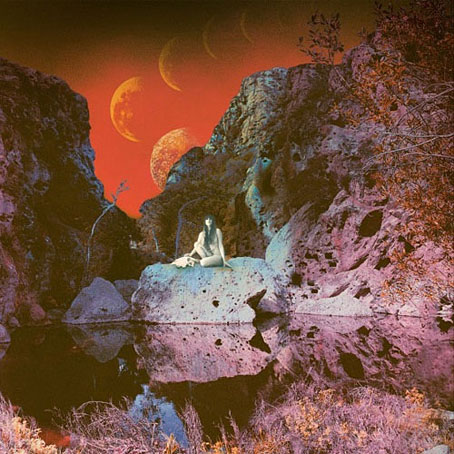
earth.jpg

Primitive And Deadly (2014) by Earth. Art by Samantha Muljat.

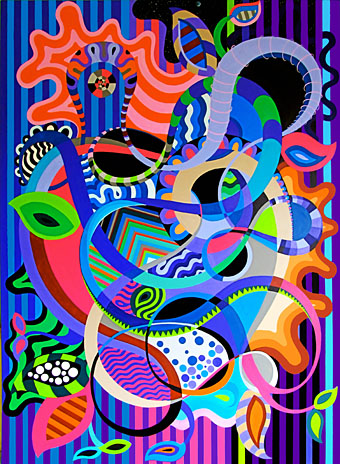
The psychedelic art of the 60s isn’t exactly overlooked so I paid more attention to tracing the influence of the psychedelic style, and also mentioning painters such as Ernst Fuchs, Alex Grey, Martina Hoffmann and Mati Klarwein. Among the more recent artists, I was pleased that Samantha Muljat‘s album cover for Earth was featured. I’ve been listening to this album a great deal over the past few months, and loved that cover as soon as I saw it. One of the other contemporary names, Brazilian artist Duda Lanna, works in a very different style: bold, vivid, and often abstract. There seems to be a lot of this kind of work around at the moment, so much so that I kept spotting new examples after the article had been delivered. It’s difficult to say whether this is a developing trend or simply a case of there being more of everything around these days. I’ll play safe and suggest it’s probably a bit of both although, as I say at the end of the article, if the movement to legalise drugs gains momentum we can expect to see a lot more psychedelic art.

lanna.jpg

Garden of Psychedelic Delights by Duda Lanna.