Weekend links 295

dupre.jpg

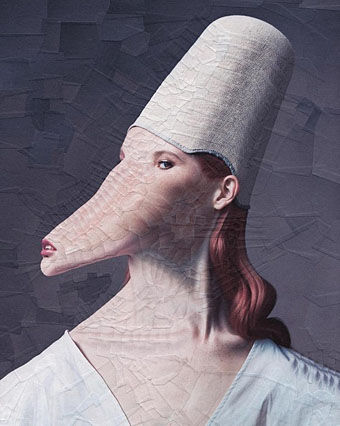
Untitled (2014) by Lola Dupré. Via.

Announcement of the week (if not the month/year) is the news that the BFI will be releasing all of the BBC dramas directed by Alan Clarke on DVD/Blu-ray in May. In addition to the long-awaited appearance on disc of Penda’s Fen (1974) we can expect a previously unseen director’s cut of Clarke’s last TV film, The Firm (1989), the DVD premier of Baal (1982) with David Bowie, plus many other works including some from the 1960s that were believed lost. (And it should be noted that this isn’t everything of Clarke’s; he also worked occasionally for ITV and later directed feature films for Channel 4.)

The BFI attention is a tribute to an exceptional director that’s overdue. Clarke has long been a cult figure among the British actors who worked with him, and among directors such as Harmony Korine and Gaspar Noé, but the tendency of TV to give one-off dramas a single screening has meant that much of his best work has been unavailable for years outside old VHS tapes. Clarke is important for having persistently chosen difficult subjects which he directed with a flair and intensity usually only found in cinema. When he died in 1990 the BBC repeated a handful of his films but the only ones given repeated DVD release have been the violent dramas with the big names attached: Scum (1979, with Ray Winstone), Made in Britain (1982, with Tim Roth), and The Firm (with Gary Oldman). Clarke’s oeuvre is much more than a parade of nihilistic villains, as will become evident later this year.

• A psychedelic video directed by Peter Strickland for Liquid Gate (ft. Bradford Cox) by Cavern of Anti-Matter. The debut album from Cavern of Anti-Matter, Void Beats/Invocation Trex, will be out later this month.

Celebrating Dusseldorf, the city that birthed Krautrock. (Article loses points for not mentioning producer Conny Plank.)

All Rivette’s features might be regarded as different kinds of horror films; Céline et Julie vont en bateau is his first horror comedy. The anxiety and despair of Paris Nous Appartient and La Religieuse, L’Amour Fou and Spectre seem relatively absent, yet they perpetually hover just beyond the edges of the frames. We still have no privileged base of ‘reality’ to set against the fictions, each of which is as outrageous as the other; and along with Borges, we can’t really say whether it’s a man dreaming he’s a butterfly or a butterfly dreaming he’s a man—although we may feel, in either case, that he and we are just on the verge of waking.

Jonathan Rosenbaum on work and play in the house of fiction: Jacques Rivette’s Out 1 and Céline and Julie Go Boating

• Mixes of the week: Finders Keepers Radio Show Krautrock Special, and The Ivy-Strangled Path Vol. XV by David Colohan.

• At Dangerous Minds: Super strange sculptures (by Shary Boyle) only the dark and demented could love.

• Beautiful Brutalites: S. Elizabeth questions Arabella Proffer about her paintings.

KTL is a musical collaboration between Peter Rehberg and Stephen O’Malley.

• Why study art when you can make it? The strange world of…This Heat.

Sarah Galo on the explicitly sexual female artists that feminism forgot.

Irmin Schmidt‘s favourite music (this week).

• LSD: My life-saving drug by Eric Perry.

The Occult Activity Book

Twenty Tiny Cities

Der LSD-Marsch (1970) by Guru Guru | Krautrock (1973) by Faust | Düsseldorf (1976) by La Düsseldorf

Weekend links 289

hermes.jpg

Fathomless Sounding (1932) by Gertrude Hermes.

• Over at Greydogtales (“weird fiction, weird art and even weirder lurchers”) I talk about art, design, the writing of this blog, and I also reveal more about my ongoing Axiom project. The latter currently stands at two novels, a couple of half-finished stories and a few pieces of artwork. I may be unveiling some of the art in the new year so watch this space.

• Howard Brookner’s Burroughs: The Movie (1983), a definitive film portrait of William Burroughs, is released at last on DVD/Blu-ray. US-only for the moment but further releases elsewhere are promised. The director’s nephew, Aaron Brookner, has a documentary about his uncle released next year.

• “…beautifully articulated bawdiness, perverse pleasures and a radical, though nondidactic, political view.” Melissa Anderson reviews Boyd McDonald’s Cruising the Movies: A Sexual Guide to Oldies.

The crisis, as Ellis and Silk tell it, is the wildly speculative nature of modern physics theories, which they say reflects a dangerous departure from the scientific method. Many of today’s theorists — chief among them the proponents of string theory and the multiverse hypothesis — appear convinced of their ideas on the grounds that they are beautiful or logically compelling, despite the impossibility of testing them. Ellis and Silk accused these theorists of “moving the goalposts” of science and blurring the line between physics and pseudoscience. “The imprimatur of science should be awarded only to a theory that is testable,” Ellis and Silk wrote, thereby disqualifying most of the leading theories of the past 40 years. “Only then can we defend science from attack.”

Natalie Wolchover on A Fight for the Soul of Science

• Mixes of the week: A mix by Front & Follow, and The Ivy-Strangled Path Vol. XIV by David Colohan.

• “Psychedelics can’t be tested using conventional clinical trials,” says Nicolas Langlitz.

• At Dangerous Minds: Ralph Steadman illustrates Ray Bradbury’s Fahrenheit 451.

• Why does Moby-Dick (sometimes) have a hyphen? Erin Blakemore investigates.

• My thanks again to Dennis Cooper for including this blog on his year-end list.

• Cian Traynor was given 20 minutes to ask Ennio Morricone some questions.

Lolita at 60: Ten writers reconsider Nabokov’s novel, page by page.

• At Ballardian: High-Rise: Wheatley vs Cronenberg.

Poison Ivy: The Queen of Psychobilly Punk

The Cinema of Hotels: a list

Solo intimacy DIY

Moby Dick (1970) by Led Zeppelin | William Burroughs Don’t Play Guitar (1996) by Islamic Diggers | Physical (2001) by Goldfrapp

Weekend links 285

graphic.jpg

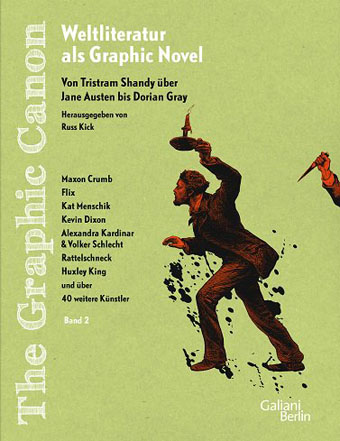
Some of the art from my collage adaptation of The Picture of Dorian Gray appears on the cover of The Graphic Canon: Volume 2, published this month in a German edition by Verlag Galiani. Out next month (although possibly available now) is the same book in a Brazilian edition from Boitempo Editorial. One of the disappointments this year was having to abandon plans to contribute to Russ Kick’s forthcoming graphic canon of crime fiction. I was overstretched during the summer, and what with projects slipping their deadlines and the trip to Providence there wasn’t any time left for other things.

• For those who missed the first edition, a second and final expanded edition of the Penda’s Fen study/celebration The Edge Is Where The Centre Is.

• Whipping up a storm: how Robert Mapplethorpe shocked America; Kevin Moore on the photographer’s Perfect Moment exhibition.

In the best scenario, metaphysical art distributes the work of understanding among cultural traditions and symbolic systems, and it is along these lines that Carrington’s work has been described as a productive combination of Mexican, Egyptian, Hebrew, Celtic, Greek, and Mesopotamian elements. Her paintings, plays, and stories mix the symbols of alchemy, astrology, Tarot, herbalism, magic, witchcraft, and a personal iconography.

Leif Schenstead-Harris on the life, art and fiction of Leonora Carrington

• Mixes of the week: Hieroglyphic Being collects favourite cosmic jazz of the 1970s; NTS Radio presents an hour of Annette Peacock.

• At Kill Your Darlings: Alexandra Heller-Nicholas enthuses about Dario Argento’s delirious masterwork, Suspiria.

Pye Corner Audio releases a new album (only limited vinyl at the moment—boooo!) and remixes Stealing Sheep.

• The Trip Planners: Emily Witt meets the founders behind Erowid, the online drug encyclopedia.

Woven Processional (1985), music on the Long String Instrument by Ellen Fullman.

• “The Paris attacks prove Charlie Hebdo’s critics wrong,” says Dorian Lynskey.

• Photographs by Danila Tkachenko of abandoned Soviet technology.

Come Wander With Me / Deliverance by Anna von Hausswolff.

• The collages of Guy Maddin.

CAN HALEN

Let’s Take A Trip (1965) by Godfrey | Trip On An Orange Bicycle (1968) by The Orange Bicycle | Last Trip (1968) by We Who Are

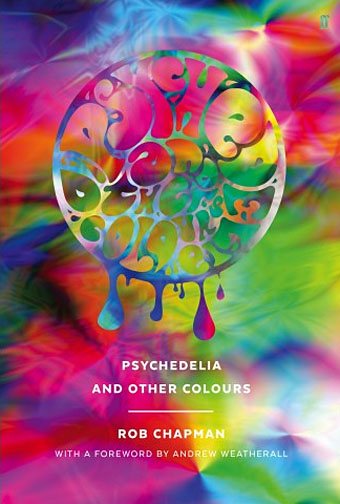
Psychedelia and Other Colours by Rob Chapman

psychedelia.jpg

My mother thought well enough of The Beatles in the 1960s to buy two of their albums—Beatles For Sale and Help!—and she continued to enjoy the Fab Four’s songs up to the point when (in her words) “they went funny”, by which she meant the period after Rubber Soul when they dropped the beat stylings, picked up sitars and took to recording drums and guitars in reverse. They were also taking drugs, of course, hence the funniness, and this rapid evolution—from loveable moptops to freaked-out weirdos in a matter of months—is the subject of Rob Chapman’s huge study of psychedelia as a cultural phenomenon, the period from around mid-1965 to late 1969 when Western youth “went funny” en masse.

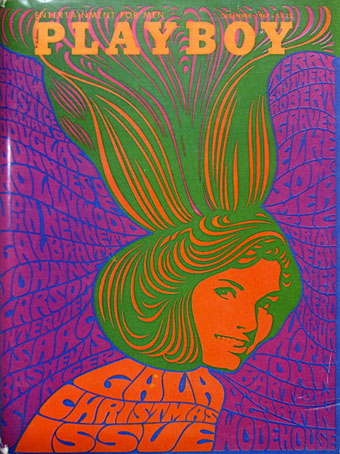
This isn’t an undocumented era but Chapman’s book provides an overdue counterweight to the American focus of earlier studies such as Jay Stevens’ Storming Heaven: LSD and the American Dream (1987). Psychedelic art evolved in San Francisco but it’s an irony of the form that many of the wildest, most typically psychedelic concert posters were promoting acts that were only marginally psychedelic in their sound or, in the case of the older jazz, soul and blues acts, weren’t psychedelic at all. Chapman is more interested in the multi-media light shows than the poster art, and he reaches back in his early chapters to the origin of the San Francisco light shows in the avant-garde art of the Modernist era (especially László Moholy-Nagy’s Light-Space Modulator of the 1920s) and the art schools of the 1950s; he also traces the familiar journey of LSD from the Sandoz laboratories in Switzerland and the clinics of America to the front pages of newspapers and magazines. One of the most remarkable and unlikely aspects of psychedelia was the way in which a short-lived poly-cultural phenomenon maintained an aura of danger and illegality late into the 1960s even while psychedelic aesthetics were filtering into every facet of mainstream life: films, fashion, decor, advertising, even children’s television—all bloomed briefly with vivid colours and melting typography.

playboy.jpg

Playboy gets hip to the trip, December 1967. Art by Wes Wilson.

Chapman touches on all of this but the bulk of his study is concerned with the music which was always the core of psychedelic culture, even if many of the artists involved were only following a trend (or, to be less charitable, jumping on a bandwagon). American groups are given their due, and Chapman has some smart things to say about the often neglected surf boom of the early 60s; as noted here last month, the first piece of popular music to use “LSD” in its title was LSD-25 (1960), a surf instrumental by The Gamblers. Surf bands and garage bands mutated into psychedelic groups but there was often little change in the overall sound beyond adding an effect or two to the instrumentation. Adulterated or processed sound is what I usually look for in psychedelic music, the psychedelic experience being one of distorted or exaggerated perception. Adulteration (or lack of it) is the most obvious factor that differentiates American psych from its British equivalent: White Rabbit by Jefferson Airplane is a great song (its final line is fixed to every page of this blog) but is psychedelic only as a result of its lyrical context. Musically, the song is a simple rock bolero next to which Strawberry Fields Forever sounds like a broadcast from another planet.

Continue reading “Psychedelia and Other Colours by Rob Chapman”

George Barbier’s Le Bonheur du Jour

barbier11.jpg

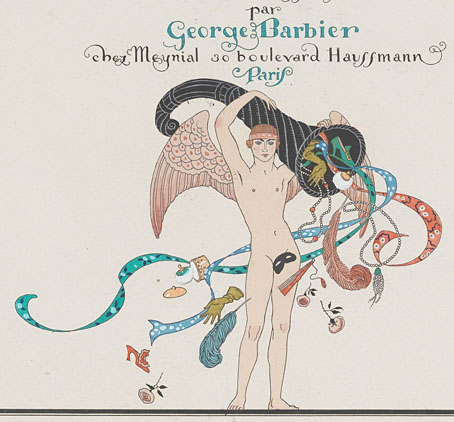
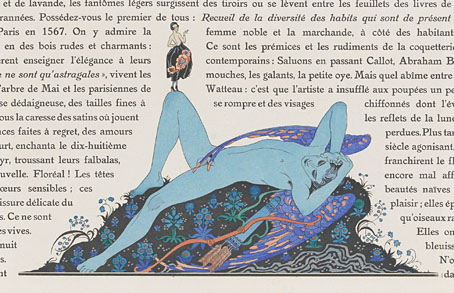
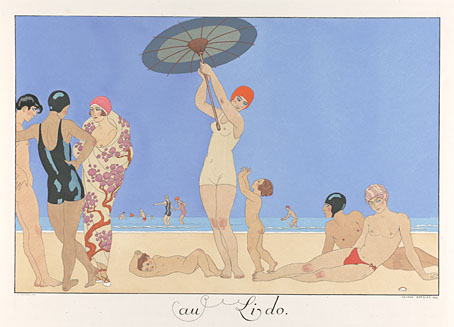
French artist and designer George Barbier was born on 16th October, 1882, so here’s a post for his birthday. Barbier’s work has appeared here in the past but there’s still more to be seen, especially his book illustrations. Le Bonheur du Jour; ou, Les Graces a la Mode is a series of prints from 1924, some of which turn up in collections of Art Deco graphics. Those tend to be the society scenes but I’m always more interested in Barbier’s decorative or decadent work examples of which are also represented here. Of note is a Sapphic scene in an opium den (a common theme in the 1920s), a great deal of Chinoiserie, and more of a homoerotic flavour than usual: the languid blue Cupid is like a male equivalent of Saga in Saga de Xam, while the scene au lido features a surprisingly naked man on the left who may be eyeing the bare breast of one of the women nearby but could also be capturing the gaze of the swimmer in the black cap on the right. More of these prints may be seen at the Metropolitan Museum of Art.

barbier12.jpg

barbier02.jpg

Continue reading “George Barbier’s Le Bonheur du Jour”