A.R.T. art

ARTflyer.jpg

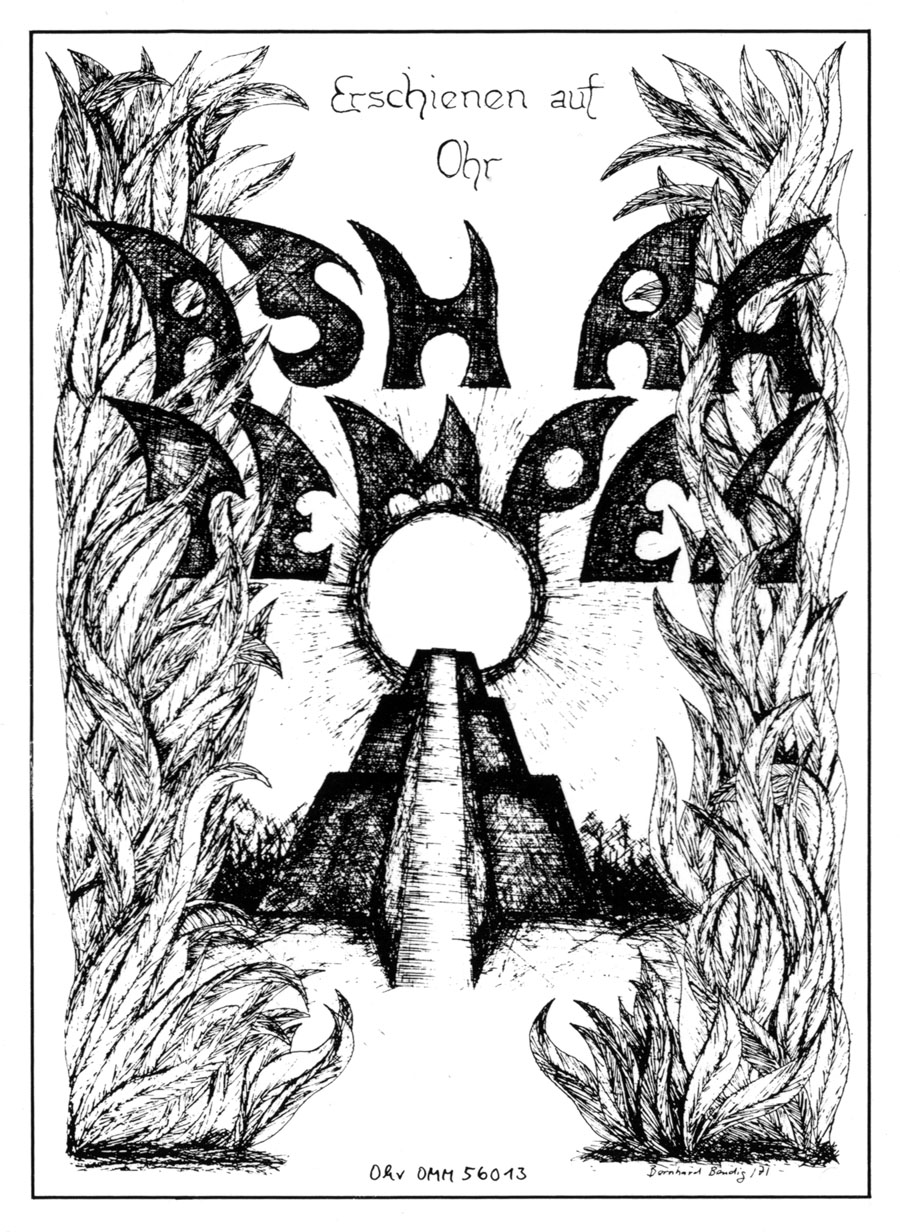
Some Manuel Göttsching-related graphic ephemera. This 1971 flyer for Ash Ra Tempel seems to be a rare item, the only place I’ve seen it being inside one of the inserts for The Private Tapes, a series of six CDs limited to 1000 copies each that Manuel Göttsching released in 1996. I was lucky to buy these when they were first released. A double-disc selection from the series followed two years later but neither this nor the rest of the set have been reissued since, despite containing a wealth of previously unreleased recordings from Göttsching’s archives, including many live concert recordings of Ash Ra Tempel. The flyer was the work of Bernhard Bendig who also drew the sleeve art for the group’s first two albums.
ARTcosmic.jpg

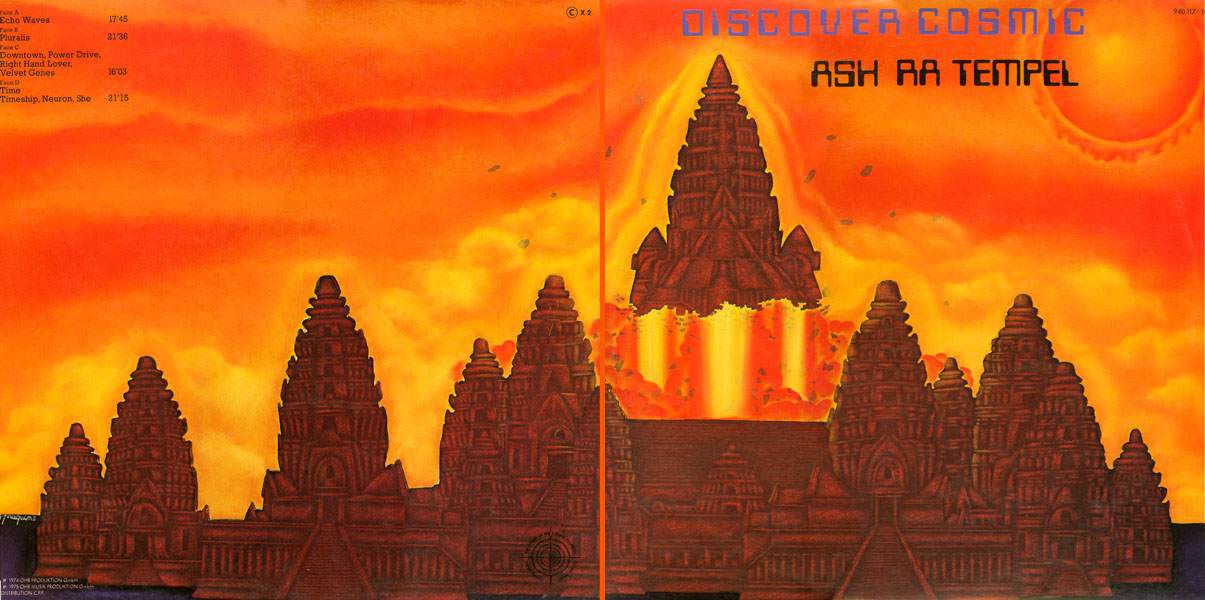
Not as scarce, but not very visible either, is this painting of another somewhat wonky temple by P. Praquin for a 1975 reissue of two Ash Ra Tempel albums: Inventions For Electric Guitar (which isn’t really ART), and Seven Up, the ramshackle studio jam which is mostly spoiled by the bellowings of Timothy Leary and friends. Discover Cosmic was a short-lived series of double-disc reissues of albums originally released on Cosmic Music, an imprint of Barclay Records that repackaged releases from Ohr and Kosmische Musik for the French market. There were three volumes of Discover Cosmic, the other two showcasing Popol Vuh and “The Klaus Schulze Sessions”, this being the first Cosmic Jokers album plus Join Inn by Ash Ra Tempel. The mysterious P. Praquin was responsible for all three cover paintings of which this is the best, wonky or not, a variation on the church-as-spaceship idea that may have been borrowed from the Roger Dean cover for Space Hymns by Ramases. This is one of those graphic contrivances that I usually expect to find repeated elsewhere, although to date the only other example I’ve seen was a Viennese museum poster. But there are more than enough churches that resemble spaceships to give people ideas, especially recent constructions like the Hallgrímskirkja in Reykjavík. If you know of any other steeples blasting off then please leave a comment.

Previously on { feuilleton }
• Manuel Göttsching, 1952–2022
• The kosmische design of Peter Geitner
• Raising the roof
Weekend links 649

chihuly.jpg

Niijima Floats: Mottled Blue Black Float with Silver Leaf (1991) by Dale Chihuly.

• “Blue whale songs fall below the range of human hearing. If you want to listen to one, to actually hear its ethereal patterns of wobbly pulses and haunting moans, you have to speed it up by at least two-fold. But according to Hildebrand and McDonald’s instruments, the tonal frequencies of the songs had been sinking to even greater depths for three straight years. ‘This is weird,’ Hildebrand thought. To figure out if it was just an anomaly or something more, Hildebrand and McDonald embarked on a quest to find some really old songs. Eventually they got their hands on some of the earliest known recordings, created by the Navy in the 1960s and stored on analog cassettes. They were floored. The frequencies had declined by 30 percent over 40 years.” Kristen French on a mysterious development in blue whale songs.

• “She didn’t see it as a game, or for divination, but as a model of the universe.” Joanna Moorhead on the Tarot designs of Leonora Carrington.

• “A collection of blogs about every topic”: ooh.directory. (Ta to whoever added this place to the list.)

• New music: Pop Ambient 2023 by Various Artists, and Aeolian Mixtape by Quinta.

• At Public Domain Review: The Tanzmasken of Lavinia Schulz and Walter Holdt.

• At Wormwoodiana: Mark Valentine on mazes and labyrinths. (Previously)

• At Spoon & Tamago: Paper-cut cityscapes by kirie artist Hiroki Saito.

• At Smithsonian Magazine: The Unrivaled Legacy of Dale Chihuly.

• Mix of the week: Neo-Medieval Mix by Moon Wiring Club.

• Old music: Back To The Woodlands by Ernest Hood.

• At Dennis Cooper’s: Jacques Rivette Day.

• Weyes Blood’s favourite music.

• (Gorgeous Curves Lovely Fragments Labyrinthed On Occasions Entwined Charms, A Few Stories At Any Longer Sworn To Gathered From A Guileless Angel And The Hilt Edges Of Old Hearts, If They Do In The Guilt Of Deep Despondency.) (2004) by Akira Rabelais | The Private Labyrinth (2008) by The Wounded Kings | Labyrinths (2018) by Jonathan Fitoussi & Clemens Hourrière

Weekend links 647

oneill.jpg

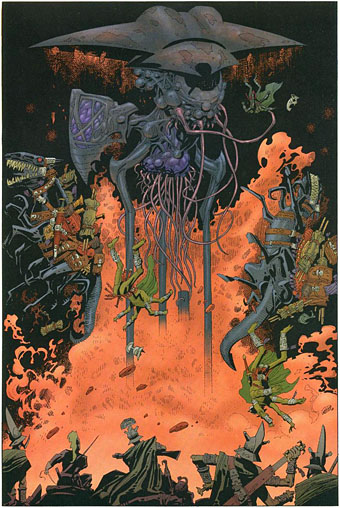
A local dispute on the planet Mars. Art by Kevin O’Neill from The League of Extraordinary Gentlemen.

• “…this image has puzzled enthusiasts of the scientific mystic’s works, both for its obscure provenance and cryptic symbolism. With its pastiche of Renaissance visual style and medieval caption — “A missionary of the Middle Ages tells that he had found the point where the sky and the Earth touch” — the illustration was once thought to have originated centuries before Flammarion published his text.” Hunter Dukes on the enduring mystery of the “Flammarion Engraving”.

• “For Spare, radio, and the waves that carried the music he loved to listen to, were more than just a metaphor for the spirit world. They were an active mode of conveyance for occult energies and vibrations – the swirling, ectoplasmic tendrils from which odd figures emerge in some of his most dense and haunting work.” Mark Pilkington explores Austin Osman Spare’s influence on the world of music.

• At Spine: Design studio Milk & Bone’s designer Alicia Raitt re-imagines all 14 of Kurt Vonnegut’s book covers to celebrate his 100th birthday.

• Farewell to Kevin O’Neill and Nik Turner, both of whom headed to the Western Lands this week.

• Mean, moody and magnificent: film noir studio portraits – in pictures.

• Mix of the week: XLR8R Podcast 773 by Roméo Poirier.

• New music: Evergreen by Patrick Shiroishi.

• Brainstorm (1972) by Hawkwind | Hurricane Fighter Plane (1985) by Inner City Unit | Brainstorm (1993) by Monster Magnet

The Legend of Charlie Fish

charliefish.jpg

I’ve had several new book covers waiting in the wings for the past few months. The most recent of these, the cover for The Legend of Charlie Fish by Josh Rountree, was made public earlier this week so I can reveal it here.

In this debut, neo-gothic Western novel, an unlikely found family flees to Galveston, Texas, and a psychic young girl bonds with an enigmatic gill-man. While two bounty hunters are determined to profit by the spectacle Charlie Fish, the Great Storm—the worst natural disaster in US history—is on its way.

The brief for this one was to create something similar to the covers I designed for Mike Shevdon’s Courts of the Fayre series. Having already been asked to imitate the look of that series for a Marianne Williamson cover I was a little reluctant to do so again, but the final version of this one feels sufficiently different from the others to stand apart. One advantage of the graphic treatment was being able to use silhouettes to hint at the nature of the “enigmatic gill-man” without being too specific. When the appearance of characters is more alluded to than described you have to take care that your artwork isn’t too literal.

The Legend of Charlie Fish will be published by Tachyon in July 2023.

Twinkle, twinkle little stars

turner1.jpg

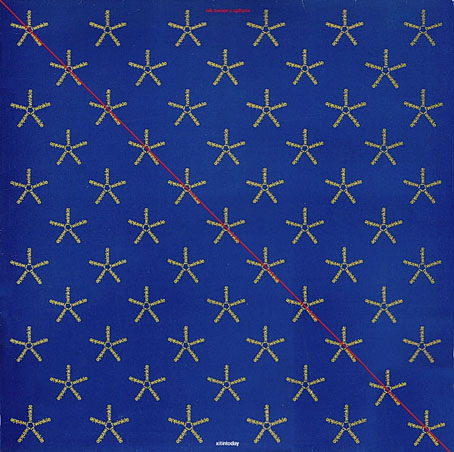
Xitintoday (1978) by Nik Turner’s Sphynx.

It’s been a long time since I’ve had a reason to write about Barney Bubbles but I’ve finally worked out why one of his more mysterious album covers looks the way it does.

When Nik Turner was unceremoniously kicked out of Hawkwind in 1976 he headed to Cairo to consider his next move. While there he recorded an hour or two of flute improvisations inside the sarcophagus in the King’s Chamber of the Great Pyramid of Cheops. The resulting tapes provided the basis for his first solo album, Xitintoday, which was released in 1978 on the Charisma label, and credited to Nik Turner’s Sphynx. Steve Hillage produced the album, helping to craft the meandering solos into a suite of songs based on passages from The Egyptian Book of the Dead. Xitintoday is one of the more unusual concept albums from a decade filled with such things. I’ve always liked it, in many ways it’s closer to Hillage’s oeuvre than Turner’s, as well as being very different to anything else in the Hawk-sphere.

turner2.jpg

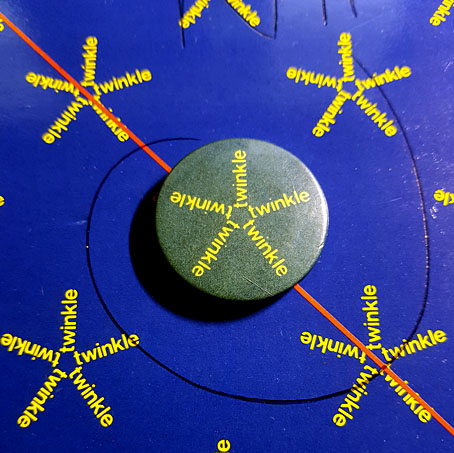
A faded promo badge. The ballpoint scrawl is Mr Turner’s autograph.

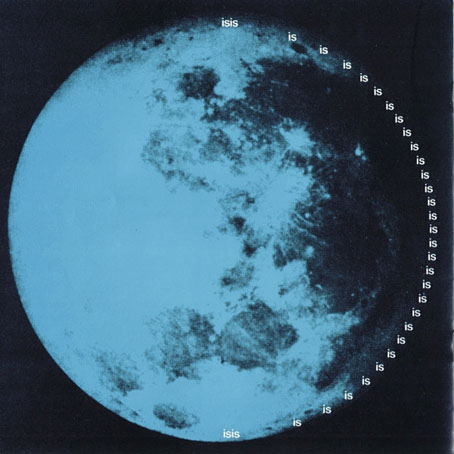
Barney Bubbles’ design for the album is also very different to anything else in the Hawk-sphere, an example of what might be called his High Modernist period, when the hippy motifs and decorative pastiches of his earlier work were replaced with bold, flat colours and playful graphic designs. Xitintoday was released with a square booklet containing lyrics, notes about the mythological theme, and a series of pictures which combine diagrams and Ancient Egyptian reliefs with calligram-like wordplay. The back cover of the album exemplifies the latter, with the word “Day” spelled out in much smaller words reading “Night”; inside the booklet there’s a page for Isis the Moon Goddess where the words “Isis is is is is…” form a curve around a photograph of the Moon. The cover design continues the cosmic theme with a field of star shapes in which each star is created by the word “Twinkle”. The star field makes sense in the context of the booklet but I’ve wondered for a long time why Barney Bubbles thought it was a suitable cover design rather than simply being another booklet page.

turner3.jpg

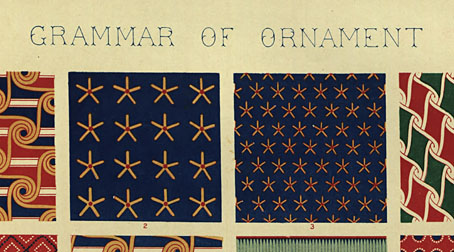
The solution arrived last week when work-related research had me looking through old design books for examples of Ancient Egyptian ornamentation. One of these, The Grammar of Ornament (1856) by Owen Jones, contains several pages of full-colour plates filled with Egyptian pattern samples.

egypt1.jpg

And on one of those pages there are these two squares which made me think immediately of the Xitintoday cover. This might seem tenuous when the cover design doesn’t feature any red dots but Barney Bubbles was an avid Egyptophile, avid enough to name his son after one of the Egyptian gods. A quick search revealed many more examples of this pattern which are closer matches for the cover design.

egypt2.jpg

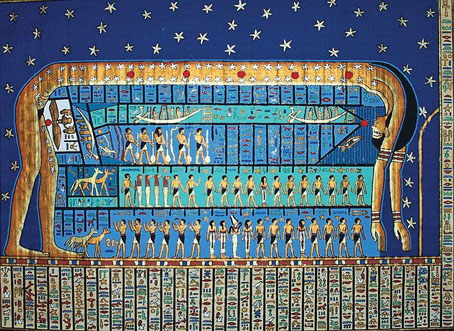
It turns out that the yellow star on a blue background was a common way of representing the night sky in Egyptian art, you’ll find the same stars in wall paintings and on the ceilings inside royal tombs.

egypt3.jpg

For years I’ve regarded the Xitintoday cover as being uncharacteristically random and abstract, surprisingly so when Bubbles designs from the same period are all so smart and well-considered. This discovery puts the Sphynx album in the same category, a design which avoids many more obvious solutions for a combination of the very old and the very new. Another feature of Barney Bubbles design is a kind of “Aha!” moment, when your appreciation of the design catches up with the thinking behind it. The appreciation this time has taken an outrageously long time to arrive but I’m pleased to have got there in the end.

Previously on { feuilleton }
• Led Zeppelin IV: Jimmy Page versus Little Bo-Peep
• The Grammar of Ornament revisited
• On the pyramid