Marabout Fantastique book covers

marabout15.jpg

A post for Halloween featuring a selection of covers from the “Fantastique” imprint of Belgian publisher Bibliothèque Marabout. The imprint, which was only labelled “Fantastique” on later editions, was launched around 1969 and ran through the 1970s before petering out in the early 1980s. The uniform cover design—almost always black with titles set in Roberta—is an attraction for paperback collectors even when the titles are very familiar ones, and when the cover art, most of which was the work of Henri Lievens (1920–2000), is sketchy and vague.

marabout02.jpg

Among the Belgian writers rubbing shoulders with their more famous foreign counterparts are Jean Ray, author of the cult novel Malpertuis, playwright Michel de Ghelderode, and Thomas Owen (the pen-name of Gérald Bertot). Not all of the artwork is credited but most of the examples here are the work of the prolific Lievens, an artist whose cobwebbed eccentricities sometimes exceed the bounds of their brief; that flapping creature on the cover of The White People by Arthur Machen has no analogue in any of Machen’s stories. Later covers in the series saw contributions from Jean Alessandrini, with collages that were the subject of an earlier post. Marabout is still publishing today, albeit in a reduced fashion, having relocated to France where the company is now a tiny part of the Hachette empire.

marabout03.jpg

marabout01.jpg

marabout07.jpg

Continue reading “Marabout Fantastique book covers”

Weekend links 644

binnie.jpg

Yoshitoshi’s Ghosts (2004) by Paul Binnie.

• “The later Grand Etteilla series, printed well into the nineteenth century, and the present-day proliferation of Tarot decks, following ephemeral fads and fashions, all trace their origins to this beautiful and beguiling creation from the enigmatic Egyptophile at 48 Rue de L’Oseille.” Kevin Dann on the Livre de Thot Tarot (ca. 1789) by Jean-Baptiste Alliette, better known as “Etteilla”.

• “Death is not a subject he has ever shied away from, in his fiction or conversation. Indeed, he has measured other writers by how seriously they address it.” Richard B. Woodward on his friend, Cormac McCarthy, and McCarthy’s new novels. There’s an exclusive extract from The Passenger here.

• “…addicts, psychopaths, lovelorn outsiders, cult leaders, lesbian and gay icons…you name it, the vampire has become it.” Christopher Frayling on the perennial popularity of the vampire, and a new book collection of vampire film posters.

Robert Wilson‘s new production of Ubu Roi by Alfred Jarry is “a sinister, multilingual pantomime bathed in red light and looped in noise…fittingly violent, absurd, ominous and infantile”.

• “What kind of music goes with a show that originates in deep space?” Aquarium Drunkard on Sonny Sharrock’s final recordings, the soundtrack music for Space Ghost Coast To Coast.

• At Wormwoodiana: Mark Valentine takes a fresh look at the health of secondhand bookshops in Britain.

• Tokyo nightlife photographed by Hosokawa Ryohei.

• New music: Approach by Lawrence English.

The Passenger (1977) by Iggy Pop | The Passenger (1987) by Siouxsie And The Banshees | The Passenger (1997) by Lunachicks

Weekend links 643

wittdorf.jpg

Freundschaftsfoto (1964) by Jürgen Wittdorf.

• “It’s truly astonishing how Laswell collided with vastly divergent musicians and genres while somehow still representing complementary musical spheres.” Yes, indeed. Mixes of the week: Bill Laswell Research Institute: Vol I & II, two 90-minute collections at Aquarium Drunkard dedicated to the career of the indefatigable musician/producer/catalyst.

• “These pieces are created using custom developed software and laser specialised machines resulting in highly detailed laser cut works on layered paper with some works comprising over a thousand individual parts.” Works in paper at Studio Ibbini.

• “The visual history of polyhedra is littered with false starts, poignant failures, and allegories unable to convey the weight of their subject matter.” Noam Andrews explores the history of rendering polyhedral objects in art.

• “When it came to homosexuality, the east was as bourgeois as the west.” Homoerotic art from the communist era by Jürgen Wittdorf (1932–2018) receives a reappraisal.

• More MR James: All of James’ ghost stories in a single volume at Standard Ebooks, the home of free, high-quality, public-domain texts.

• More mixes: A mix for The Wire by NikNak, and XLR8R Podcast 769 by The Sun Ra Arkestra.

• At Spoon & Tamago: Tracing the history of railways in Japan through art.

• At Dennis Cooper’s: Marie Menken Day.

Angeline Morrison‘s favourite albums.

Ghost Train (1961) by Virgil Holmes | Ghost Train (1961) by Electro-Tones | Ghost Train (1962) by The Partners

Abe Gurvin album covers

gurvin01.jpg

Nuggets: Original Artyfacts From The First Psychedelic Era 1965–1968 (1972).

Reading this article last week about Lenny Kaye’s Nuggets compilation I realised I’d never looked up the album’s cover artist, Abe Gurvin (1937–2012); this despite owning two copies of Kaye’s compilation, one of which, an expanded box of four CDs, includes additional Gurvin art (see below). Nuggets was released in 1972 on Elektra, a label for whom Gurvin worked regularly as a designer as well as an artist. The only other cover of his I definitely recall seeing before is for one of Mort Garson’s electronic novelty albums, Cosmic Sounds (credited to The Zodiac), although some of the classical recordings on Elektra’s Nonesuch imprint look vaguely familiar. Nonesuch were using vivid art and graphics on the covers of their classical albums from the mid-60s on, years in advance of rival labels; Gurvin, along with Bob Pepper, Gene Szafran and others, provided the cover paintings. In the 1980s many of these albums turned up cheap in British remainder shops, hence the familiarity, although I can’t say whether it was Gurvin’s art I remember seeing.

gurvin02.jpg

Disc art from the four-CD Nuggets box (1998).

The subtitle of the Nuggets album—”Original Artyfacts From The First Psychedelic Era 1965–1968″—always promised more than it delivered when only a quarter of the songs could be called psychedelic. Without Gurvin’s artwork providing a contextualising frame it’s hard to imagine the compilation sustaining its reputation as a psych classic, whatever the subtitle might suggest. Gurvin’s florid aesthetics were put to similar use elsewhere, not only on classical recordings. Some of the examples below are a result of attempts by art directors to give artists like Gene Pitney a trendy spin.

gurvin03.jpg

Cosmic Sounds (1967) by The Zodiac. “Must be played in the dark” says a note on the back cover.

Nuggets, incidentally, was beneficial in its influence even if its psychedelic quotient is lacking. Without its success there might not have been the 28 psych/garage compilations known as Pebbles, a bootleg series that retrieved from obscurity many minor bands and one-off singles; and without Pebbles we wouldn’t have had further imitations like Boulders (11 discs) and all the many series that followed, including my personal favourite, Rubble, a 20-disc collection of British psychedelic singles.

gurvin09.jpg

The Dove Descending: Choral Music (1966) by The Canby Singers.

gurvin10.jpg

Haydn: Symphony No. 21 In A Major / Symphony No. 48 In C Major (“Maria Theresia”) / Symphony No. 82 In C Major (“L’Ours”); Chamber Orchestra Of The Saar, Karl Ristenpart / Gürzenich Symphony Orchestra Of Cologne, Günter Wand (1966).

gurvin15.jpg

Sweet, Sweet Lovin’ (1968) by The Platters.

Gurvin’s contribution to this one is the hand-drawn title design.

Continue reading “Abe Gurvin album covers”

Weekend links 642

wheel.jpg

A light wheel. Via.

• “Part of the instrument’s draw is its fallibility. Famously, or perhaps infamously, every Rhodes is different: some freakishly responsive, some with keys that stick like glue, and all with uneven registers, darker corners, and sweet spots.” Hugh Morris on the delicate art of reinventing the Fender Rhodes.

Rambalac’s YouTube channel of first-person walks through Japanese locations is a vicarious pleasure, especially on a big screen. It’s not all city streets but if you like urban meandering then Tokyo walk from day to rainy night – Higashi-Ikebukuro, Mejiro, Ikebukuro is a good place to start.

• At Igloomag: Chang Terhune interviews Stephen Mallinder in a gratifyingly lengthy piece which covers Mallinder’s recent solo recordings and collaborations, his work with students on his sound-art course, and (unavoidably) the late Richard H. Kirk and Cabaret Voltaire.

What I think might be a useful approach—perhaps impractical, but bear me out—I think that if we were to reconnect magic and art as a starting point, because they’re practically the same thing anyway, make art the product of your magical experiments, the way that Austin Spare did for example, then that would give magic an enormous sense of purpose and I think it would also lend art the vision that it seems to be lacking at present. A lot of modern art seems rather empty and hollow conceptualism that lacks any real vision or substance or power. A linking of magic and art would help both of those fields. Then, once you’ve done that, maybe linking art and science. There’s plenty of work already done in that regard.

Alan Moore talking to Miles Ellingham about the usual concerns plus his new story collection, Illuminations

Wheels of Light: Designs for British Light Shows 1970–1990 is a book by Kevin Foakes (aka DJ Food) which will be published later this month by Four Corners Books. The author talks about his book here.

• “The Sandjak of Novi Pazar always sounded as if it were a title, like the Sultan of Zanzibar or the Dame of Sark…” Mark Valentine on discovering outdated maps in forgotten books.

• “My brief was to find tracks that had been left by the wayside or disregarded.” Lenny Kaye on 50 years of his influential garage-rock compilation Nuggets.

• Mixes of the week: XLR8R Podcast 768 by Lawrence English, and King Scratch (Musical Masterpieces from the Upsetter Ark-ive) by Aquarium Drunkard.

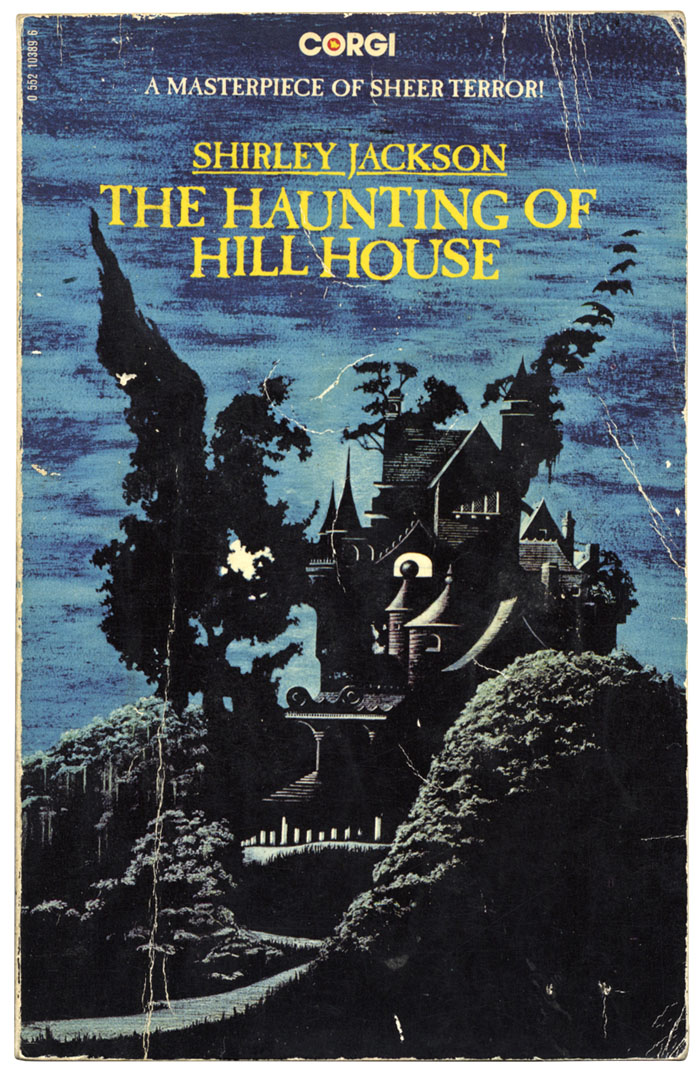
• At Dennis Cooper’s: Spotlight on Shirley Jackson The Haunting of Hill House (1959).

• Steven Heller’s font of the month is Slag.

• This Wheel’s On Fire (1968) by Julie Driscoll, Brian Auger & The Trinity | Cosmic Wheels (1973) by Donovan | Wheels On Fire (1985) by Haruomi Hosono