William Morris and His Work

morris01.jpg

The world isn’t exactly starved of books about William Morris but William Morris and His Work (1899) is the first I’ve seen that gives an opportunity to study the creation of some of the Morris company’s florid textile designs. Those that follow obvious repeating patterns (like the bird designs below) don’t appear technically challenging but I’ve wondered a few times about the difficulties of creating some of the very elaborate interlacings of foliage that became the Morris hallmark. Lewis Foreman Day wrote a number of books on the history of ornament and design so he’s an ideal guide. Browse his book here or download it here.

morris02.jpg

morris03.jpg

morris04.jpg

Continue reading “William Morris and His Work”

Weekend links 222

wicker.jpg

A self-portrait by Nadia Wicker from her Projectie series.

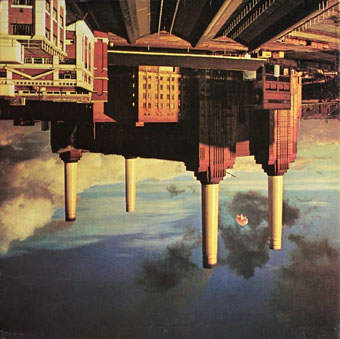
• “And boy, did that Rain Parade sleeve look cool with its picture of the insouciant band sitting in front of large hot-house (or glass palace), the sky behind them tinted a sickly shade of apocalypse pink…” Joe Banks on the Rain Parade’s finest moment, Explosions In The Glass Palace.

• “…there are pleasures to be had from books beyond being lightly entertained. There is the pleasure of being challenged; the pleasure of feeling one’s range and capacities expanding…” Rebecca Mead on the pleasure of reading to impress yourself.

• “If Gengoroh Tagame performed the acts he drew in his comics he’d probably be dead or in jail,” says Zac Bayly, interviewing Tagame for BUTT.

Crime does not fascinate James Joyce as it fascinates the rest of us—the suggestion of crime dismays him. He tells me that one of his handicaps in writing Work in Progress is that he has no interest in crime of any kind, and he feels that this book which deals with the night-life of humanity should have reference to that which is associated with the night-life of cities—crime. But he cannot get criminal action into the work. With his dislike of violence goes another dislike—the dislike of any sentimental relation. Violence in the physical life, sentimentality in the emotional life, are to him equally distressing. The sentimental part of Swift’s life repels him as much as the violence of some of his writing.

Padraic Colum attended Joyce’s 47th birthday party.

• I’m currently reading The Wanderer, “a weird document” by Timothy J. Jarvis, which is officially published this week.

The Changes, another remarkable children’s TV series from the 1970s, is out on DVD next week.

Sir Richard Bishop has made all 14 of his solo albums available as free downloads.

• “How long do CDs last? It depends, but definitely not forever,” says Laura Sydell.

• “Readers absorb less on e-readers than on paper, study finds

• Book designer Craig Mod wants to talk about margins.

• Mix of the week: a mix for The Quietus by Helm.

Ozu’s passageways

• The Rain Parade: No Easy Way Down (BBC TV, 1984) | No Easy Way Down (studio, 1984) | No Easy Way Down (Tokyo, 1984)

Parajanov posters

parajanov1.jpg

Shadows of Our Forgotten Ancestors (1964).

A selection of the better ones. Last week I was rewatching Sergei Parajanov’s The Colour of Pomegranates and was curious to see how it had been advertised. Shadows of Our Forgotten Ancestors is also known as Wild Horses of Fire (or Horses of Fire), after the novelette by Mykhailo Kotsiubynsky which provided the story. The Russian poster above shows the fateful axe which kills Ivan’s father at the beginning of the film, while the French and Japanese posters below play on the horses of fire in their titles.

parajanov2.jpg

parajanov3.jpg

Continue reading “Parajanov posters”

In Homage to Priapus

gay02.jpg

I’ve written a few things in the past about the covers of the gay pulps but decent source material—never mind the books themselves—has often been difficult to find. So it’s been good to stumble across the huge trove of covers at LibraryThing where diligent collectors have tagged and archived some very scarce publications. These are the books that flourished briefly in the US between the first flowering of gay liberation in the mid-60s to the advent of easily available hardcore porn in the mid-70s which must have made the text-only pleasures of a few years earlier seem very quaint and rather superfluous. Looking back today many of the covers of these books have a provocative silliness which is wholly absent from current titles for a gay audience. They may be crude and camp (sometimes simultaneously), and the design is often rudimentary, but they also give an insight into how gay men perceived themselves when they were starting to be more public about their desires.

Despite its cover, In Homage to Priapus looks like a fairly serious sampler of a kind you still see today. By contrast, many of the authors of the titles below were pseudonymous, some ridiculously so: “Billy Farout”. This time I’ve avoided the pulpy art styles featured at sites like Gay on the Range and Strange Sisters in favour of photo covers, odd titles or the more provocative illustrations, of which there are many examples. By coincidence, the latest post at Lambda Literary concerns the publishing of lost gay classics. One of the titles mentioned there, The Leather Boys by Gillian Freeman, can be found in the LibraryThing collection.

gay01.jpg

Don’t mention Jerry Lewis, please. I’ll think instead of this song by Heaven 17.

gay04.jpg

Whoever chose that typeface could also do with a thrashing.

Continue reading “In Homage to Priapus”

The Use and Abuse of Books

savoy.jpg

Savoy • Savoy • Savoy: The first wave of book covers pinned to the Beardsley wallpaper of the Deansgate office.

I often feel I’m in a minority in never having been desperate to see my work in a gallery. We are, after all, living in the Age of Mechanical Reproduction (thanks, Walter), and the idea of having to visit a physical location in order to see a work of art can seem like a rather antiquated affair. (Plenty of arguments counter this, of course, but I don’t create anything that needs to be experienced in situ, and I’m also not enmeshed in the art market.) So it’s been surprising this month to realise that examples of my work are currently on display in Monterey, California (the Tentacles exhibition), London (Comics Unmasked: Art and Anarchy in the UK at the British Library which ends today) and in Manchester (The Exhibition Centre for the Use and Abuse of Books at the International Anthony Burgess Foundation). If all goes according to plan, some of my steampunk book covers will also be exhibited in Beijing next month; more about that later.

dbmb.jpg

Britton & Butterworth by Kris Guidio (1986).

The Use and Abuse of Books is a necessarily brief overview of the 40-year history of Savoy Books, a notable moment in the life of the company since this is the first time any Manchester institution has acknowledged the existence of a local publisher with such a long, varied and often controversial history. In part this is a result of the cultural histories of Manchester concentrating almost exclusively on the music scene. Many of the books and features written about Manchester arts have been produced by DJs or ex-musicians who appear tone-deaf to literary culture despite the existence of Carcanet Press (established 1969), Savoy Books, and other more recent publishers who are happy to operate outside London. (The venerable Jon Savage gets a pass here.) Carping aside, The Use and Abuse of Books describes itself thus:

Featuring text, images and rare promotional content from Savoy’s infamous 1989 publication Lord Horror, the exhibition tackles the question of whether the depiction and description of horrific acts is justified in satire. In 1992 Lord Horror was declared by Judge Gerrard Humphries as ‘a glorification of racism and violence’ whereas writer Michael Moorcock believed the book to belong to ‘a tradition of lampoon, of exaggeration. Its purpose is to show up social evils, and the evils within ourselves.’ Displaying artwork from Sinister Legends and Meng and Ecker alongside other panels from rare comics and graphic novels (including Reverbstorm), The Use and Abuse of Books also examines the relationship between text and imagery within Savoy’s publications, revealing how artwork from John Coulthart, Kris Guidio and James Cawthorn supplements and enhances the storytelling through visual references to architecture, cultural figures or specific works of art. The exhibition will be open 10am–4pm weekdays and in the evenings during events from Friday 15th August until Friday 5th September. (more)

Some of my pages from Lord Horror: Reverbstorm have been printed large-size for the walls, and there’s also a life-size cardboard figure of my Beardsley-style Lord Horror. Savoy publications past and present are on display, including some of my book designs. It’s fitting that this should be taking place under the aegis of the Anthony Burgess Foundation; Burgess was a great Joycean and a champion of two Savoy favourites: William Burroughs and JG Ballard. I can’t imagine him getting too enthusiastic about many of Savoy’s publications but I’d hope he might have appreciated the spirit of Mancunian bloody-mindedness in which they were produced.