
Firebirds

bilibin.jpg

Ivan Tsarevich Catching the Firebird’s Feather (1899) by Ivan Bilibin.

The firebirds are those that you find on the covers of recordings of Stravinsky’s Firebird ballet score, or on its popular distillation, The Firebird Suite. The latter has long been one of my favourite pieces of classical music, in fact it was one of the first I owned, via a cheap vinyl pairing with The Rite Of Spring that was mainly of interest for being conducted by Stravinsky himself. The cover photo showed a ballerina as the Firebird in a ballet performance, a common choice for the covers of Firebird recordings.
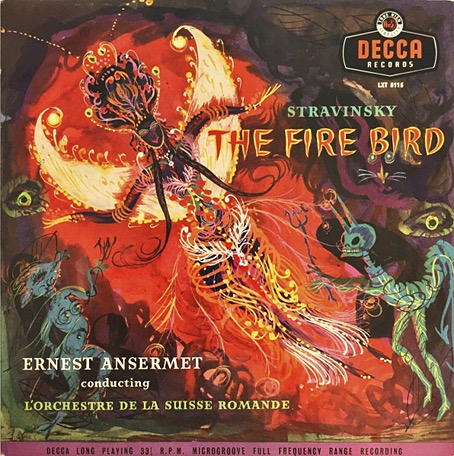
firebird-1955.jpg

No artist/designer credited, 1955.

Much better was the cover of Tomita’s Firebird album (see below) which I bought around the same time, an uncredited tapestry design which is also a better album cover than the painting used on the earlier Japanese release. Depicting the Firebird itself is the other obvious choice when designing Stravinsky albums, and the dazzling, magical bird has helped this particular opus fare better in the world of classical album design than many other recordings.
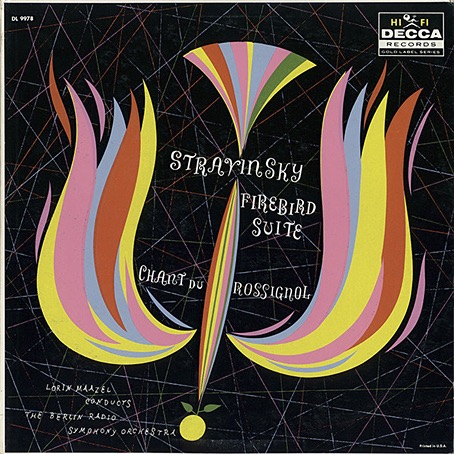
firebird-1958.jpg

No artist/designer credited, 1958.

It’s easy to cast aspersions at the designers or art directors of classical records when you see an uninspired cover design, but the format presents a number of difficulties. There’s no such thing as a fixed design for a classical album because classical albums have no fixed form. With the exception of albums devoted to a single long composition most classical albums are compilations, pairing longer works with shorter ones, often by two or more composers. This confusion of identity creates problems for the designer, as does the huge quantity of classical releases. Then there’s the problems posed by the music itself which is so often abstract; you can’t “illustrate” The Goldberg Variations. The default choice is to use a painting or a drawing or a photograph of the composer as a cover image, or a photo of the conductor or performer. The easiest assigments, as these Firebird covers demonstrate, are albums based around a composition with a well-defined theme that can be depicted visually. Nobody has ever had a problem designing a cover for recordings of Debussy’s La Mer, for example, the only difficulty is deciding what picture of the sea you want to use.
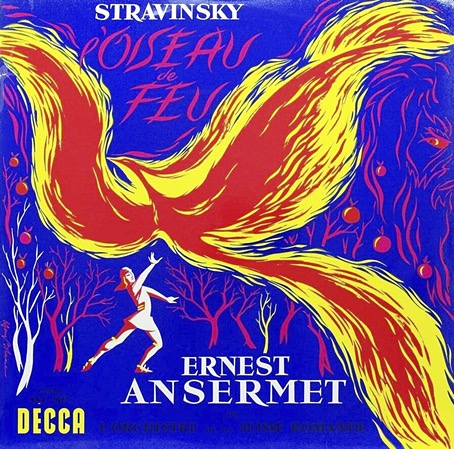
firebird-1960-1.jpg

No artist/designer credited, 1960.

I’ve never had the impression that classical devotees care very much about these issues, it’s the music and the performance they’re interested in. Record labels (or their marketing departments) do seem to pay attention to visual matters now and then, and you’ll find occasional attempts to create a new line of themed covers. (The Orphic Egg series was one of the more bizarre examples from the 1970s.) Deutsche Grammophon have a history of decent cover design but even they resort to using photos of the artist or conductor far too often. I’ve never been asked to design a classical release, and I’m not sure I’d relish the task, but the problems raised by the form fascinate me. This is a subject I’ll no doubt keep returning to.
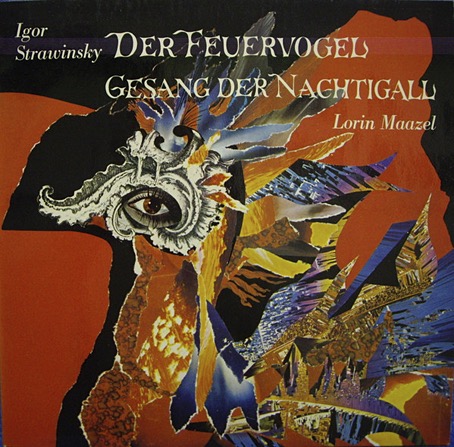
firebird-nd2.jpg

Irma Seidat, no date.

Continue reading “Firebirds”

Weekend links 791

transparent.jpg

Cover design by Marian Bantjes for a 2009 series of Nabokov reprints.

• “It is quite unlike the bland featurelessnesses of the current fiction in which dull creative writing students chat to dull creative writing students (there is today a generalised fear of imaginative invention and giving offence).” Jonathan Meades on late style and Vladimir Nabokov’s Transparent Things.

• Cathi Unsworth remembers the late Roger K. Burton, founder of London’s unique exhibition and venue space, The Horse Hospital.

• New music: Interior of an Edifice Under the Sea by Pan American & Kramer; Glass Colored Lilly by Yuki Fujiwara.

• Mixes of the week: DreamScenes – August 2025 at Ambientblog, and Bleep Mix 307 by On-U Sound.

• At the BFI: Michael Brooke chooses 10 great Eastern European science-fiction films.

• At The Wire: David Toop and Ania Psenitsnikova on moving beyond music and dance.

• At Colossal: Weird Buildings celebrates architects who think outside the box.

Verbal #12 includes new fiction by Michael Moorcock, among others.

• At Unquiet Things: Exquisite incantations in clay by Forest Rogers.

• Steven Heller’s font of the month is Experimo.

Dale Cornish’s favourite albums.

Tenth Letter of the Alphabet

Ecstasy Symphony/Transparent Radiation (Flashback) (1987) by Spacemen 3 | Almost Transparent Blue (1996) by David Toop | Transparent (1997) by Reflection

Weekend links 790

firebird.jpg

Set design by Vladimir Pleshakov for the Ballets Russes’ The Firebird (1923).

• The latest book from Swan River Press is A Mystery of Remnant and Other Absences, a collection of fictions by the late B. Catling. Copies include postcards with accompanying texts by Alan Moore and Catling’s friend and regular collaborator, Iain Sinclair.

• New music: The Loneliness Of The Hollow Earth Explorer Vol. 1 by Arrowounds; The Eraserhead: Music Inspired By The Film Of David Lynch by Various Artists.

• Among the new titles at Standard Ebooks, the home of free, high-quality, public-domain texts: The Purple Cloud by MP Shiel.

• A catalogue of lots at another After Dark: Gay Art and Culture online auction. Homoerotic art, photos, historic porn. etc.

• At Colossal: Laser-cut steel forms radiate ornate patterns in Anila Quayyum Agha’s immersive installations.

• Photographs by Man Ray and Max Dupain showing at the Heide Museum of Modern Art, Melbourne.

• Mix of the week: Isolatedmix 134 by Artefakt.

• At Dennis Cooper’s it’s Anna Karina’s Day.

Three Imposters

Purple Haze (1967) by The Jimi Hendrix Experience | Pilots Of Purple Twilight (1981) by Tangerine Dream | Purple Rain (live, 1985) by Prince & The Revolution

Sanquirico’s theatrical settings

sanquirico01.jpg

Work-related research over the past couple of weeks has had me looking for pictures of theatres in the 19th century, especially backstage views. The latter proved harder to find than I expected although I did turn up a few useful reference images after scouring the picture libraries. Nuova raccolta di scene teatrali (1828) by Alessandro Sanquirico is an Italian book that surfaced during the searches, not something I wanted but it’s another collection of imaginary architectural views which I always like to see. Sanquirico was set designer for La Scala in Milan so most of these designs are for opera sets, although several are labelled “ballo“, a type of theatrical dance which evidently required dramatic settings. As to the designs, there’s more variety than you find among earlier generations of theatrical designers like the Bibienas, a family of artists who specialised in very detailed Baroque interiors. The Romantic era demanded tempestuous drama and greater spectacle, hence Sanquirico’s views of castles, caves, prisons, conflagrations and fanciful depictions of the ancient world. The selection that follows is only a small sample; the book has 242 plates in all.

sanquirico02.jpg

sanquirico03.jpg

sanquirico04.jpg

sanquirico05.jpg

Continue reading “Sanquirico’s theatrical settings”

Parade de Satie

yamamura1.jpg

The first chimes of a period which began in 1912 and will only end with my death, were rung for me by Diaghilev, one night in the Place de la Concorde. We were going home, having had supper after the show. Nijinsky was sulking as usual. He was walking ahead of us. Diaghilev was scoffing at my absurdities. When I questioned him about his moderation (I was used to praise), he stopped, adjusted his eyeglass and said: ‘Astonish me.’ The idea of surprise, so enchanting in Apollinaire, had never occurred to me.

In 1917, the evening of the first performance of Parade, I did astonish him.

This very brave man listened, white as a sheet, to the fury of the house. He was frightened. He had reason to be. Picasso, Satie and I were unable to get back to the wings. The crowd recognized and threatened us. Without Apollinaire, his uniform and the bandage round his head, women armed with pins would have put out our eyes.

Jean Cocteau (again), writing in The Difficulty of Being about the opening night of Parade, the “ballet réaliste” he created for Diaghilev’s Ballets Russes. Erik Satie wrote the music, Léonide Massine choreographed the dance, and Pablo Picasso designed the costumes and decor, with assistance from Giacomo Balla, one of the Italian Futurists. The reception for Parade wasn’t as thoroughly hostile as that received by Le Sacre du Printemps a few years earlier but there was bait enough for the reactionaries, with ragtime quotes in the dance and the music, and an everyday setting in which a group of street performers attempt to summon a crowd to see their show. Other details were overtly avant-garde: some of Picasso’s costumes were more like wearable cardboard sculptures, while Cocteau further antagonised the audience (and the composer) by adding the sounds of a typewriter, siren, pistol and steamship whistle to the music. The most significant response came from Apollinaire when he described the ballet in the programme notes as “une sorte de surréalisme“, giving the world a new word which we still use today.

yamamura2.jpg

yamamura3.jpg

Parade de Satie by Koji Yamamura is an animated presentation of Satie’s music which sees the characters from the ballet—a Chinese magician, a small American girl, the acrobats, a pantomime horse—jumping and dancing around the screen while Satie, Picasso and Cocteau observe the proceedings. It’s a lively and witty film, probably more lively than the ballet itself when the hand-drawn performers are less encumbered by gravity or their unwieldy outfits. Yamamura has directed a single animated feature, Dozens of Norths, and many more shorts like Parade de Satie, including films based on a story by Franz Kafka (A Country Doctor) and the life of Eadweard Muybridge (Muybridge’s Strings). Being a pioneer of motion photography and inventor of the Zoopraxiscope, Muybridge is an attractive subject for animators. The naked figures from his studies of human and animal motion turn up in Terry Gilliam’s Monty Python animations, while Gérald Frydman directed a short biographical film about Muybridge, Le Cheval de Fer, in 1984.

yamamura4.jpg

yamamura5.jpg

Previously on { feuilleton }
Jean Cocteau: Autoportrait d’un inconnu
Orphée posters
Cocteau and Lovecraft
Cocteau drawings
Querelle de Brest
Halsman and Cocteau
La Belle et la Bête posters
The writhing on the wall
Le livre blanc by Jean Cocteau
Cocteau’s sword
Cristalophonics: searching for the Cocteau sound
Cocteau at the Louvre des Antiquaires
La Villa Santo Sospir by Jean Cocteau