Three short films by Pascal Baes

baes1.jpg

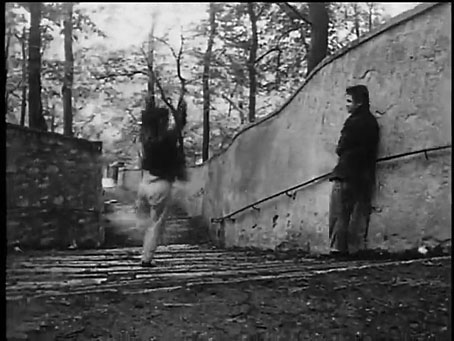
Topic I (1990).

Black-and-white film, a handful of dancers, and the streets of old Prague (plus a Parisian courtyard). I linked to Topic II in a weekend post some time ago but since all three films in the series are on Vimeo I thought they deserved a post of their own.

baes2.jpg

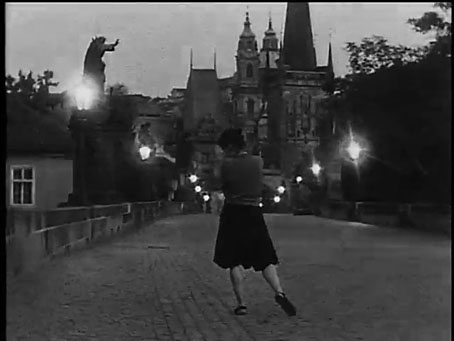
Topic II (1990).

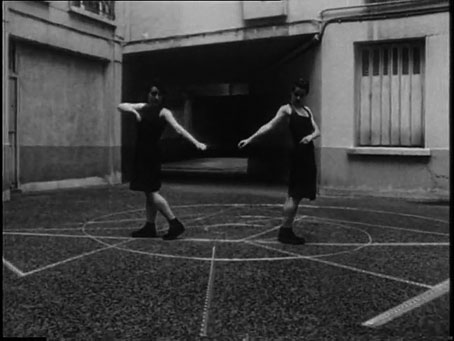
Pascal Baes is a French film-maker who may have created something unique here by combining the dance film with pixilation, the animation technique in which people move frame-by-frame like live action puppets. The technique is an old one that was generally used for comic effect, at least until the arrival of the music video; Baes’ innovation is to give us dance pieces that can exist only in the camera. One of the attractions for this viewer is the Prague settings, especially those in the best film of the three, Topic II, in which a pair of dancers glide up the labyrinthine streets leading to the castle that dominates the city.

baes3.jpg

46bis (1988).

Previously on { feuilleton }
• Jan Švankmajer: The Animator of Prague
• Stone Glory, a film by Jirí Lehovec
• The Face of Prague
• Josef Sudek
• The panoramic towers of Prague
• Prague panoramas
• Steven Soderbergh’s Kafka
• Karel Plicka’s views of Prague

Art on film: Providence

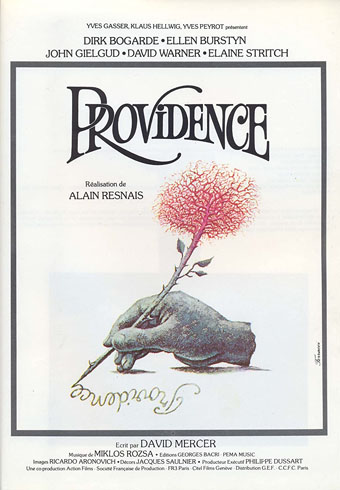
providence01.jpg

Art by René Ferracci.

Continuing an occasional series about artworks in feature films. Most people know HR Giger’s work via his production designs for the Alien films; a much smaller number of people also know about his designs for Jodorowsky’s unmade film of Dune, but hardly anyone knows that his art first appeared in a major film two years before Alien was released. This isn’t too surprising when the film in question, Providence, directed by Alain Resnais, has been increasingly difficult to see since 1977; the film isn’t mentioned in any of Giger’s books either, a curious omission for an artist who spent his career logging every public appearance of his work.

Providence began life as a collaboration between Resnais and British playwright David Mercer, with the resulting script leading to a Swiss/French co-production that was filmed in English. The film has an exceptional cast—Dirk Bogarde, Ellen Burstyn, John Gielgud, Elaine Stritch, David Warner—marvellous photography by Ricardo Aronovitch, and a sumptuous score by Miklós Rózsa. If you’re the kind of person who regards awards as designators of quality then it’s worth noting that Providence won 7 Cesar Awards in 1978, including the one for best picture. Yet despite all this, and despite being regularly described as a peak of its director’s career there’s only been a single DVD release which is now deleted. I’d been intending to write about the film for some time but first I had to acquire a decent copy to watch again; this wasn’t an easy task but I managed to “source” a version that was better than the VHS tape I used to own.

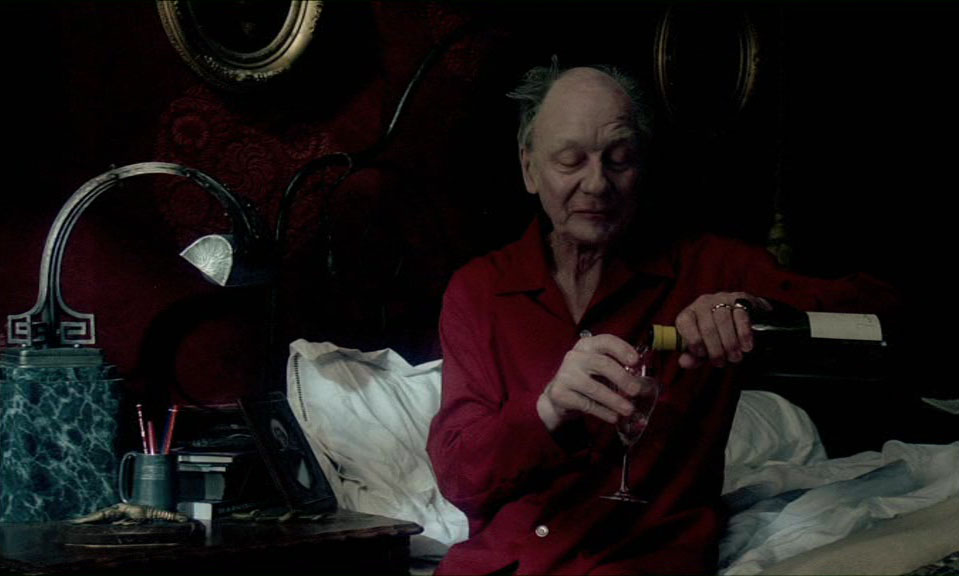
providence13.jpg

For most of its running time Providence is a film about artistic invention, more specifically about the process of writing. Clive Langham (John Gielgud) is an ailing author spending a sleepless night alone in his huge house, “Providence”, wracked by unspecified bowel problems, painful memories and fears of impending death. To distract himself from his troubles he drinks large quantities of wine while mentally sketching a scenario for a novel in which the people closest to him are the main characters. In this story-within-the-story Langham’s son, Claude (Dirk Bogarde), is a priggish barrister whose primary conflicts are with his absent father, his bored wife, Sonia (Ellen Burstyn), and a listless stranger, Kevin (David Warner), who Sonia has befriended and seems attracted to even though Kevin won’t reciprocate. While Claude cajoles and insults the pair he also conducts an affair of his own with Helen (Elaine Stritch), an older woman who resembles his dead mother. The scenario is elevated from being another mundane saga about middle-class infidelities by its persistently dream-like setting, and by the interventions and confusions of its cantankerous author. If you only know John Gielgud from his later cameos playing upper-class gentlemen then he’s a revelation here, boozing and cursing like the proprietor of Black Books. Between spasms of illness and self-pity Langham shuffles his playthings around like chess pieces, revising scenes while trying to keep minor characters from interfering; “Providence” isn’t only the house where Langham lives but also the watchful eye of its God-like author. Meanwhile, his characters bicker and chastise each other, paying little attention to the disturbing events taking place in the streets outside: terrorist bombings, outbreaks of lycanthropy, and elderly citizens being rounded up for extermination.

Continue reading “Art on film: Providence”

Weekend links 618

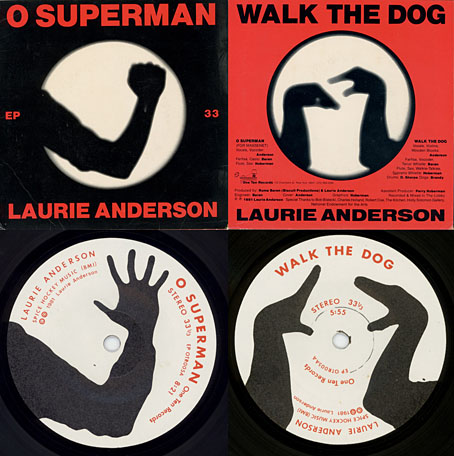
anderson.jpg

O Superman (1981), a seven-inch single on One Ten Records. Design by Laurie Anderson and Perry Hoberman.

• “…I was painting a picture of a garden at night. It had a lot of black and this green kind of coming out of the black, and I sat back, probably to take a smoke, looking at this painting, and I suddenly heard a wind coming from the painting, and the green started to move. And I thought, ‘Oh, a moving painting.’ And that experience led to cinema.” David Lynch talking to Josh Hitchens about living in Philadelphia.

• “This is the time and this is the record of the time.” Big Science, the album that propelled Laurie Anderson from performance artist to pop star, is 40 years old this month. Mat Colegate recalls his confused impression that the album was the work of a West Country folk singer, while Studs Terkel talked to Laurie Anderson about the album shortly after its release.

• At Public Domain Review: Kensy Cooperrider explores a millennium of “hand mnemonics”, “the variety of techniques practised by Buddhist monks, Latin linguists, and Renaissance musicians for remembering what might otherwise elude the mind.”

• Ghosts in the Machine is an exhibition being hosted by Bower Ashton Library, Bristol, for World Book Night, 2022. 93 participants contributed ghost-related images for an accompanying artist’s book [PDF].

• “Sixty years after Seattle’s Century 21 Exposition, world’s fairs have largely fallen out of fashion in the US.” Grant Wong charts the rise and fall of world’s fairs.

• A trailer for Ennio: The Maestro, a feature-length documentary about Ennio Morricone by Giuseppe Tornatore.

• “The film Putin doesn’t want the world to see: Firebird, a gay love story about fighter pilots.”

• At Dennis Cooper’s: Andrei Tarkovsky Day.

• New music: Intersections by Specimens.

• Schöne Hände (1977) by Cluster & Eno | Hands 2 Take (1981) by The Flying Lizards | Red Hand (1996) by Paul Schütze

Bruges-la-Morte, 1978

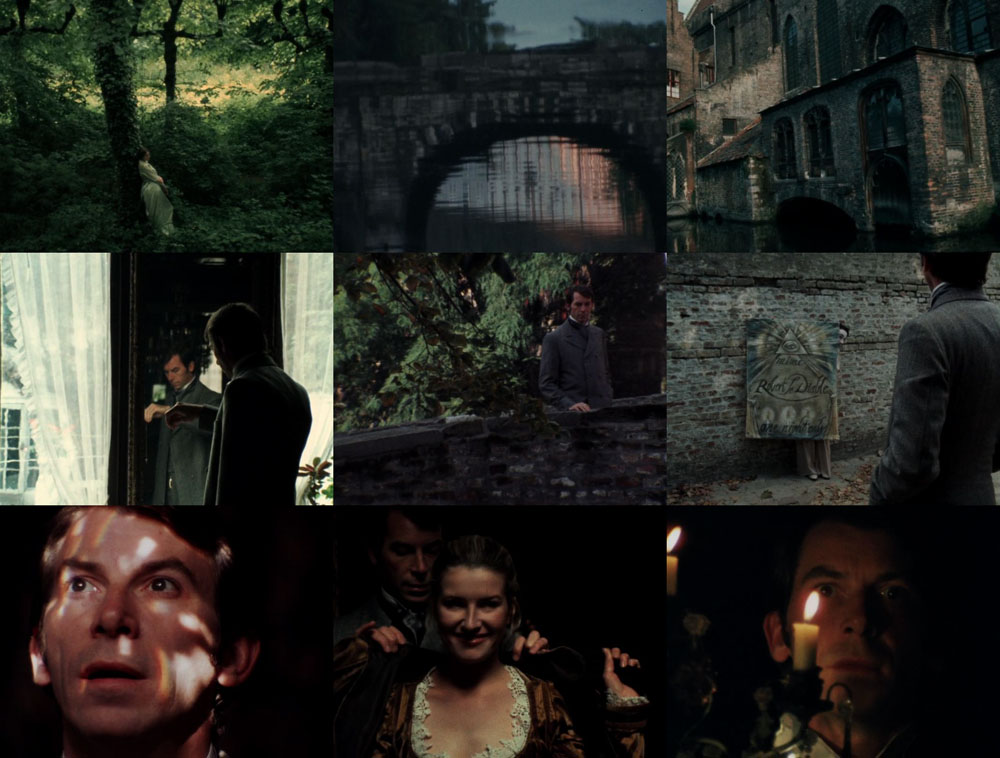
blm1.jpg

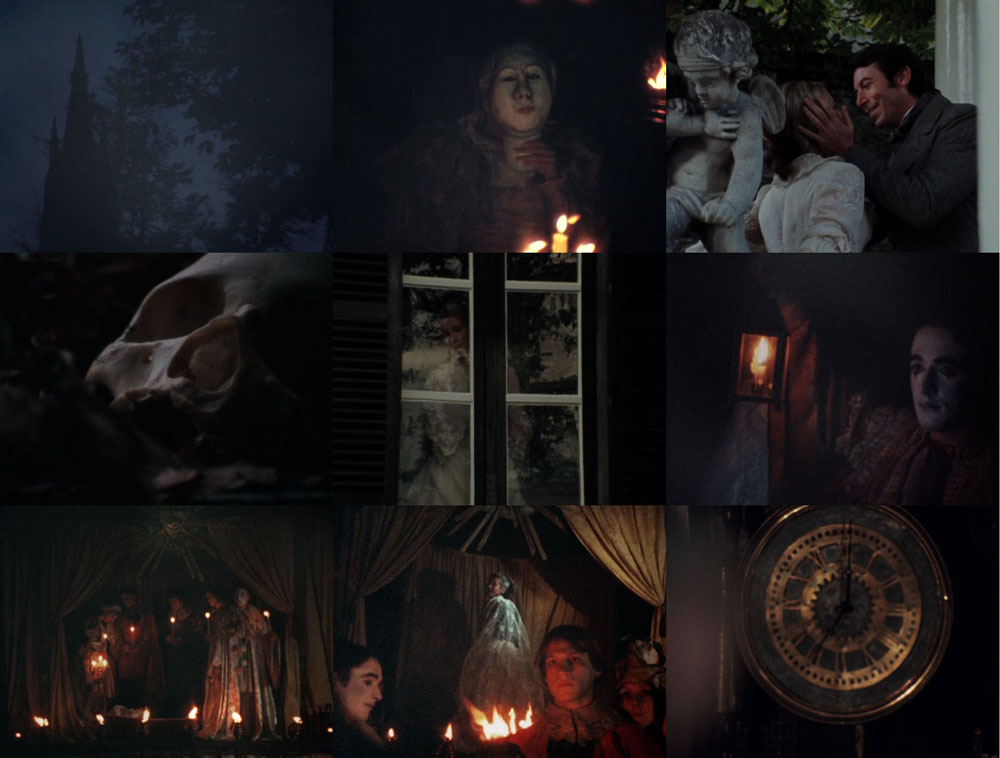
What we have here is a very creditable 67-minute film adaptation of the Symbolist novel by Georges Rodenbach. Ronald Chase directed, co-wrote the screenplay with Pier Luigi Farri, and also photographed the production with a small company of English actors in the city of Bruges. The film has recently been given a high-definition restoration and made available on the director’s Vimeo page. Chase describes his adaptation as a low-budget affair, the footage being originally intended for screening during performances of Die Tode Stadt by Eric Korngold, but it doesn’t come across as cheap or amateurish thanks to a professional cast and authentic locations. Rodenbach’s novel is distinguished by its early use of photographic illustrations, most of which are views of the canals of Bruges. Here we get to see the church steeples and crow-step gables from the viewpoint of a camera drifting along the same swan-filled waterways.

It’s a long time since I read Rodenbach’s novel so I can’t judge this version in any detail although my memories are of a dreamier narrative than the one the film delivers. Chase credits the story as being “suggested” by the novel but the broad outline follows Rodenbach, with a grieving widower (Richard Easton, whose character is unnamed in the film) meeting a dancer (Kristin Milward) who seems to be the double of his recently deceased wife. The dancer works with a troupe of performers who stage a nocturnal masque for the tormented man, an event which fails to alleviate his confusion or his anguish.

blm2.jpg

Chase’s film resembles one of the literary adaptations the BBC used to make throughout 1970s and 80s, modest and serious, and certainly of a quality that it could have been broadcast as a part of the Omnibus arts strand or in a late slot on BBC 2. Among the performers are a Pierrot character played by Anthony Daniels, an actor most people will know for his role as a gold robot in a space opera, and Nickolas Grace, who appeared as Oscar Wilde a decade later in Ken Russell’s Salomé’s Last Dance. There’s a touch of the diabolical Russell (and James Ensor) in the later masque scenes when the performers don papier-mâché masks, and a nun gets chased around a church. The mask-making is credited–very surprisingly–to Winston Tong, an artist and musician best known for his association with Tuxedomoon. I was hoping we might see more of the gloomy canals and equally gloomy architecture but the buildings and bridges that we do see look just as they would have done in Rodenbach’s day. If you want more there’s always the paintings and drawings of Fernand Khopff and Lucien Lévy-Dhurmer, or the photographs in the novel itself.

Previously on { feuilleton }
• Bruges in photochrom
• Bruges panoramas
• Bruges-la-Morte

Weekend links 555

demuth.jpg

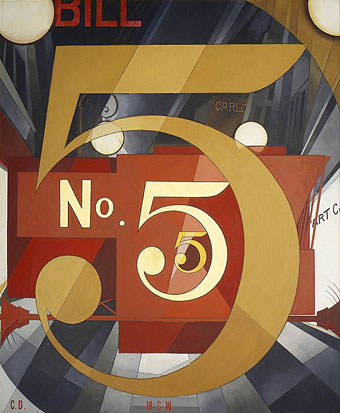
I Saw the Figure 5 in Gold (1928) by Charles Demuth.

• “Reading the new edition in 2021, I’m struck by his dismissal of CD-ROMs, of VR, of interactivity; how he anticipates contemporary debates about algorithmic bias…his prescient exhaustion.” Sukhdev Sandhu reviews Brian Eno’s diary for 1995, A Year with Swollen Appendices. Meanwhile, Eno himself says “Artists like me are being censored in Germany—because we support Palestinian rights.”

• “Kink is often pathologized in popular culture: it’s shamed, used as a punchline, and, on the whole, relegated to the margins of desire.” Greg Mania interviews R.O. Kwon and Garth Greenwell about Kink a collection of new stories about unorthodox desires.

• “This album is the king of hauntology. From where I’m sitting, I’m going back to the past, listening to an album imagining the future, imagining the past.” Tom Herdman on the fabulous Time (1981), a science-fiction concept album by the Electric Light Orchestra.

Cavafy, the ultimate Alexandrian, gave us an Alexandria that was already not quite there in his own lifetime. It kept threatening to disappear before his eyes. The apartment where he had made love as a young man had become a business office when he went to revisit it years later; and the days of 1896, of 1901, 1903, 1908, 1909, once filled with so much eros and forbidden love, were already gone and had become distant, elegiac moments that he remembered in poetry alone. The barbarians, like time itself, were at the gates, and everything would be swept in their wake. The barbarians always win, and time is hardly less ruthless. The barbarians may come now or in a century or two, or in a thousand years, as indeed they had come more than once centuries earlier, but come they will, and many more times after that as well, while here was Cavafy, landlocked in this city that is both the transitional home he wishes to flee and the permanent demon that can’t be driven out. He and the city are one and the same, and soon neither will exist. Cavafy’s Alexandria appears in antiquity, in late antiquity, and in modern times. Then it disappears. Cavafy’s city is permanently locked away in a past that refuses to go away.

André Aciman on the poetry of Cavafy and the Alexandrias of memory

• DJ Food on the package design for The Superceded Sounds of…The New Obsolescents, which uses a similar foil card to the “Héliophore” stock used by Philips in their cult series of electroacoustic compositions, Prospective 21e Siècle.

• Onlyou by Can, is “A relaxed studio session, recorded on a mono taperecorder in 1976 at the Innerspace”. Released in 1982 on a 34-minute cassette sealed inside a can (geddit?), and limited to 100 copies.

• Olivia Rutigliano ranks 45 films containing prison escapes. I’d put the Bresson at number one but otherwise, yes.

• “…some kind of future unrealised time…” Mix of the week is a mix for The Wire by Muqata’a.

• RIP Christopher Plummer. Never mind the musical, watch him in The Silent Partner (1978).

• At Ubuweb: short films by Erkki Kurenniemi soundtracked by his own electronic music.

• New music: Neurogenesis by Robert Rich.

• Kinky Boots (1964) by Patrick McNee & Honor Blackman | David Watts (1967) by The Kinks | The Dominatrix Sleeps Tonight (Dominant Mix) (1984) by Dominatrix