Le Panorama Exposition Universelle

exposition01.jpg

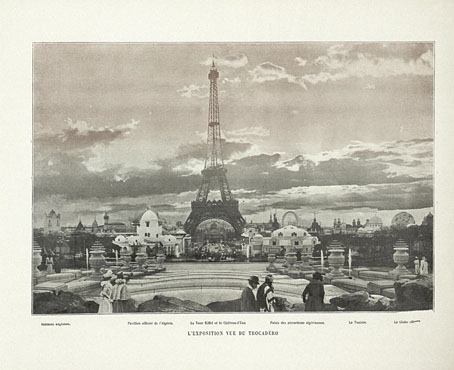
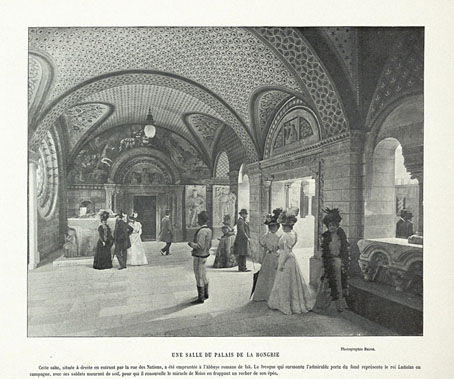
One day I really will have exhausted this subject but for the moment here’s another look at the Paris Exposition Universelle of 1900. I’d downloaded this photo album months ago from the excellent resources at the University of Heidelberg then promptly forgot all about it. The book is of interest for the variety of views it gives of the exposition; despite this being a world event that attracted a host of photographers and even (as we’ve seen) early filmmakers, the views you see are often the same remote shots of the major buildings.

Ludovic Baschet’s book compensates for this with photos by the Neurdein brothers, Étienne and Antonin (assisted by Maurice Baschet) which show many close views of the pavilions, including a couple I hadn’t seen before in any detail. The oddest thing about these views is that many seem to be composites, with figures from other shots dropped into the scenes; this may be more obvious to eyes schooled in the disparities of Photoshop. Baschet’s book also has the best views I’ve seen of the Swiss exhibit, a miniature village built in the 7th arrondissement complete with livestock, authentic milkmaids and a fake mountain. And is that a joke at Britain’s expense in the view of Edwin Lutyens’ surprisingly dull British pavilion? Philippe Jullian tells us that Paris endured a heatwave in the summer of 1900—there are many parasols in evidence—yet the British pavilion is shown with a rain-soaked pavement, and set against a mass of impending storm clouds.

exposition02.jpg

exposition03.jpg

Continue reading “Le Panorama Exposition Universelle”

London zoom

london01.jpg

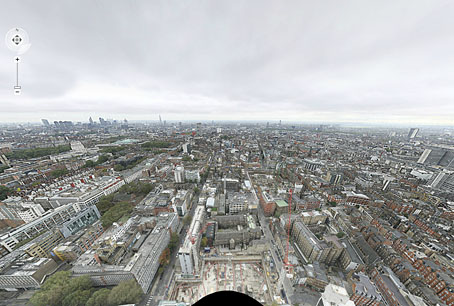
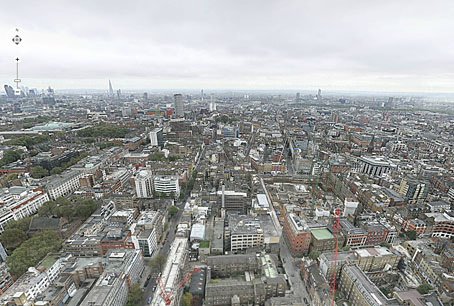
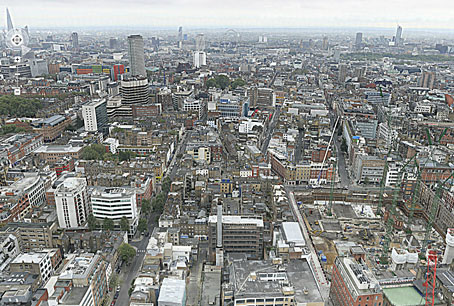
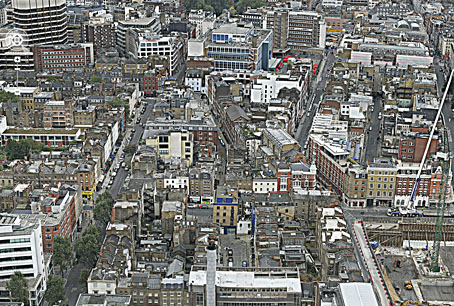
I’m generally indifferent to panoramic views of cities, especially London where the sprawl lacks the distinct contours of Manhattan or the Napoléonic severity of Hausmann’s Paris. This view is different, however, being a 320 gigapixel panorama of the capital seen from the top of the BT Tower. This view is currently the world’s largest panoramic photo, and while the wide view is of the usual grey cloudscape and undifferentiated vista of 19th-century roofs and 20th-century ducting, the ability to zoom down into the streets (and, in some cases, into windows) is unprecedented at this resolution.

london02.jpg

These screengrabs show a zoom towards the river from the widest angle down to the painted sign of the Duke of York pub on the corner of Rathbone Street and Charlotte Place in Fitzrovia. At the end of the zoom there’s a reverse view from Google Maps showing the pub itself, and the tower, the one landmark you won’t otherwise see. MetaFilter’s members have bookmarked various points of interest. I’m surprised there are so many roof gardens in this area of London although I think Paris still has the edge in that department.

london03.jpg

london04.jpg

Continue reading “London zoom”

Weekend links 133

woods1.jpg

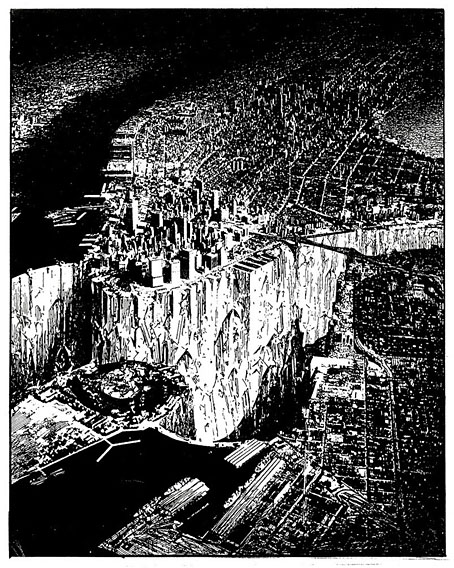
Lower Manhattan (1999) by Lebbeus Woods.

RIP Lebbeus Woods, an architect and illustrator frequently compared to Piranesi not only for his imagination and the quality of his renderings but also for the way both men built very little from a lifetime of designs. Lots of appreciations have appeared over the past few days including this lengthy piece by Geoff Manaugh at BLDGBLOG. (Geoff interviewed Woods in 2007.) Elsewhere: A slideshow at the NYT, Steven Holl remembers Lebbeus Woods and Lebbeus Woods, visionary architect of imaginary worlds. See also: Lebbeus Woods: Early Drawings and this post about Woods’ illustrations for an Arthur C Clarke story collection. Woods was at his most Piranesian with Gothic designs for an artificial planet that would have been the principal location in Vincent Ward’s unmade Alien 3.

• Arkhonia draws to the end of a year of blogging about and around the Beach Boys’ errant masterwork, Smile (1967). Witty, discursive and frequently scabrous accounts of how Brian Wilson’s magnum opus was derailed and marginalised until it became convenient for commercial interests to exploit its reputation. Anyone following those posts won’t have been surprised by Wilson’s sacking from his own group by Mike Love in September.

• “We’ve been underground for 27 hours now. Everyone is caked in mud, with grit in their hair.” Will Hunt explores the catacombs and sewers of Paris.

I think the only remotely interesting drug was acid. I had a slightly peculiar attitude towards it I think. Just about everything about hippydom I hated. I liked the 60s up to about ’65 or ’66. I liked the mod clothes, I liked the look. I wasn’t a keen taker of speed because I didn’t like the comedown from it. Then everything changed and became looser, I didn’t like the clothes at all. I felt rather out of step with it. The acid thing was interesting though. I come from Salisbury and from the age of 12 I had a friend who was 30 years older than I was who I saw regularly up until when he died a couple of years ago, whose obituary I wrote in The Times. This man was called Ken James and he was deputy head at the chemical warfare unit at Porton Down [the MOD’s Defence Science and Technology Laboratory]. He then became head of the scientific civil service; he was the man who introduced computing into the civil service and he had taken acid as early as 1950. This was long before Aldous Huxley.

Sharp Suits And Sparkle: Jonathan Meades On Acid, Space And Place by John Doran. Marvellous stuff. Meades’ new book is Museum Without Walls.

• In New York later this month: A Cathode Ray Séance – The Haunted Worlds of Nigel Kneale.

• More acid: Kerri Smith talks to Oliver Sacks about his drug experiences.

• “It starts with an itch”: Alan Bennett (again) on his new play, People.
nymag.jpg

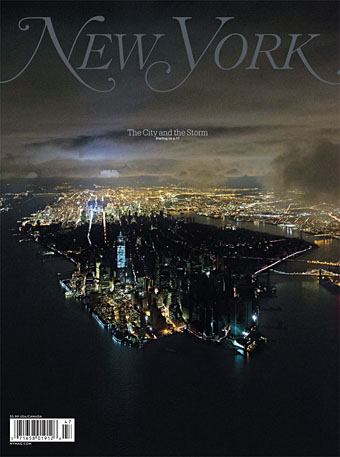
Lower Manhattan last Wednesday. Photo by Iwan Baan.

• Back issues of OMNI magazine can now be found at the Internet Archive.

• Alan Moore & Mitch Jenkins present their new film, Jimmy’s End.

• At BibliOdyssey: Atlas title pages part one & part two.

• Raw Functionality: An interview with Emptyset.

• Athanasius, Underground

• Vintage Caza

• Stormy Weather (1979) by Elisabeth Welch.
Views of Old Manchester

manchester01.jpg

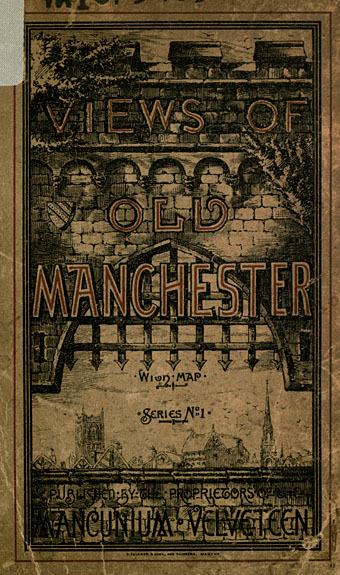
I’ve always been curious about the history of the places I live in so for a while I was reading a lot about the history of Manchester, mostly via small booklets published by the City Council. The drawings in this Internet Archive discovery are familiar from some of those publications which tended to recycle the same few views. Manchester’s history dates back to the Roman occupation of Britain but the city never received the kind of detailed artistic attention that London inspired.

manchester02.jpg

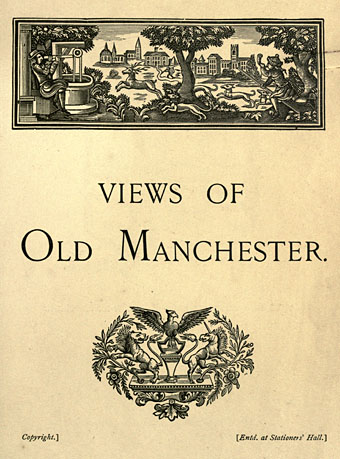
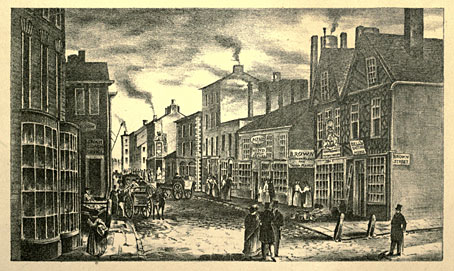
Views of Old Manchester is dated 1885 but its antiquarian publishers use the old-fashioned (and somewhat anachronistic) medial “s” in their text. The drawings are from Jackson’s Views of Manchester Streets (1822) and James’s Views (1825), and show a variety of Dickensian buildings many of which had been demolished by the time this small book was published. The only recognisable structure to contemporary eyes is the tower of the Cathedral. For an idea of how Market Street looks today, Flickr has plenty of recent views while mcrarchives has photos dating back to the 19th century.

manchester03.jpg

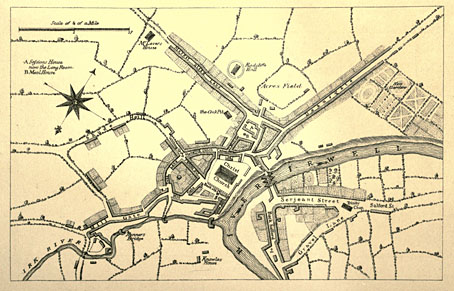
Map of Manchester, 1650.

manchester04.jpg

Top of Market Street (Built about 1550).

Continue reading “Views of Old Manchester”

Rue St. Augustin, then and now

augustin1.jpg

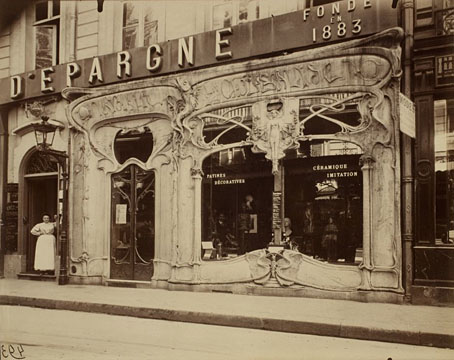
Boutique art nouveau, 45 rue st. Augustin (2e arr, 1904–05).

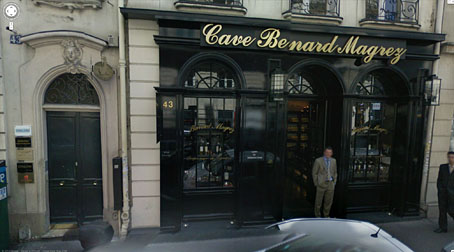
Despite being reasonably familiar with Eugène Atget’s celebrated photos of Paris, this picture of a very elaborate Art Nouveau façade is something I’d not seen until now. The photo is part of the George Eastman House collection of Atget prints, and is unusual for showing a very contemporary shopfront. Atget generally preferred premises redolent of an older, pre-Haussmann Paris, like the window full of barometers at Au Griffon, 39 Quai de l’Horloge. The Rue St. Augustin façade is an especially baroque example of Art Nouveau excess with a flying fish, a large butterfly (or moth) supporting the window, and the ubiquitous fin de siècle female floating above it. Naturally I had to know if the decor had survived but a quick look at Google Maps revealed the mundane scene below. The apartment entrance next door is pretty much unchanged but the wine shop that’s there now shows no traces of its delirious past.

augustin2.jpg

Previously on { feuilleton }
• Hector Guimard elevations
• Infernal entrances
• Hector Guimard sketches
• Temples for Future Religions by François Garas
• Elizabetes Iela 10b, Riga
• Atelier Elvira
• Louis Bonnier’s exposition dreams
• The Maison Lavirotte
• The House with Chimaeras