Martin van Maële’s illustrated Poe

poe01.jpg

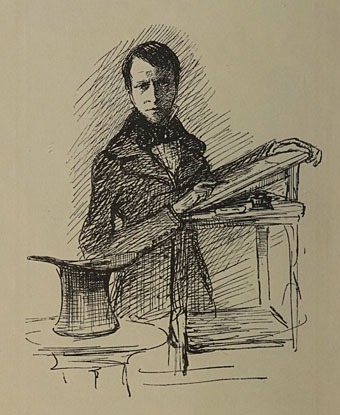
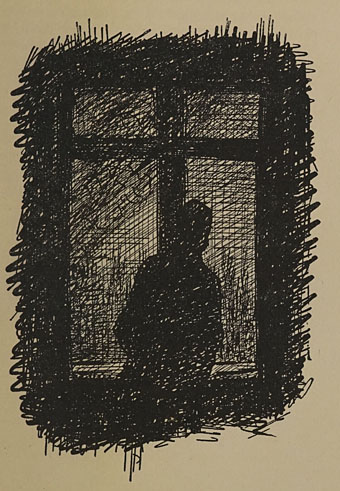
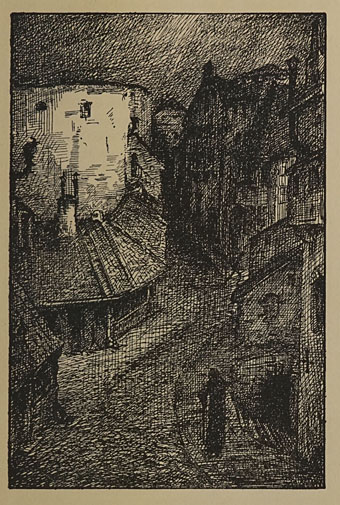
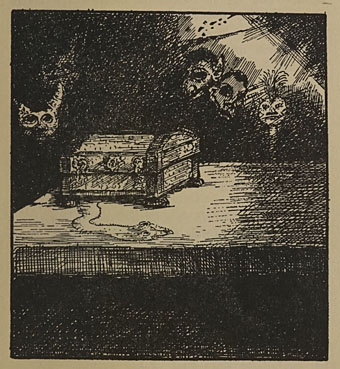
I’ve waited months to write about this book in the run-up to Halloween. Several years ago I wrote a series of pre-Halloween posts about the illustrators of Edgar Allan Poe, with the final entry containing a lone illustration for The Tell-Tale Heart by Martin van Maële (1863–1926). At the time van Maële’s book was unavailable online so I was left to wonder what the rest of his illustrations might be like. Dix contes d’Edgar Poe (1912) is the volume in question, a collection of moody full-page illustrations plus many small vignettes, all of them engraved on wood by Eugène Dété.

poe02.jpg

I’d been familiar with several other pieces from this book for many years without knowing their origin thanks to their appearance in the 1986 Penguin Encyclopedia of Horror and the Supernatural, an excellent guide edited by Jack Sullivan with a minor deficiency in that many of the illustrations are uncredited. (They did credit van Maële for two of his pictures but spelled his name as “van Moële” which doesn’t help.) The startling picture of a skeleton pushing a shrouded woman back into her tomb—which I now know is van Maële’s portrait of Madeline Usher—was one of the uncredited drawings, as was the vignette of another skeleton holding a heart like a ticking pendulum (The Tell-Tale Heart again). There are many more skeletons in this book. Van Maële’s illustrations oscillate between two pictorial extremes, from shadow-filled realism in the full-page drawings to Doré-like spot illustrations that suit Poe’s fatalism and macabre sense of humour. It’s a shame that many of these reproductions are darker than they should be, being from the old series of Gallica scans which remove all the grey tones from the images, but at least we can see the book as a whole. My thanks again to Mr TjZ for alerting me to this!

poe03.jpg

The Tell-Tale Heart.

Van Maële might be better known today if more of the books he illustrated had been suitable for a general audience. In a reversal of the usual state of affairs most of his illustrated editions are the classic works of erotic literature by Apuleius, Choderlos de Laclos, Anatole France et al, plus obscure works devoted to le vice Anglais, while his non-erotic titles by Poe and Conan Doyle are in the minority. If he had a flair for the erotic then he also had a flair for the macabre. Some of his erotic drawings manage to combine the two, notably in La Grande Danse Macabre des Vifs (1905), a portfolio which approaches Félicien Rops by bringing to erotic art a quality of imagination that would usually be rejected for distracting from the primary purpose of pornographic imagery. Wikipedia has this and many more of van Maële’s erotic illustrations.

poe04.jpg

The Tell-Tale Heart.

poe05.jpg

Hop-Frog.

poe06.jpg

Silence.

Continue reading “Martin van Maële’s illustrated Poe”

Peculiar Shocks

bodyshocks02.jpg

My cover design for Body Shocks, the body-horror story collection edited by Ellen Datlow, appeared here back in March. Now that the book is out from Tachyon I can show some of the interior design. In the earlier post I mentioned cover drafts that featured anatomical illustrations, none of which worked as well as the eyeball collage that became the final cover. The rejected pieces were better suited to the interior which combines engraved illustrations with the kind of sans-serif typography you might find on modern medical labels.

bodyshocks03.jpg

The diagram of veins that fills out the contents spread looks like an illustration from a 19th-century edition of Gray’s Anatomy but it’s actually an illustration from a book about massage whose title I don’t seem to have made a note of. Gray’s is a thorough volume, being a complete guide to the human body, but the illustrations aren’t as large or as detailed as those you can find elsewhere. The header bands used to indicate the beginning of each story are from Gray’s, however, while many of the stories end with full-page plates from The Anatomy of Humane Bodies by William Cowper. These are mostly engravings of autopsies which I processed by inverting the images then overlaying them with parallel lines. You can still tell the pictures are medical illustrations but they’re not as obtrusive as they would be if they’d been left untreated.

bodyshocks04.jpg

Continue reading “Peculiar Shocks”

Weekend links 592

anderson.jpg

Cover art by Gray Morrow; design by Henry Berkowitz, 1967.

• “Dial-a-Poem received more than a million calls before it lost funding and ended in 1971. There were complaints of indecency, claims that the poems incited violence. The FBI investigated…” Ralf Webb on John Giorno’s Dial-a-Poem project which is still active at the US and UK numbers on this page.

• Mixes of the week: Halloween approaches so for those who require themed mixes you can take your pick from these selections by Kaptain Carbon; at The Wire there’s a Halloween-free mix by Kuunatic.

• New music: New Moon by Laetitia Sadier, and The Reinterpretation Of Dreams (Remixed) by Tomoroh Hidari; not-so-new music: Velocity Of Sleep by Kali Malone.

The activist’s whole identity is tied up in him being denied, as opposed to him manifesting. Nobody can give you your freedom. You ARE free. It is your natural state, okay? You can give it all away if you want, but: no. I can’t GIVE you your rights. I can’t give you your freedom. And to go and beg the Man for your rights and BEG the Man for your freedom? LIVE your freedom.

One of Berg’s phrases was “life actor.” “Theatre of the streets.” All of this as theatre. As opposed to in a different arena you would call politics or activism or so on. But using theatre as a way to open doors that might not be opened if someone was approaching it in other ways. Out of that comes this whole sense of “create the reality you want to live in.” Which is a powerful, profound concept. People are trapped in the paradigm: you can’t even think there is an outside of the box. Just that notion of thinking, and living outside that paradigm, was real powerful stuff.

Claude Hayward of the San Francisco Diggers talking to Jay Babcock for the eighth installment of Jay’s verbal history of the hippie anarchists

Joanna Moorhead on the creation of the Mae West lips sofa, a collaboration between Salvador Dalí and Edward James.

• The latest book from Rixdorf Editions is Papa Hamlet by Arno Holz and Johannes Schlaf.

• At Sweet Jane’s Pop Boutique: Op and Pop | Art Forms in Furnishing (1966).

Denis Bovell’s favourite music.

• At Dennis Cooper’s: Coffins.

Love At Psychedelic Velocity (1966) by The Human Expression | Hamlet (Pow, Pow, Pow) (1982) by The Birthday Party | The Art Of Coffins (2002) by Bohren & Der Club Of Gore

Weekend links 591

entangled.jpg

Ghost Box 39. Design, as always, is by Julian House.

Entangled Routes by Pye Corner Audio will be the next album on the Ghost Box label, due for release on 26th November. This will be Pye Corner Audio’s fourth album for Ghost Box, and one which forms the final part of a trilogy of imaginary soundtracks for science-fiction scenarios, “the latest installment of which plays with the idea of mycorrhizal networks and attempts by humans to listen in and communicate”.

• “…for every ten projects I start, nine will probably fall by the way side—they just don’t get made. Nothing happens, you can’t find the tapes, you can’t find the rights holders, the tapes were destroyed, no one’s interested.” Jonny Trunk interviewed at Aquarium Drunkard.

• At Unquiet Things: S. Elizabeth is celebrating the first anniversary of The Art Of The Occult (previously) by giving away a signed copy of her book to one of the commenters on this post.

• “Sand is not only temporary, it is also the most temporised form of matter.” Steven Connor on the dust that measures all our time.

• Mixes of the week: Autumn Hymnal: A Mixtape by Aquarium Drunkard, and In Estonia with Bart de Paepe by David Colohan.

• “Touched by the hand of Ithell: my fascination with a forgotten surrealist.” Stewart Lee on Ithell Colquhoun.

• Skin trade: a playlist of percussion at the outer limits; Valentina Magaletti surveys alternatives to the conventional kit.

• At Wormwoodiana: Mark Valentine reviews The Devil At Saxon Wall by Gladys Mitchell.

• “The Show: Alan Moore brings vaudevillian dazzle to Northampton noir,” says Phil Hoad.

• At Bandcamp: A Guide to the Eclectic Funk Music of Bernie Worrell by John Morrison.

• At Dennis Cooper’s: Spotlight on…Octave Mirbeau The Torture Garden (1899).

• At Spine: Vera Drmanovski on redesigning the novels of Hermann Hesse.

• New music: Music For Psychedelic Therapy by Jon Hopkins.

South To The Dust (1990) by Ginger Baker | Into Dust (1993) by Mazzy Star | Photon Dust (2020) by Pye Corner Audio

Crank book covers

kolosimo2.jpg

Cover art by Tony Roberts, 1974. A book I received as a present for Christmas, 1974. Also the first place I encountered the words “Popol Vuh”, before discovering the music of Florian Fricke and co. a few years later.

Yes, “crank” is a pejorative word but it’s used with some degree of affection, as in “harmless crank”. It’s also a convenient umbrella term for the books referred to in the weekend post which embrace diverse subjects, from lost continents and “Earth energy” to ancient astronauts and flying saucers.

The prime crank decade was the 1970s, a period when publishers were falling over themselves to cash-in on the massive popularity of Erich von Däniken’s dubious investigations, while also catering to the by-products of the hippy era and the occult revival. Books by Charles Fort, Immanuel Velikovsky and James Churchward (the Mu series) all received reprints, with some appearing in paperback for the first time. The British editions of these books were published by imprints like Corgi, Panther and Sphere who were also publishing large quantities of science fiction, a situation that led to many crank titles being packaged as though they were fiction or fantasy. Sphere was in the vanguard, presenting a wide range of books with the same cover designs, cover artists and Novel Gothic typeface as their SF titles. A cynical move, no doubt, but it also makes the crank books seem more like fiction than their authors might have intended.

This post presents a selection of crank titles with cover art by SF artists but there are many more examples out there. (Watch the skies!) I’ve limited the selection to British publishers but the same syndrome was evident in American publishing, as documented at Absolute Elsewhere. And I’ve included a couple of books by sceptics John Sladek and Dr. Christopher Evans. These were intended to dismantle the claims of L. Ron Hubbard, Erich von Däniken and co. but were still packaged in paperback to resemble the books they were attacking. The major demolition of Von Däniken is Ronald Story’s The Space Gods Revealed but covers for that one have always been relatively restrained.

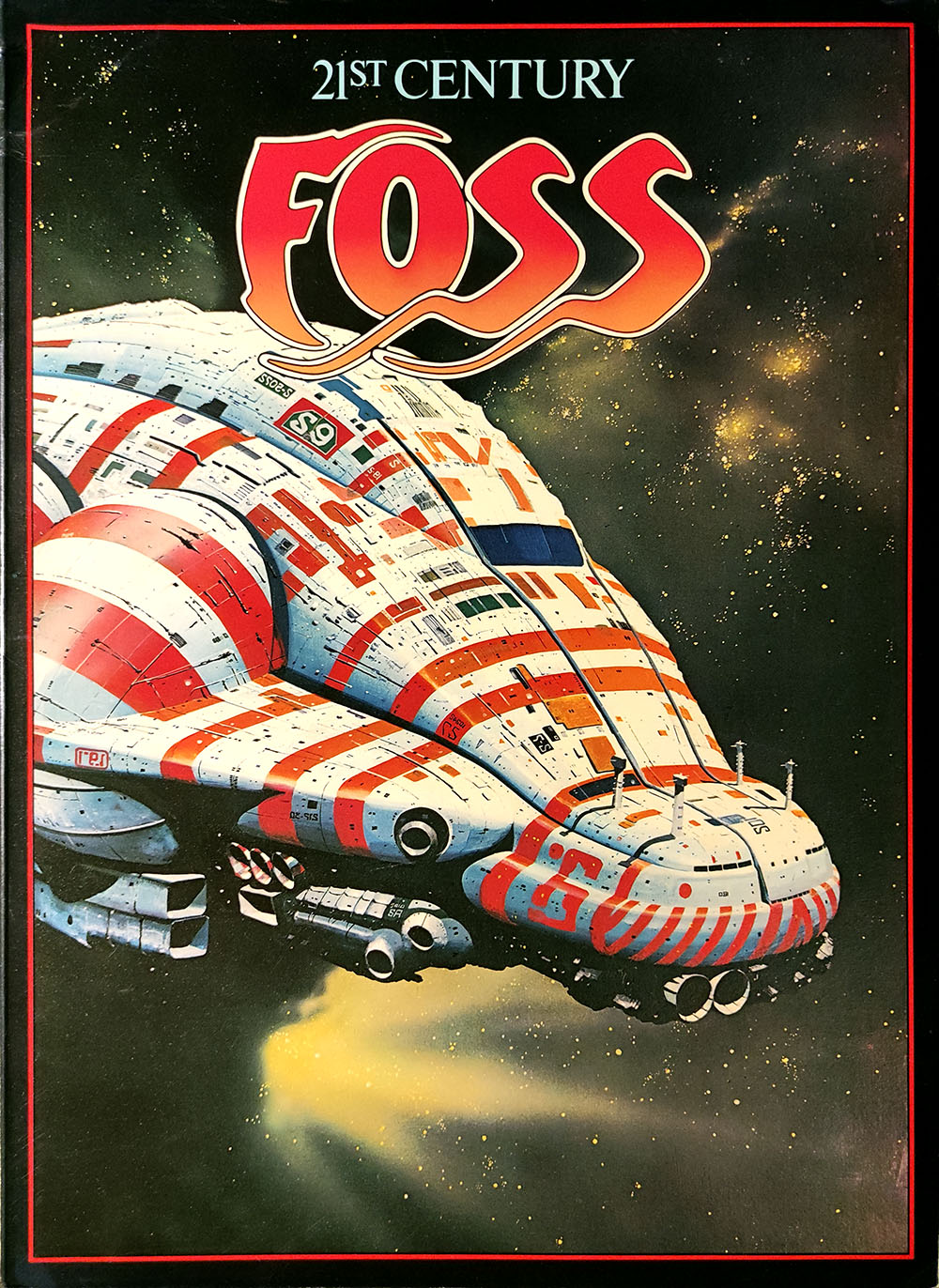
Missing from this list are three paintings by SF artist Peter Jones for books by Dr. Celia Green. The art may be seen in Jones’s Solar Wind collection but I couldn’t find any of the printed covers, which suggests they had a limited run if they were printed at all. These are odd for being typical fantasy imagery attached to serious studies of lucid dreaming and out-of-body experiences. Dr. Green is a philosopher and science researcher (she coined the term “out-of-body experience”) so she doesn’t belong on a crank list in any case. Also absent is the most popular British cover illustrator of the decade, Chris Foss, who would have been too busy working through his fiction commissions and creating designs for feature films.

kolosimo1.jpg

Cover art by Tony Roberts (?), 1974.

evans.jpg

Cover art by Bruce Pennington, 1974.

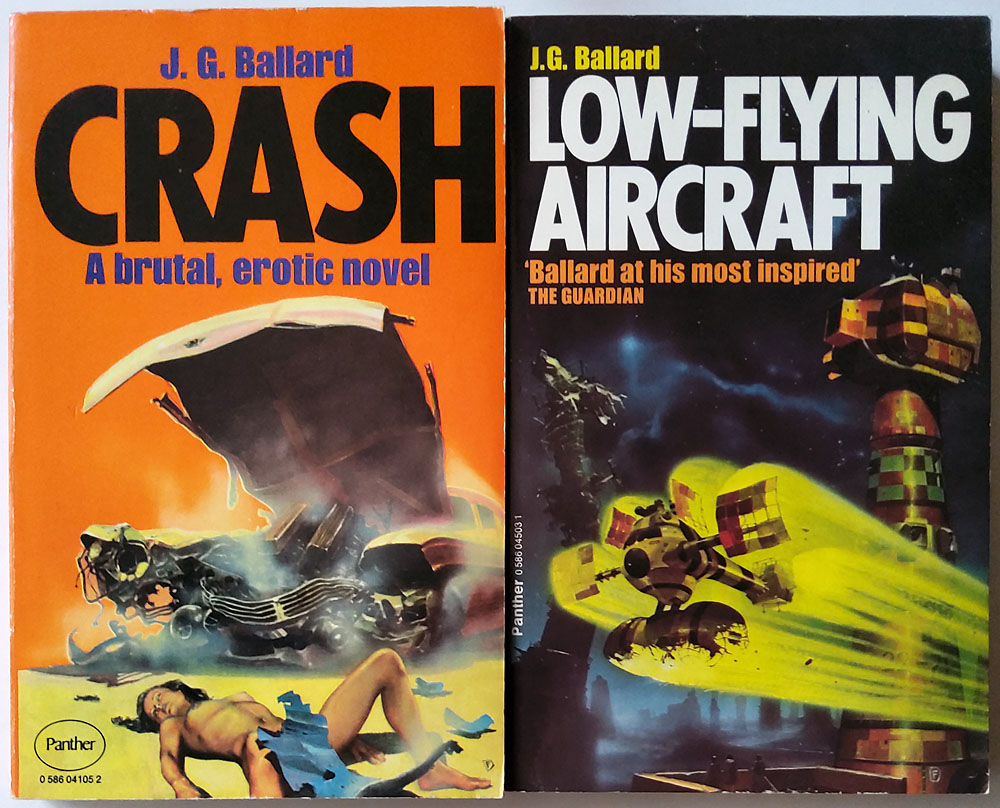
Evans was a computer scientist, an occasional contributor to New Worlds magazine, and also the model for the deranged Vaughan in JG Ballard’s Crash. Cults of Unreason investigates crank sects such as the flying-saucer worshippers of the Aetherius Society (hence the cover art), and the Scientologists who caused a stir in Britain in the 1960s when L. Ron Hubbard set up an outpost at East Grinstead.

fort2.jpg

Cover art by Colin Hay, 1974.

fort1.jpg

Cover art by Angus McKie, 1979.

Continue reading “Crank book covers”